As I write, the second day of Rosh HaShanah is winding to a close. At 7:45, it’s fully dark out, and quite cool for a change — I’ve actually closed the French doors in the living room.

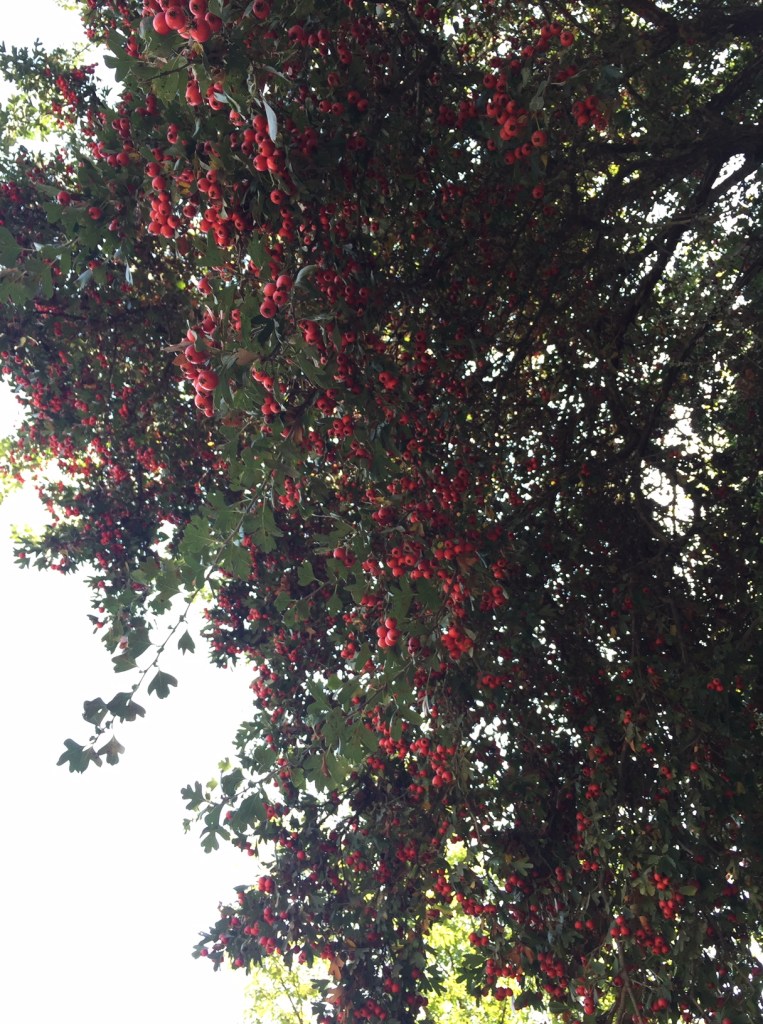
My holiday has been a sweet one, thank G-d! I’ve enjoyed, first of all, being in a country where most people are celebrating and following the same calendar. I’ve loved the piles of pomegranates in the shops (as well as the trees loaded with pomegranates in many yards), the supermarket specials on honey and apples, the sound of children attempting to blow shofarot. the crowds of festively-dressed people in the mostly vehicle-free streets.
After a mellow Shabbat, I joined the general bustle on Erev Rosh HaShanah, hiking up the hill to buy an extra bottle of wine (one must not come without wine or candy to any dinner one is invited to). In the evening I walked in another direction to join my teacher Leah and her family davenning with a Modern Orthodox minyan in the basement of a library. The service was short and sweet. It’s customary here to bring one’s own prayer book, which means occasionally one finds the leader doing a prayer that isn’t in the book one happens to have. I brought my Koren-Sacks machzorim (High Holy Day prayer books) from Vermont — published by Koren here in Jerusalem in the building next to where I go to school, with a commentary by Rabbi Lord Jonathan Sacks the former Chief Rabbi of Britain. They’re beautiful books, and when I’m missing a prayer, I just read the interesting commentaries.
The leader of the service had a sweet, plaintive voice. His nusach (tunes, modes, motifs) was a kind of Ashkenazi/Mizrachi mash-up — it was familiar, but with a nice Middle Eastern twist. The folks at BAJC who complain that our our High Holy Day nusach is vanilla would have enjoyed the variation I think.
After dinner I walked home with Leah and her husband and daughters and one of my classmates, David from England, who seems to turn up at a number of events I’m at somehow. He’s a cute boy, with that terribly dry English humor and a desire to stir up trouble when he can, just for fun. When we got to the house, some other Pardes students arrrived — Helen, with her boyfriend Ben who is in rabbinical school, and Brandon. Just in passing, I need to say that all of my classmates seem to be, not only really nice, but alarmingly smart. Brandon, for instance, at the age of 35 speaks Korean, Japanese, and Mandarin, as well as Hebrew and his native English. Helen and Ben both have degrees in astrophysics.
Leah has three grown daughters — her grown sons were away. The daughters each had a distinctive look and manner — one is a school teacher, one is in the army, and one, who was very stylish and glamorous in plum colored lipstick and a blonde bobbed flapper-style haircut, is in college. Leah’s elderly parents were also there; they live down the street. They are American originally, but Leah’s husband is something like seventh generation Israeli, which is quite rare. He is also a professor, and so we were treated to a lecture in Hebrew (which I got the gist of) about the tradition of eating symbolic foods on Rosh HaShanah. Here’s more about this custom: https://www.star-k.org/articles/kashrus-kurrents/628/starting-the-new-year-right-a-guide-to-the-simanim-on-rosh-hashana/ Down the center of the table were plates of fresh dates (previously frozen — they become sweet when you do this, otherwise they are rather astringent), a pomegranate, a special gourd cooked in honey, black-eyed peas, and little pancakes, some made with leeks, some with beet greens. Also a more familiar plate of sliced apples, and a dish of honey, as well as round challot. At each of our places we had a beautiful card that the paterfamilias had made up, with the blessings written out over photos of the various foods. The blessings are based on puns that Rabbi Abaye made in the Talmud — except the for the apples and honey and round challah, that is a European tradition. We had some conversation about how interesting it is that in the Southern U.S. people also eat black eye peas at the secular New Year — a custom that comes from Africa, I believe. I restrained myself from mentioning that the black eye peas in the south usually have a ham bone in them…The dinner conversation proceeded in both English and Hebrew. Leah had made an ample dinner — meatloaf, roast chicken, various vegetables, and rice. After we bentsched (did the after meals blessing), I walked home with the Pardes students, each of us splitting off in a different direction as we came to our neighborhoods.
On Rosh HaShanah I set my alarm for six, and set off for the Yeshurun synagogue shortly before 7 am. (I was advised by my grandson-in-law that this would be where to hear some good chazzanut .) The sun was coming up, the air was cool, and the streets were still relatively empty — only Orthodox men were out and about, on their way to services. Here, you sometimes have three synagogues on a block, so I passed many on my way. It was a half hour walk, and despite being uphill all the way, it was quite a nice way to start my morning. I found the synagogue, a big one just down the street from the very grand Great Synagogue, and made my way up to the balcony where the women sit. There weren’t many women present yet, or even too many men down below. I found out why as the services progressed — it turns out a full Orthodox Rosh HaShanah takes more than six hours, and so most people don’t show up until much later. (It’s amusing to think that some people in Brattleboro complain about the services when they last three and a half hours…) As the morning wore on, the balcony filled with women, mostly my age or older, and mostly in the kind of hat one associates either with the Queen of England or with African American church ladies. I felt quite out of place in my headscarf!
The first part of the service was led by a fairly skilled person, but when the chief cantor emerged in his white robes and hat, the service went from “not bad” to excellent! His nusach was perfect, his voice was beautiful despite his age (60s? 70s?), and his delivery was very moving. Six hours is a long time, and for about four of them I needed to pee, but I felt it was a really great service nonetheless. The Torah leyner (for the sad story of Hagar and Sarah) was excellent as well, and the shofar blower had a surprisingly sweet and even tone. From time to time the cantor was joined at the bima by one or more meshorerim (harmonizers), but there was no formal choir. In addition to the extra singers he also often had what I took to be a small grandson hanging onto his hand, which was really so sweet.The whole thing was somehow at once grand and heymish (homey).
At 1:15 I galloped down the hill and found the home of my classmate Sara Laya, who lives a couple blocks over from me. She had prepared an astonishing feast — salmon roasted with pomegranate and rosemary, “smashed” potatoes, roasted veggies, a quinoa salad with date and pomegranates, and much more, including an extremely decadent chocolate pomegranate torte that was parve (neither dairy nor meat) and gluten free and made with coconut sugar, and yet managed to be totally delicious. The company was really pleasant — four of my younger classmates plus Sara Laya — and the conversation was really interesting. We spoke of feminism and Orthodoxy, music, art, politics, the curious habits of many of our teachers, and where to find the local compost pile. I stayed and did the dishes, and watched the sky turn pink and then violet from Sara Laya’s third floor apartment.
Today I set my alarm for 7:30, thinking I might get up and go to shul again for the latter part of the service, but I was unable to rouse myself — I slept until nine! Then I had a perfect day of a different kind: I had a leisurely breakfast on my patio, listening to the services at the Sephardi synagogue next door. I burned my toast when they first blew the shofar, but after that I was more careful, and fulfilled my mitzvah of hearing it without further mishap. (By the way, we recently studied Talmud Rosh HaShanah 27a and b in Nechamah’s “Greatest Sugiyot” class, and so I know that, “If one was passing behind a synagogue, or his house was adjacent to the synagogue, and he heard the sound of the shofar…if he focused his heart, he has fulfilled his obligation” — that is, the mitzvah to hear the shofar on Rosh HaShanah. So I’m covered!) Next door they seemed to blow it more times than the Ashkenazim do, and their blower had a more wailing style, less decorous and more like what I imagine it probably sounded like in Bible times. Their songs are also very Middle Eastern sounding, although at one point I heard them singing the old “Avinu Malkeinu” that my teacher Brian Mayer says is from Second Avenue theater! While I ate and listened, I read an interesting book I picked up at the English-language bookshop about feminist approaches to the Bible readings of the High Holy Days.
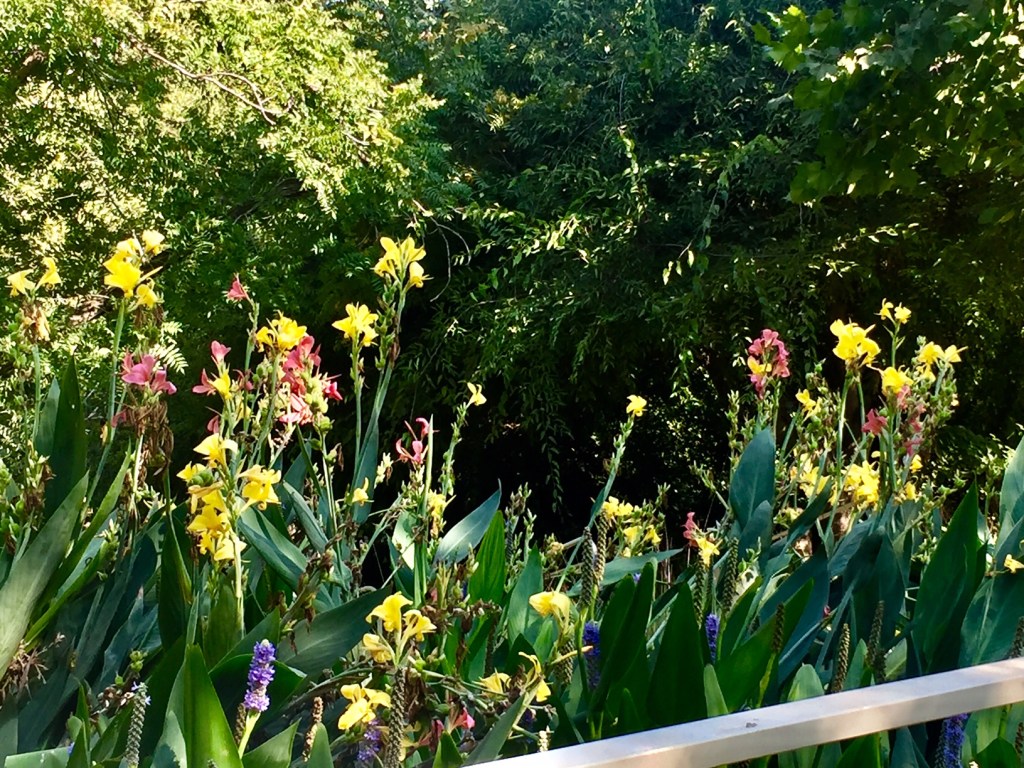
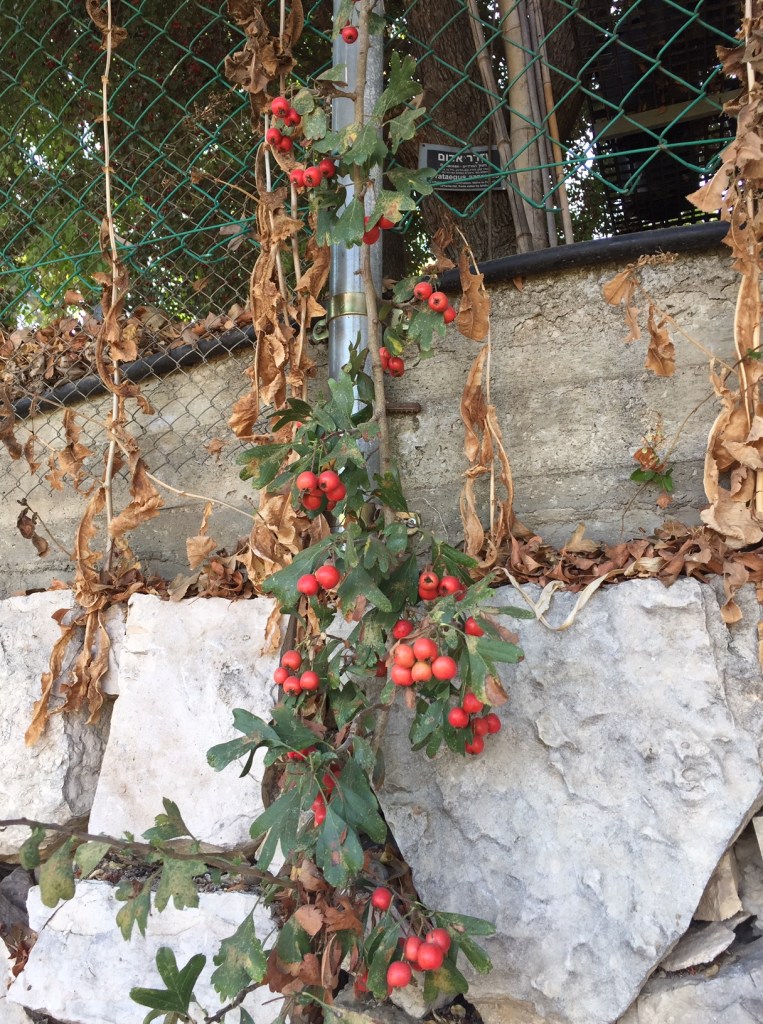
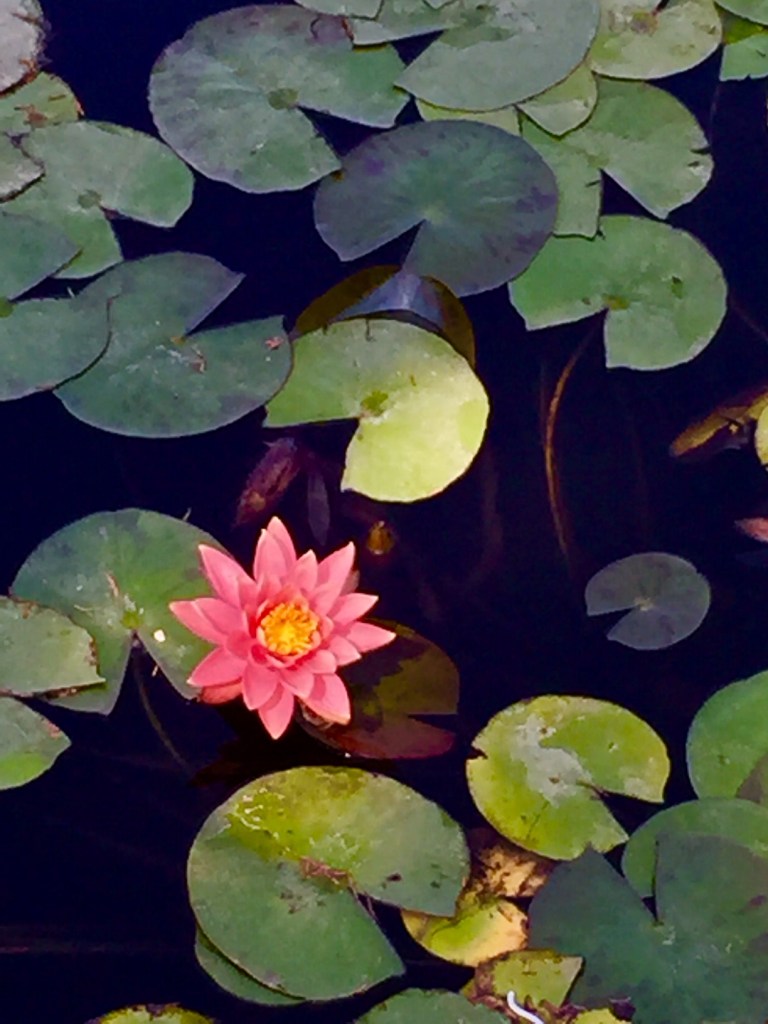
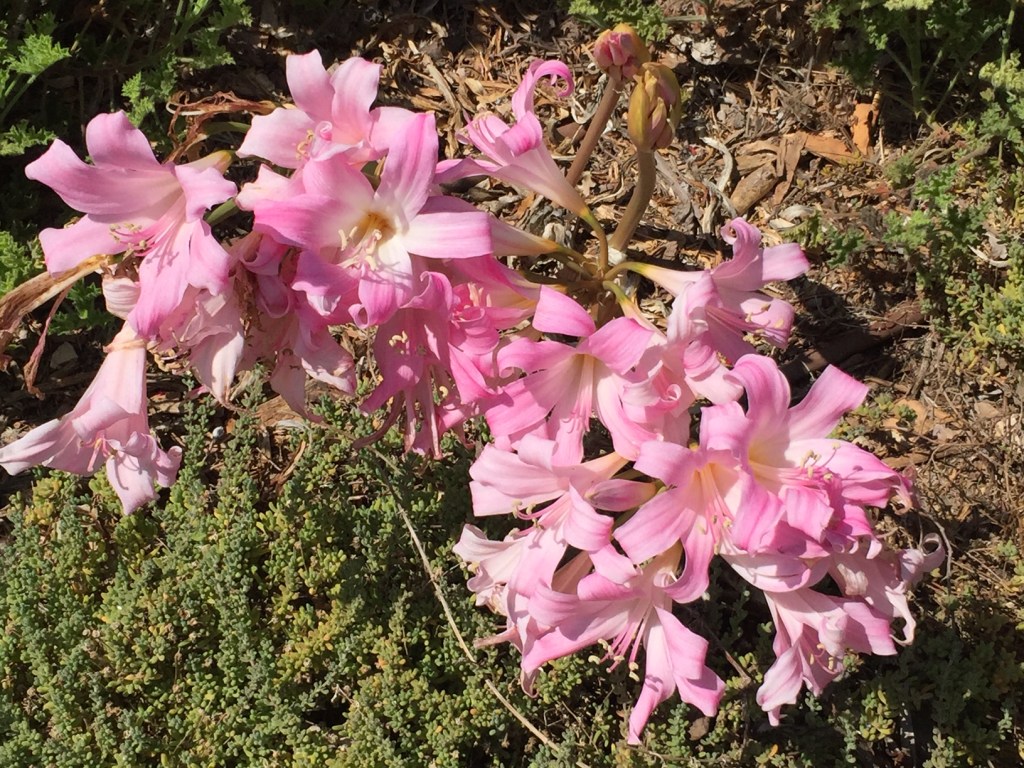
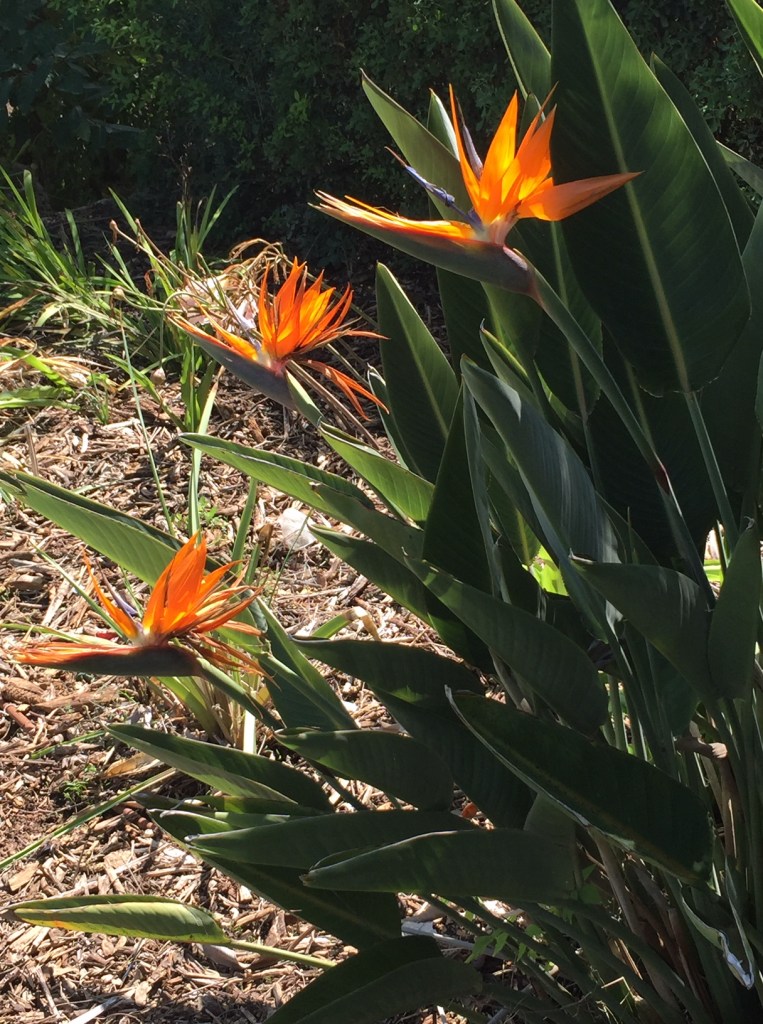
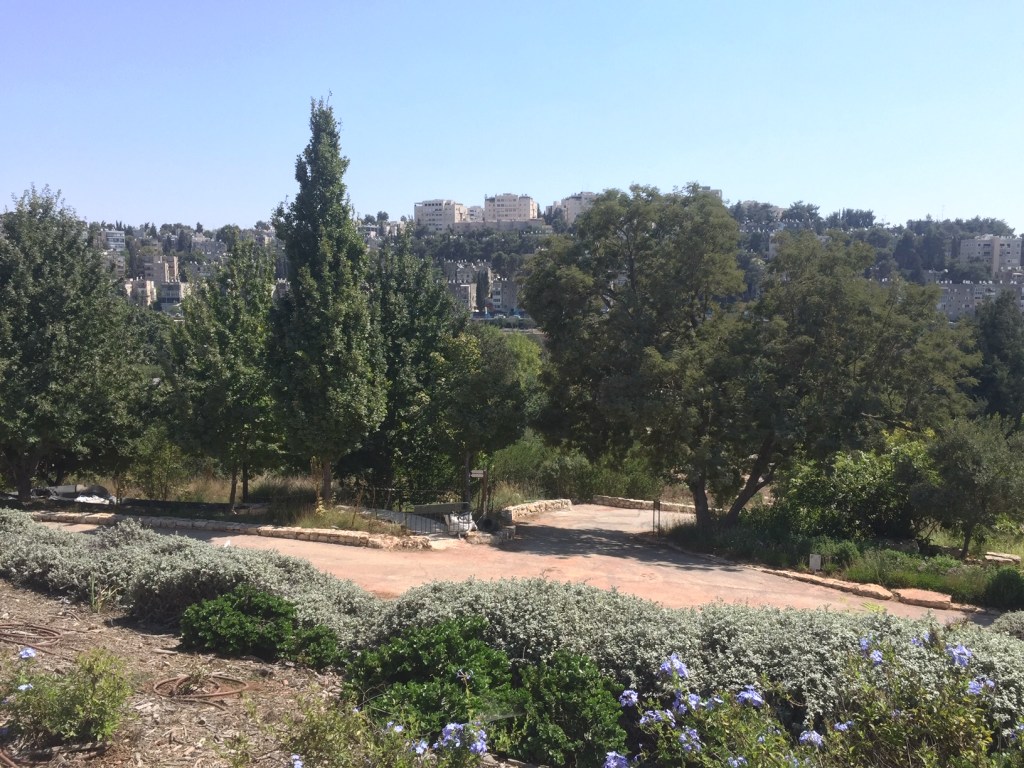
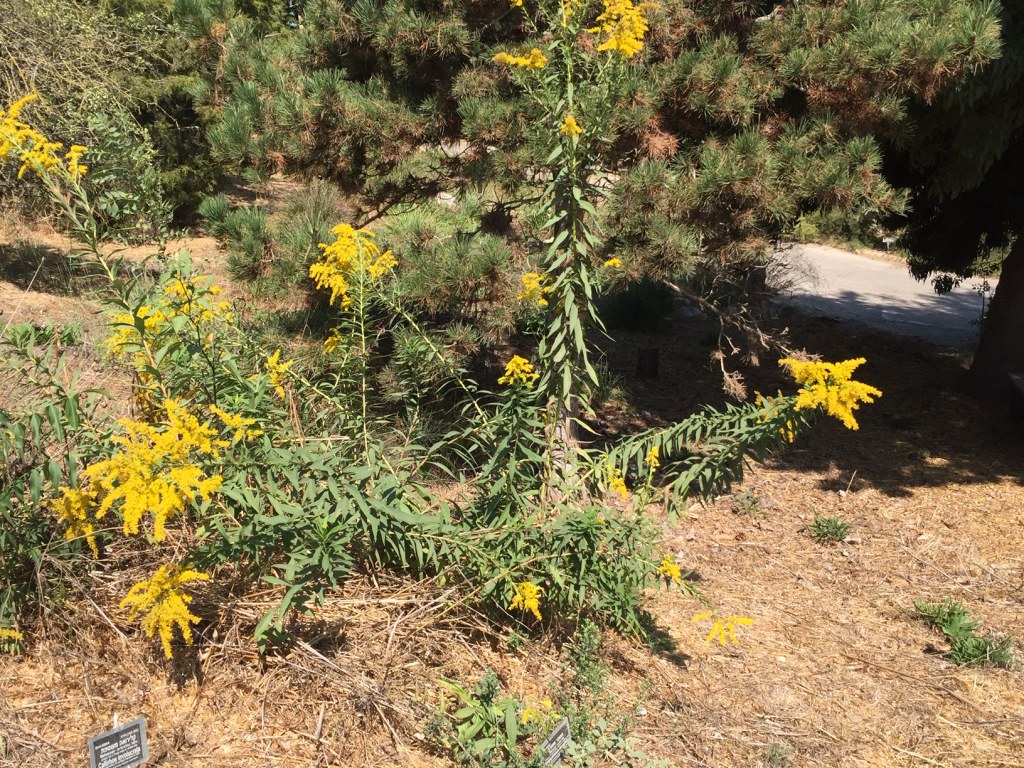
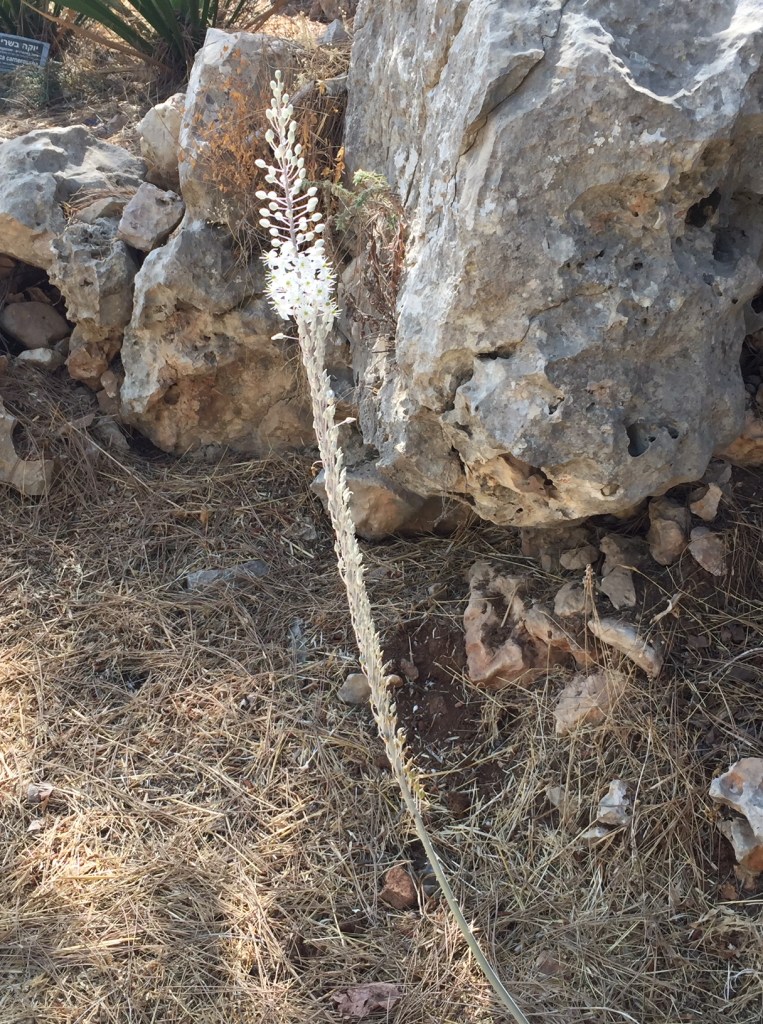
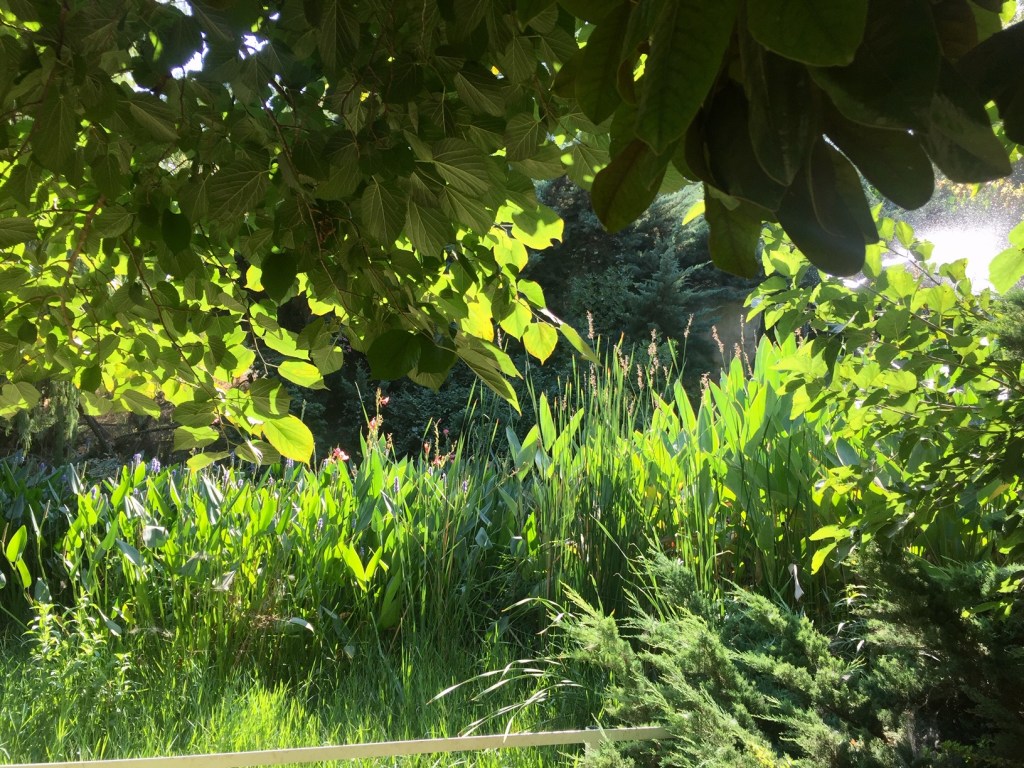
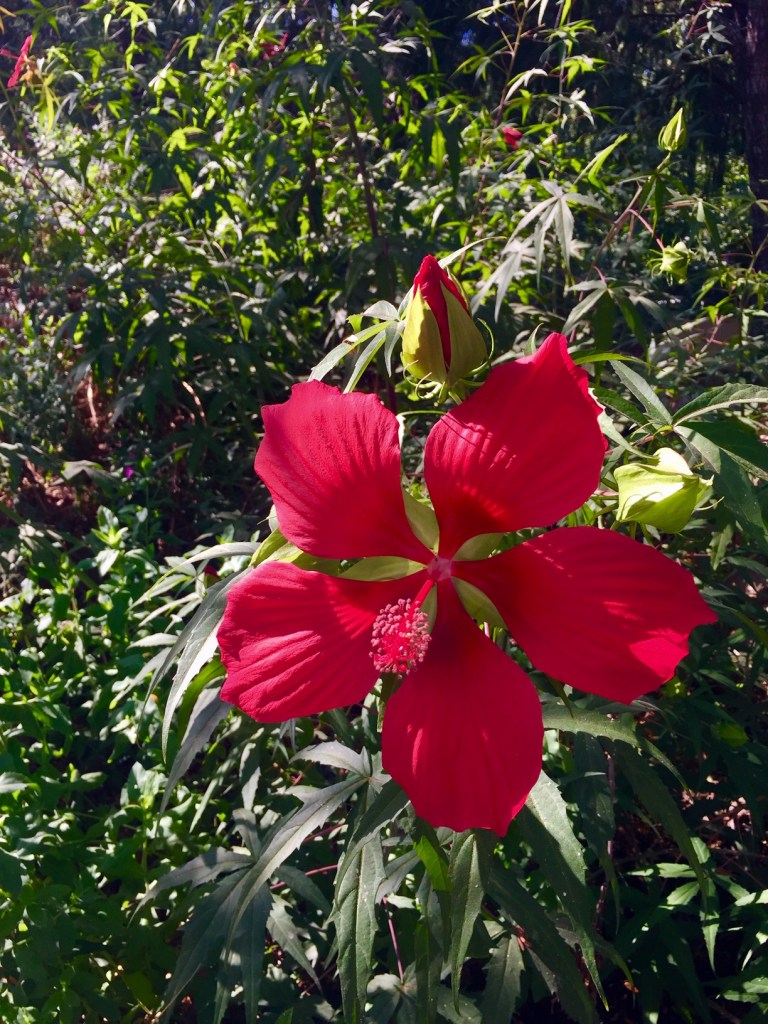
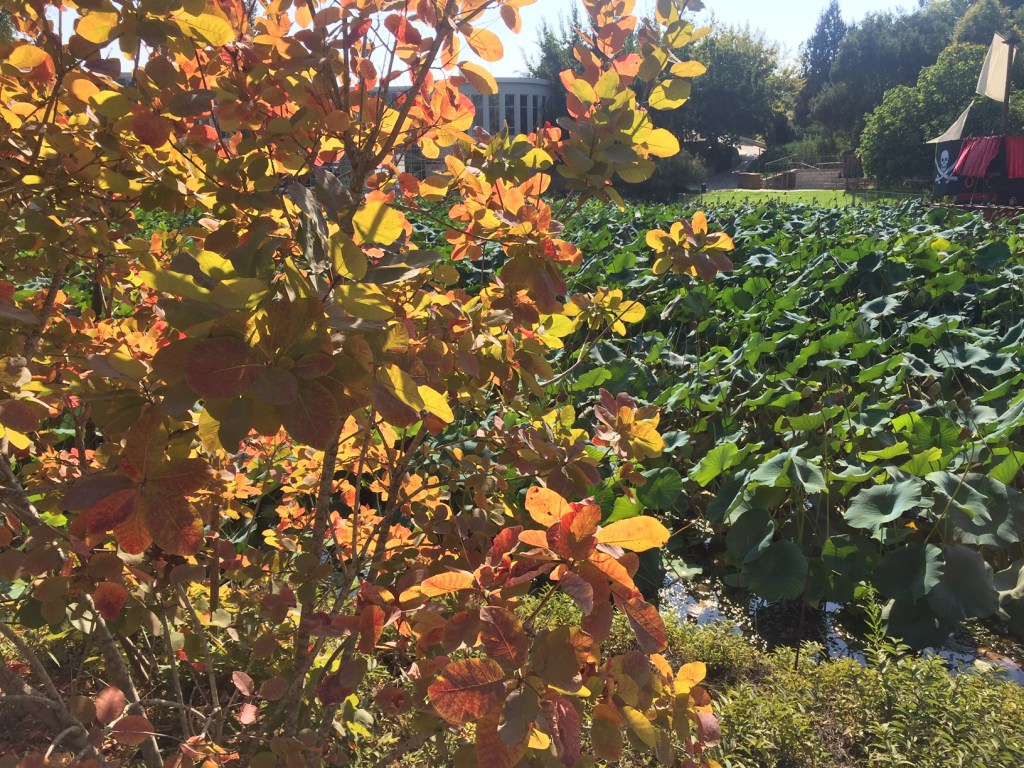
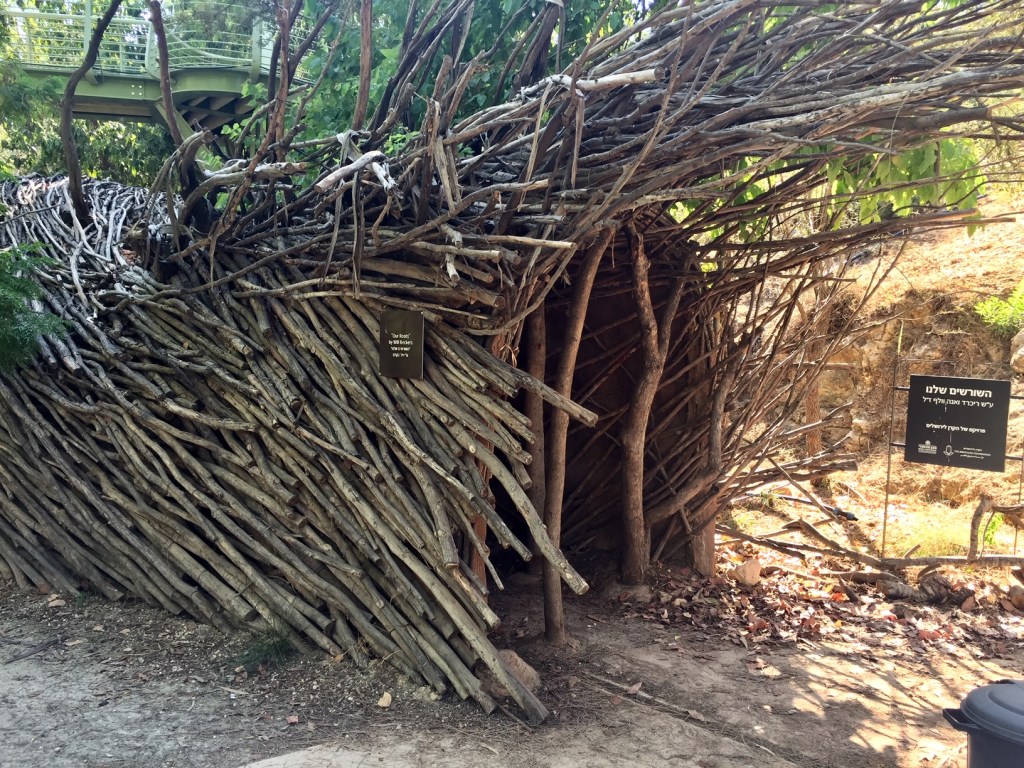
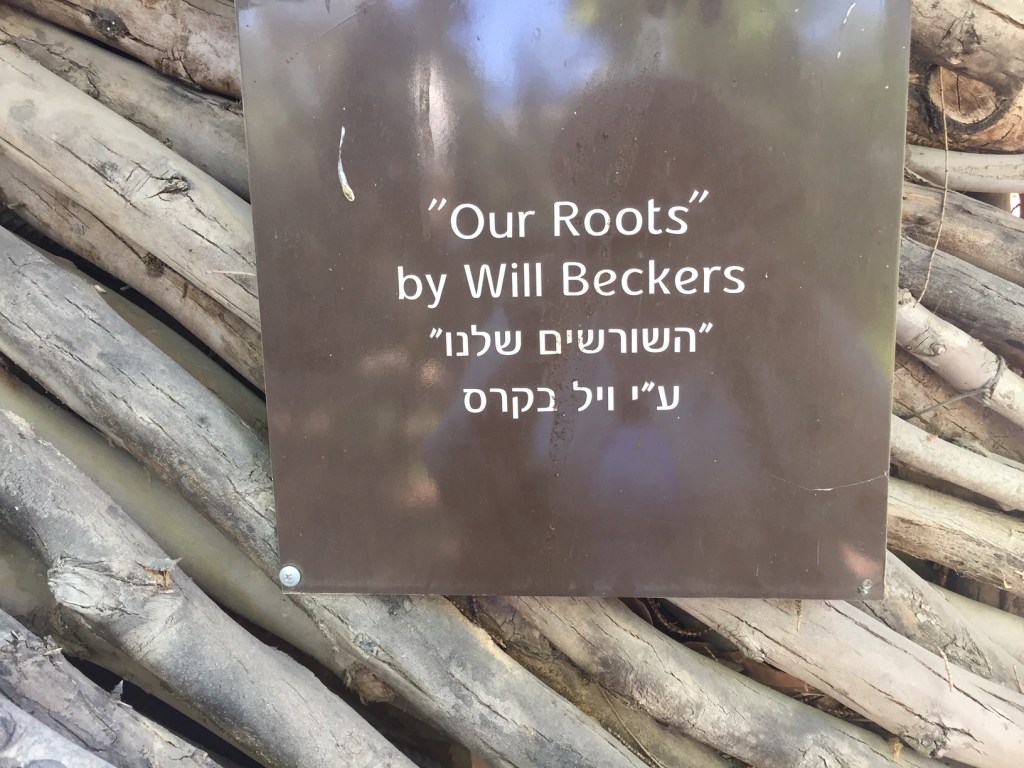
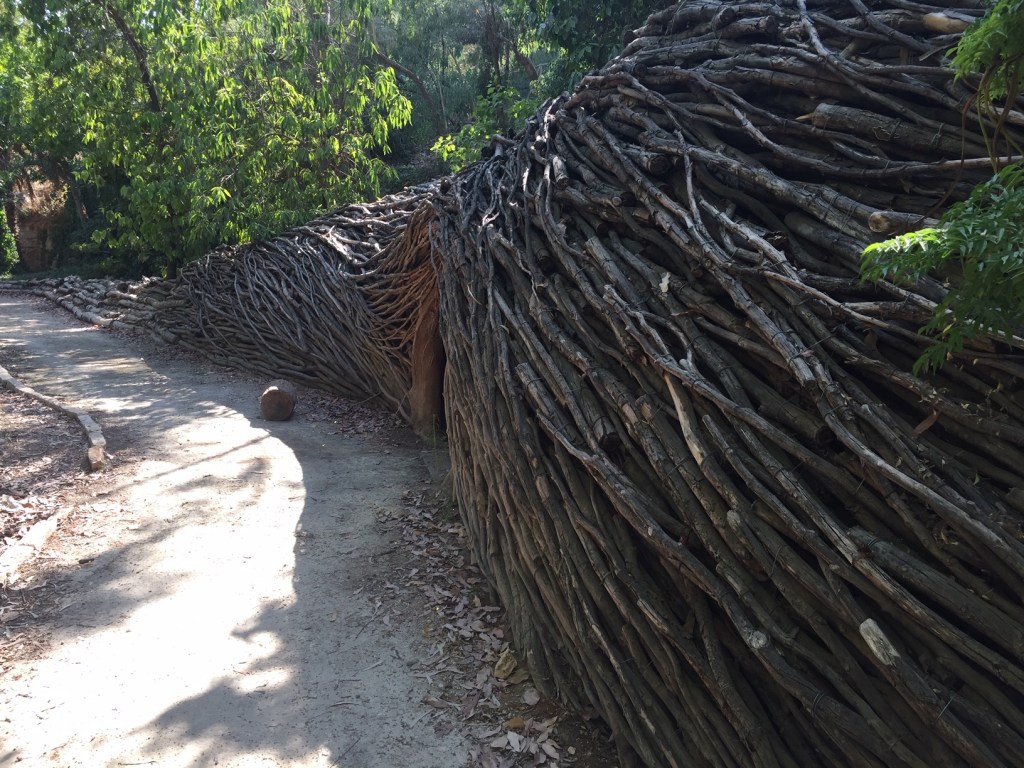
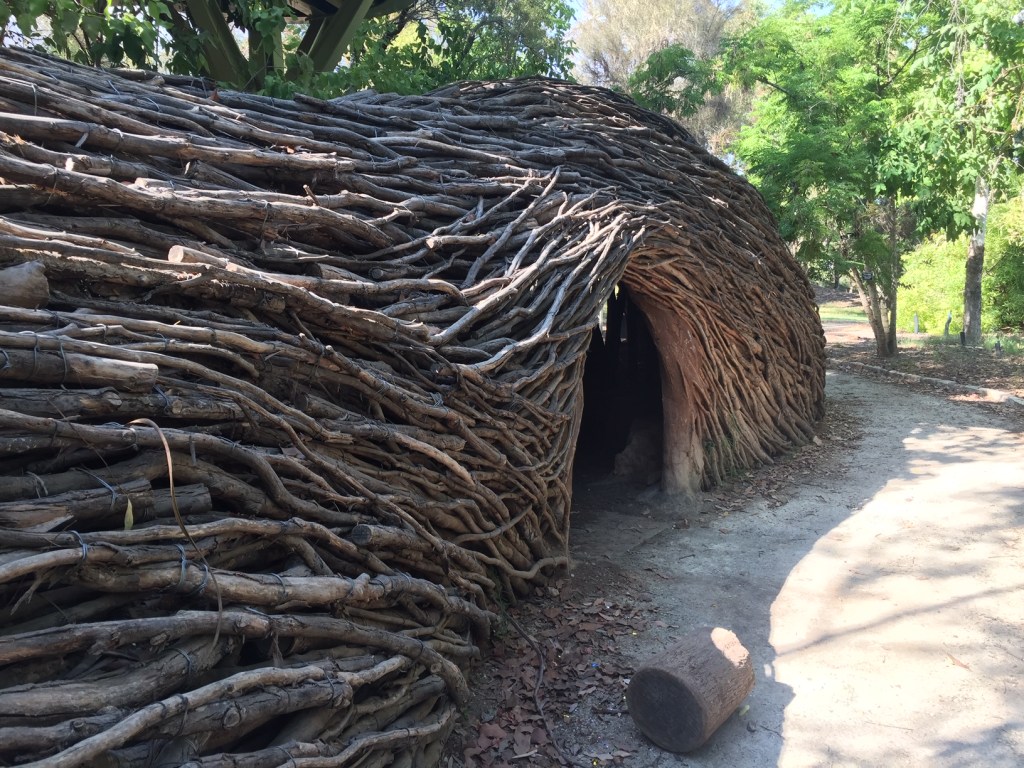
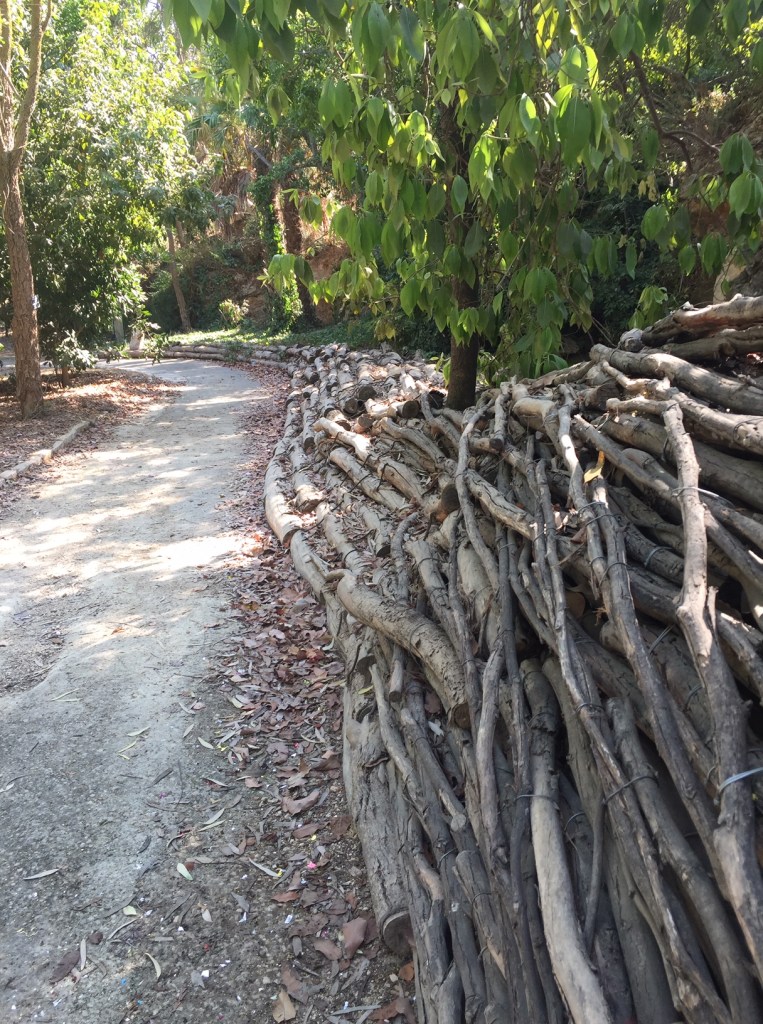
Before the davveners were out of musaf (the “additional” part of services), I had finished my meal and packed myself some water and a snack, and I set out over the hill and down the other side to go to the Botanical Garden. It was open today, although not staffed — there was one Palestinian or Israeli Arab manning the gate and taking the money. Not too many people go to the gardens on a major holiday, so I had a very nice few hours wandering around in relative solitude. It’s not the best season for the gardens — it will all really come alive once the rains arrive in October or November. Still, I took many pictures and saw lots of beautiful things, some of which I have posted through this piece and at the end.
I also saw a lot of birds. There were some warblers and other LBJs (little brown jobs) which I was unable to identify, but with the help of my trusty cellphone I did identify the following: Syrian Woodpecker (I also see him here on my phone pole — his call is exactly the same as our Red Bellied Woodpecker); Common Redstart (a completely different bird from our Redstart); Chukars (a kind of partridge, very beautiful); Eurasian Jays (also quite stunning); Palestinian Sunbirds (similar to hummingbirds but bigger — I see them here sometimes too); the familiar naturalized Ring Necked Parakeets, and also naturalized Myna Birds; the ubiquitous bulbuls, pigeons, and turtle doves; and, very startling, a European Oystercatcher wading in the lotus pool.
So — a sweet holiday all around. I know there are other things I’ve meant to write about — my tour of the Southern Excavations at the Temple Mount, and the second day of our Shabbaton in Ein Gedi — but they will have to wait for another day I guess. I wish that you may all be sealed for a good year — g’mar chatimah tovah!

 Nine months in Israel
L’Shana Tova Cantor Kate. Have been reading & enjoying all your colorfully expressed blog entries. Next best thing to actually being in Israel. We here have had a fine RH & look forward to YK. Shal-OM. SB Sent from my iPhone
>
LikeLike