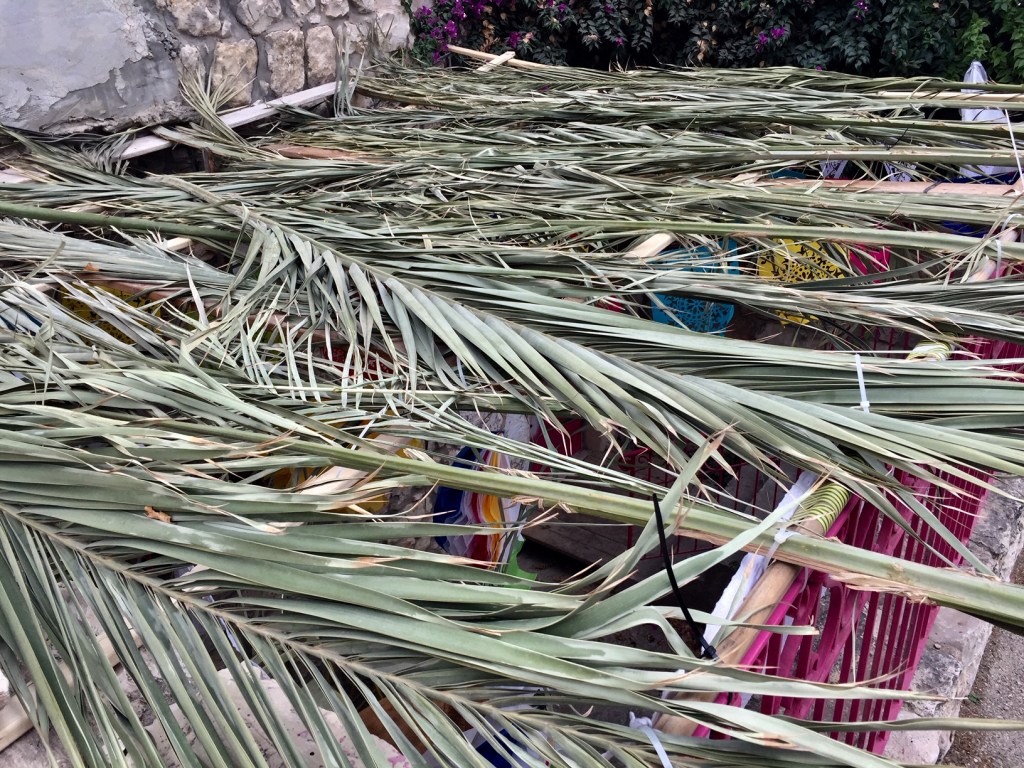
We learned in the mishna: This is the principle with regard to the roofing of a sukka: One may not roof the sukka with anything that is susceptible to ritual impurity or whose growth is not from the ground. The Gemara asks: From where are these matters with regard to the roofing of a sukka derived? Reish Lakish said that the verse states: “And there went up a mist from the earth, and watered the entire face of the ground” (Genesis 2:6); just as mist, i.e., a cloud, is a substance not capable of contracting ritual impurity, and its growth is from the ground, i.e., arises from the ground, so too, the roofing of the sukka must consist of a substance that is not susceptible to ritual impurity and its growth is from the ground. Since the mitzva of sukka evokes the clouds of glory with which God enveloped the Israelites in the desert, the legal status of roofing should be like that of a cloud. The Gemara asks: This works out well according to the one who said that the sukkot mentioned in the verse: “I made the children of Israel to reside in sukkot” (Leviticus 23:43), were clouds of glory, as it is reasonable that the roofing of the sukka is modeled after clouds. However, according to the one who said that the children of Israel established for themselves actual sukkot in the desert, and the sukkot of today commemorate those, what can be said? According to that opinion, there is no connection between a sukka and a cloud. As it is taught in a baraita that the verse states: “I made the children of Israel to reside in sukkot”; these booths were clouds of glory, this is the statement of Rabbi Eliezer. Rabbi Akiva says: They established for themselves actual sukkot. This works out well according to Rabbi Eliezer; however, according to Rabbi Akiva what can be said?
Talmud, Sukkot 14 and 15
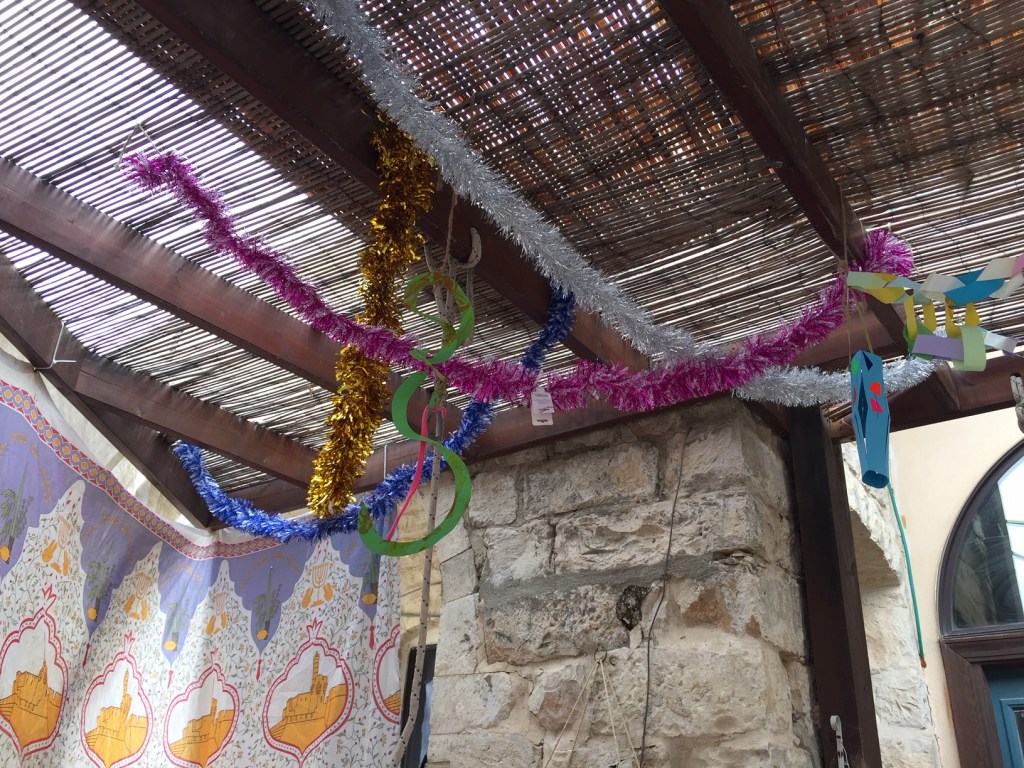
In the midst of the lengthy discussions about how to construct our sukkot (booths, huts)– measurements, materials, locations — as well as how to prepare and shake our four species (etrog — citron, hadas — myrtle, arava — willow, lulav — palm) — this intriguing paragraph appears. Remember, anything that is not in bold type is not in the original, so you can see it is quite open to interpretation. And as far as I can see, the question raised at the end — “According to Rabbi Akiva, what can be said?”– is not adequately answered.
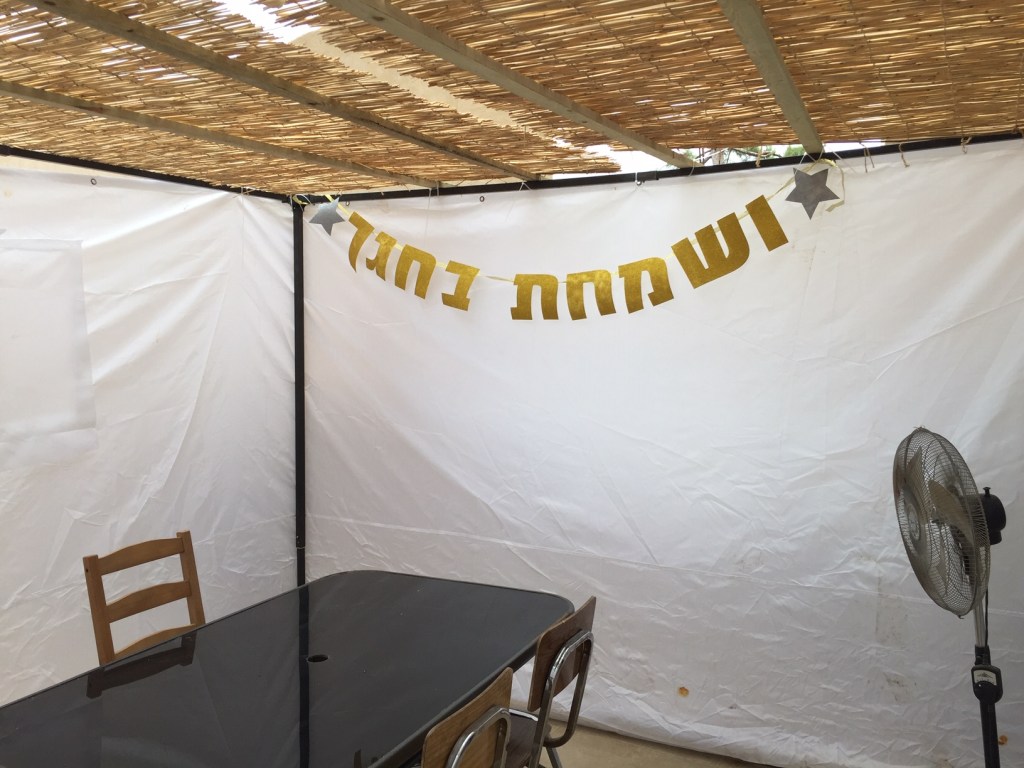
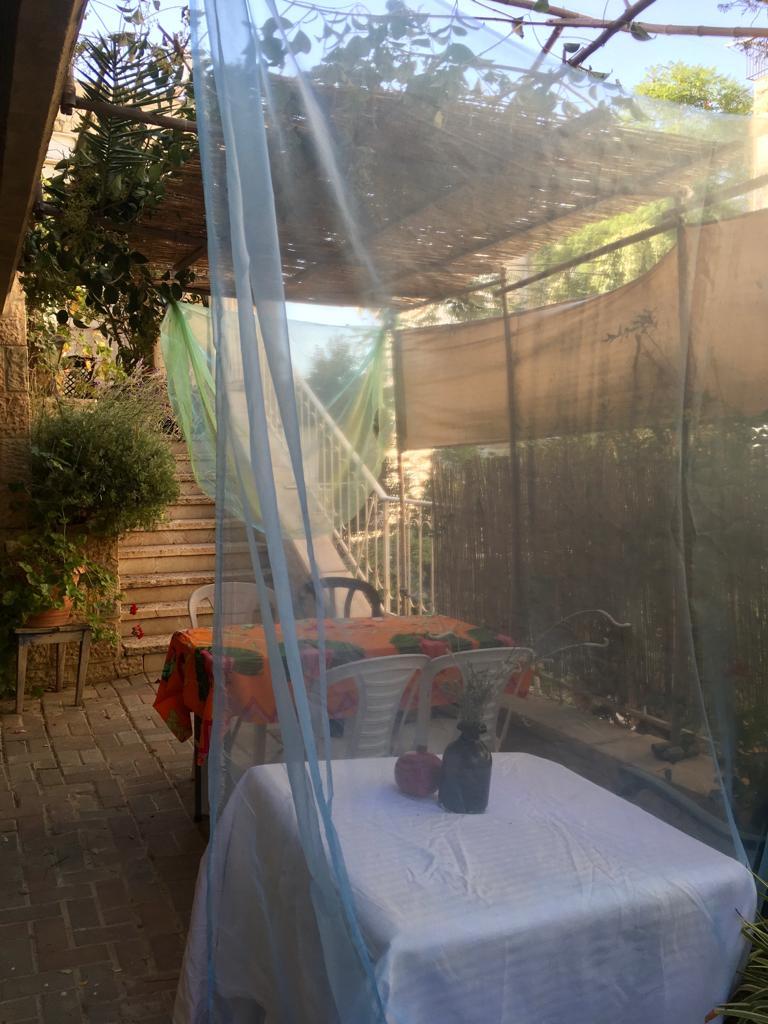
Here I sit on Chol HaMoed Sukkot — one of the intermediate days of Sukkot — not in the sukkah because there is a ferocious wind/ rain storm outside. Schach — the plant material that roofs a sukkah — is not impervious to rain; indeed, it would not be kosher if it were. The whole point of sukkot is that they are fragile. Rabbi Lord Jonathan Sacks, one of the great modern exponents of observant Judaism, writes, “Sukkot is the festival of insecurity.” He prefaces this by observing, “Sukkot, [is] a metaphor for the Jewish condition not only during the forty years in the desert but also the almost 2,000 years spent in exile and dispersion. For centuries Jews lived, not knowing whether the place in which they lived would prove to be a mere temporary dwelling.”
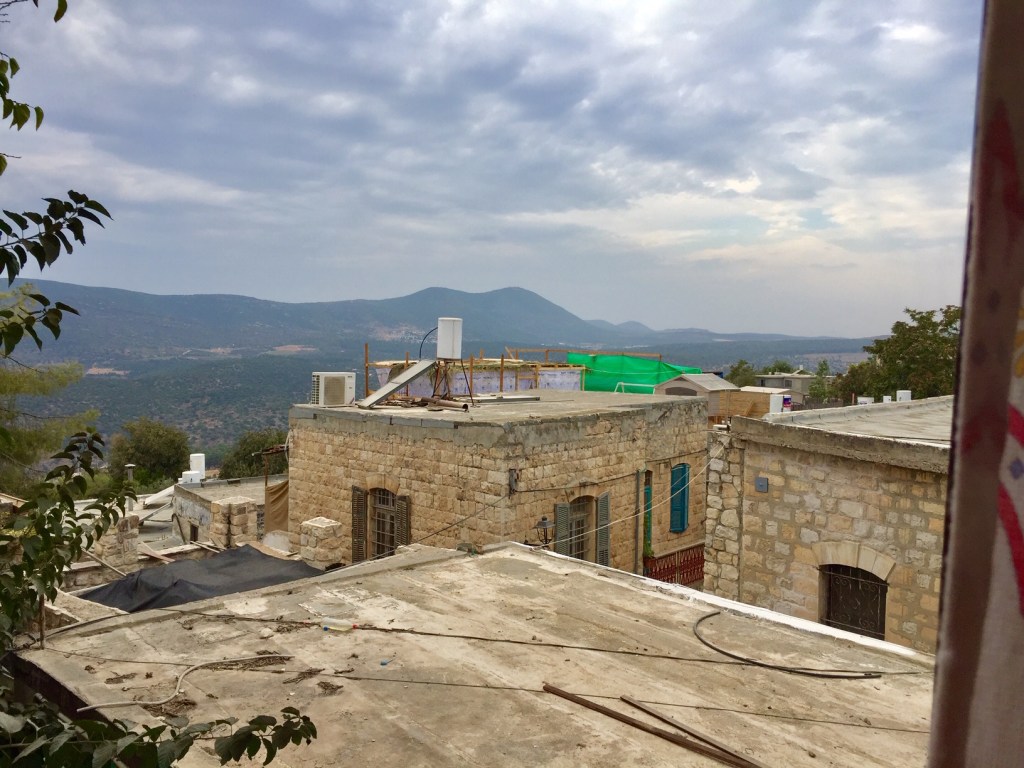
But if we were protected, not but sukkot mamash, actual sukkahs, but rather by ananei kavod, clouds of glory — would rain still fall in our soup? Or indeed, are the clouds of glory not so metaphorical either, but the long waited for rain clouds than begin at this time of year? On the “Secret Jerusalem” Facebook page someone posted, after a recent storm in that city, “All right? Who said T’filat Geshem?!” As she then explained , this is the prayer for rain — geshem — that we say/sing annually on Sh’mini Atzeret, the eighth day of Sukkot — so it’s not time to say it yet! And yet — here is the blessed, blissful rain, bringing up the sweet smell of damp stone and settled dust.
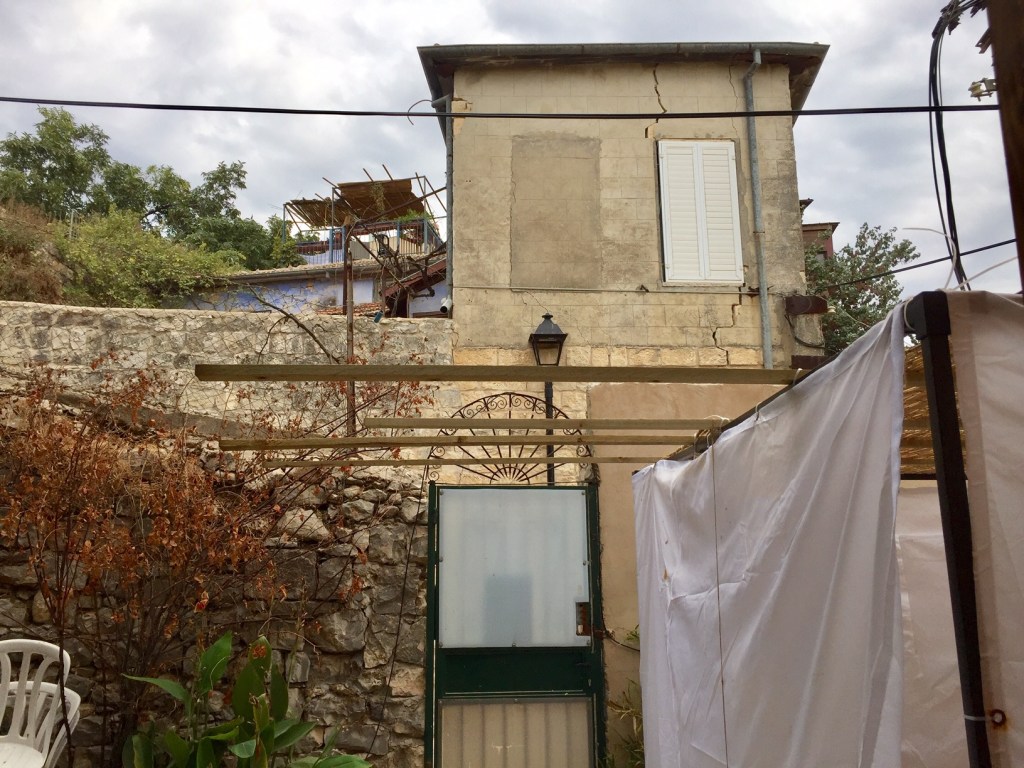
Rabbi Sacks writes, “What is truly remarkable is that [Sukkot] is called, by tradition, zeman simchatenu, ‘our time of joy.’ That to me is the wonder at the heart of the Jewish experience: that Jews throughout the ages were able to experience risk and uncertainty at every level of their existence and yet – while they sat betzila de-mehemnuta, “under the shadow of faith” (Zohar, Emor, 103a) – they were able to rejoice. That is spiritual courage of a high order. I have often argued that faith is not certainty: faith is the courage to live with uncertainty. That is what Sukkot represents if what we celebrate is sukkot mammash, not the clouds of glory but the vulnerability of actual huts, open to the wind, the rain and the cold.”
Today I read of another English rabbi, Jeffrey Newman, who was arrested while protesting with Extinction Rebellion in London. He was leading everyone in Sukkot prayer, holding his lulav and etrog. This beautiful and necessary rain storm outside my hostess’s windows is possibly also a bit aberrant, earlier and heavier than usual, quite probably influenced by global climate change. We all need Rabbi Sack’s “spiritual courage” now — “the courage to live with uncertainty”. Daily in our prayers we ask God to protect us from the destruction we ourselves have wrought: ufros aleinu sukkat sh’lomecha, spread over us the sukkah of your peace. I recently read a poetic description of the sky as kippat shamayim, the kippah, or scull cap, of the skies. But for me when I look up, whether into clouds or blue, I see sukkat shamayim — the fragile hut of the heavens.
Outside the thunder rumbles. On the beach in Ashkelon three hours ago, five people were injured by lightning, three of them severely (may they be completely healed!). Still, the plants turn their faces up to the rain, welcoming every drop. Moment by moment, we rejoice in all the abundant gifts we have to rejoice in, and then, we must join Rabbi Newman in the streets.
 Nine months in Israel