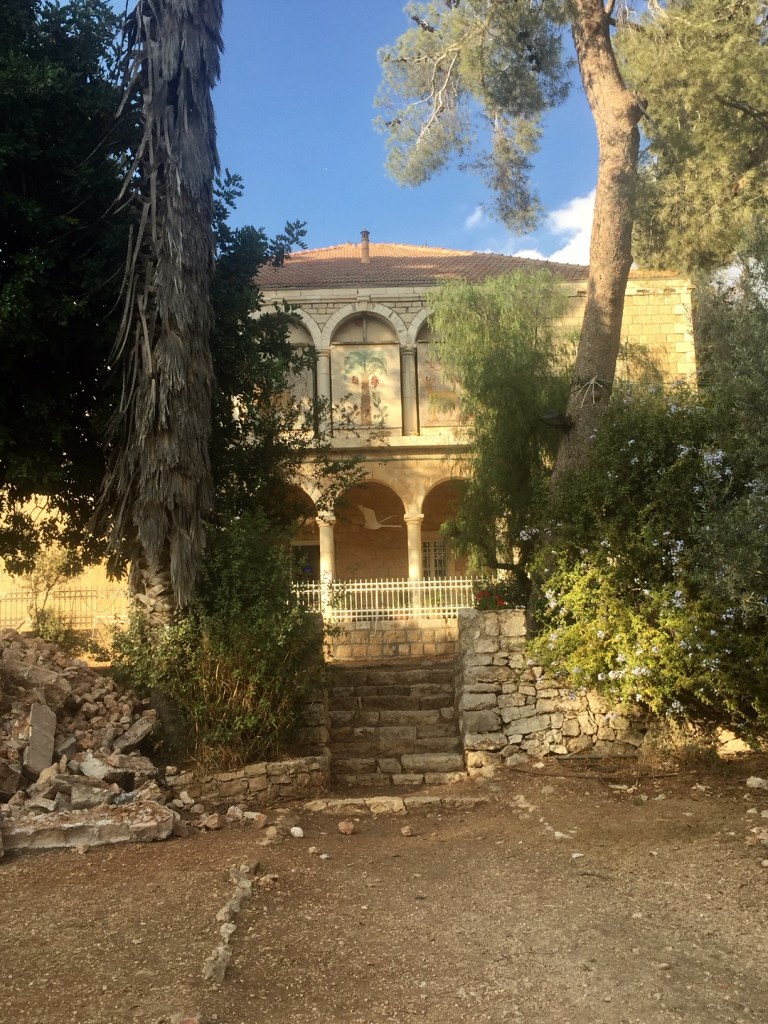
There’s so much I’ve promised to share with you: my Simchat Torah experiences, my trip to Tzfat and visit with the family, the totally fascinating twelve hour tiyyul to the periferia… And yet, today I just have to tell you about today, because it was a good one!
To begin with, it’s fall now for real, and the weather is delightful. It’s cool at night — under 60 degrees Fahrenheit — so I can leave my window open and not run the fan all night. The flea situation is coming increasingly under control, so I can sleep in peace, too! This morning when I left the apartment I was wearing long sleeves and a shawl. It was partly cloudy but there was some sun, there was a breeze but not too strong, it was cool but not cold — perfect!
It was our second day back at school after the long break. It felt good to be going to class. My first class was Gemara with Leah. We started a new section: Seder Nezikin (Damages), Tractate Bava Kama, Chapter 8. I don’t have a regular chevruta in Leah’s class — it’s been something of a sore subject, as the person who started out as my regular study partner ditched me — but today I sat in with two really nice people and we had an excellent study session. We were mostly reading p’sukim (verses) from the Torah, which is much easier than reading Talmud, although we did also start the Mishna that opens our chapter. Anyway, I felt my translation skills were better than usual, and I wasn’t holding anyone back. We were reading about what the Torah specifies as punishment or restitution for causing bodily harm. You know the passages, I’m sure — if you kill someone, mot yumat, you should be put to death, and then famous bits about “an eye for an eye, a tooth for a tooth” etc etc. Of course, the rabbis of the Talmud completely reworked all of this, so that what seems like the plain (not very pleasant) retributive justice of the Torah becomes a system of monetary compensation. It promises to be an interesting topic of study.
My next class was a bit of a bore — it always is, it’s in lecture format and teacher doesn’t ever being an historical perspective to the Bible, but talks about it as if it all could have — and probably did – really happen. But it wasn’t terrible –we had a couple of interesting discussions. Then it was time for our Thursday “Take 5”, where any member of the Pardes community can speak for five minutes on a topic of their choosing. It was the birthday of my young friend Mimi, who comes from Amherst, Mass.. She spoke a little about her birthday, and then about Lilith, who is a Jewish mythological figure with whom she feels a deep connection. (For more about Lilith, see here: https://www.myjewishlearning.com/article/lilith-lady-flying-in-darkness/ ) Mimi read us two really beautiful (and learned) poems about Lilith, which I will try to get and share soon. Then we davenned Mincha, and then we had a tasty Thursday community lunch.
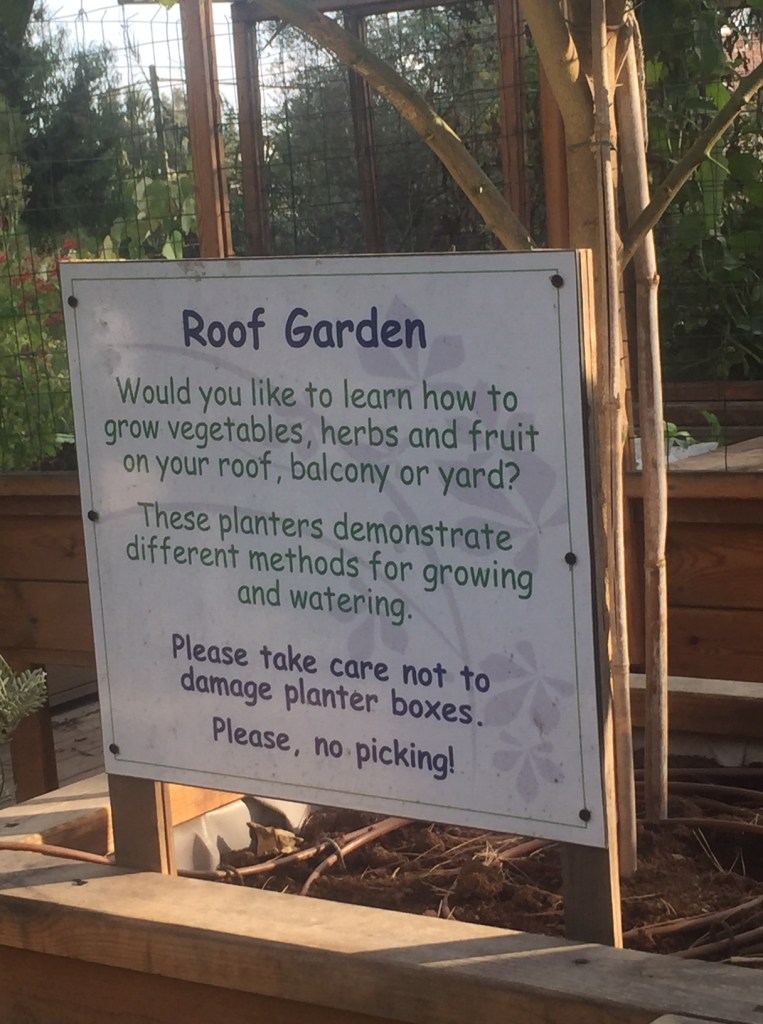
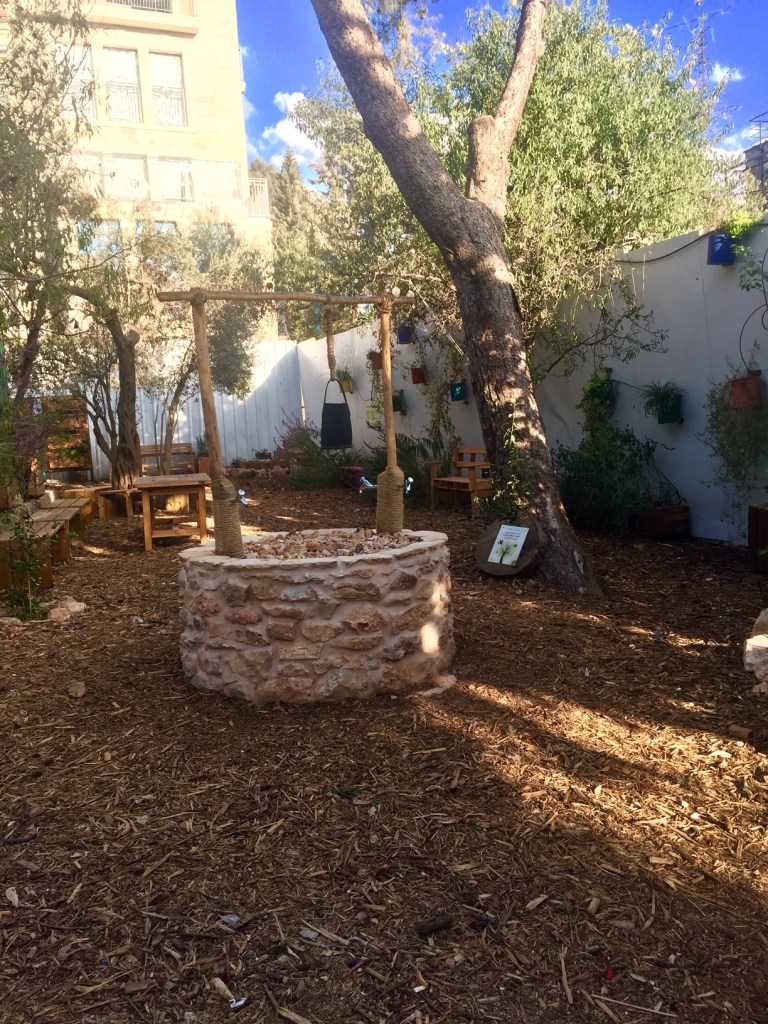
Then came the best parts of the day. I went for the first time to volunteer at the Community Garden. There are many, many community gardens in Jerusalem, each supported in some degree by the municipality. (Numbers differ, but here is a site that supposedly lists them all: http://greenmap.org.il/places?nid=1&catid=17&lang=en&page=4). The largest is the one in front of the Natural History Museum — a fusty collection of old taxidermy that is housed in a beautiful old farm villa on a large piece of land in the German Colony. (Here is more info about the garden: https://batim.itraveljerusalem.com/tour/%D7%94%D7%92%D7%99%D7%A0%D7%94-%D7%94%D7%A7%D7%94%D7%99%D7%9C%D7%AA%D7%99%D7%AA-%D7%91%D7%9E%D7%95%D7%96%D7%99%D7%90%D7%95%D7%9F-%D7%94%D7%98%D7%91%D7%A2/?lang=en)
The community heard that there might be plans to build on the land around the museum, and so people gathered together and began making a beautiful garden, in hopes that this would prevent development. It seems so far to have been successful. The garden is large, well designed, and a lovely place to visit, and the city seems to be more or less in support of it. The Museum doesn’t pay any attention to the garden nor does it offer any programs with it (because this is Israel), but in fact, the garden draws many more visitors to the museum than would otherwise come to see an outdated exhibit.
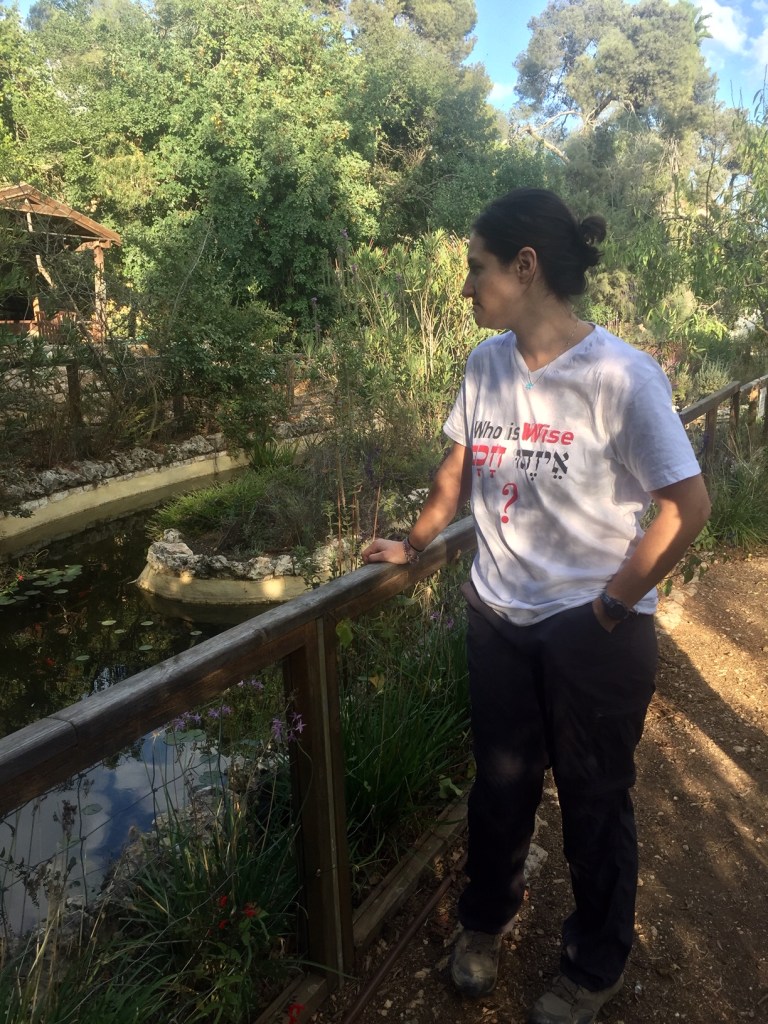
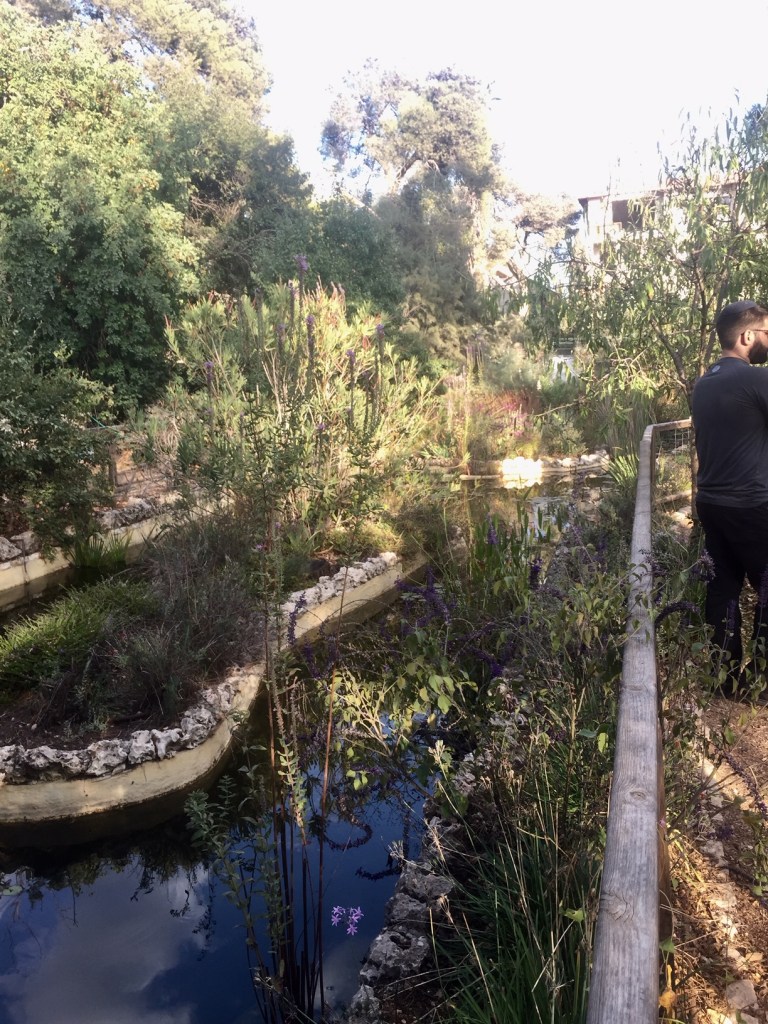
We were given a tour by my landlady, Jill, who happens to be one of the coordinators of the garden. Then we four Pardes volunteers, along with the rest of the people who volunteer at the garden, were put to work loosening the hard dry soil and planting the tiny corms of species freesias. It was a lovely afternoon, the gardens are beautiful, and the people who work there are friendly. And what bliss it was to do a little work in the dirt!
Then I walked through the German Colony to the bus, and traveled back to near Pardes for my first ulpan — Hebrew language class. To my surprise, there were two other Pardes students in the class, as well as two other people. The teacher is a young woman of 28 who is studying to be an audiologist and speech therapist. The lessons have a formula based on the Pimsleur method of teaching language. At first I was skeptical, but as the class went on, I saw that indeed I was learning Hebrew in a kind of organic way. There is a grammar element, but it is mostly about speaking. It was really a fun class.
I left feeling energized about my Hebrew learning again. On my way home I got to thinking about a new word I had hear in class — ofanayyim. An ofanayyim is a bicycle. But it’s in the plural — like the word for sky or heaven, shamayyim. So what is an ofen? I remembered that I had learned on Duolingo the term b’ofen clalli, meaning “usually”. Ofen is a way — you could say b’ofen clalli translates literally to “in a usual way”. So a bicycle is literally a “ways”.
Thanks for sharing this wonderful day with me! I’ll get on with the other topics soon!

 Nine months in Israel
I loved reading about your fun day. May you have many more!
LikeLike