Our guide for the day, Ali, was voluble. Indeed, when he stopped lecturing us in English, he switched to lecturing the driver in Arabic. He announced that he would give us some background about Jordan as a country, and tell us a little bit about Aqaba, and would then let us have some quiet until we got closer to Petra.
Aqaba, he told us, is a growing city, despite being closed in by a ring of mountains. Tourism continues to grow in the area. The climate is pleasant. Some light industry is also beginning to happen here. King Abdullah (from whom, weirdly, I have only two degrees of separation — more on that in a bit) has a vacation home on the waterfront, not far from our hotel.
We left Aqaba and began our ascent into the mountains. As we had come south in Israel to get to Eilat, one of the two only entry points into Jordan for Israelis, we now crossed the mountain range that flanks the Jordan valley on the east and drove north on the other side of the mountains. The land quickly became bare and dry and empty. Here and there we passed small villages and tourist outposts. Sometimes we saw small farms, or farmers at the side of the road with boxes of tomatoes. Large trucks passed us continually, heading north to the big cities of Jordan.
After about an hour and a half we turned off the main highway onto a small winding road. Here we were surprised to see snow on the ground. Our guide explained that only a few days before the road to Petra had been closed, as there was a significant snowfall. This is not uncommon up in the mountains, he told us. We did stop so I don’t have photos, but an image that stays in my mind is a snow man someone had built, which was wearing Arab robes and keffiyeh.
After some time we stopped at a tourist shop. We were invited to use the bathrooms and get coffee if we wished. The shop was gloomy and cold, and its wares, like most of what we saw for sale in Jordan, gave the impression that they might have been made in China or India. Nonetheless, when I glanced at some scarves a young man informed me that they were made of “pure silk and camel wool”.
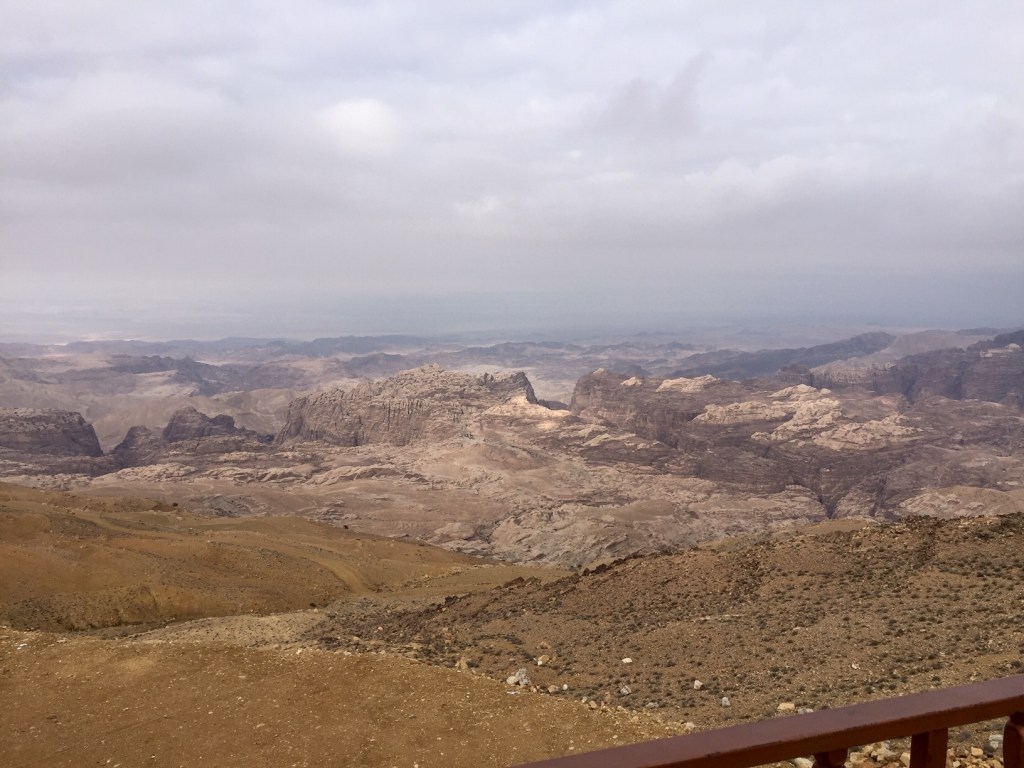
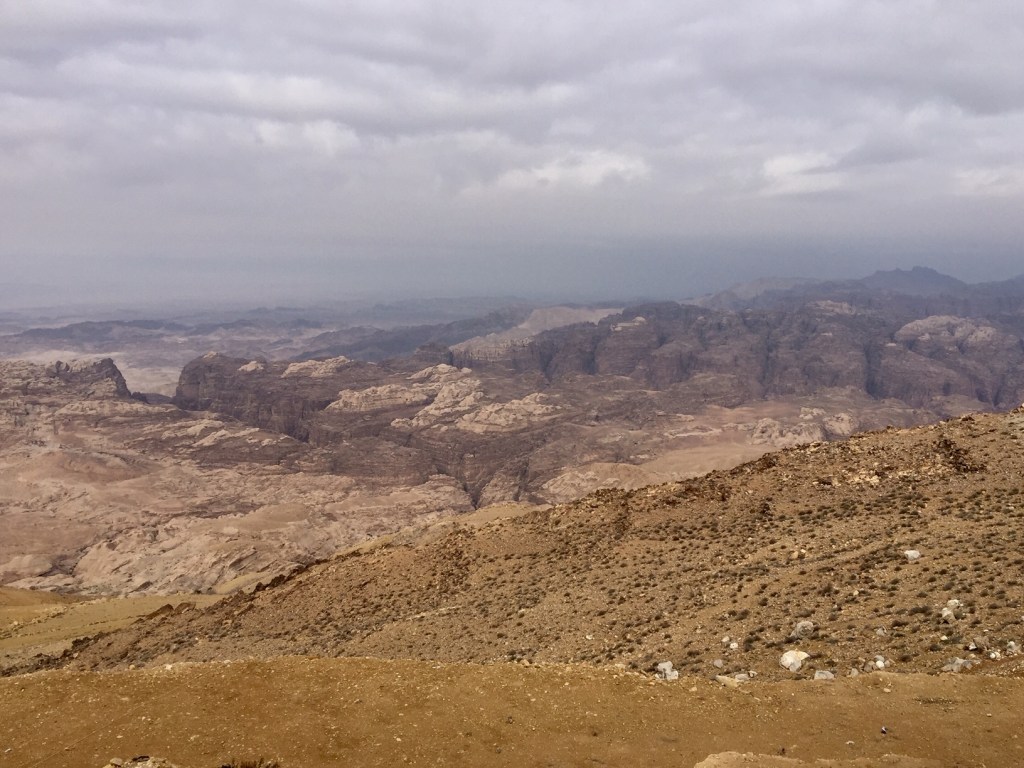
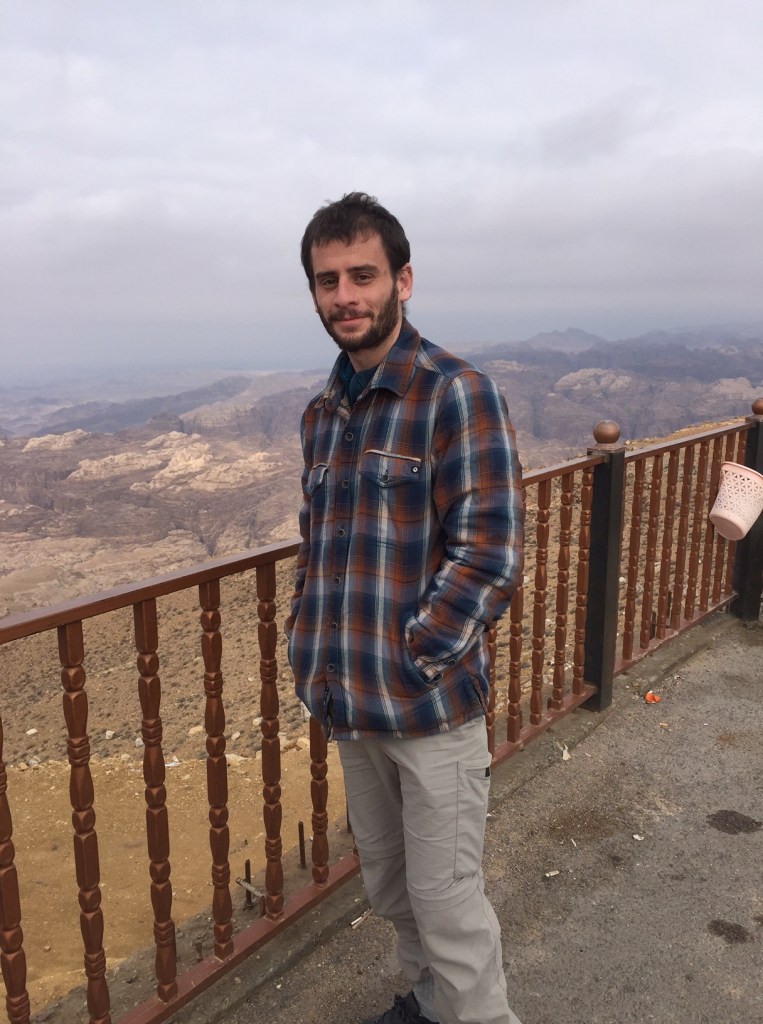
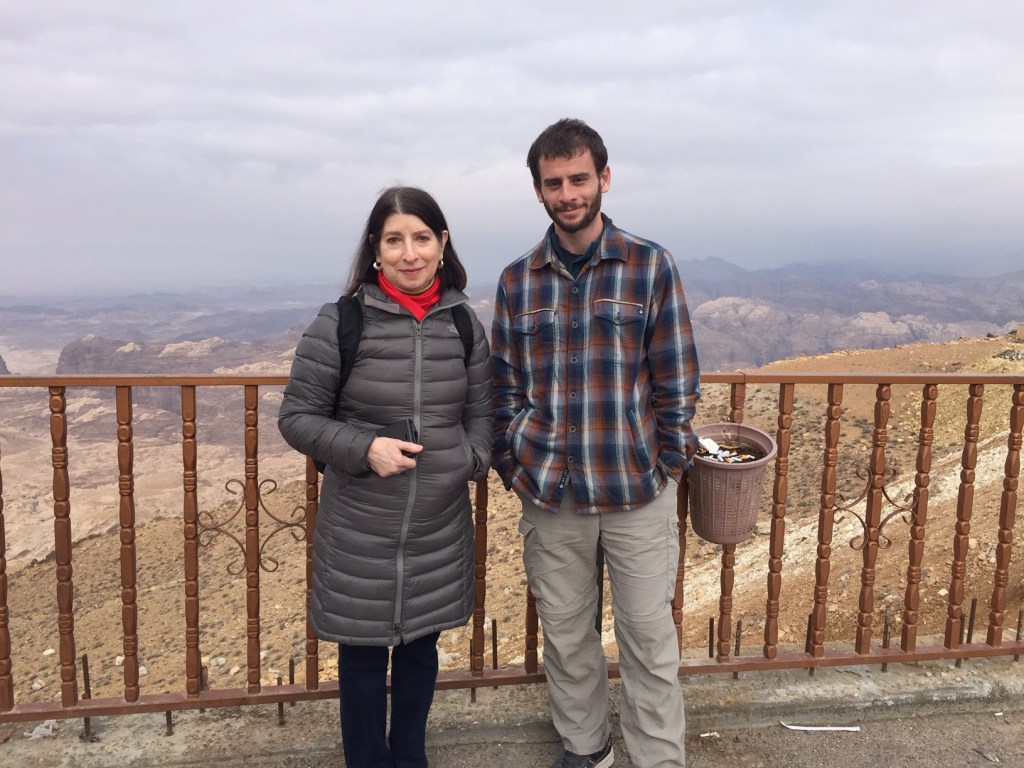
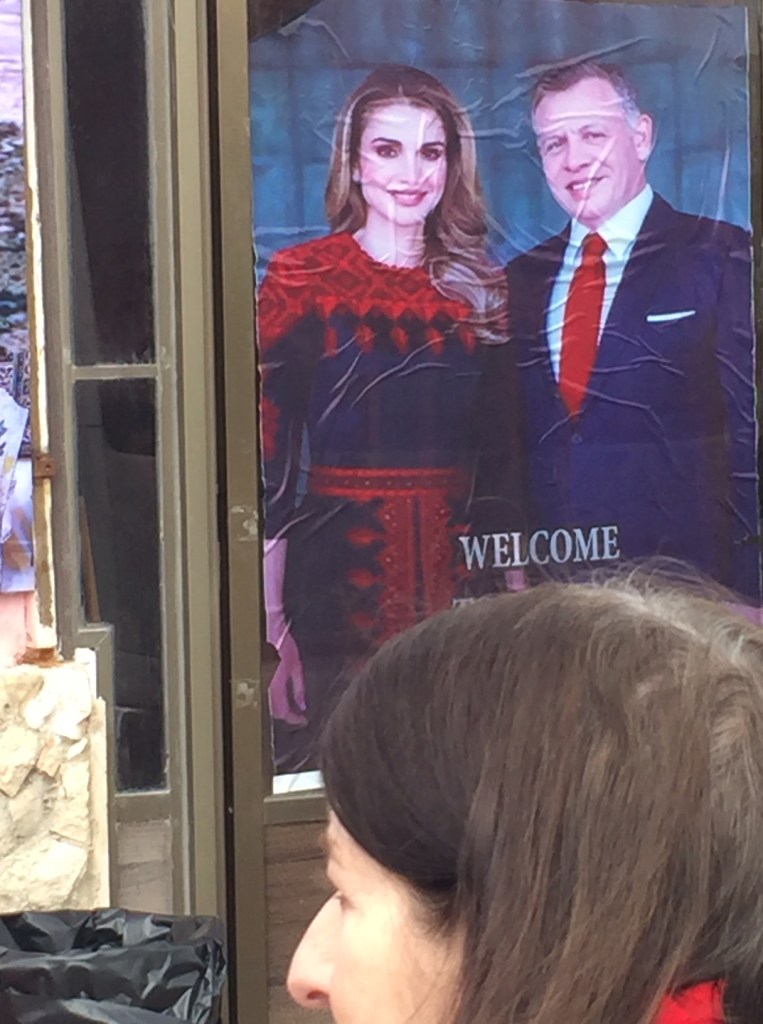
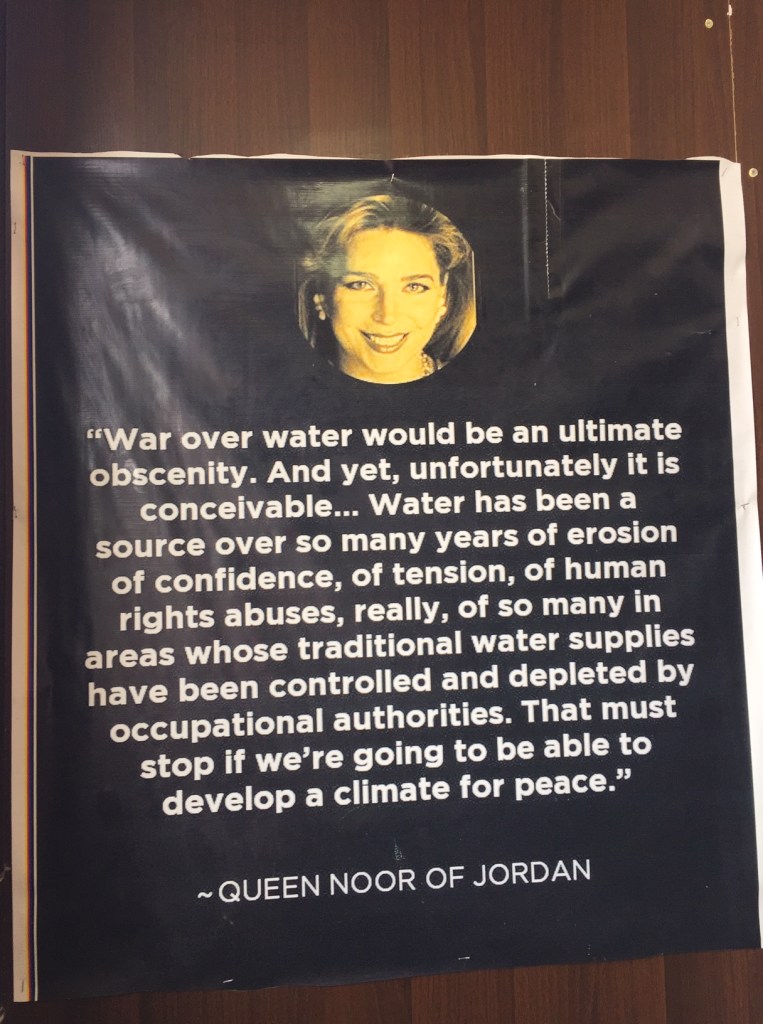
This is the view from the parking lot of the gift shop.From the roof of the little gift shop the desert appears even more vast.HagaiDeborah and HagaiOutside the shop, King Abdullah and Queen Rania welcome guestsInside the shop, the Queen Mother — Queen Noor, wife of the late King Hussein — tells us something important but also a bit pointed. Jordan and Israel have struggled over the rights to the Jordan river water for years. Fortunately, Israel now has desalinization plants working very successfully. Jordan does not, however, according to our guide, and has been suffering from a severe drought. They are tapping out their aquifers and running very low on water. Here is an extremely interesting article on water relations with Israel and Jordan — it’s long, but even if you skim it you will learn a lot: https://www.timesofisrael.com/sinking-israel-jordan-relations-leave-dead-sea-a-natural-wonder-low-and-dry/
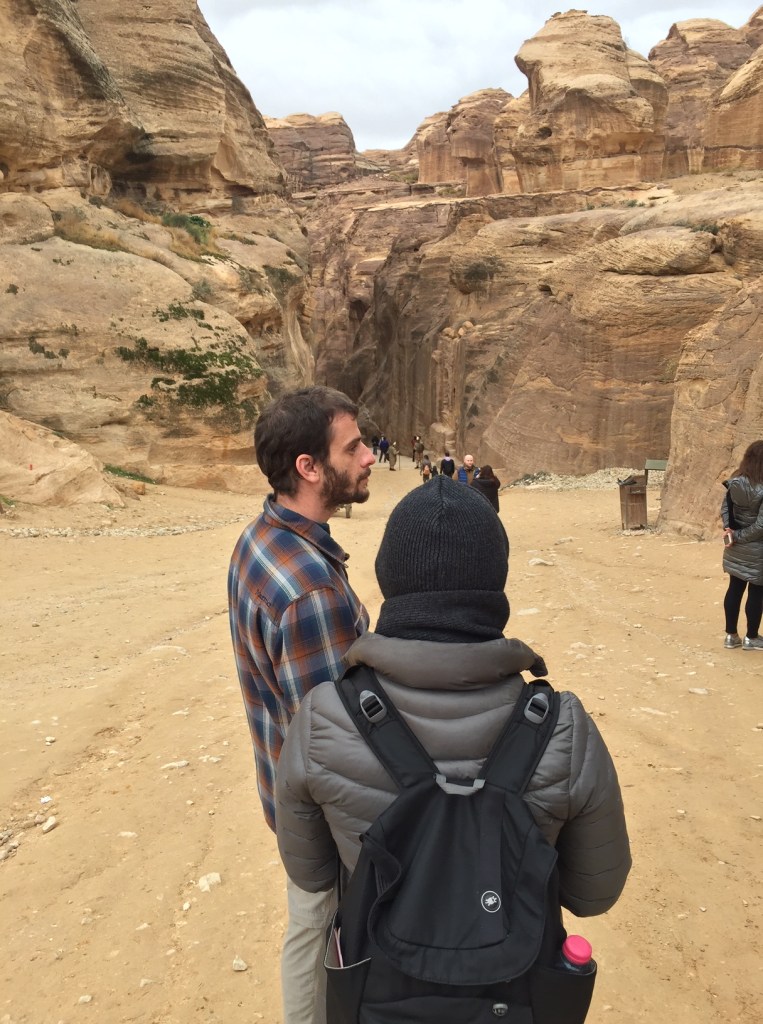
Ali purchased our tickets at the Visitor Center. He explained that he would guide us down, and then we would have lunch at the restaurant at the bottom of the site, and have the rest of the afternoon to wander the site, returning to the top of it in the late afternoon. He also told us that we could, if we wished, take either a horse, donkey, camel, or cart to ride back up — or to ride down, although he did not recommend the latter. I had been advised by the Israeli tour company not to take any such rides, which are expensive, jolting, and not kind to the animals.
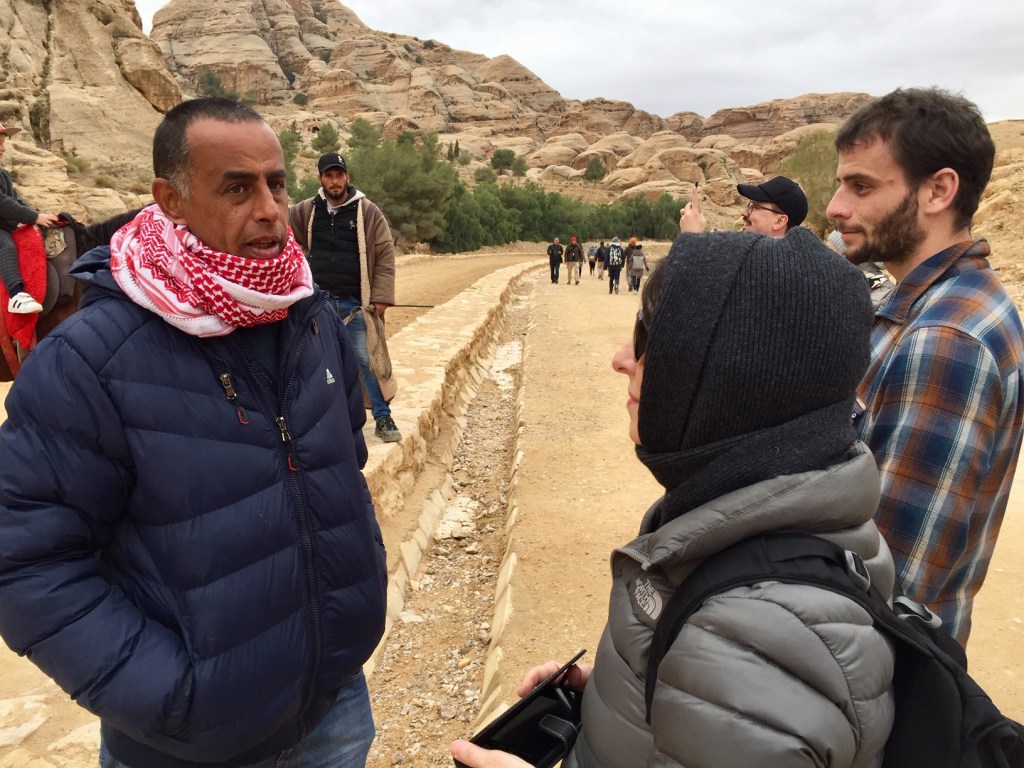
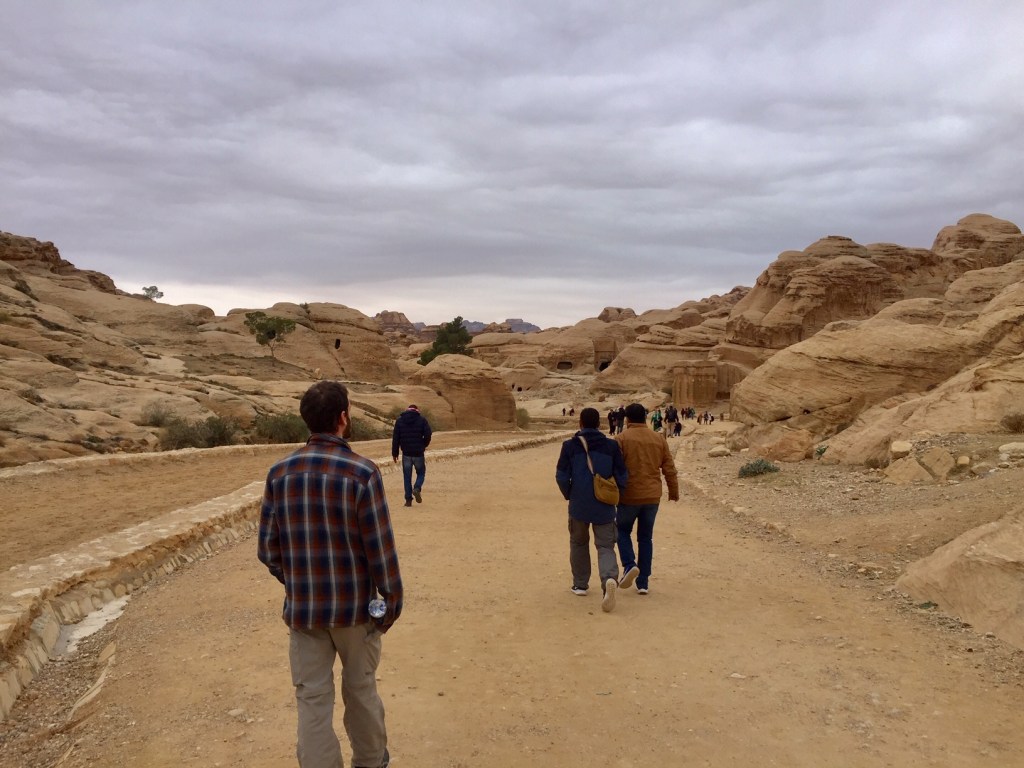
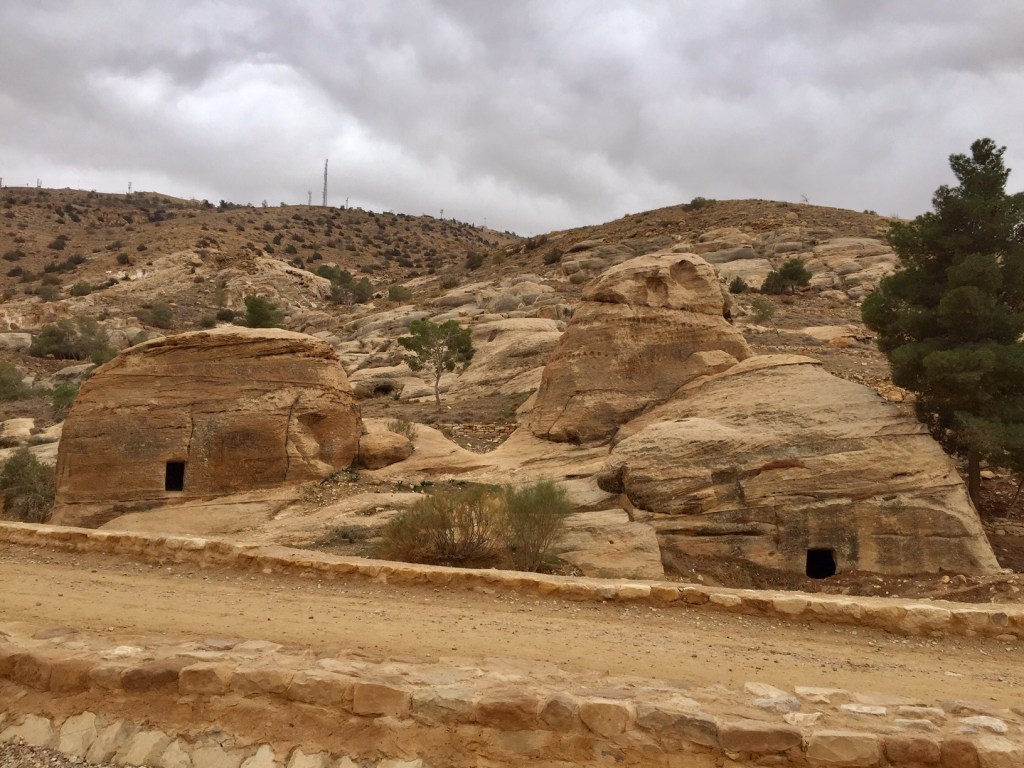
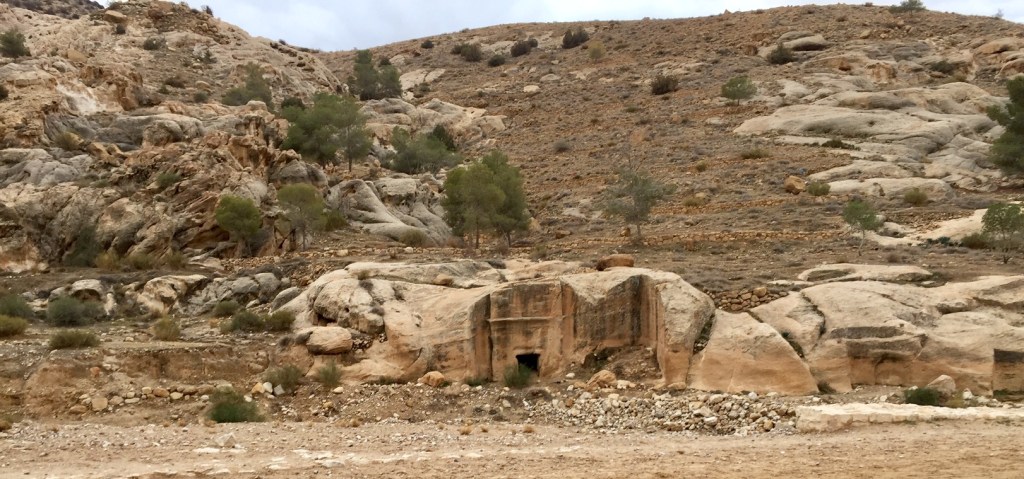
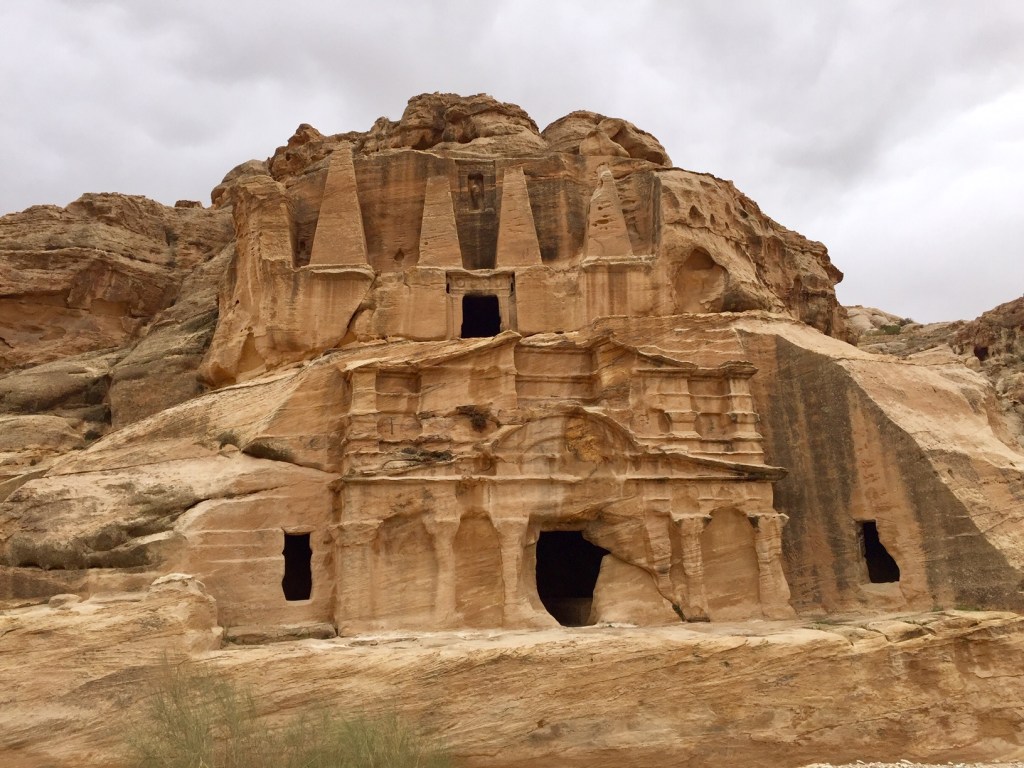
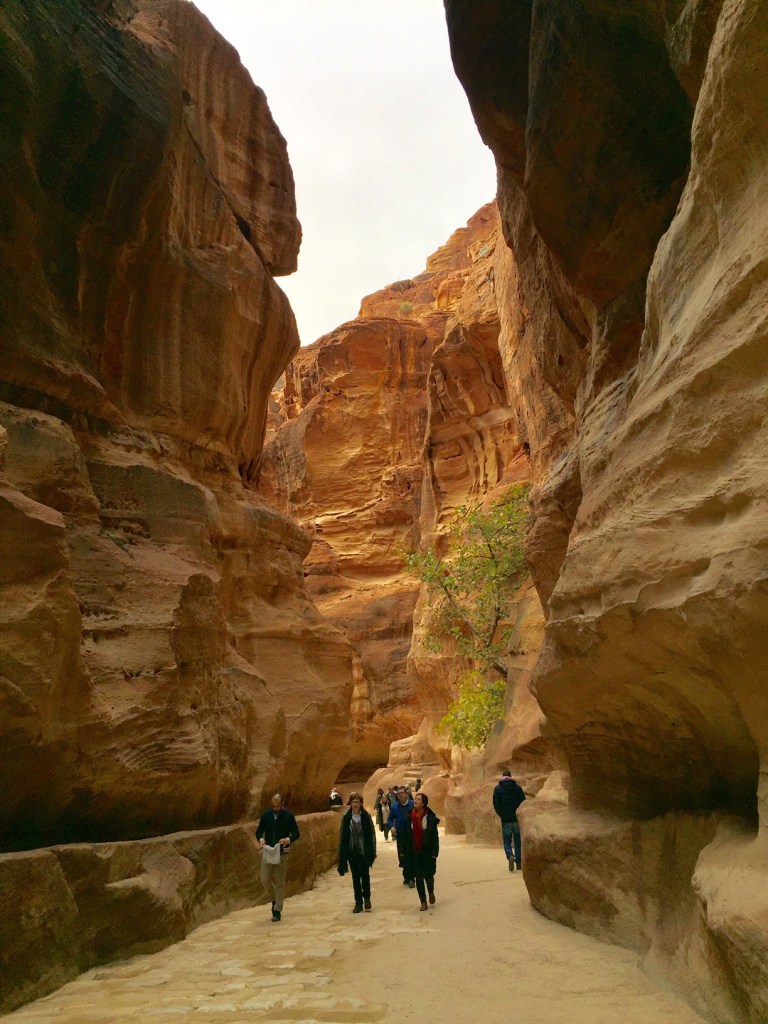
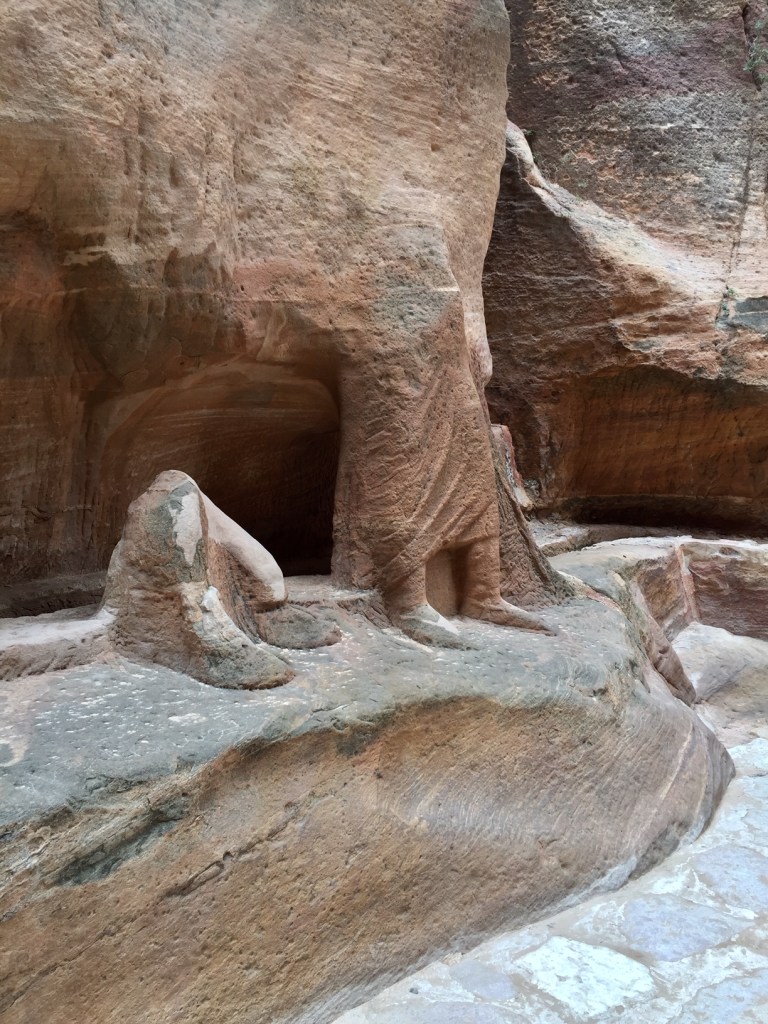
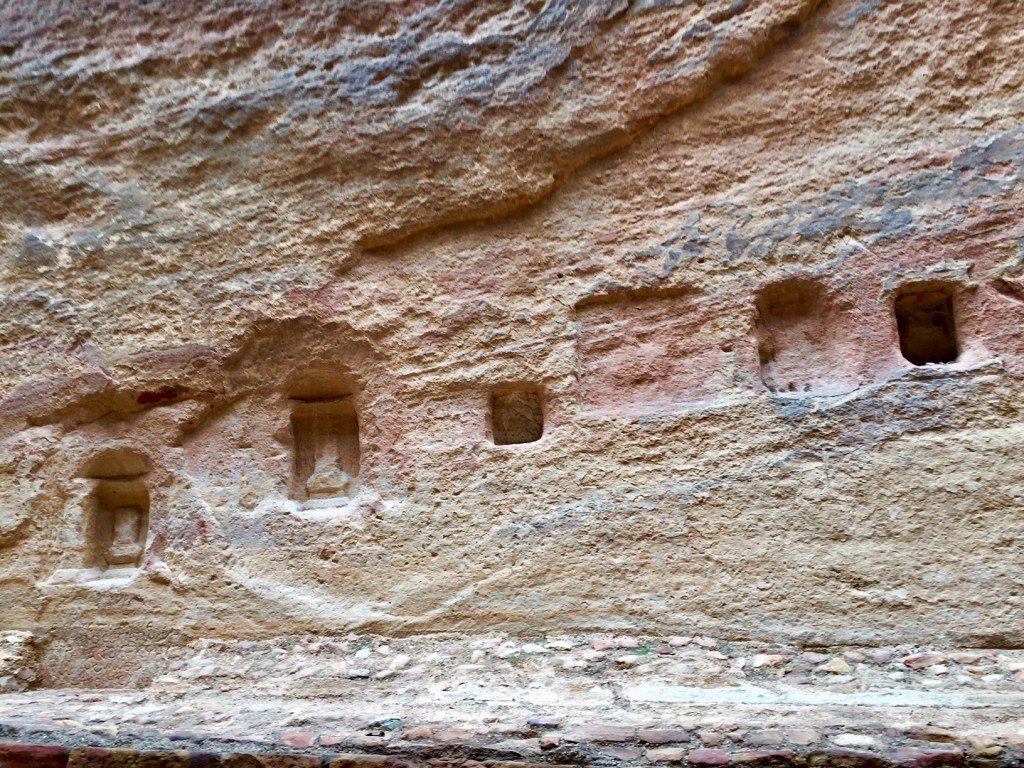
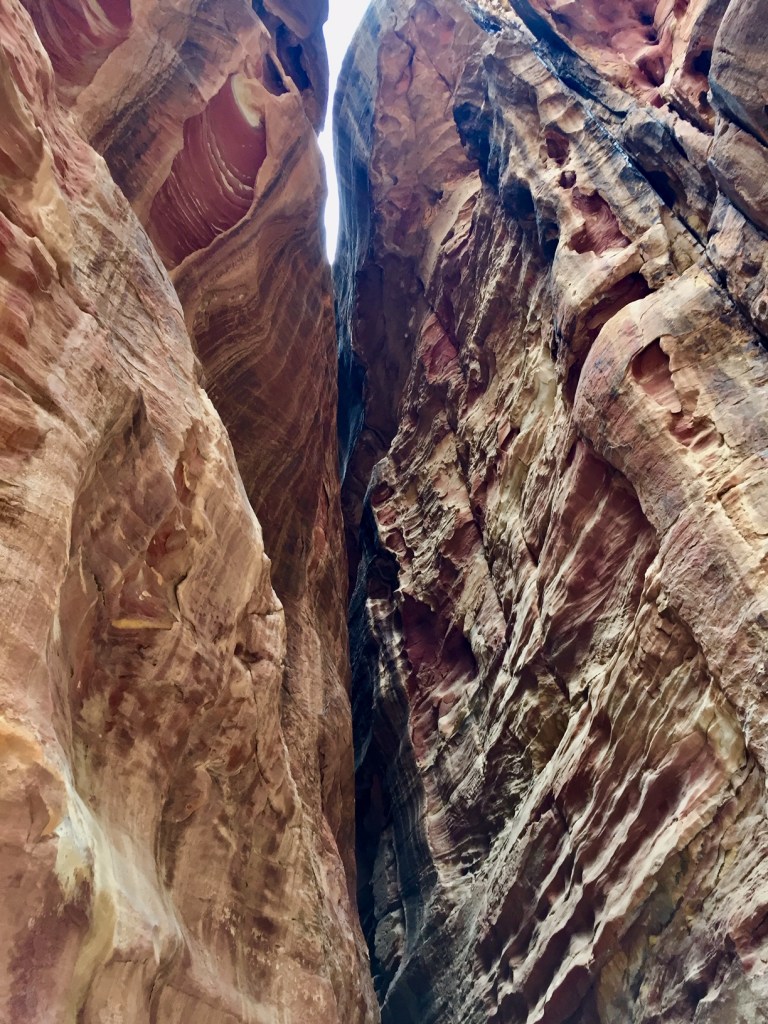
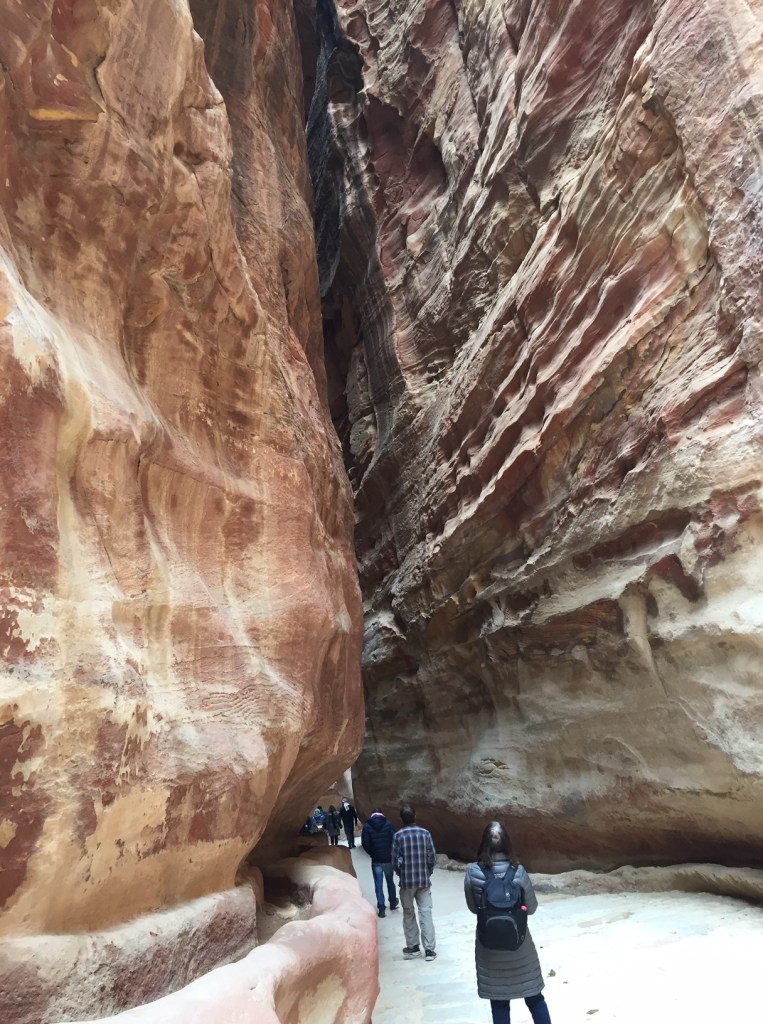
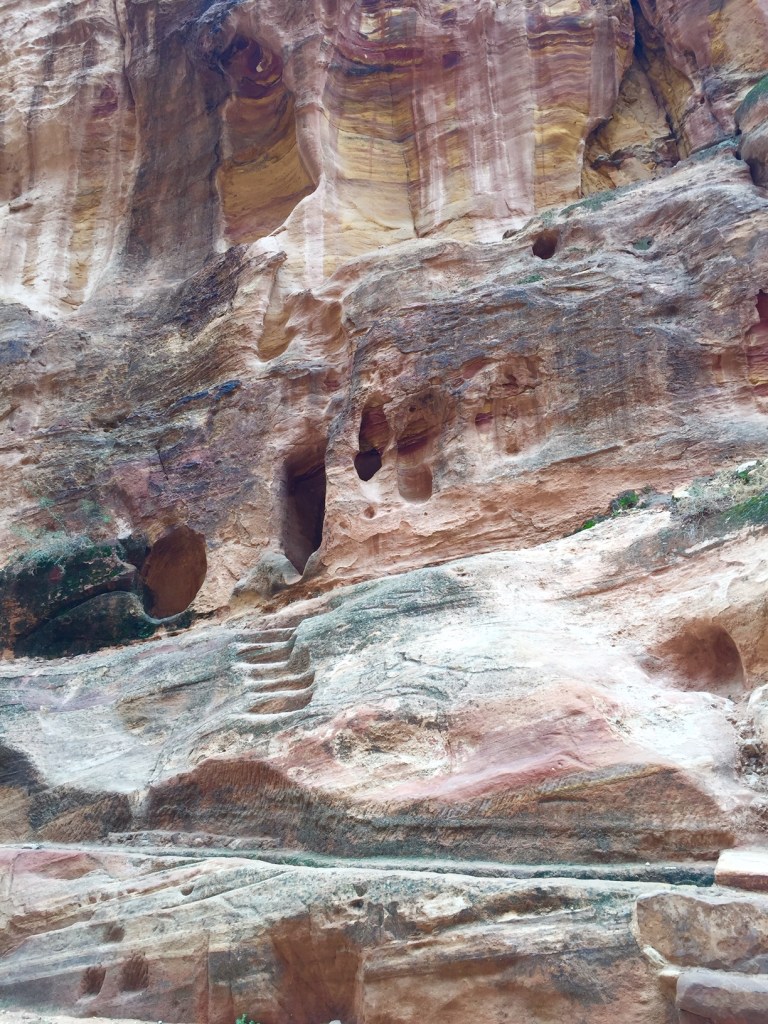
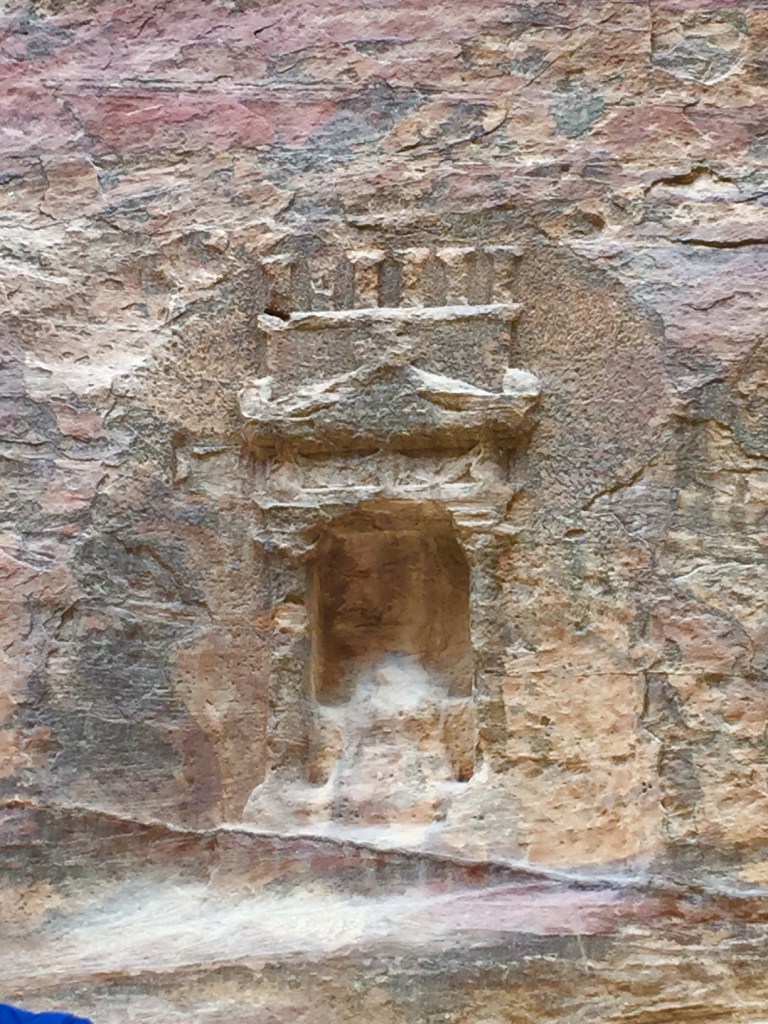
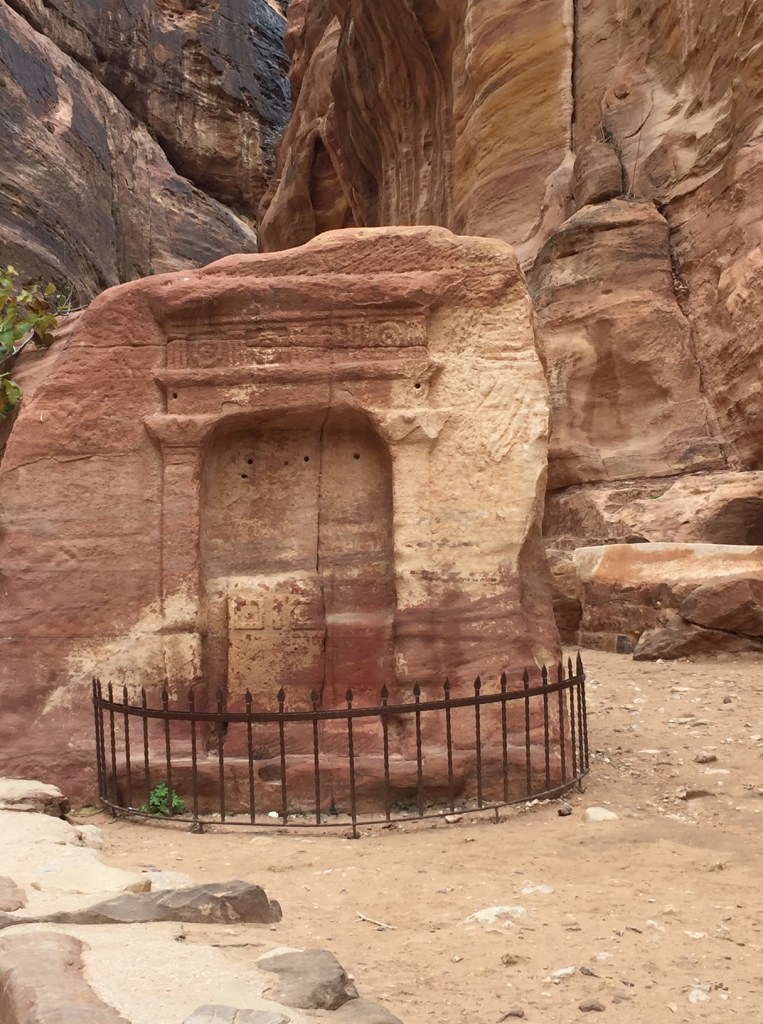
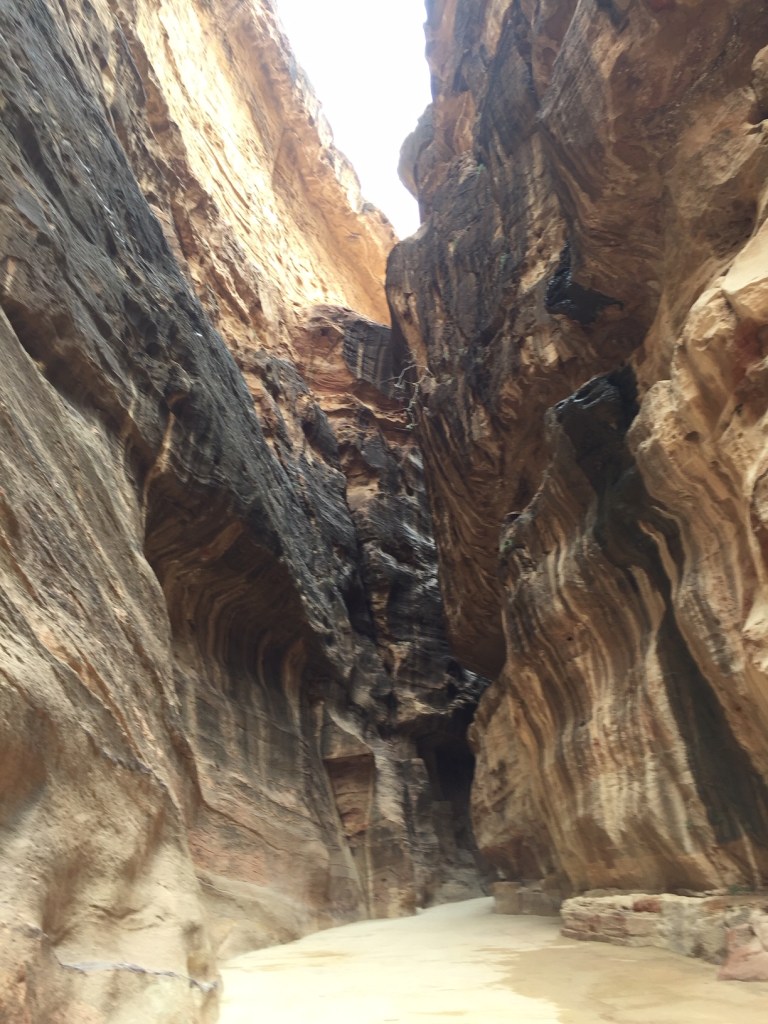
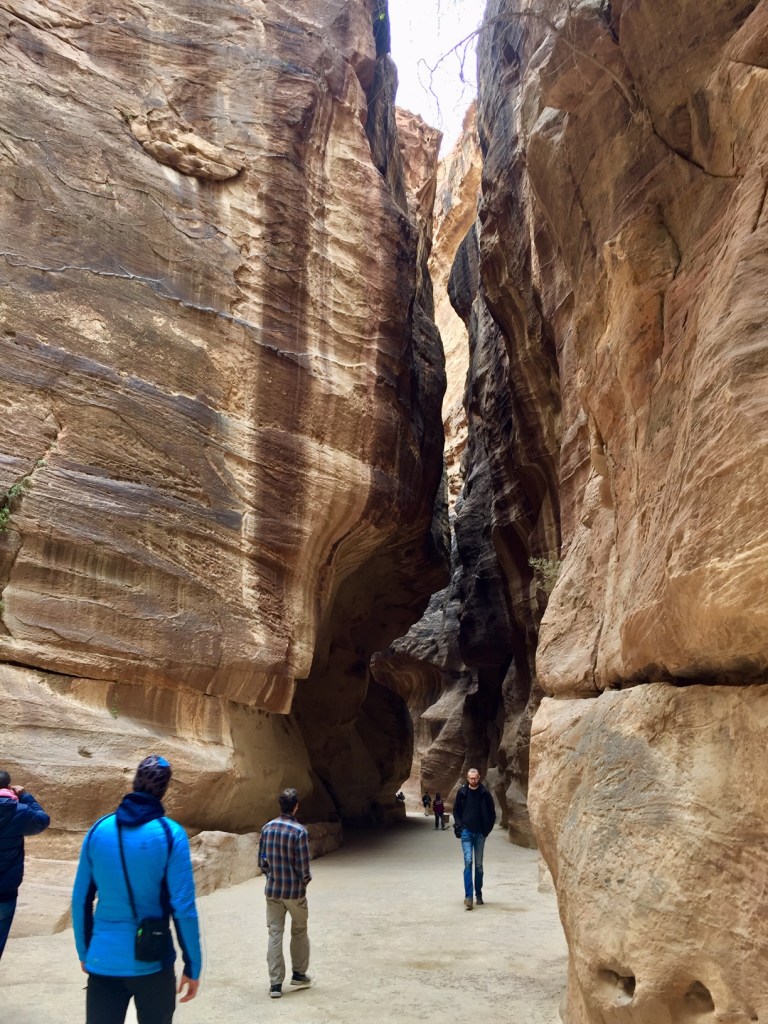
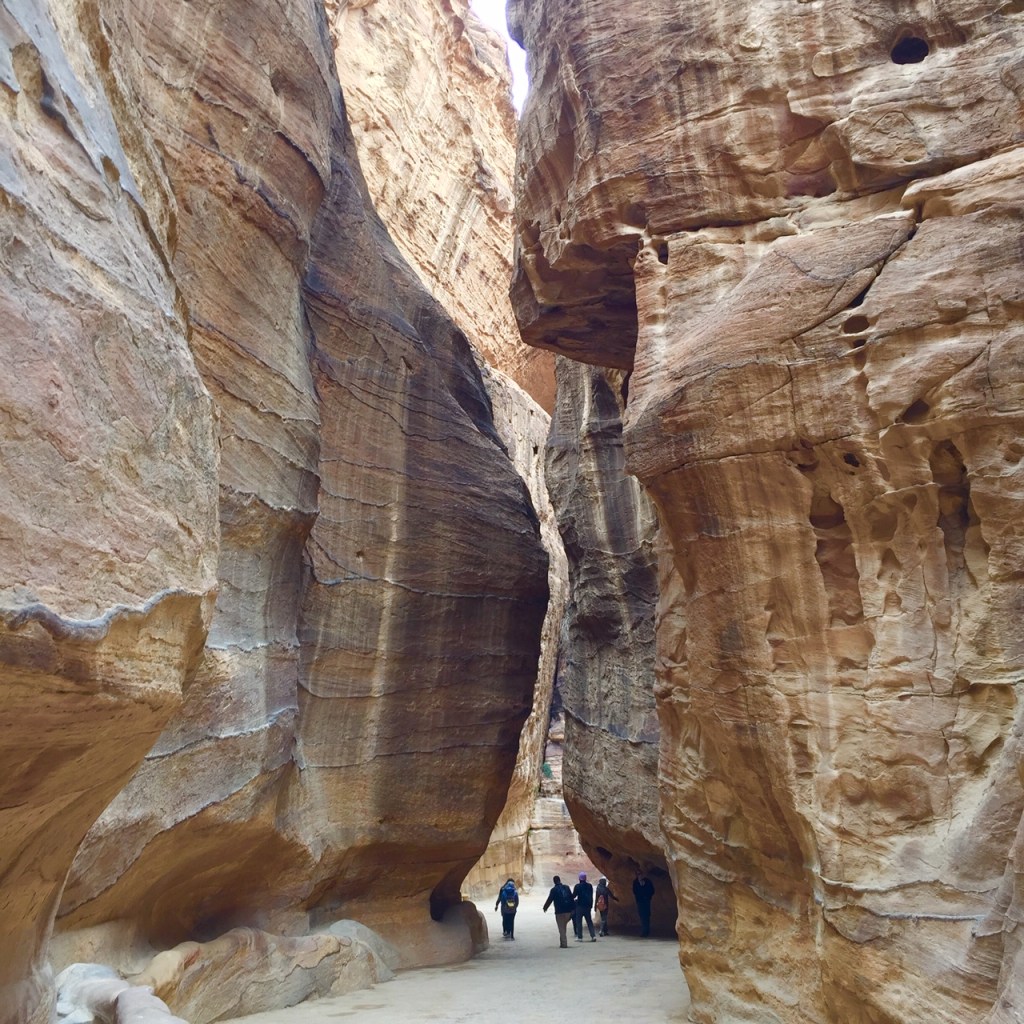
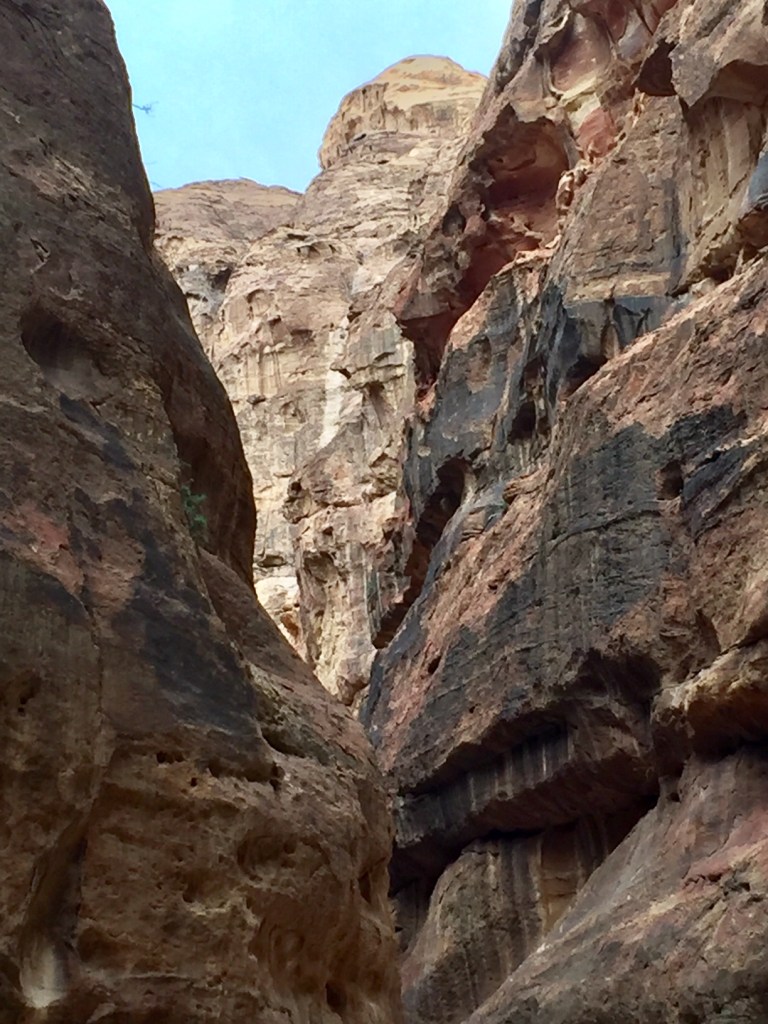
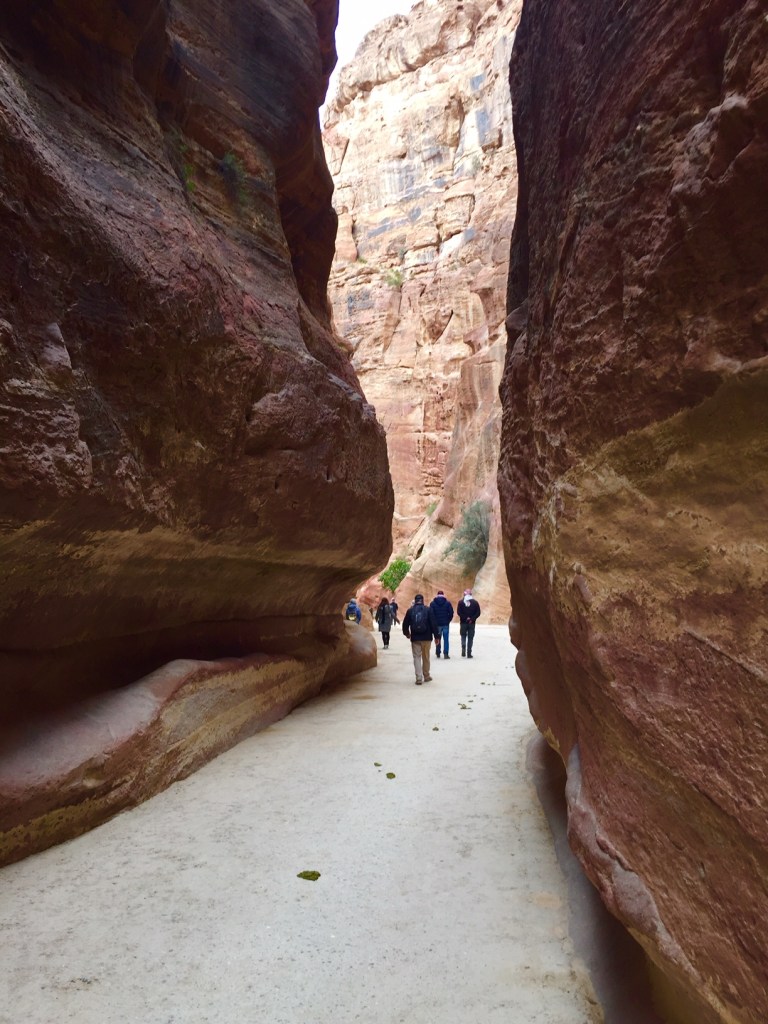
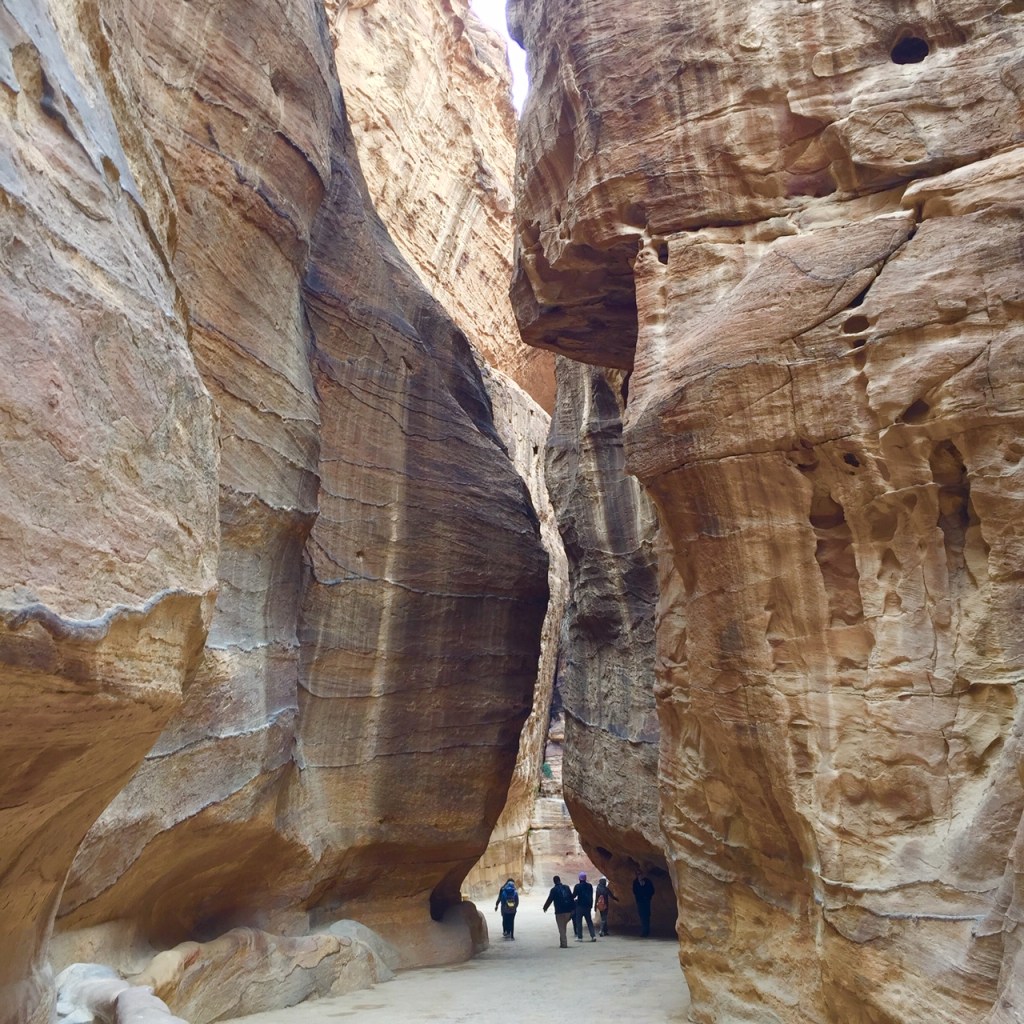
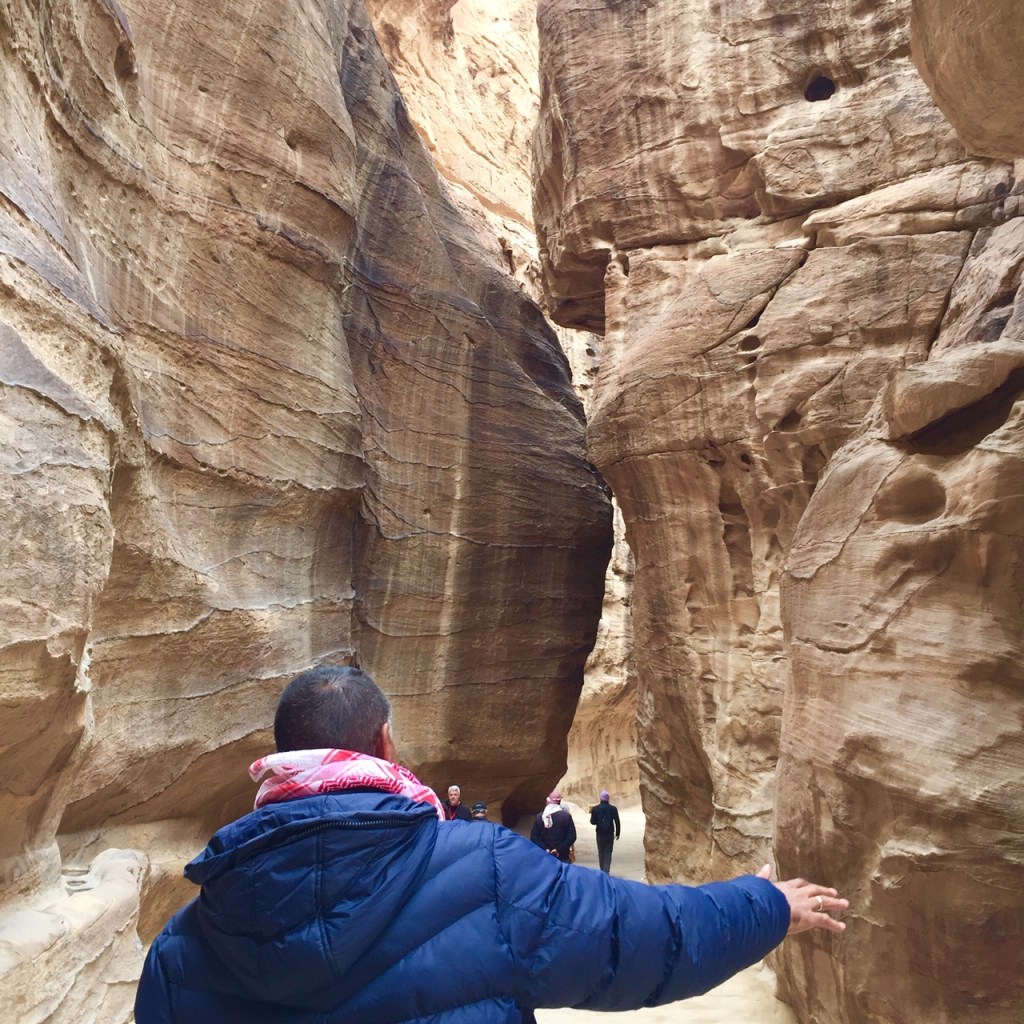
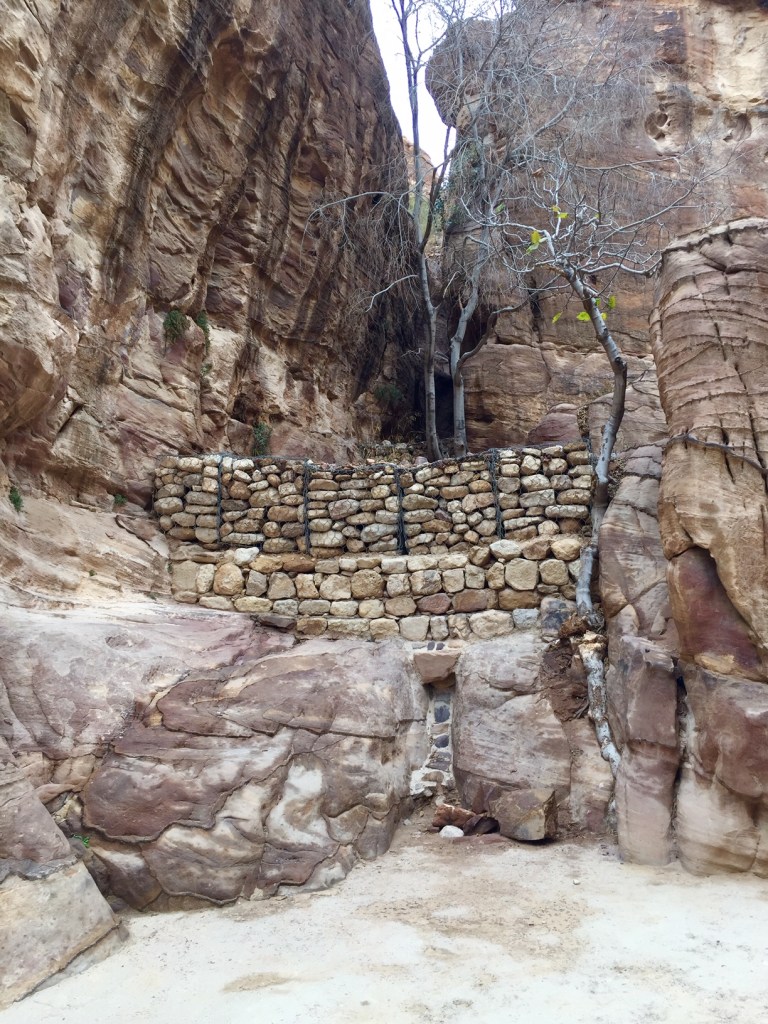
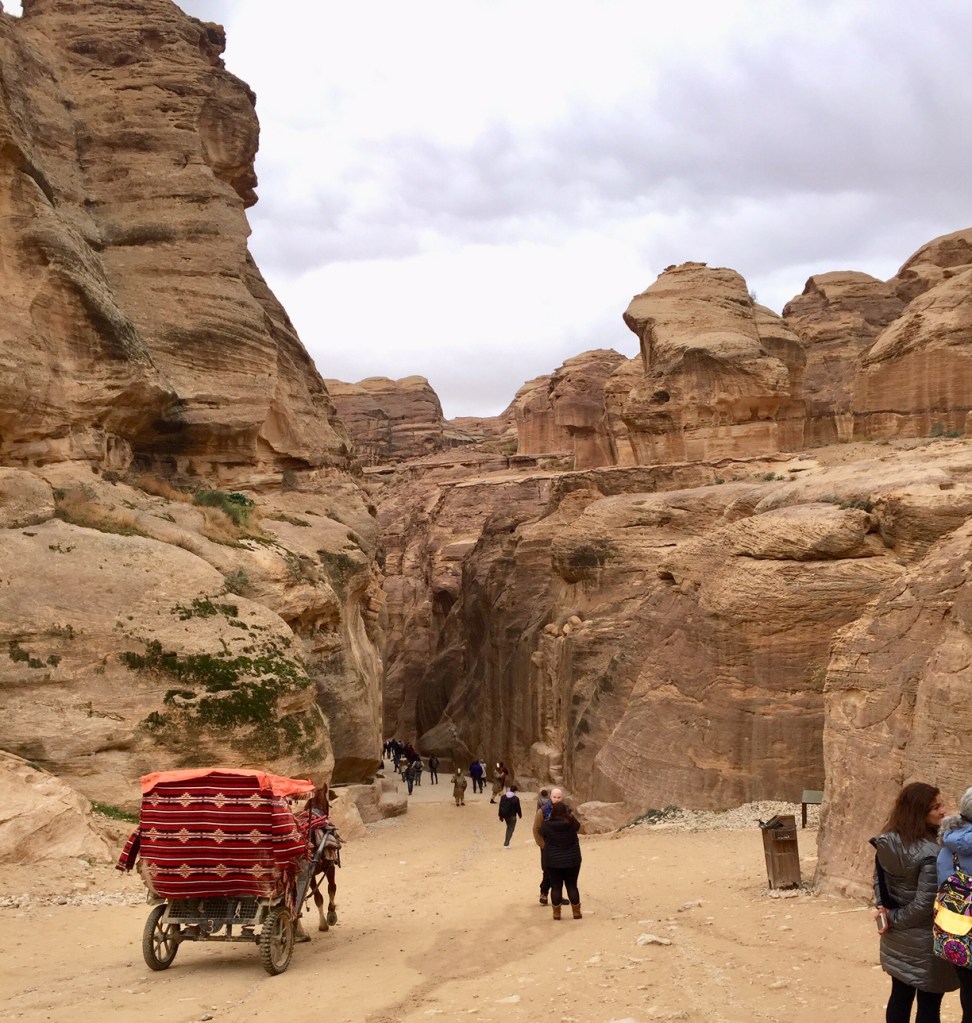
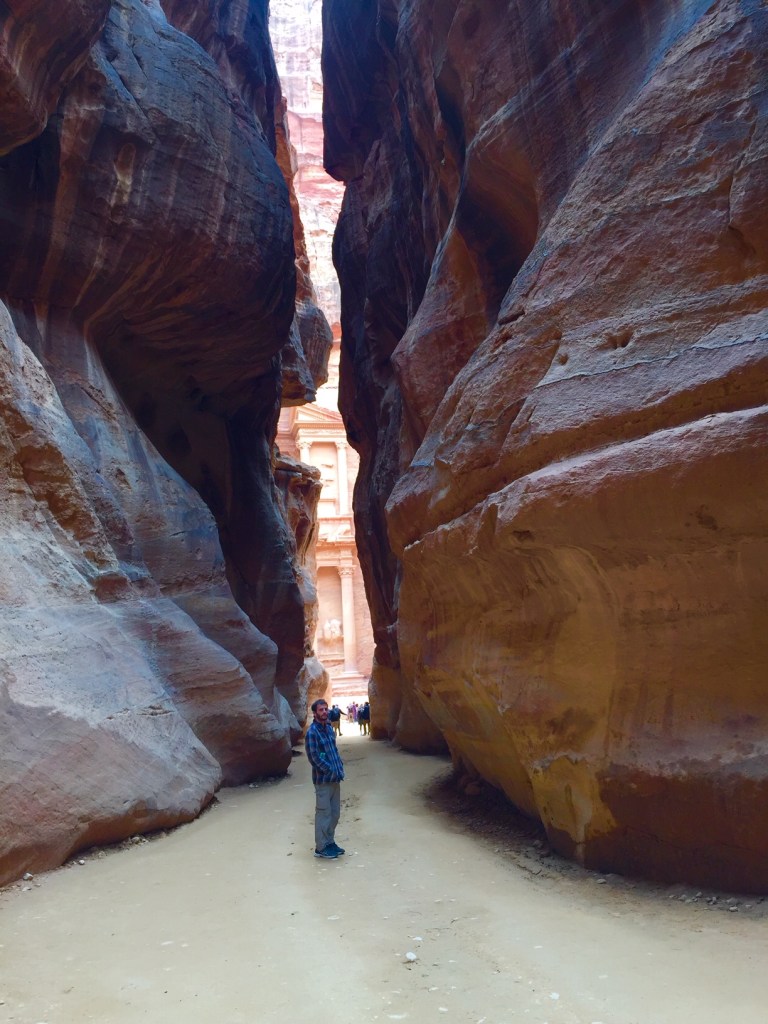
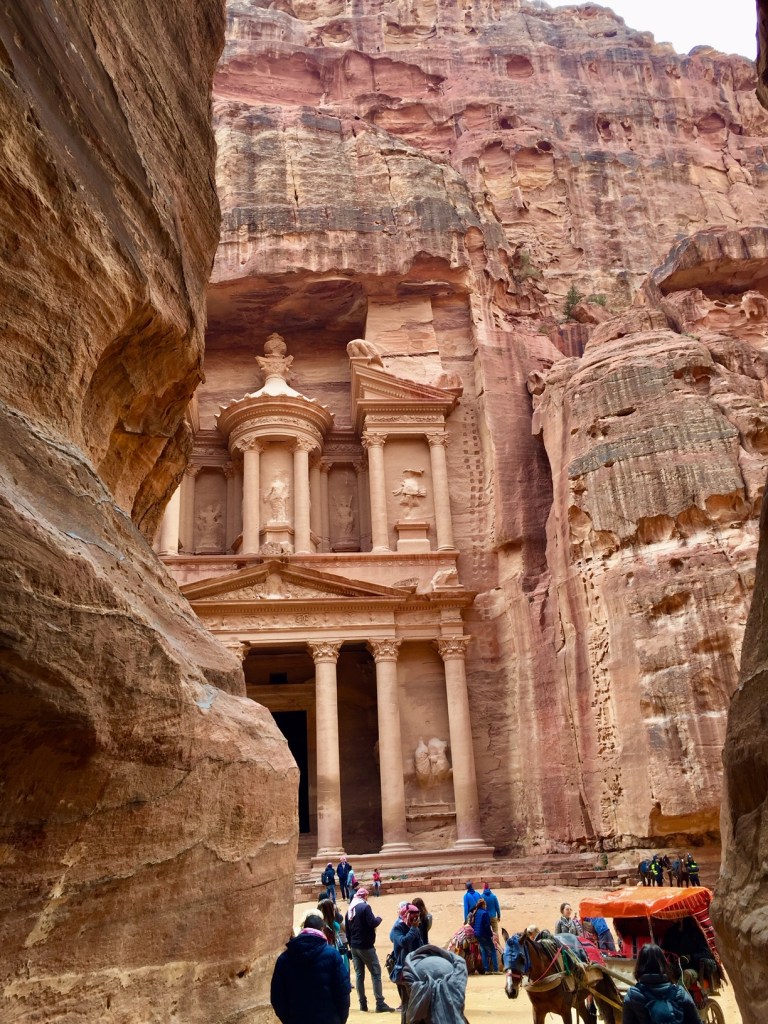
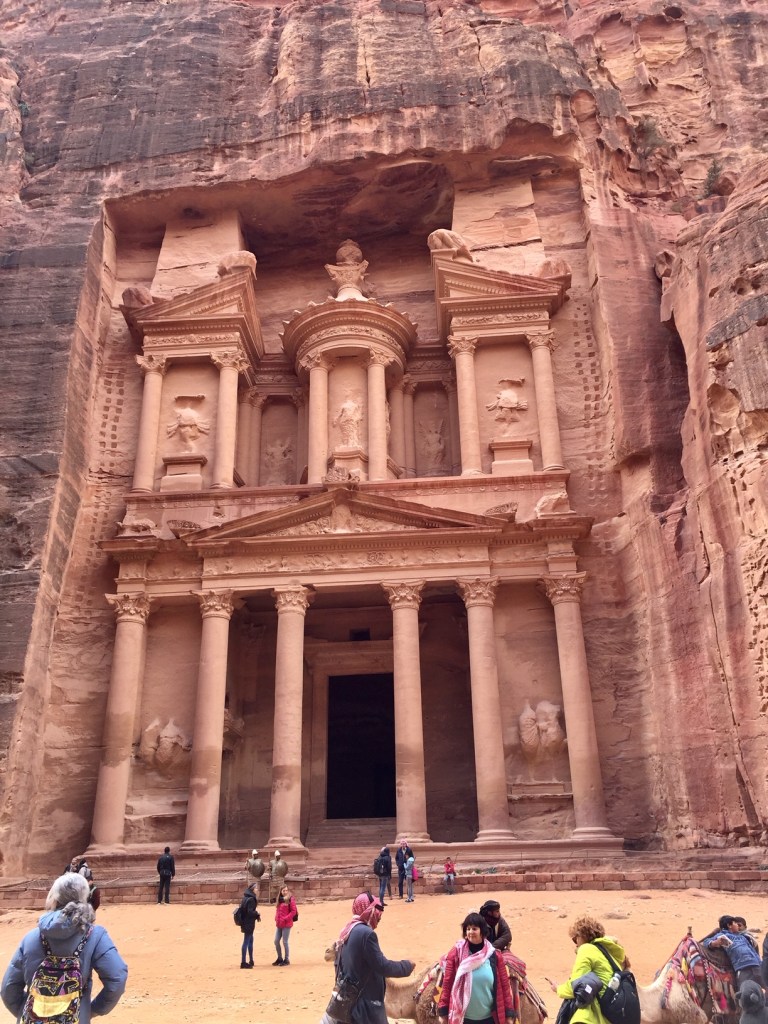
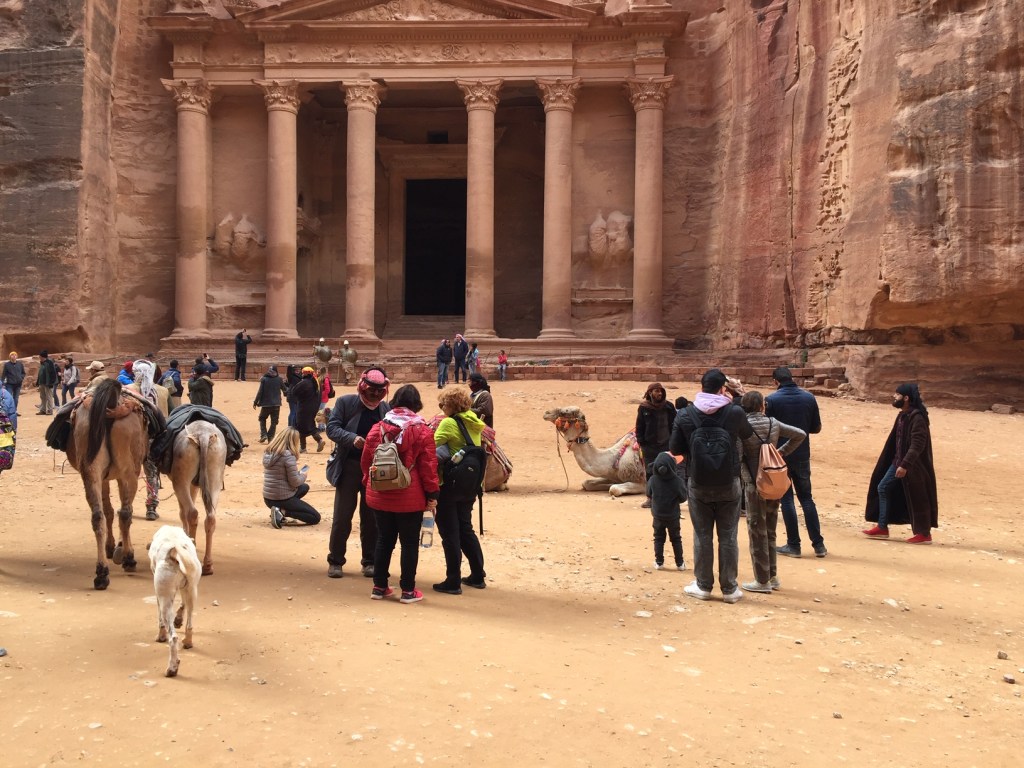
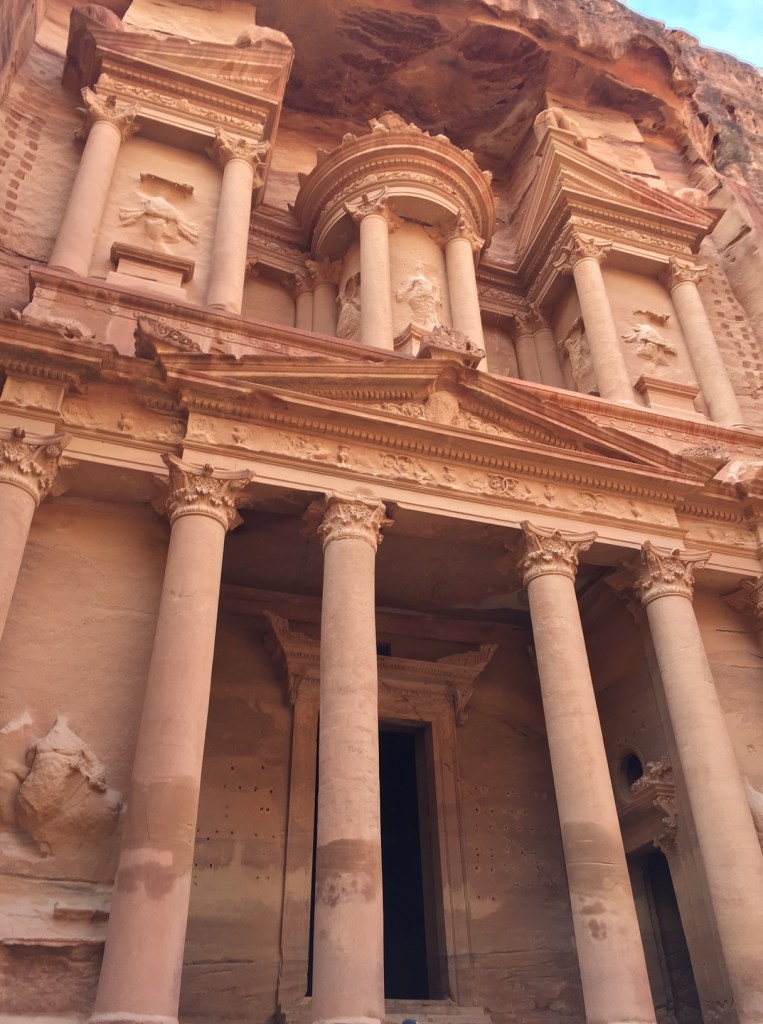
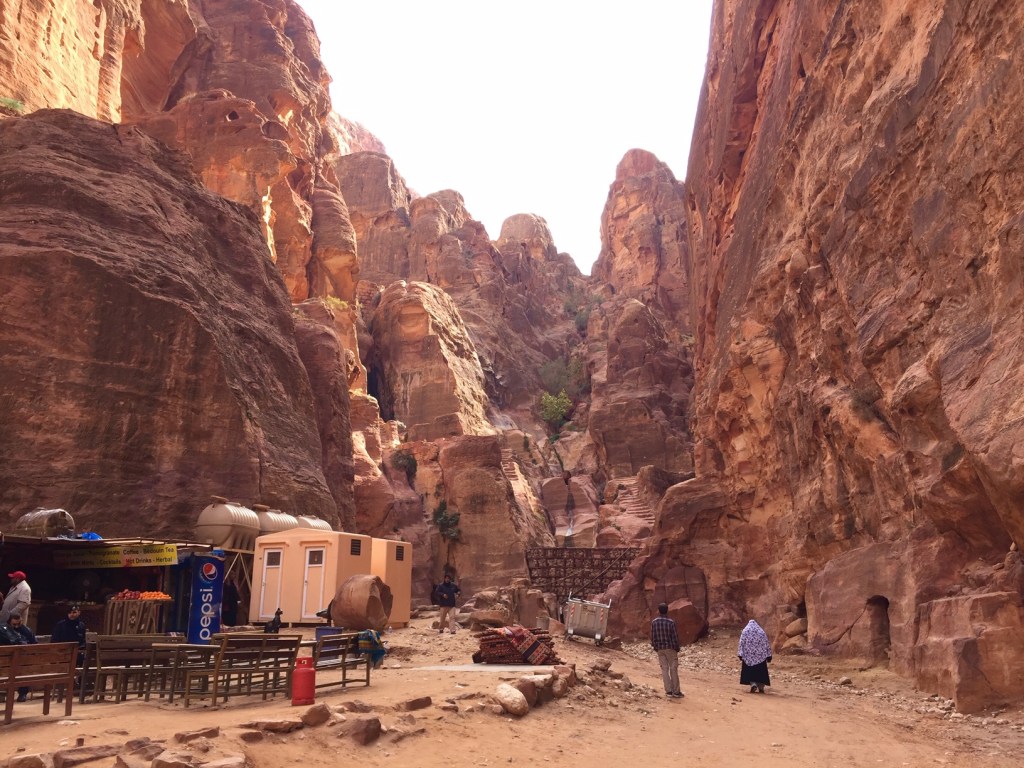
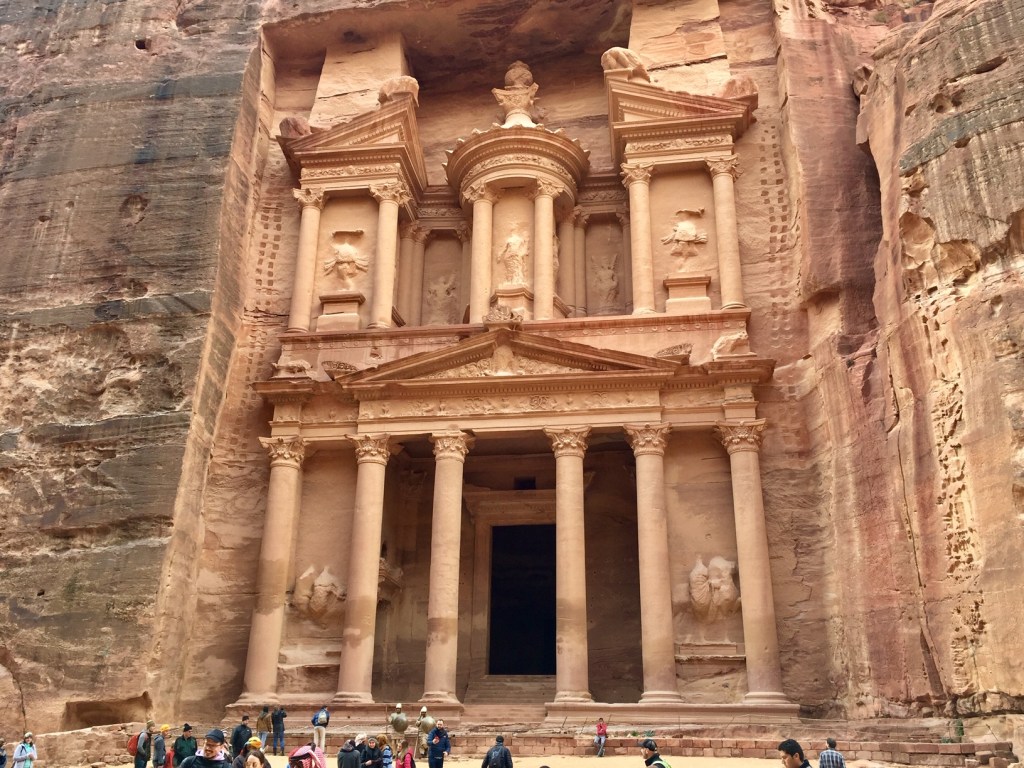
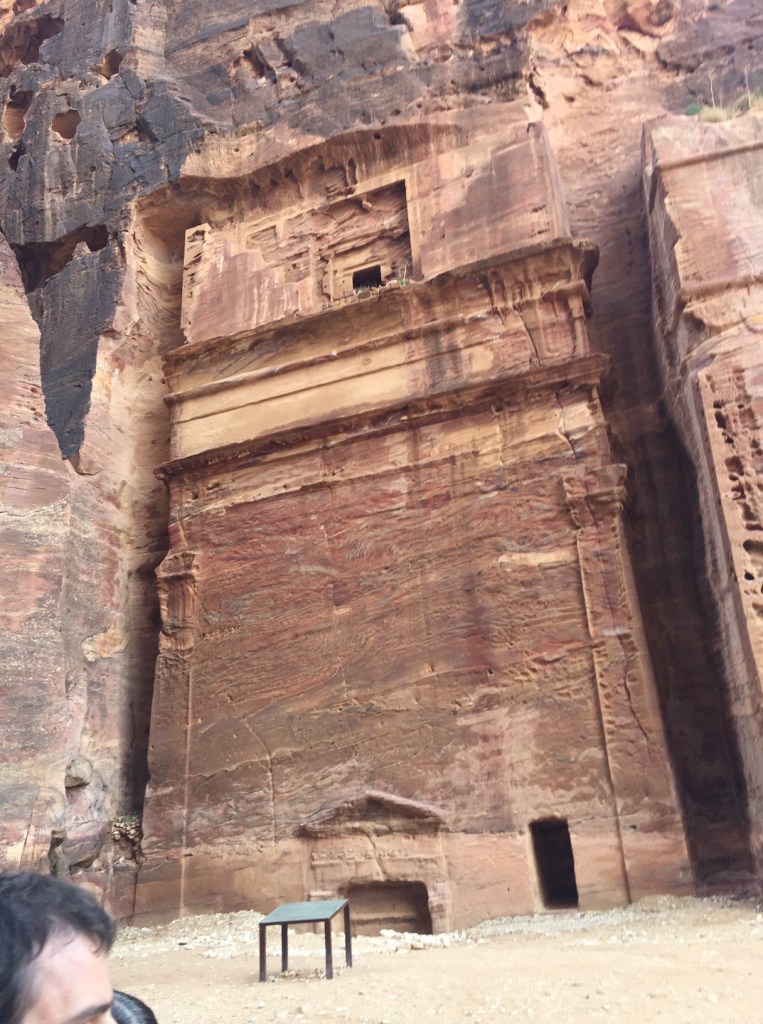
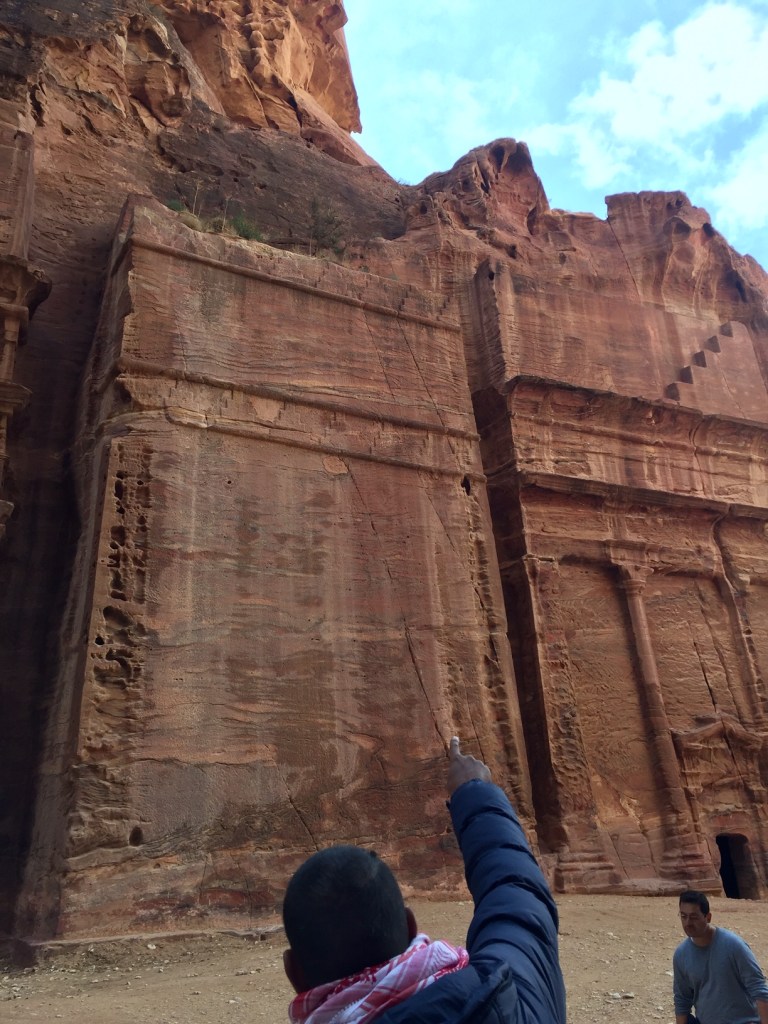
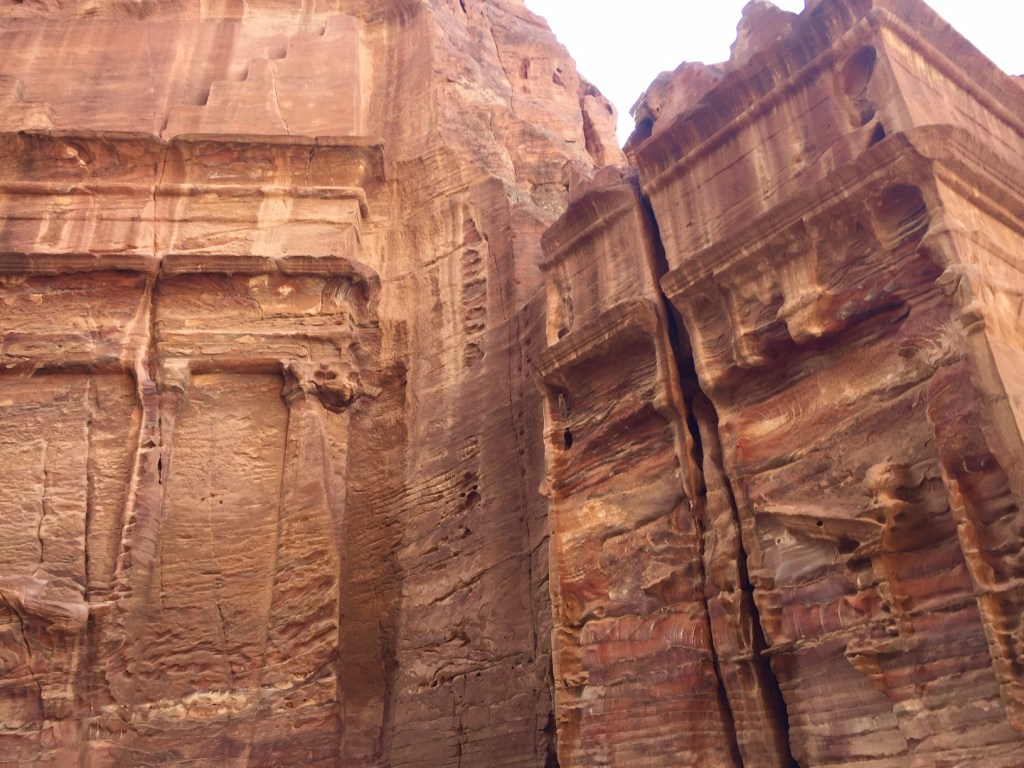
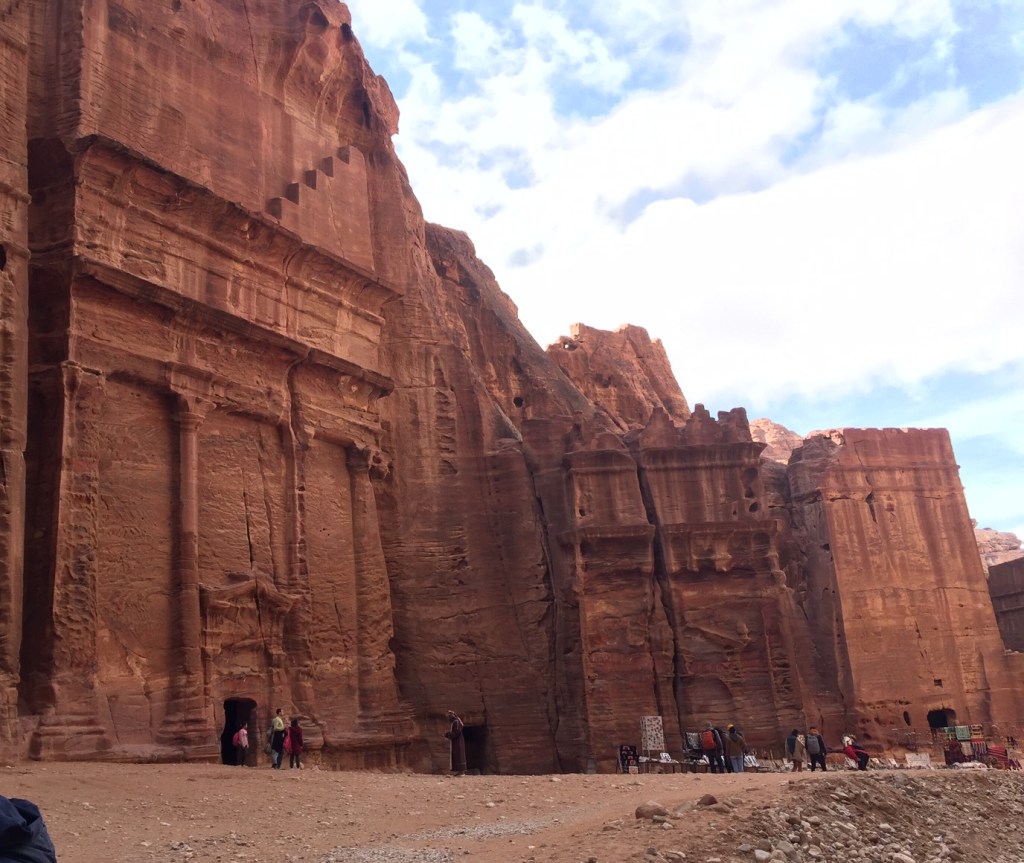
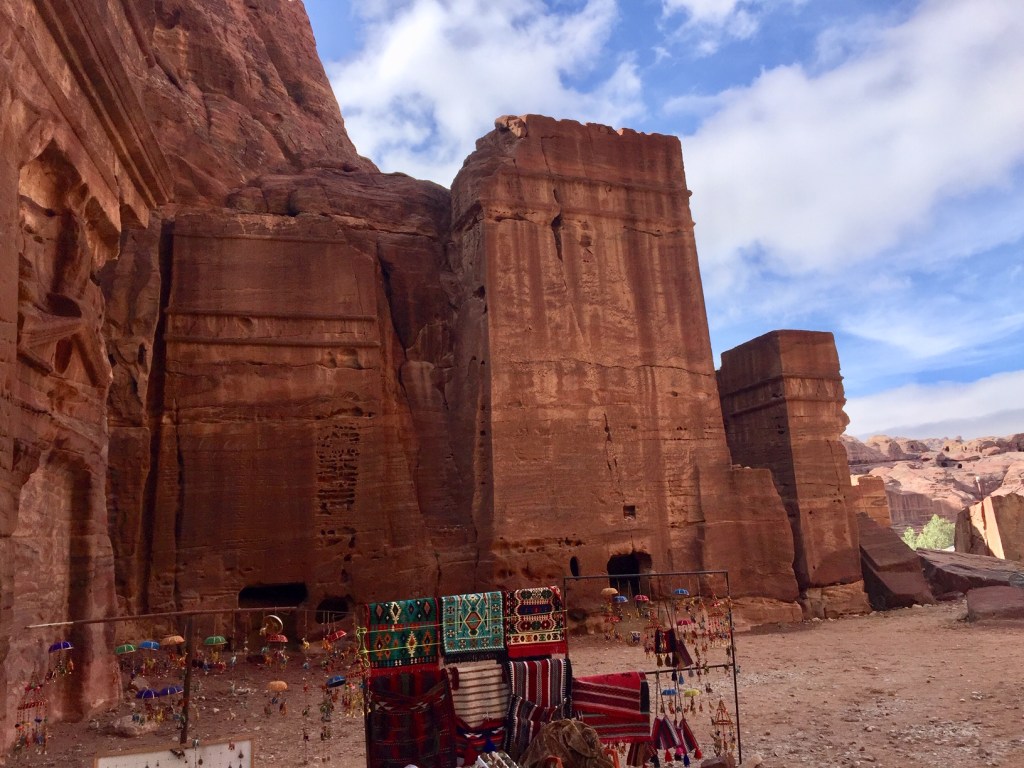
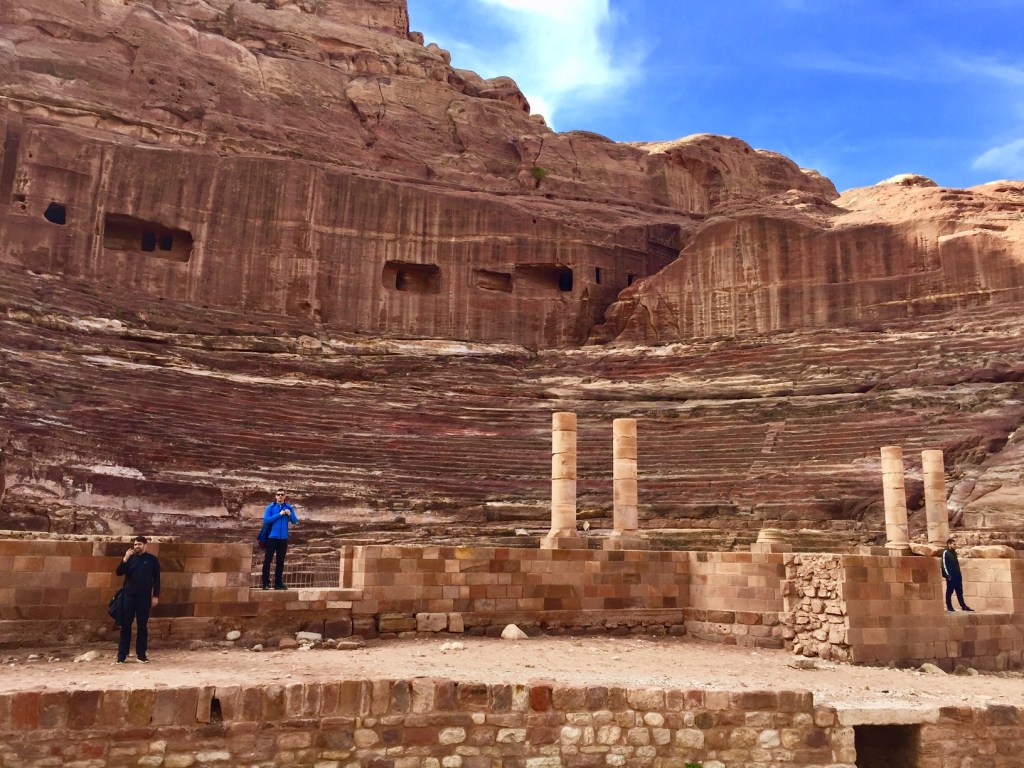
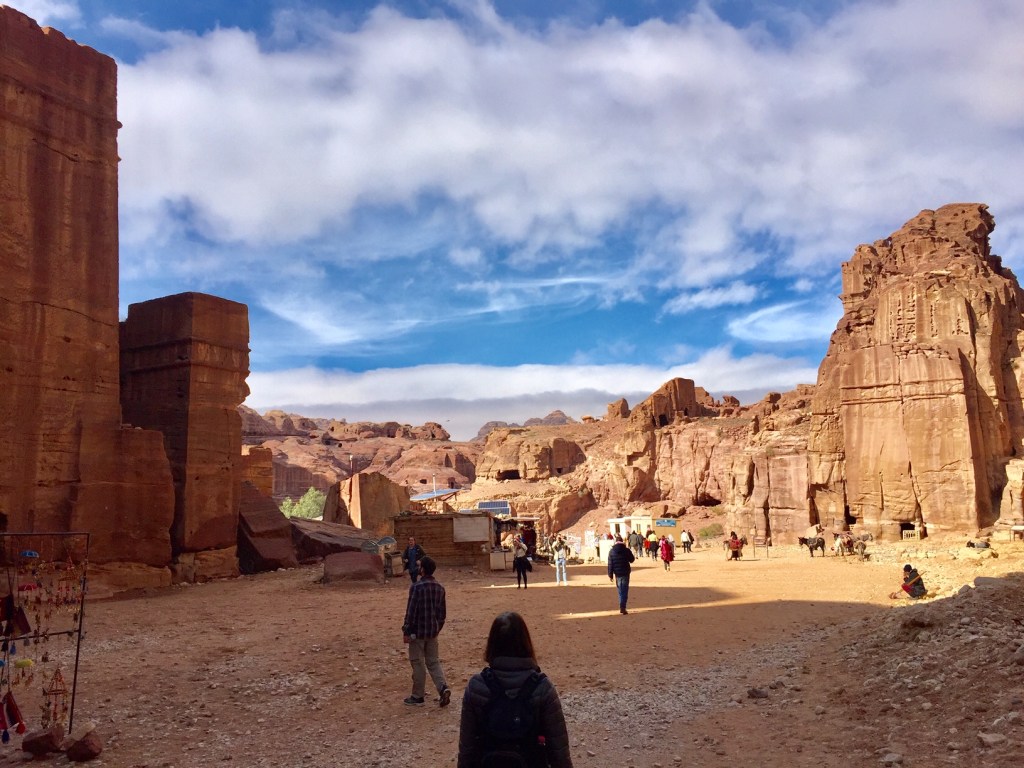
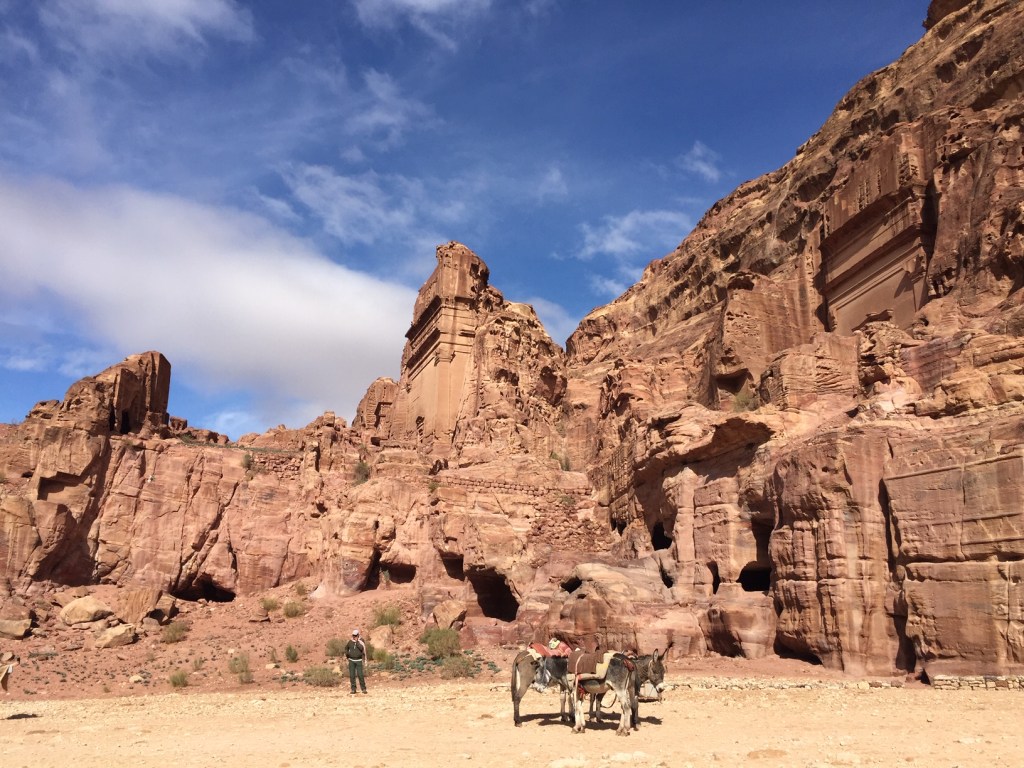
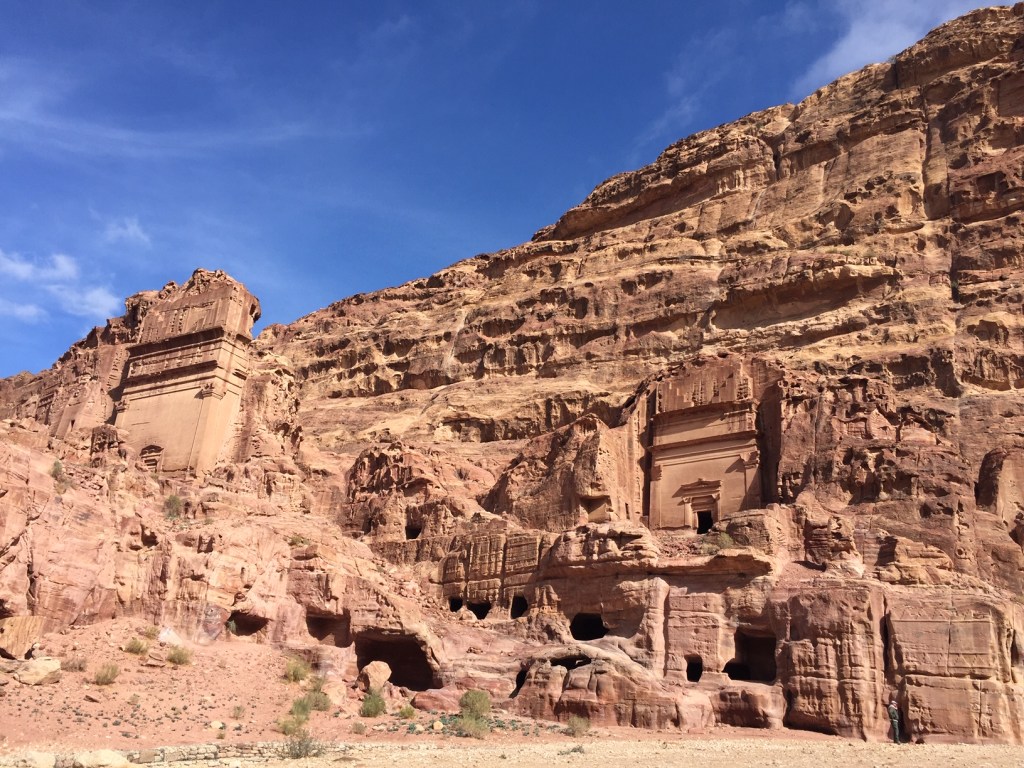
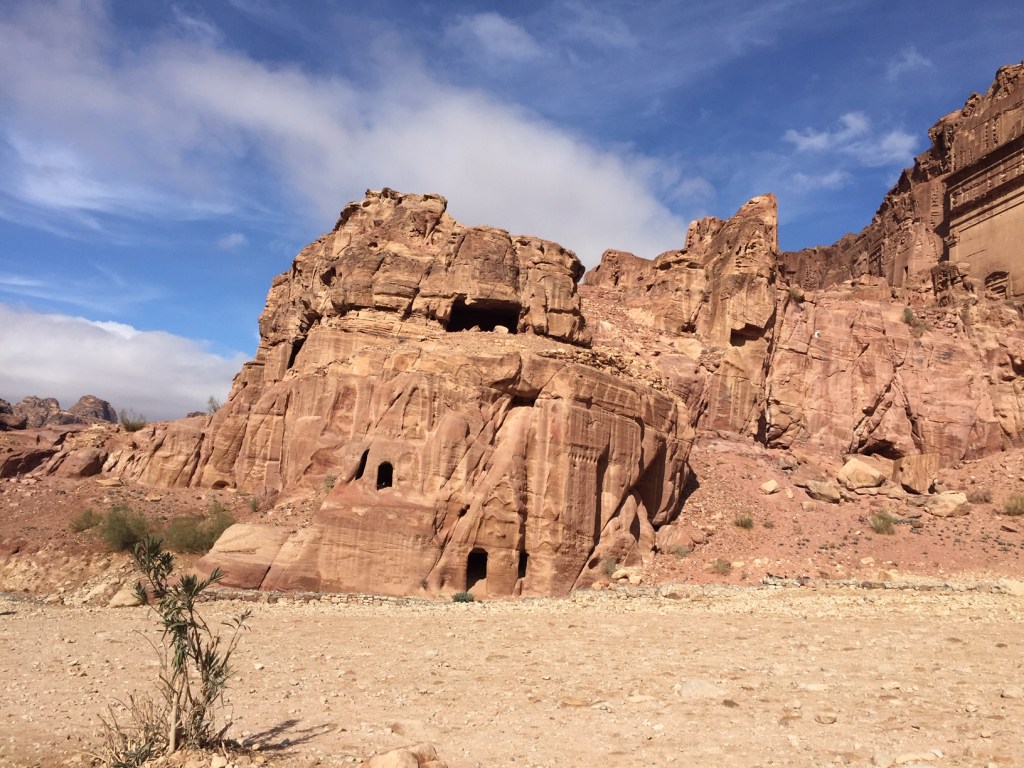
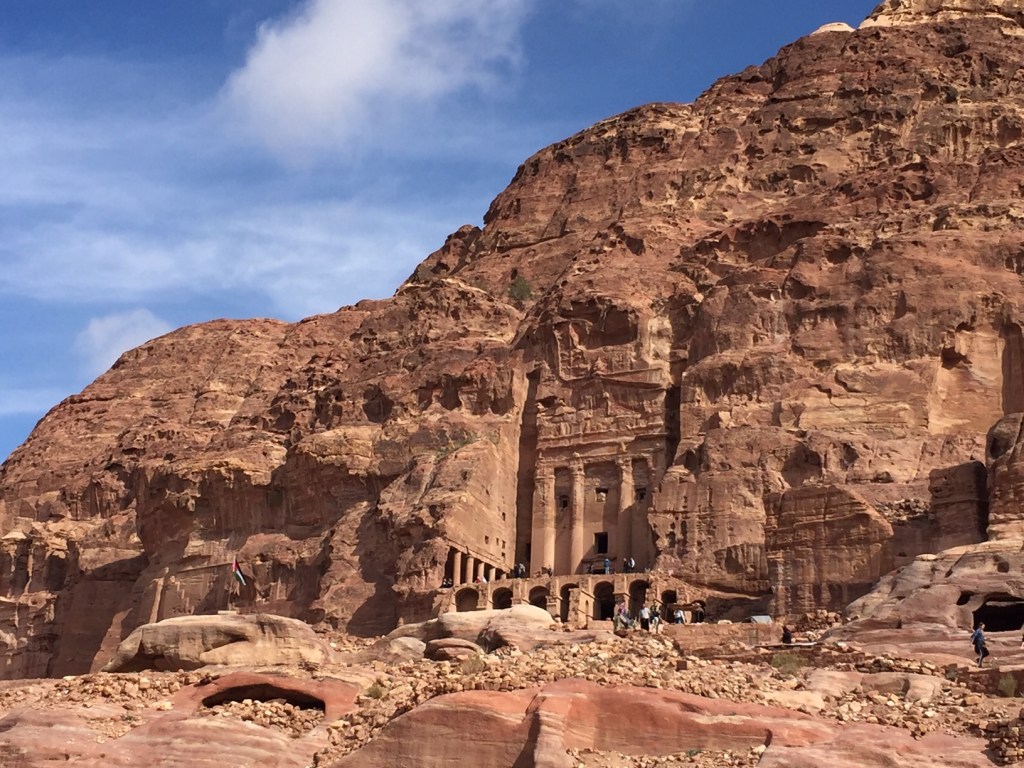
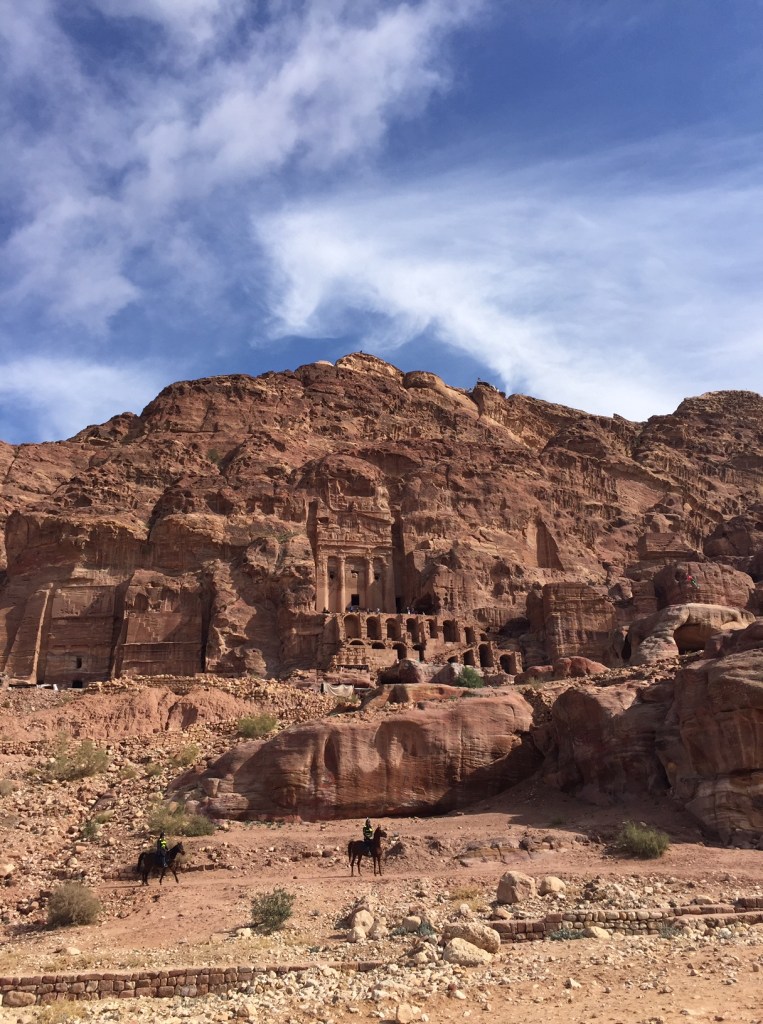
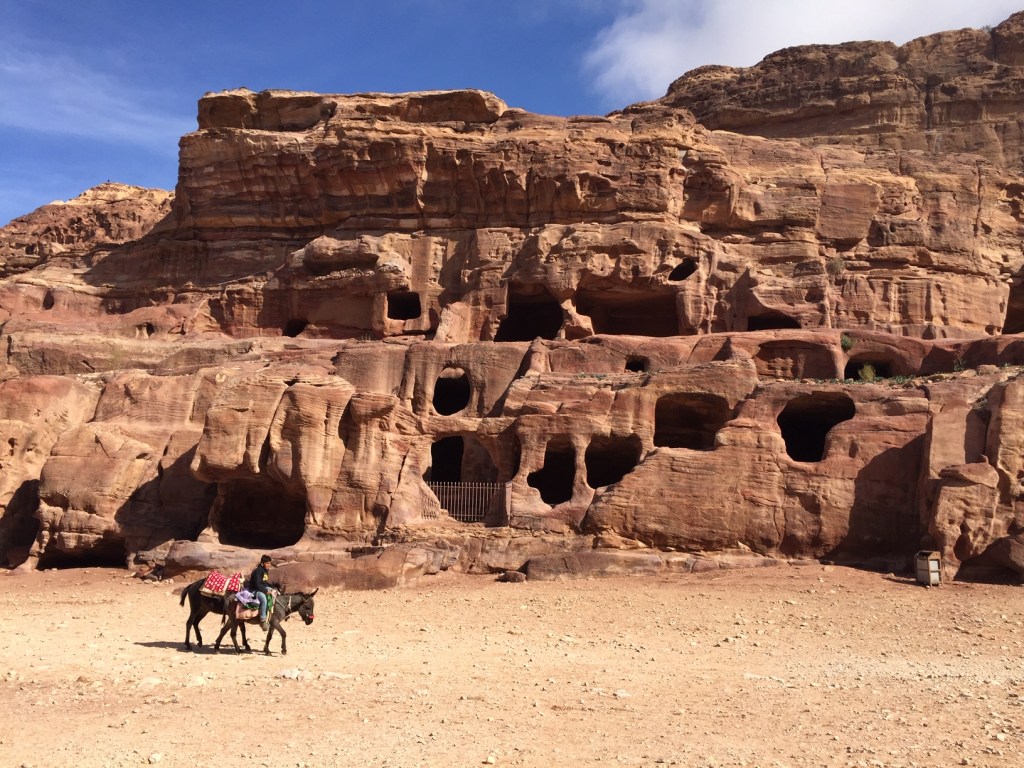
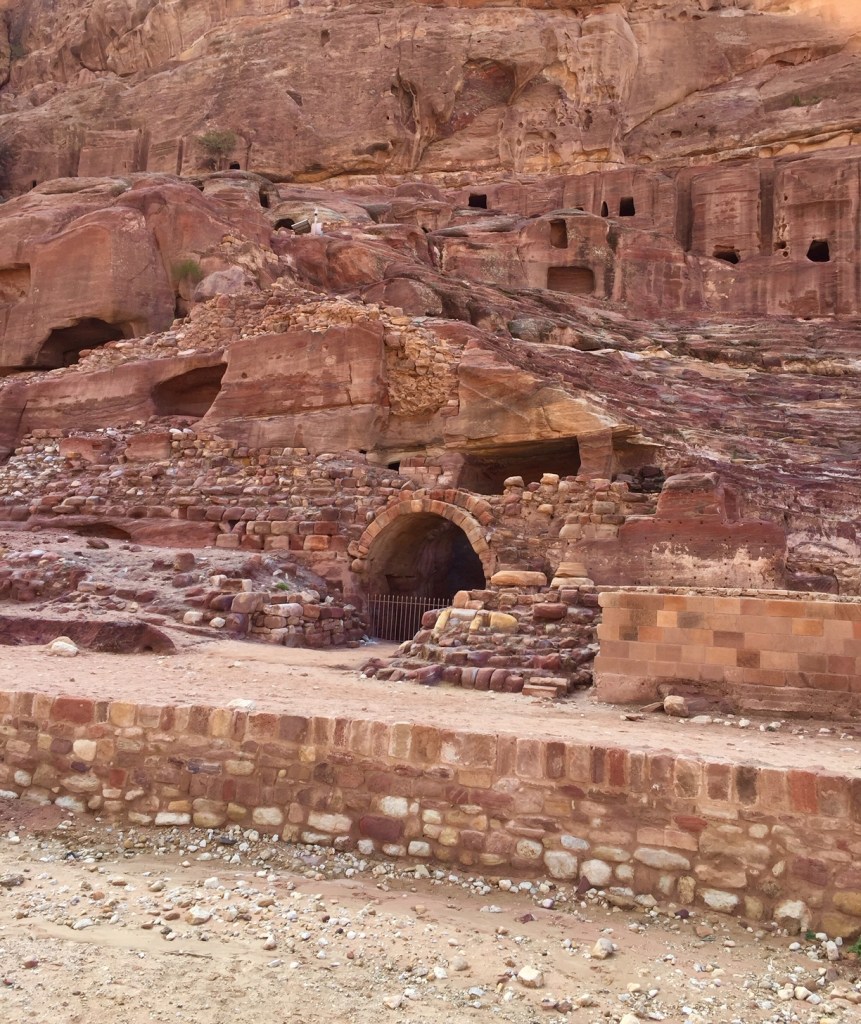
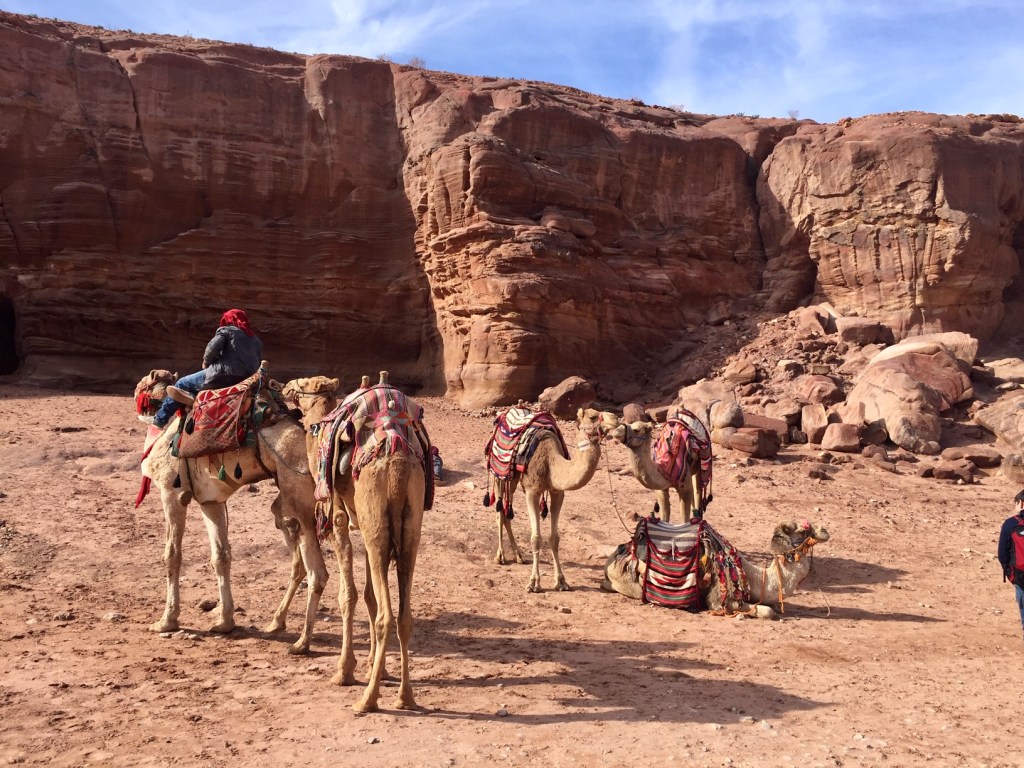
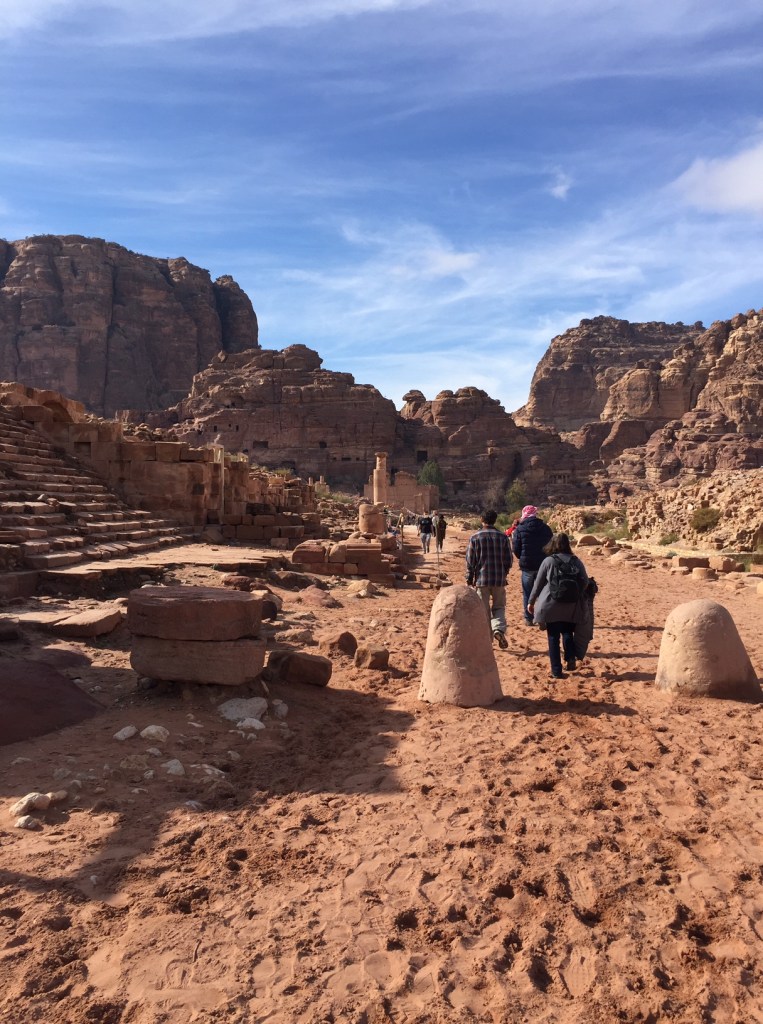
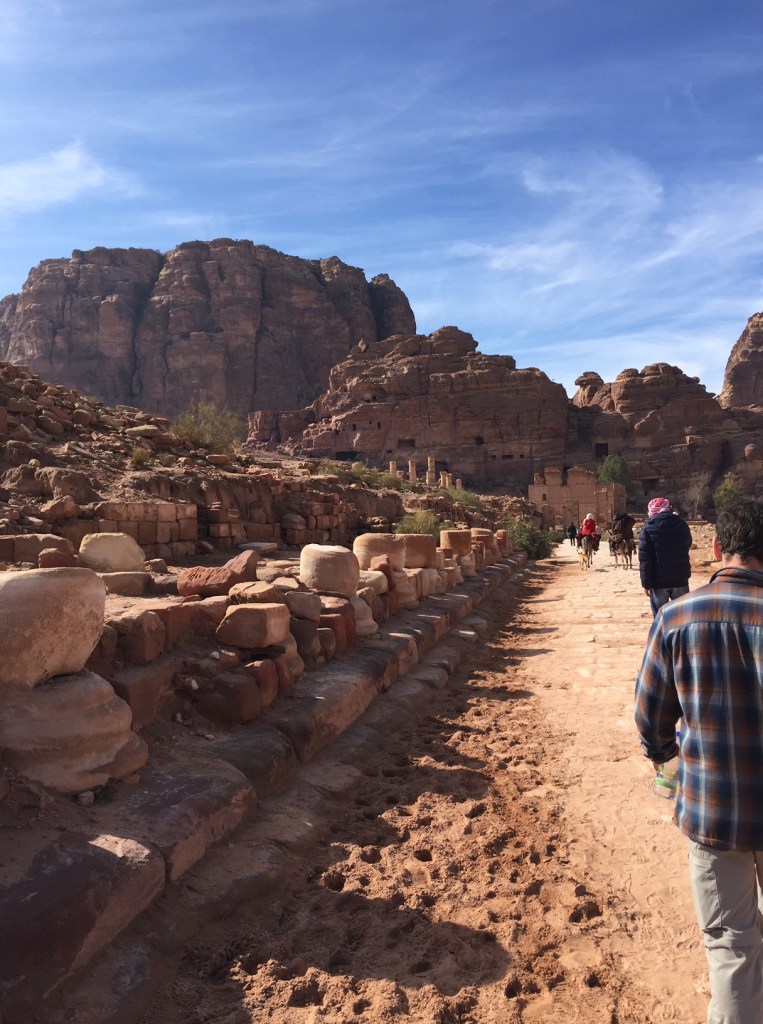
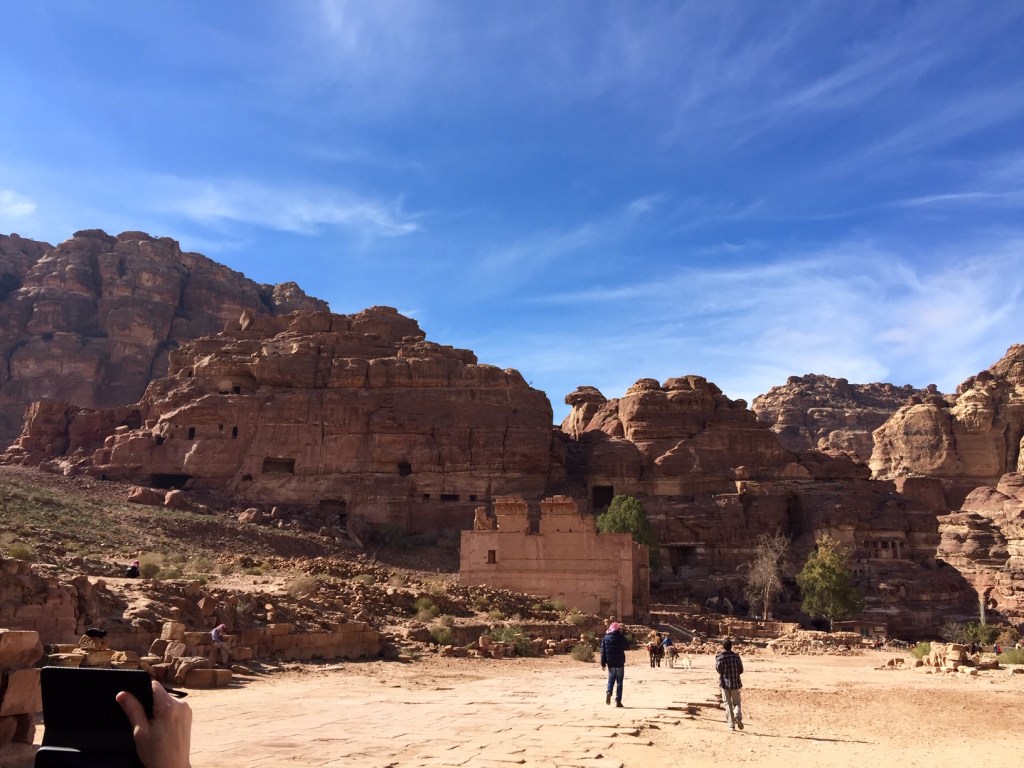
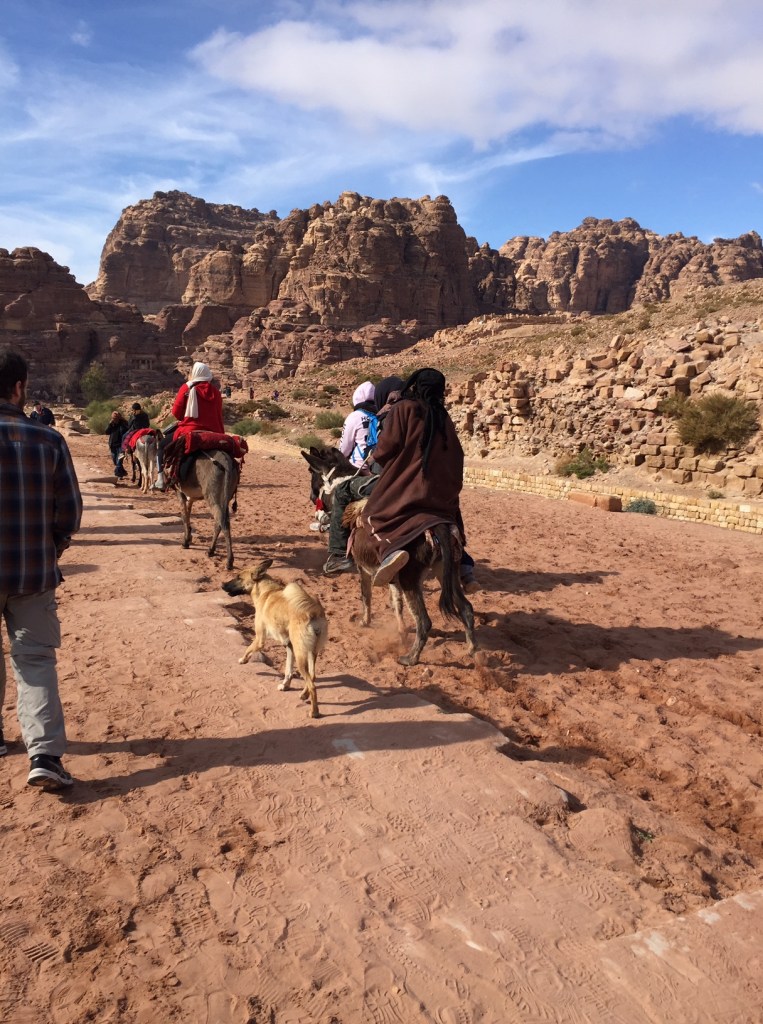
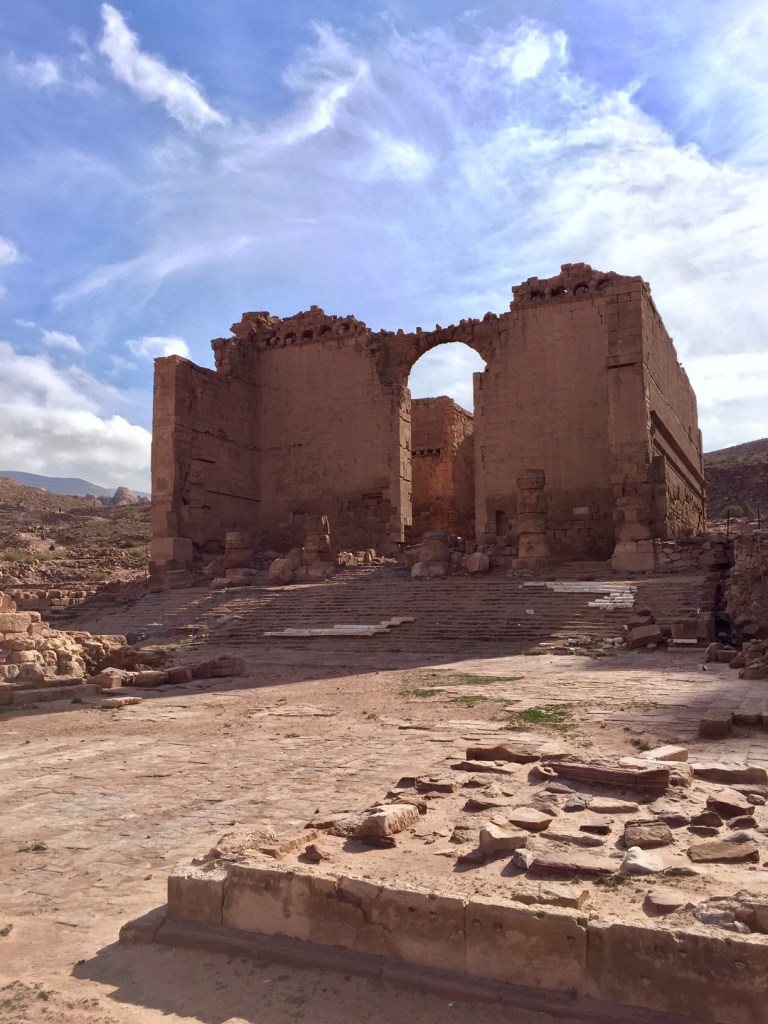
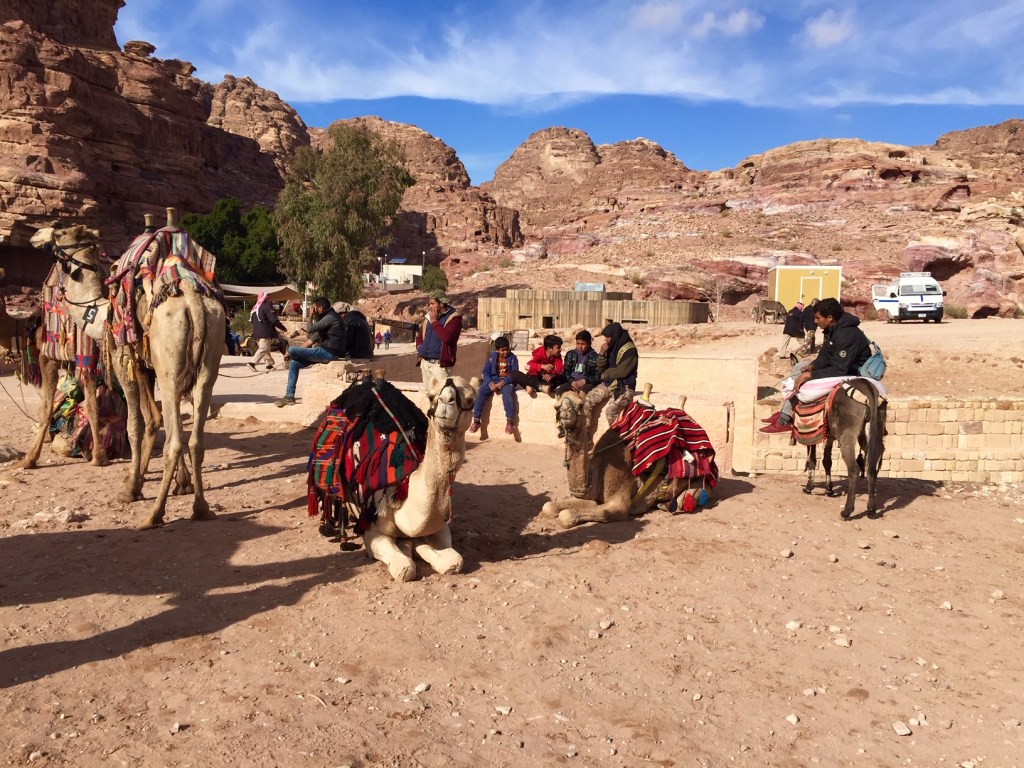
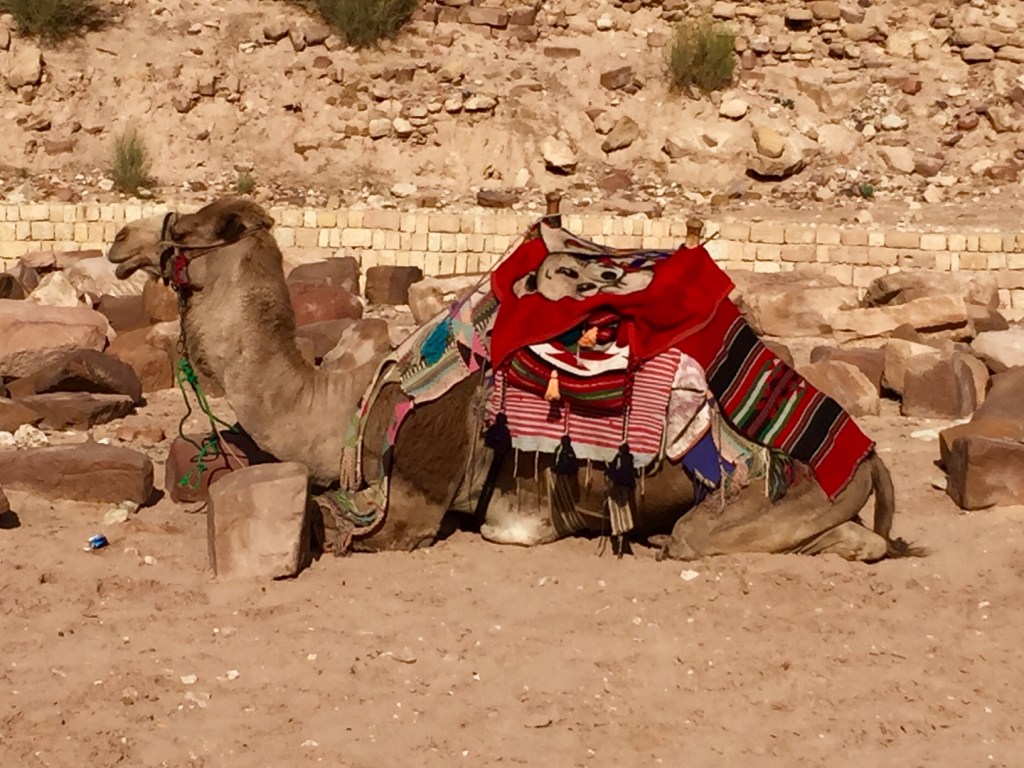
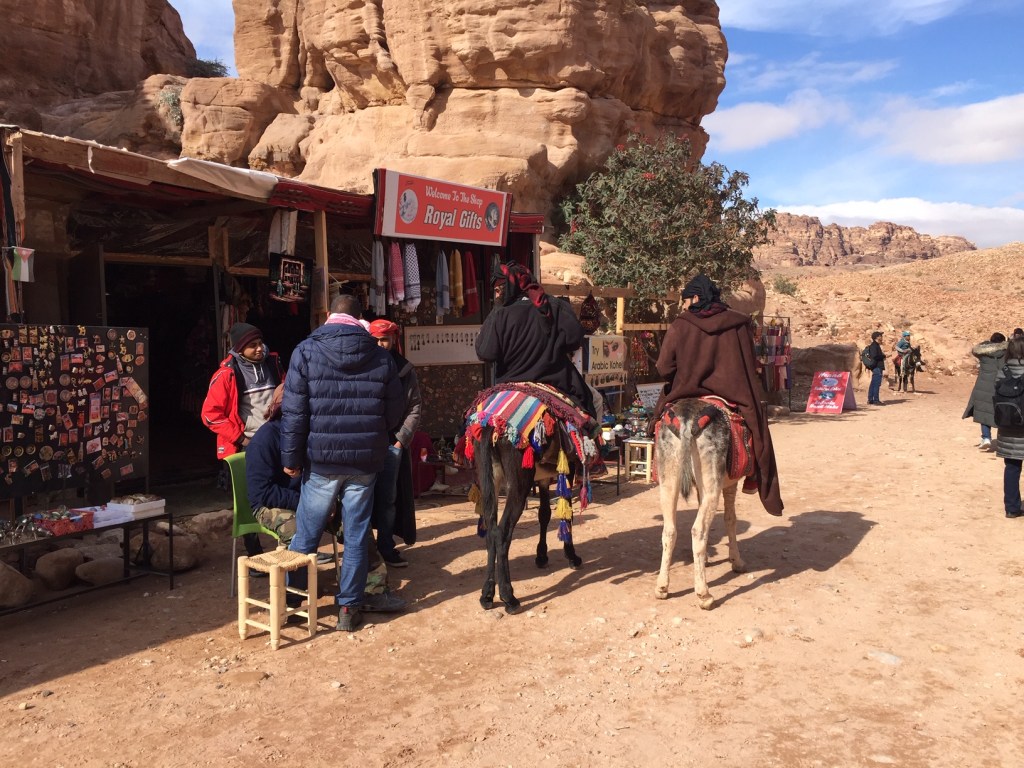
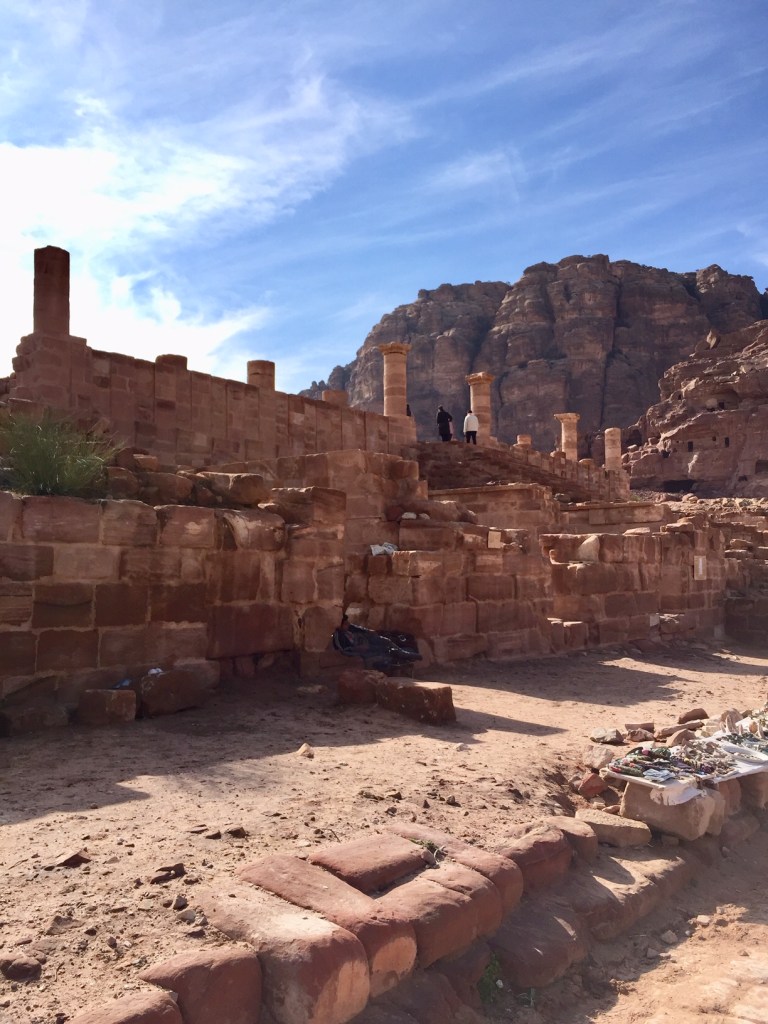
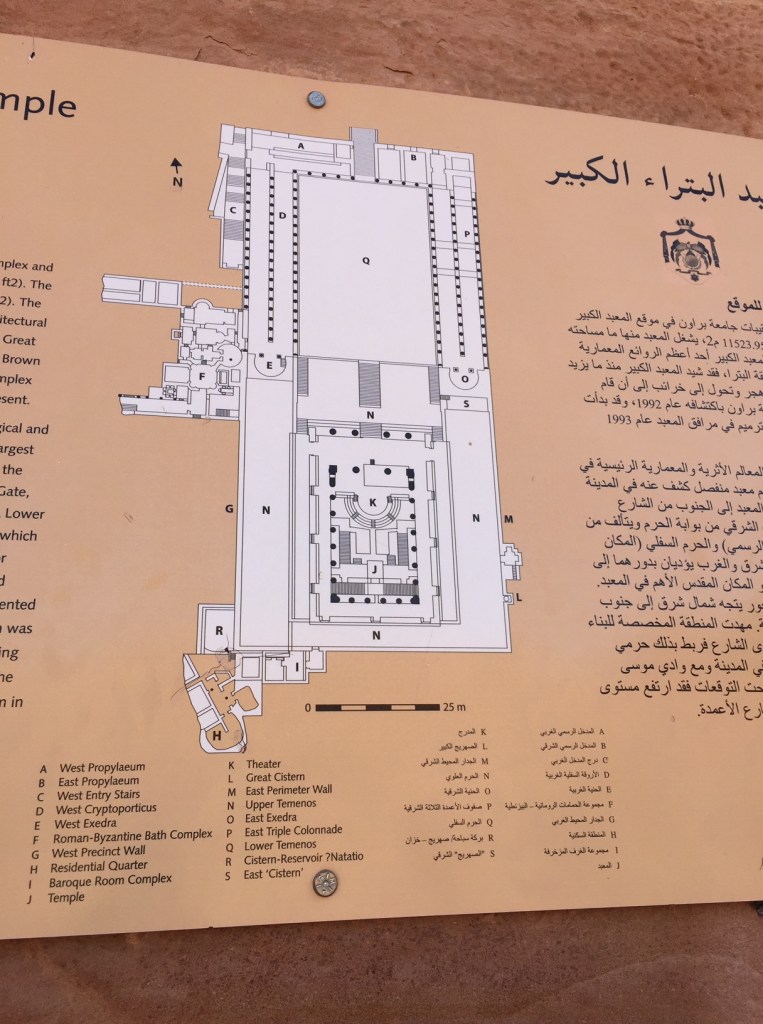
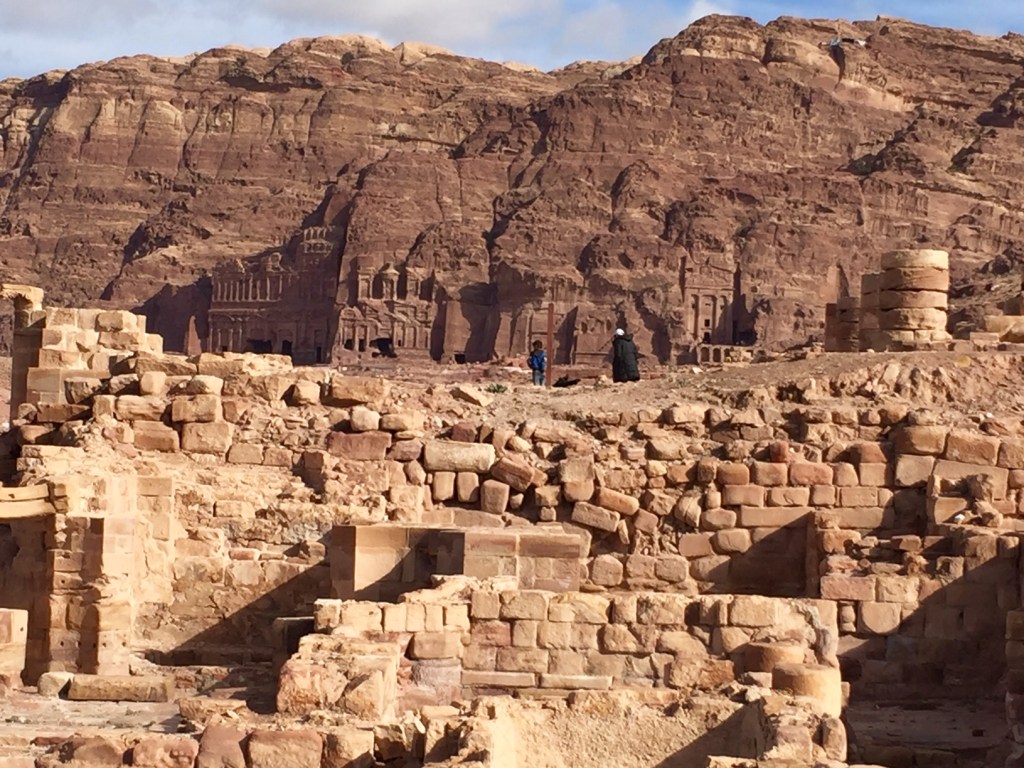
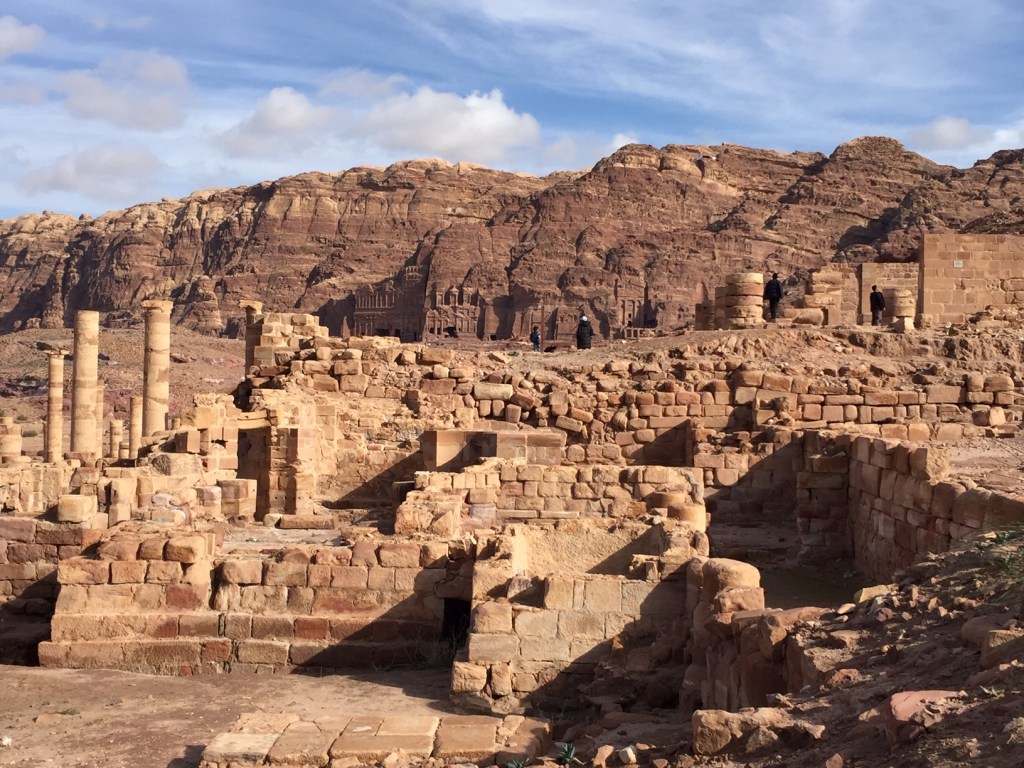
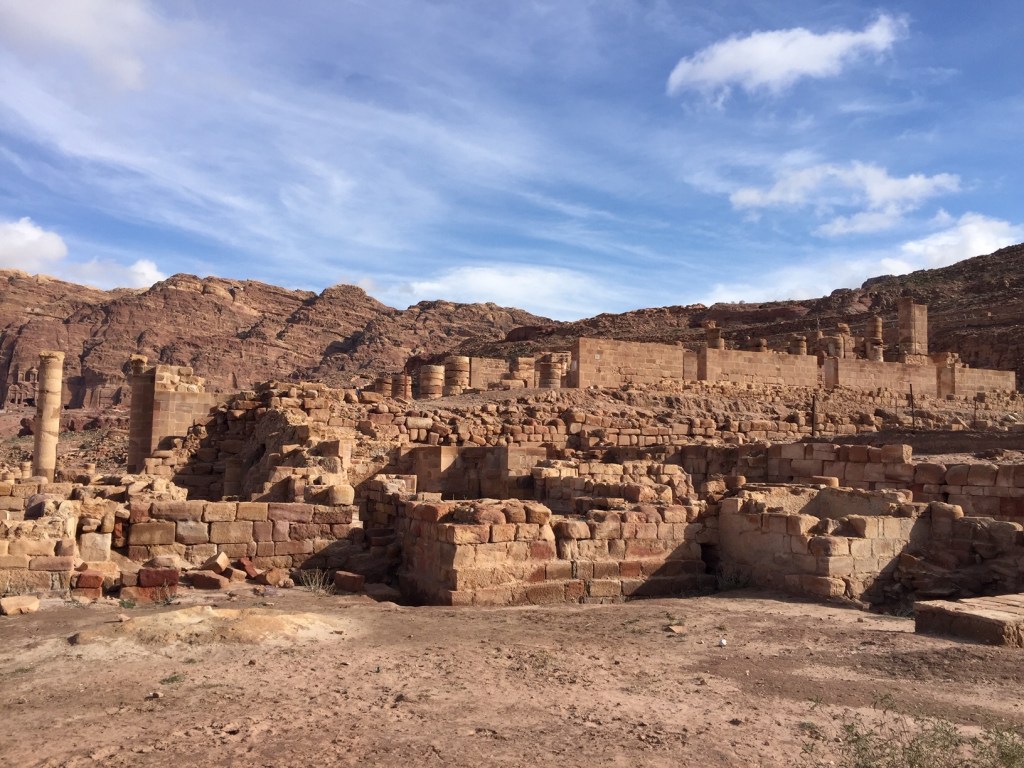
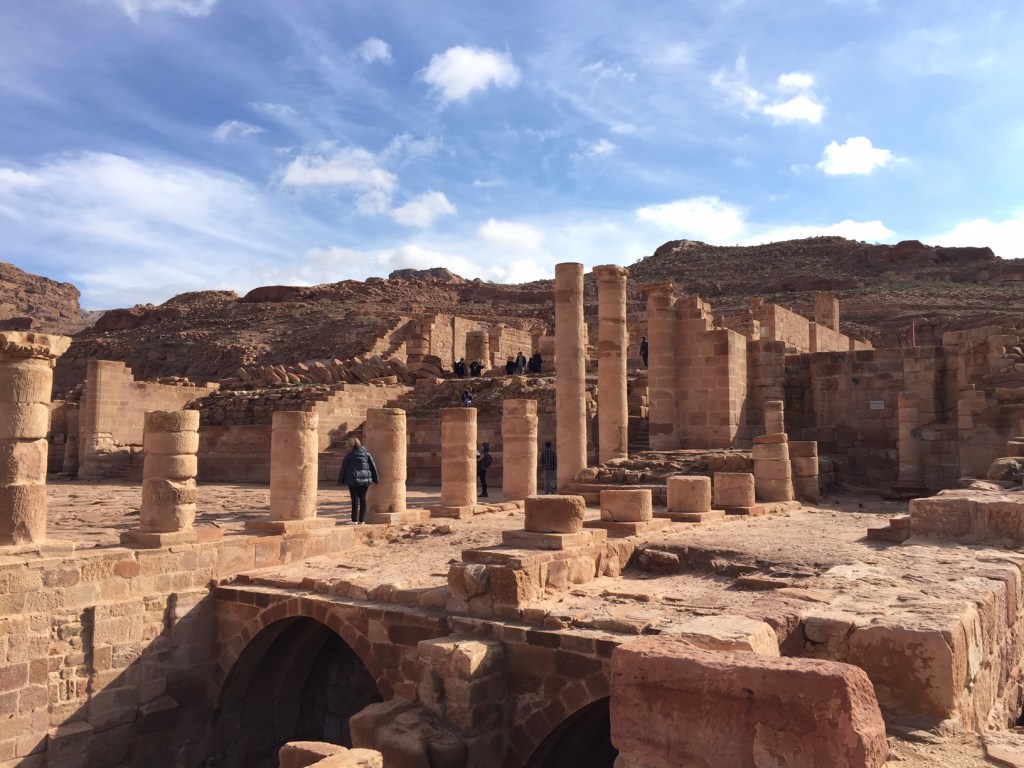
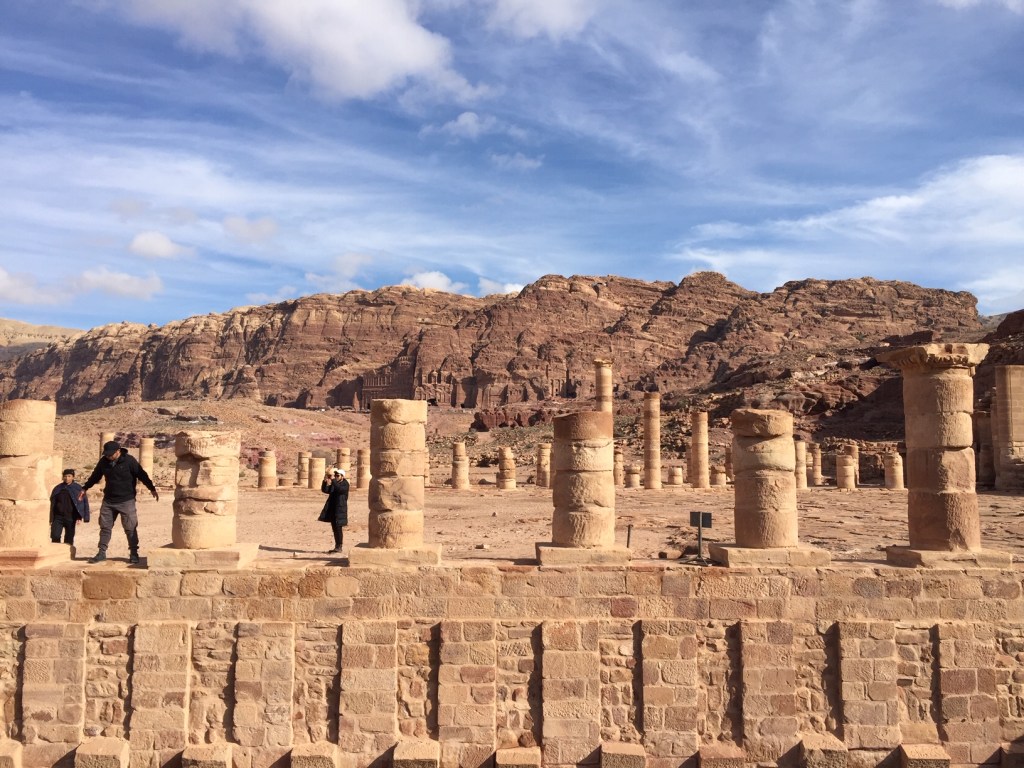
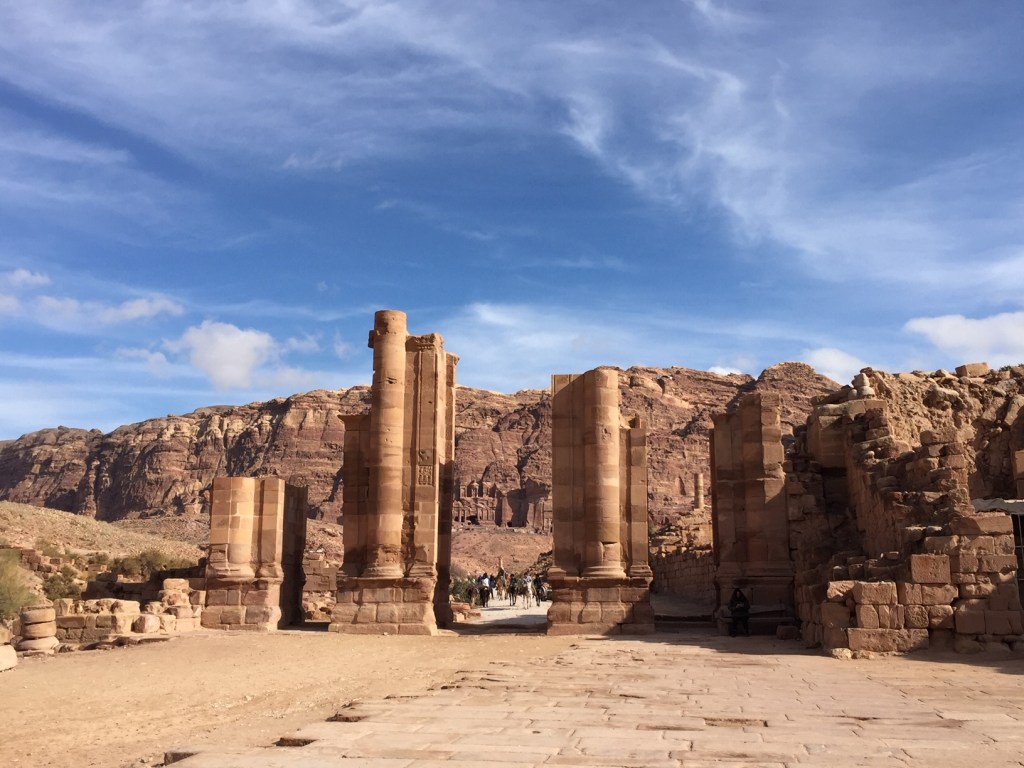
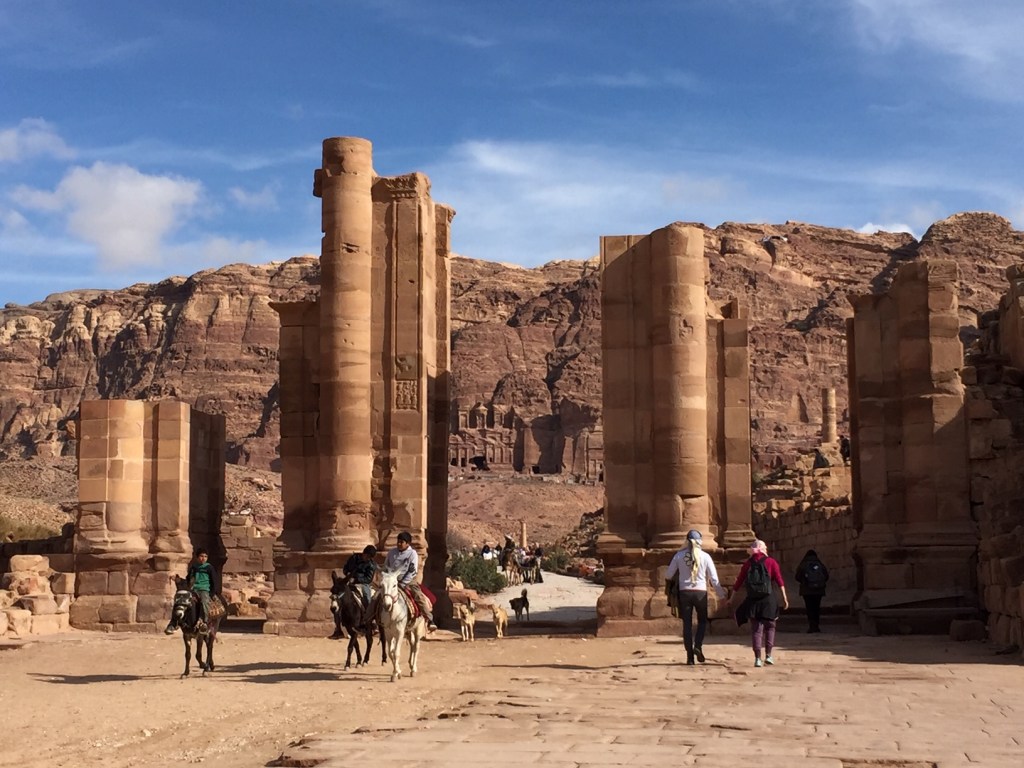
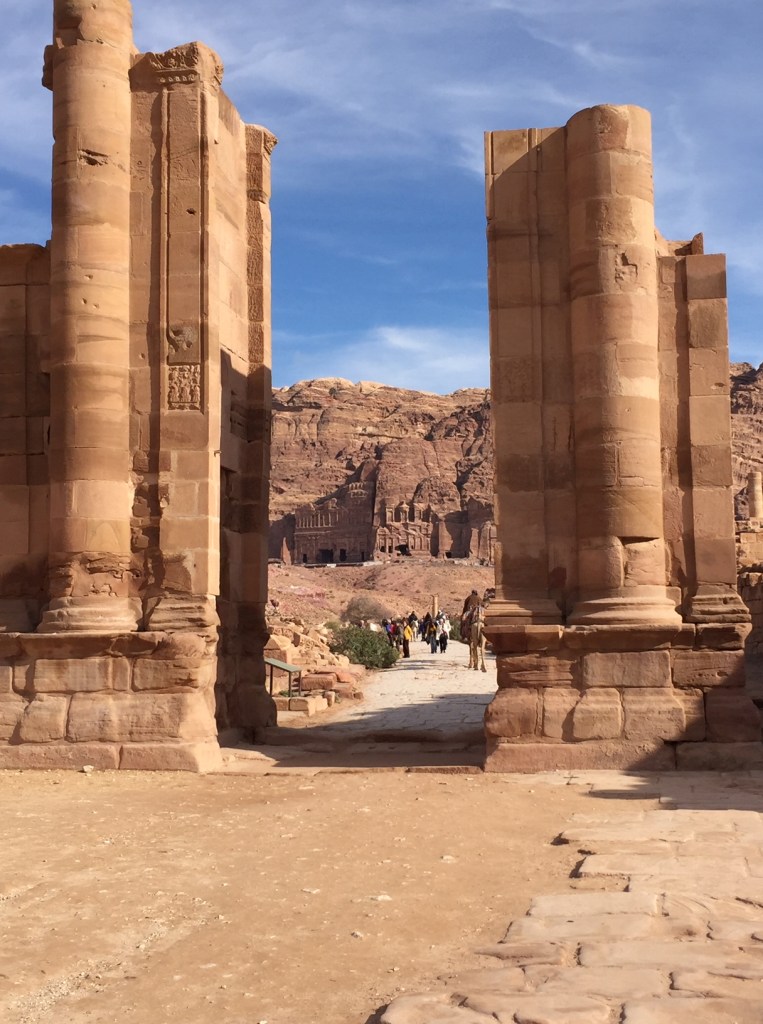
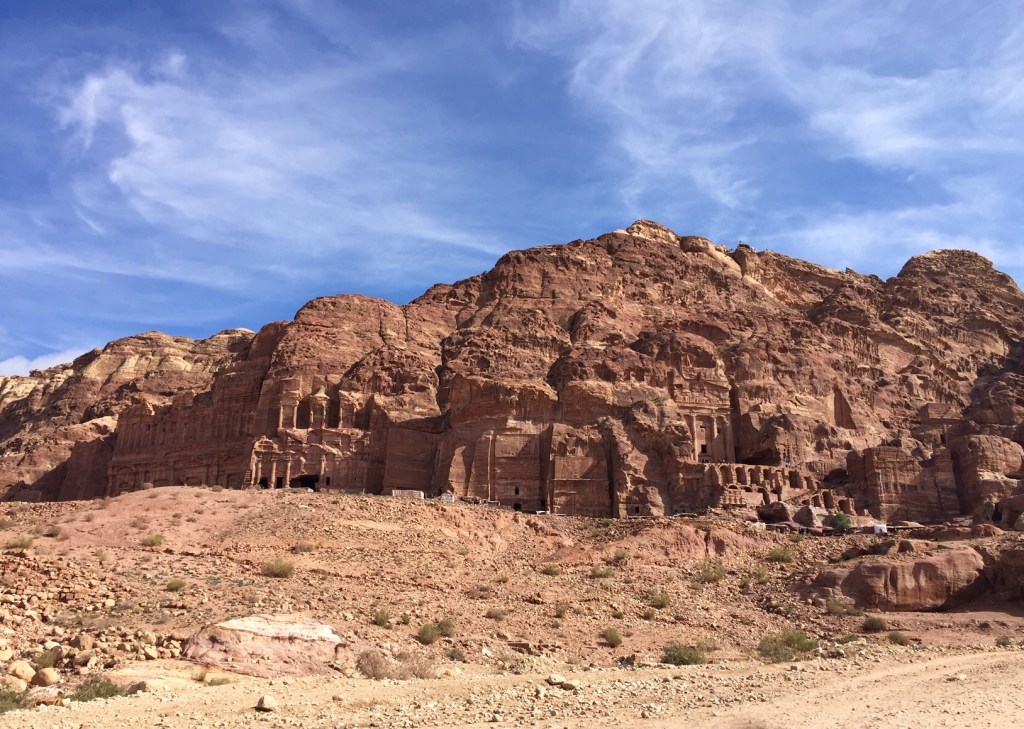
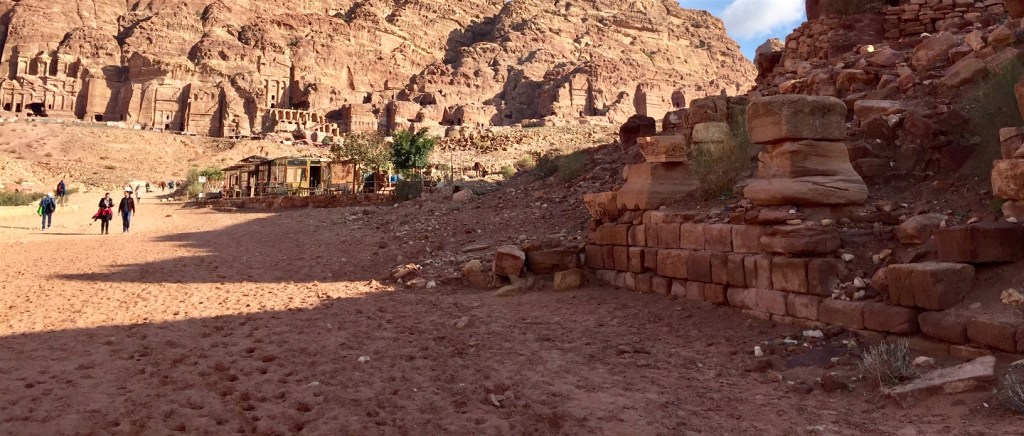
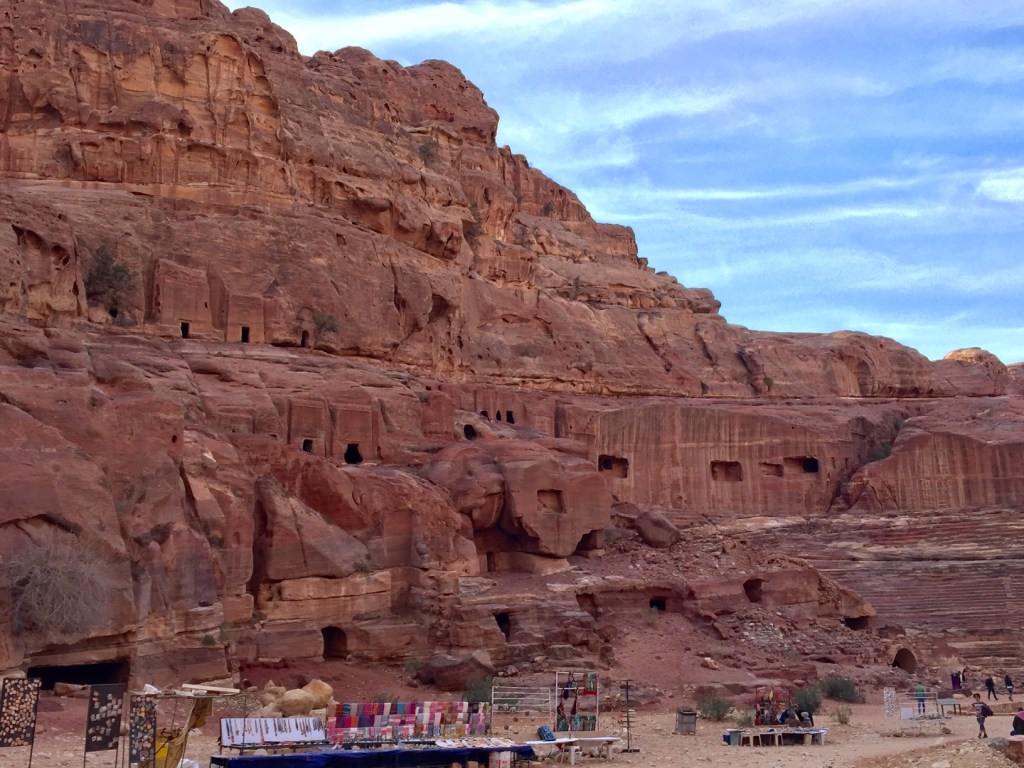
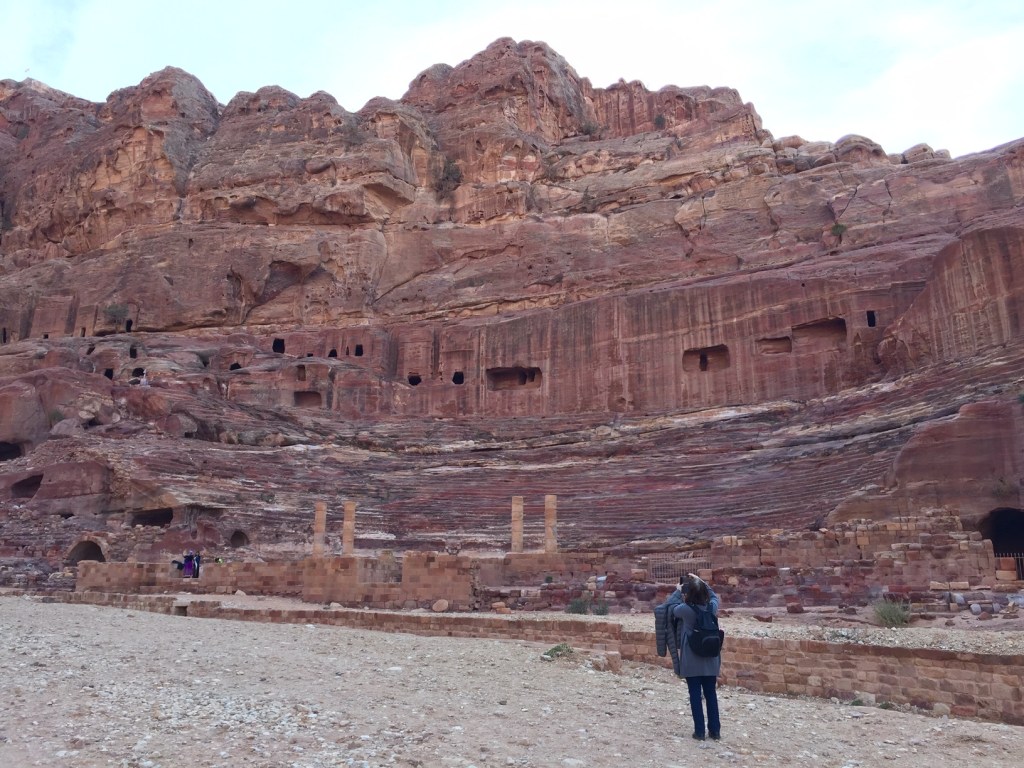
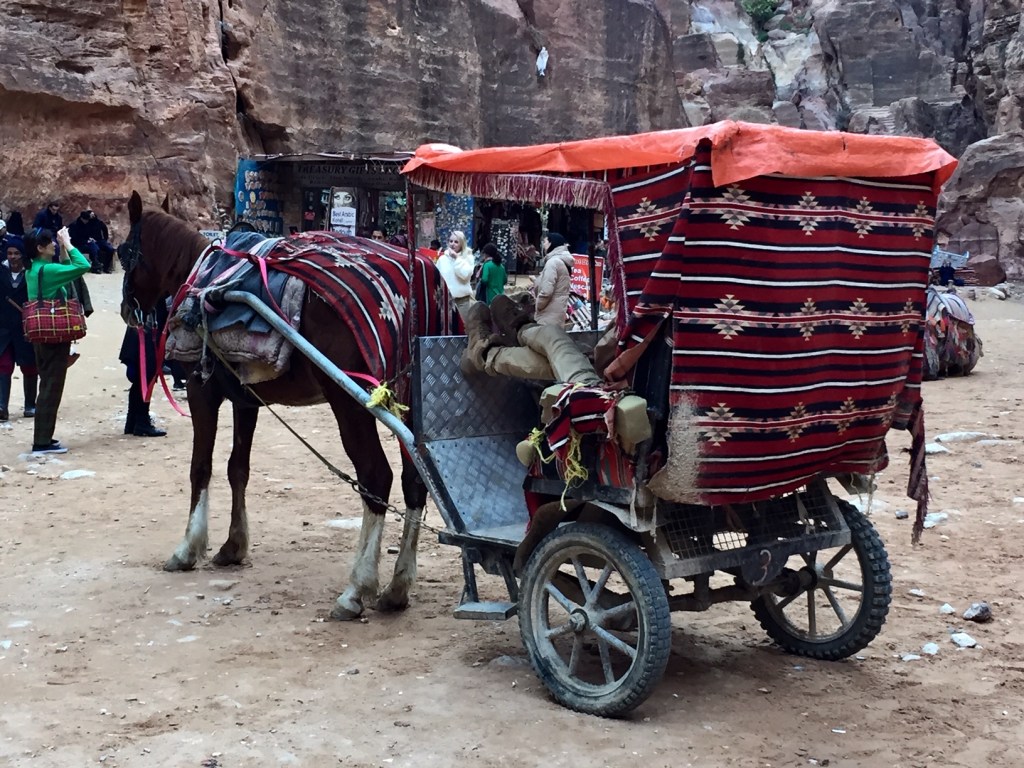
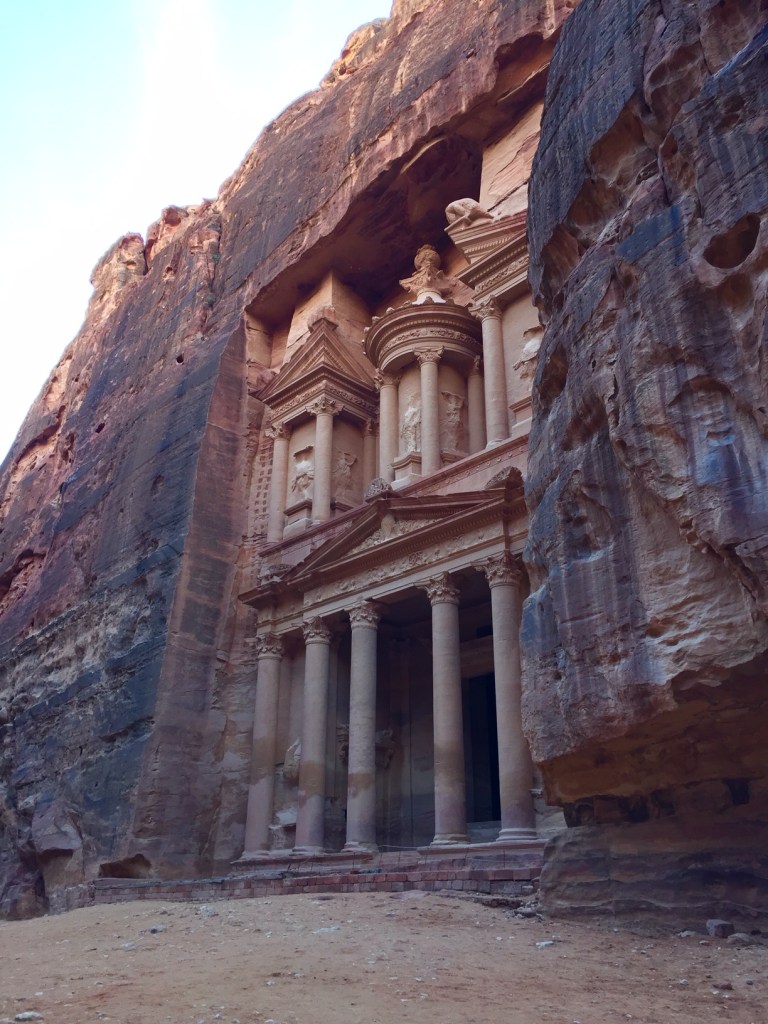
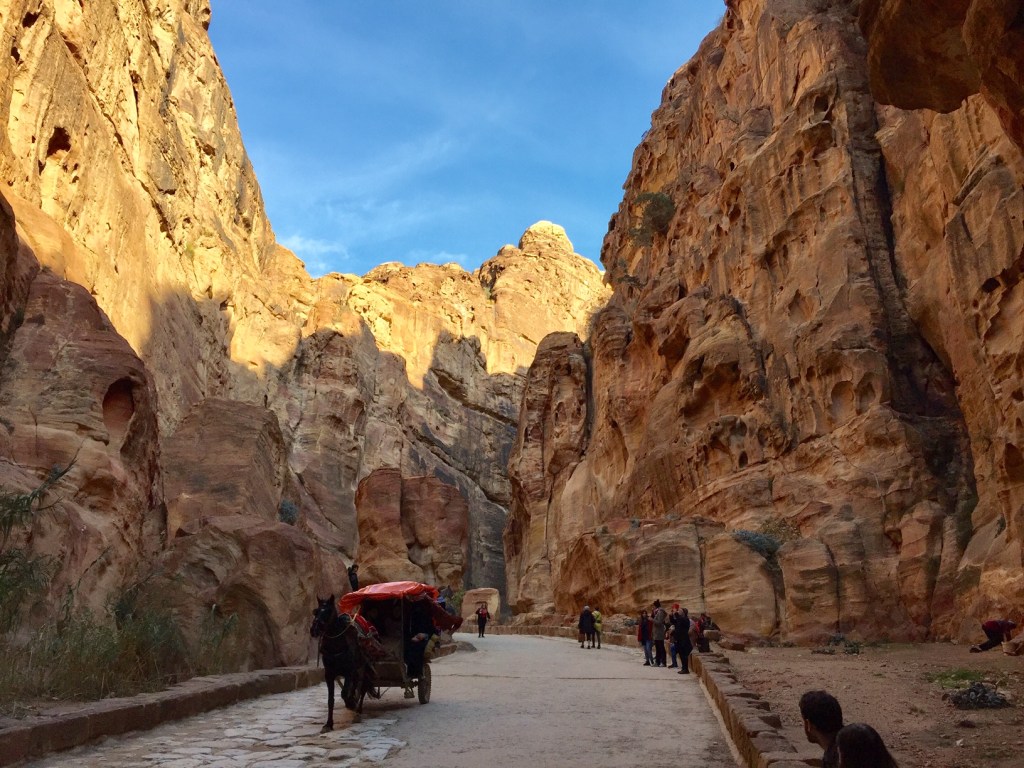
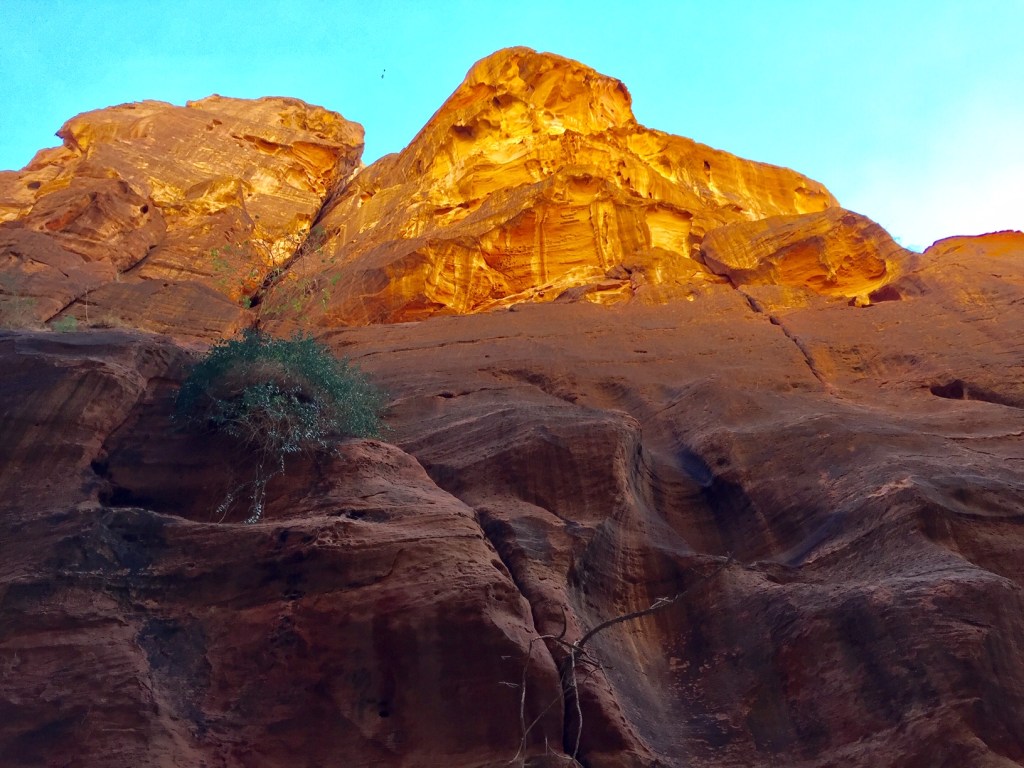
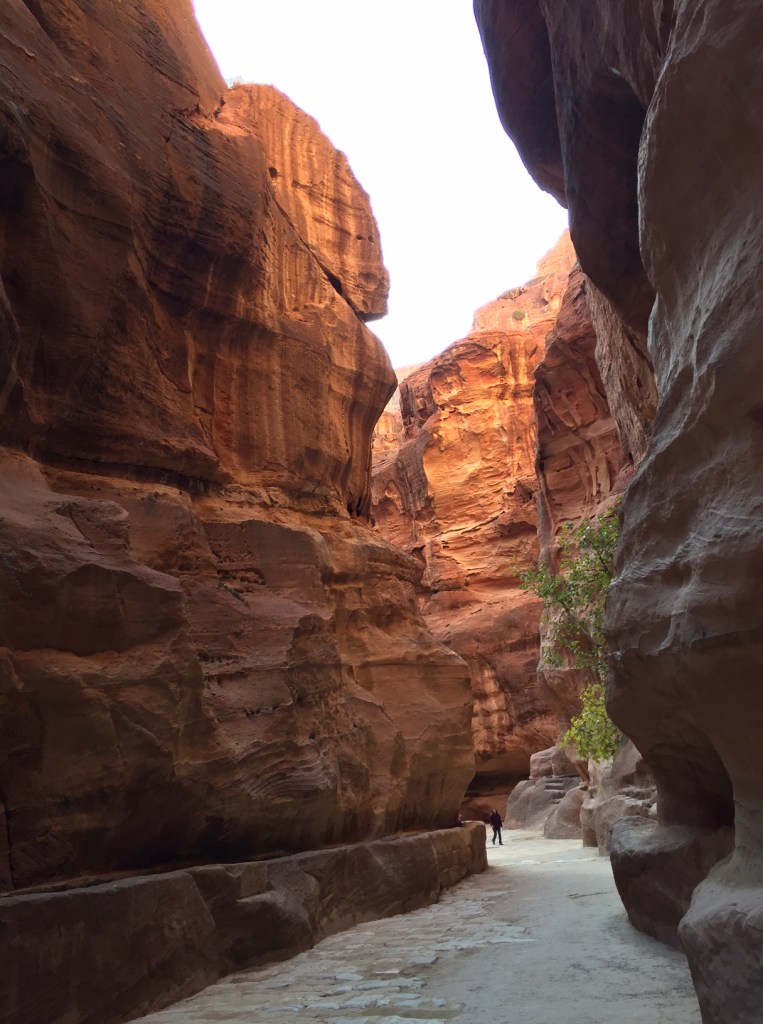
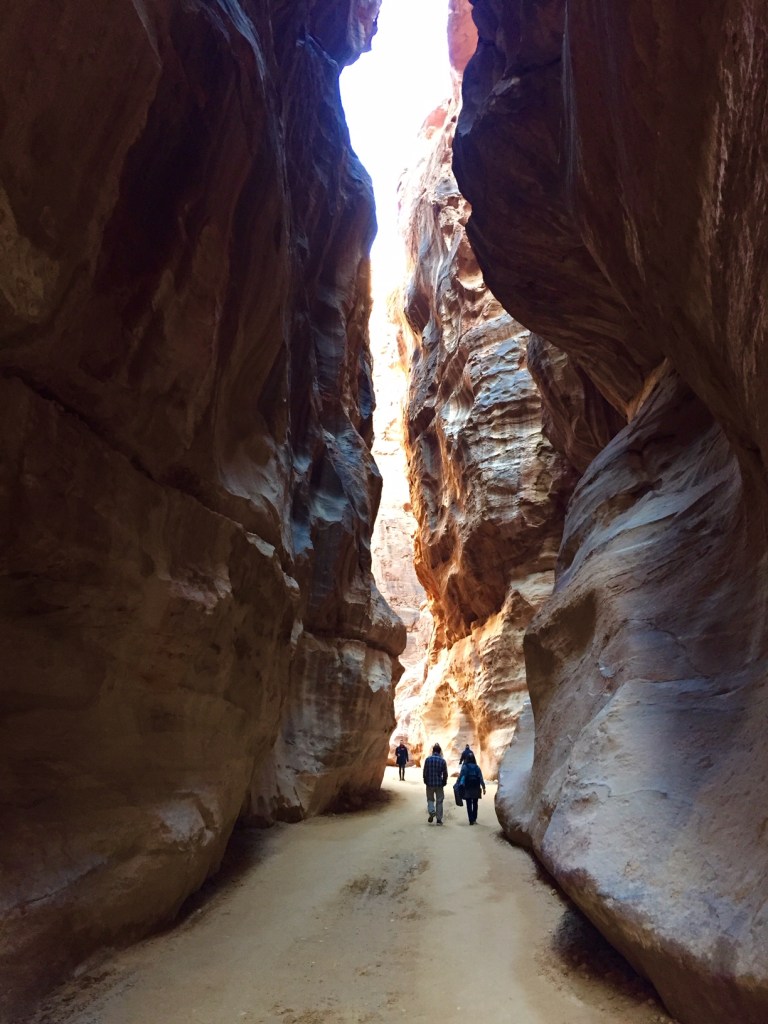
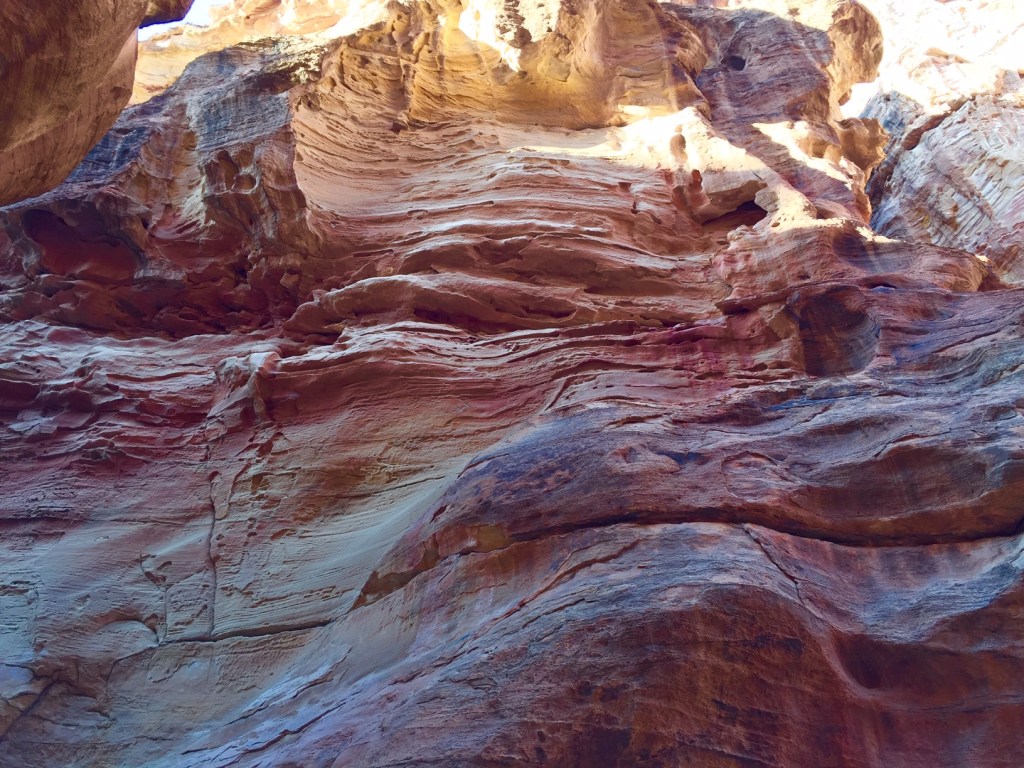
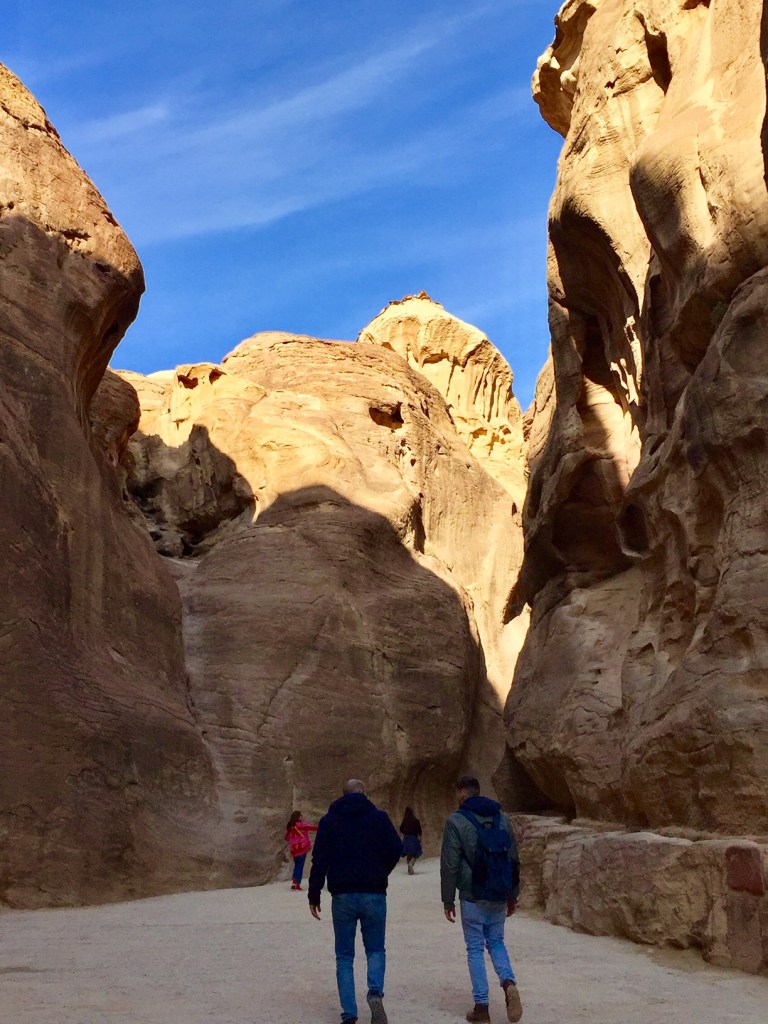
Our guide, Ali, at left. He does a tour six days a week, and seems to know and be on good terms with every camel driver and chotchke sellerTombs Carved from solid stoneDescending the canyonOnce, this was a sculpture of a man leading a caravan of camelsSome of these niches contain the remains of carved idolsOn the left, the remains of the incredible water system Most of the holes in the cliffs were carved as tombs — some served as homes. Later, Bedouin lived in these caves.It’s more than likely that the figures that used to fill the niches were destroyed by Muslims with an objection to art that depicts people. Our guide did not mention this possibility, however.If anything, the colors of the stone were richer than what the photos showIn addition to the carvings, the sandstone has amazing natural formationsDonkey carts and camels go dashing up and down the way — one has to keep one’s ears open and stand to the sideA modern attempt to keep water from flooding the canyonHorse cartWith great drama Ali had us move to one side, and then slowly step forward, until the greatest building of Petra, the tomb erroneously referred to as “The Treasury”, was little by little revealed. It was truly a dramatic moment.The stone figures – -standing or riding horses — are said to have worn away with time. The sandstone is soft, and the wind blows constantly, However, it’s possible they were destroyed by people with an aversion to “idols”.This building was carved out of solid stone. The Nabateans would first carve stairs in the stone up to the top, and then work their way downward, carving out the structure. It’s breathtaking to see and to think about. It is a tomb, not a temple, contrary to “Indiana Jones Part 3”.Look left from the “Treasury”…Then take it in again!You can see sand has washed down the valley and half-buried the door to this tomb.The stepped designs indicate that a different civilization from the one that built the “Treasury” built this imposing structure — I’m not sure, I think Ali said the AkkadiansWe were not good tourists. We didn’t buy souvenirs, or take our picture with the historical re-enactors in Roman armor. I did tell one small boy, who was manning a large souvenir stand by himself, that I would “maybe later” buy something. In Arab countries, “Maybe later” means “definitely yes”, as against in American where it means, “Not interested”. He was a beautiful boy, and it was a cold day to be trying to sell souvenirs to a sparse crowd of tourists. On the way back up the canyon later that day, I did bargain for and buy two useless souvenirs that were probably made in India or China.Amphitheater. The only one in existence to have been carved out of the stone, rather than laid of separate stones.I feel like this scene has probably not changed much since my great grand father was in the Middle East 115 years ago.The Bedouin who used to live in these caves now make their living offering donkey rides.At the bottom of the canyon is this fort, from a later era I think.And camel rides.Camels are really odd looking creatures!It had taken us a couple of hours to come down from the Visitor Center. Ali left us to explore on our own. Lunch at this small restaurant was included in our tour. It was the usual buffet style, and included some hot-out-of-the-oil falafel with sesame seeds — yum!After lunch we spent some time exploring this enormous Roman temple which archeology students from Brown University are the process of restoring.We began our ascent back up the valleyAs we climbed back up the hill I took many more pictures. The light had changed, and different perspectives were revealed. But I will spare you most of them!The amphitheater again — I think this one captures its vastness a little better.No thank you, we don’t want a carriage ride.A last look at the most iconic structure at PetraAfternoon light
When we reached the top of the canyon we had a little time left, so we went through the small but excellent museum. It had a perfect selection of artifacts from the various civilizations that once inhabited Petra. We were exhausted, but it was still worth seeing. It always astonishes me what can survive — glass, for instance, from many hundreds of years ago.
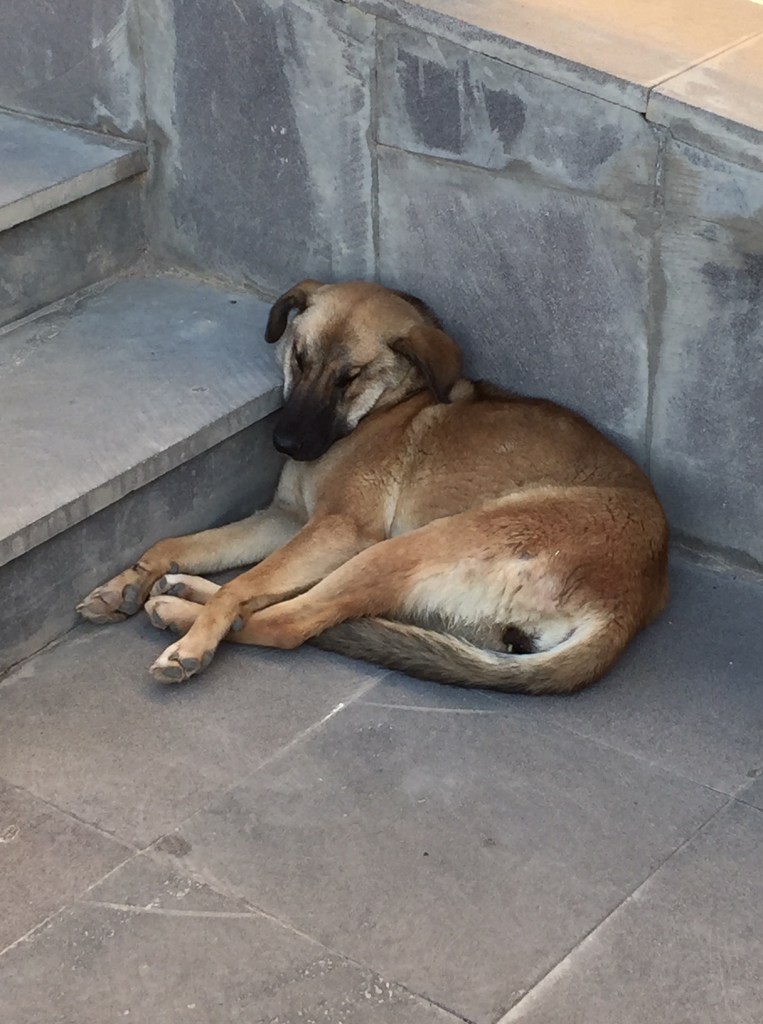
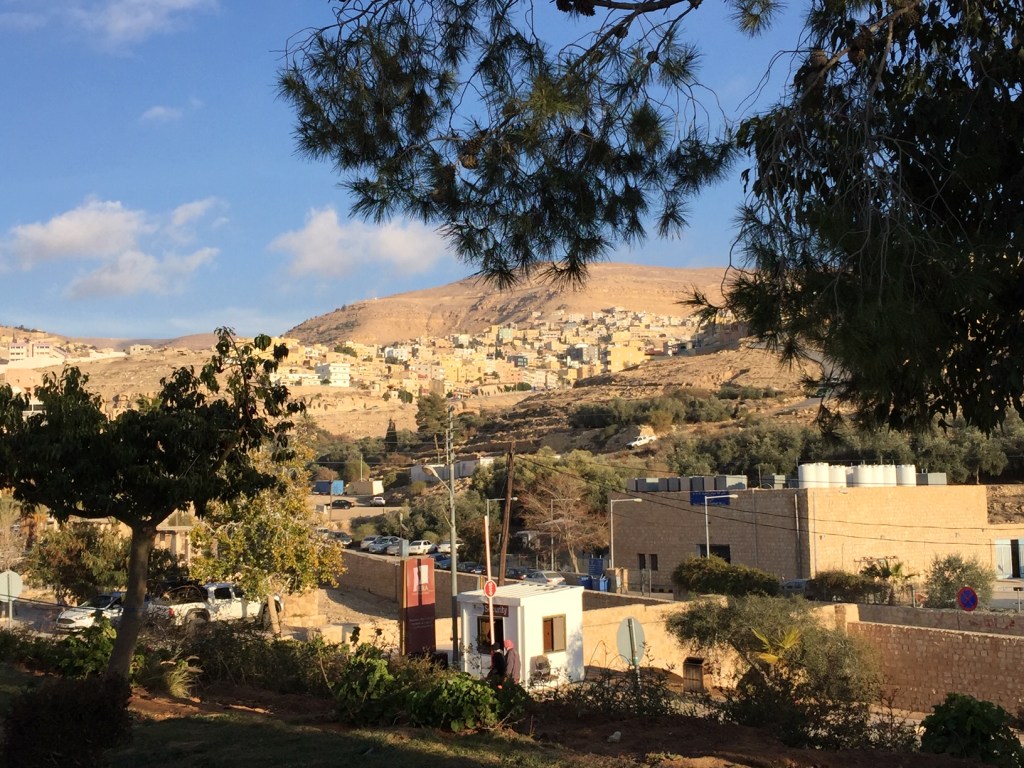
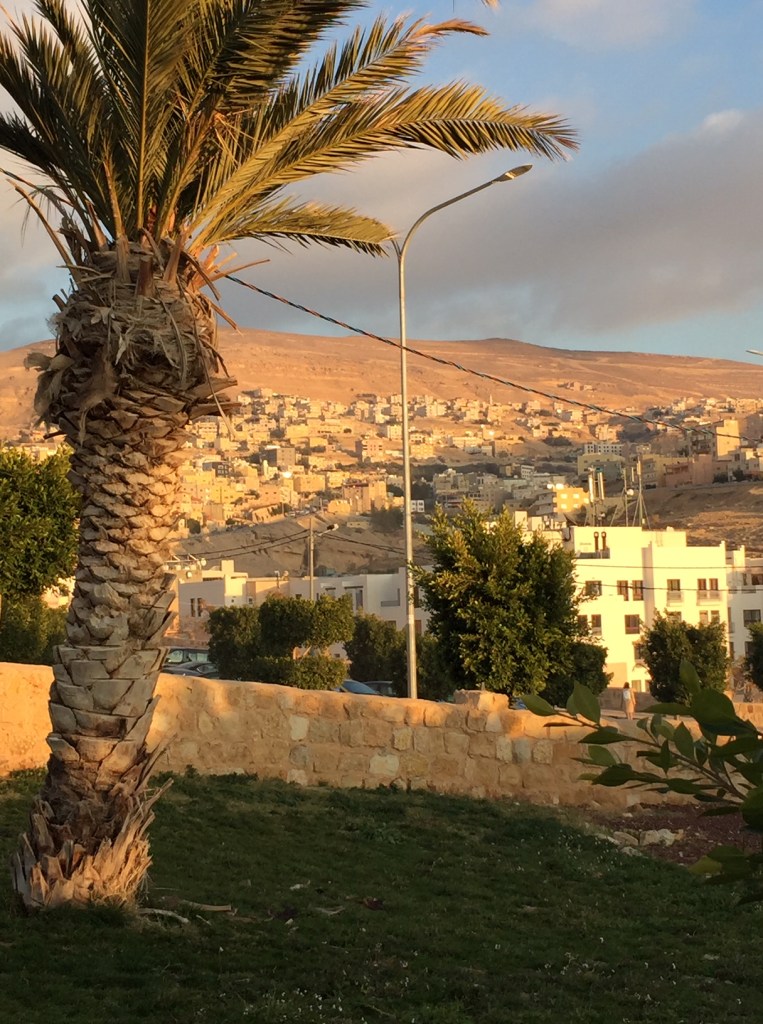
I couldn’t resist taking this fellow’s picture. He looks as tired as we felt.This is the village of Wadi Musa, where we stayed, viewed from above the museum.
It was late in the afternoon, and we were glad when our ride came to take us to the hotel. I’m tired just from sharing all this with you — so I’ll save the rest of my Jordan pictures for another couple of posts!
Kate, these are the most awesome photos! Thank you for sharing them and “tour-guiding” us. I can’t even imagine how exhausting the trip was—viewing your report convinced me that this is not an outing for senior citizens, so I really appreciate this opportunity to see Petra
WOW — and WOW again!
Suzanne and I just spent some time poring over there amazing photos. What a great experience you’re having –and hanks so much for sharing it with us.
Hugs to you,
Bob R.


 Nine months in Israel
Kate, these are the most awesome photos! Thank you for sharing them and “tour-guiding” us. I can’t even imagine how exhausting the trip was—viewing your report convinced me that this is not an outing for senior citizens, so I really appreciate this opportunity to see Petra
Love, Faith
>
LikeLike
WOW — and WOW again!
Suzanne and I just spent some time poring over there amazing photos. What a great experience you’re having –and hanks so much for sharing it with us.
Hugs to you,
Bob R.
LikeLike
Thanks, Bob. Yeah, it really was a “Wow!” experience. Glad I can share it!
LikeLike