Our new guide picked us up at 8:30 in the morning, and we set off on the drive to Wadi Rum. The new Ali (yes, same name) as not nearly as loquacious as his predecessor. However, when we commented on the snow, he talked for some time about how the village where we had stayed was snowed in many years ago, and tourists ended up staying with villagers and learning about their lives. The King (the previous one) even helicoptered in to check on the welfare of his subjects. This topic led Ali to tell us quite a bit about traditional agriculture in the region, traditional foods, and how the old systems have fallen away as young people choose to go off to university. Now, the villagers still do some farming from time to time, but with drought, they have little motivation to do so. Food is brought in from outside, life is more expensive, and no one is self-sufficient any more.
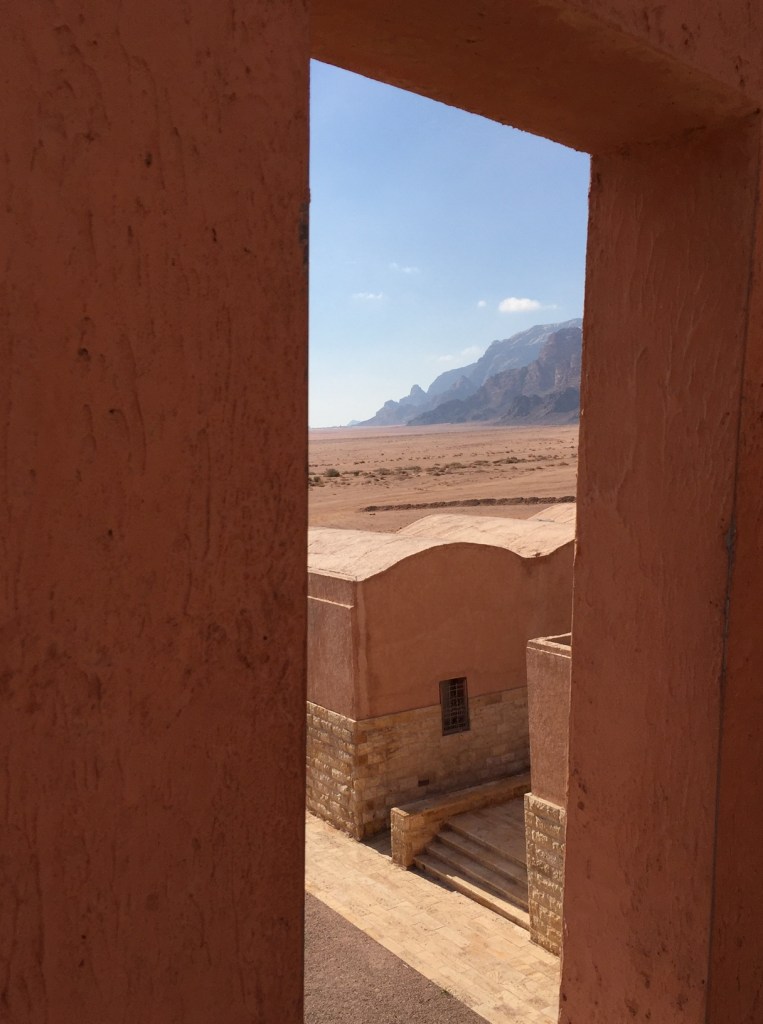
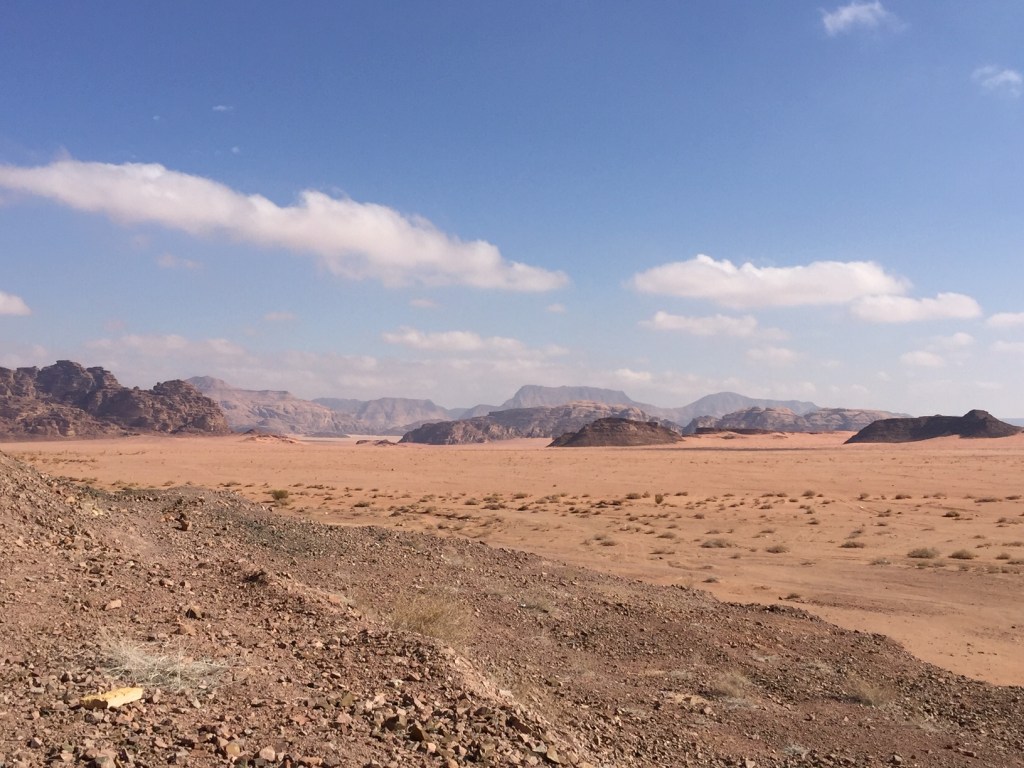
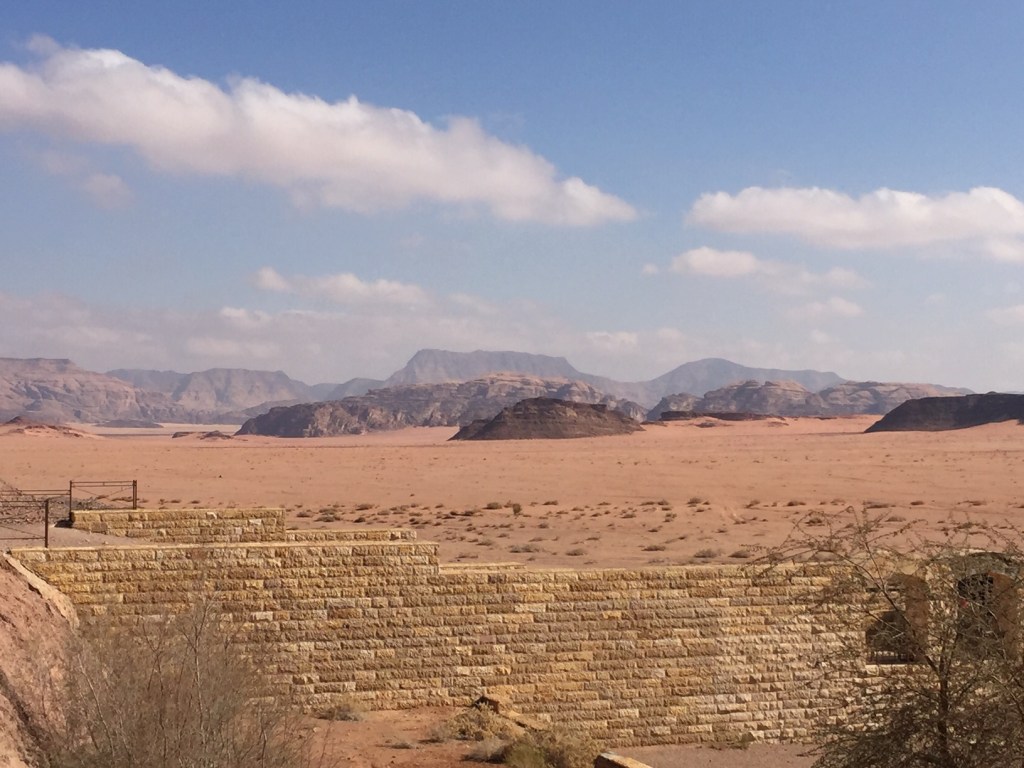
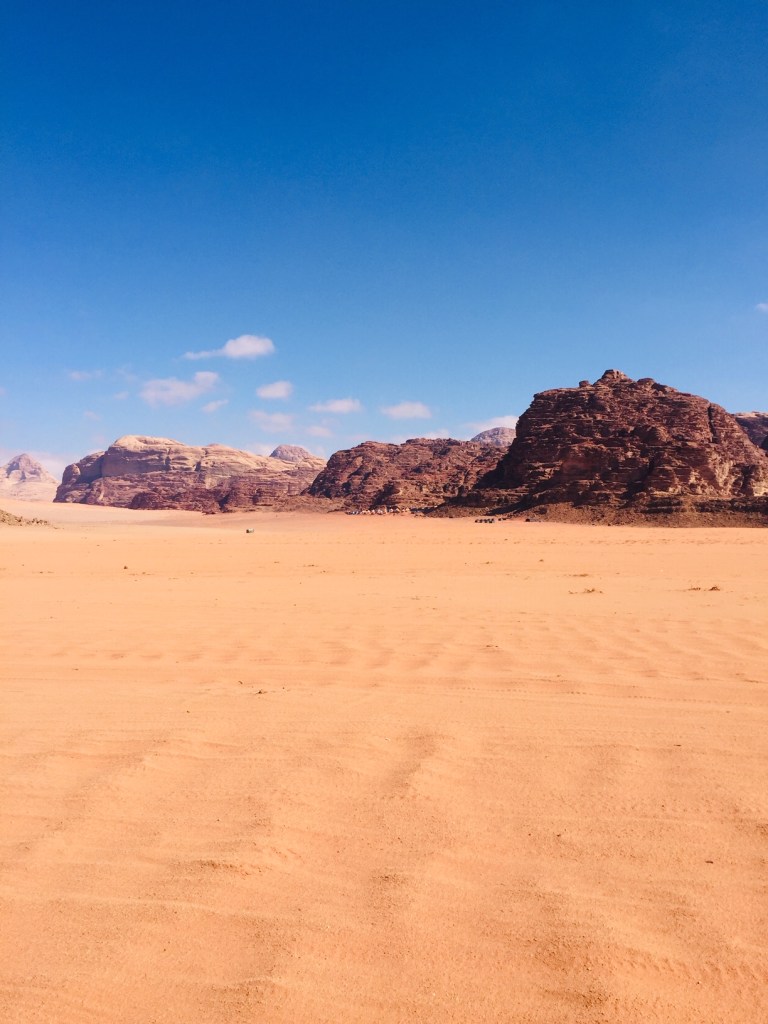
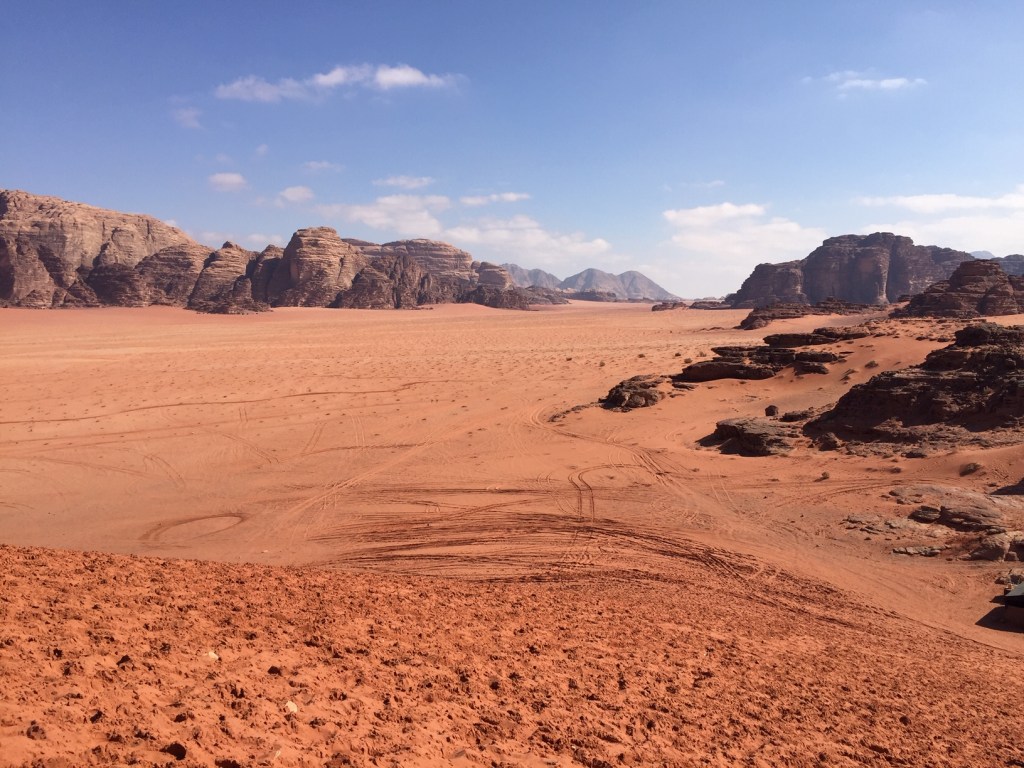
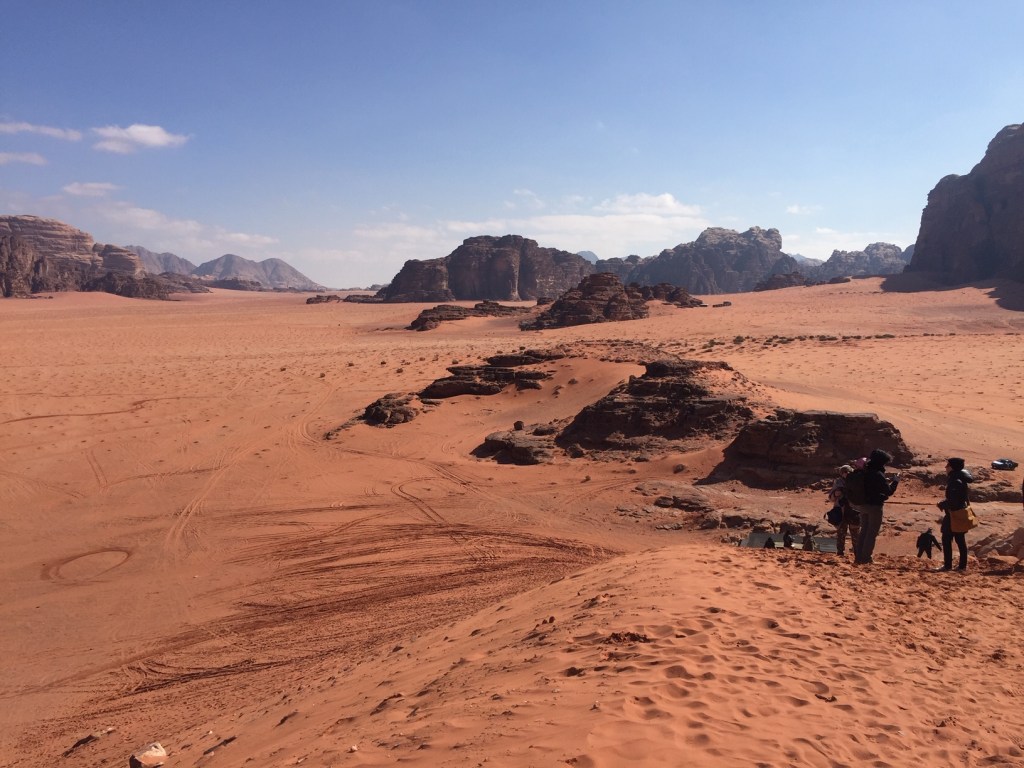
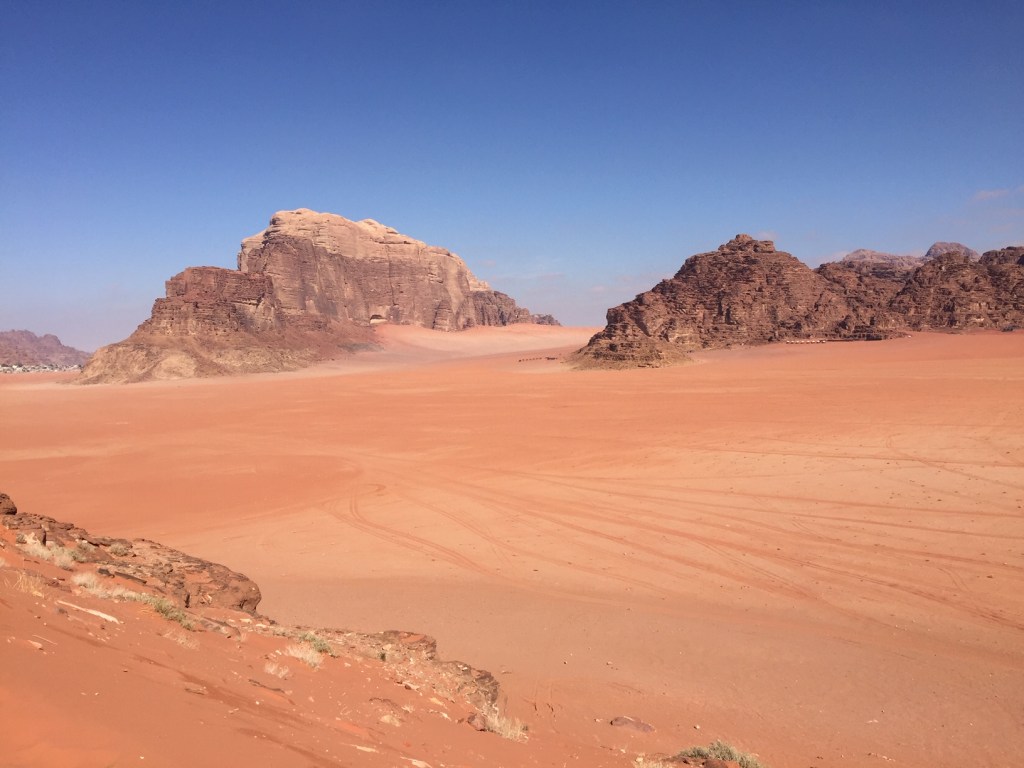
We retraced out journey of the day before, stopping once at a roadside gift and coffee shop where we bought some postcards. It was a long drive, but the views were spectacular — vast expanses of desert and mountains, with small towns huddling down among them. At last, we turned off the main highway and made our way to the Wadi Rum visitor center. While Ali paid our entrance fees, we walked up a small incline to get out first views of the Wadi Rum desert. This is what we saw:
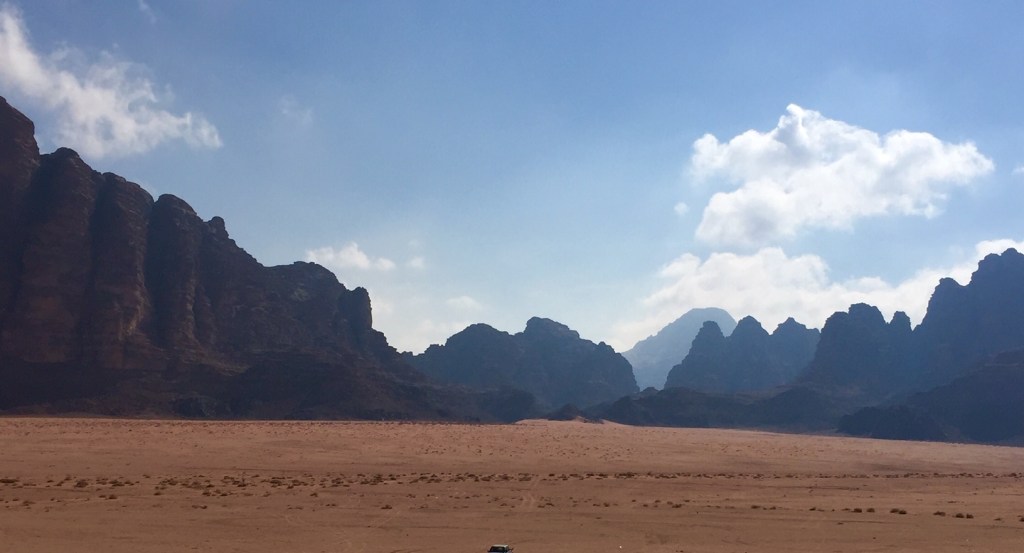
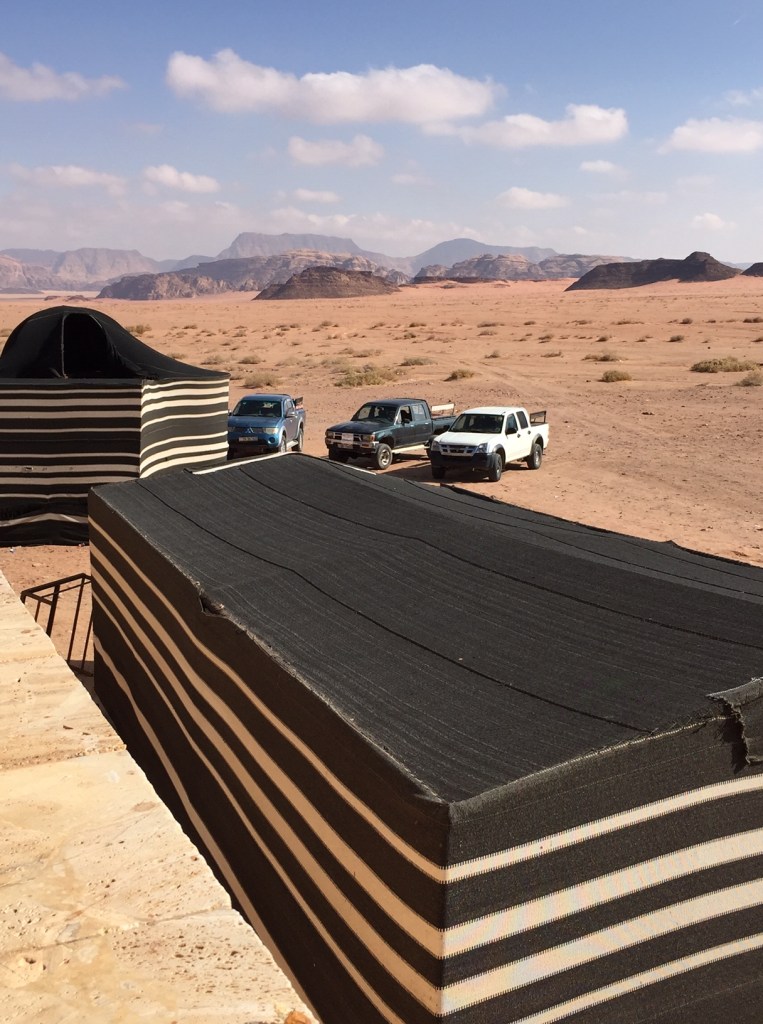
We set off into the desert. Ali explained that this area has become famous as a location for movie making. It began in the 1960s with “Lawrence of Arabia”. Indeed, several local landmarks are named after Lawrence, or after locations in the film — even though the film is supposed to take place in Saudi Arabia. More recent films made here include the last episode of “”Stars Wars”, “Transformers II”, “The Martian”, “Indiana Jones III”, and many others. Here’s a list: https://www.imdb.com/search/title/?locations=Wadi%20Rum,%20Jordan When I returned home to my apartment in Jerusalem, I watched some of these movies. I must say, I’ll never be able to watch a movie set on Mars again without thinking of Jordan!
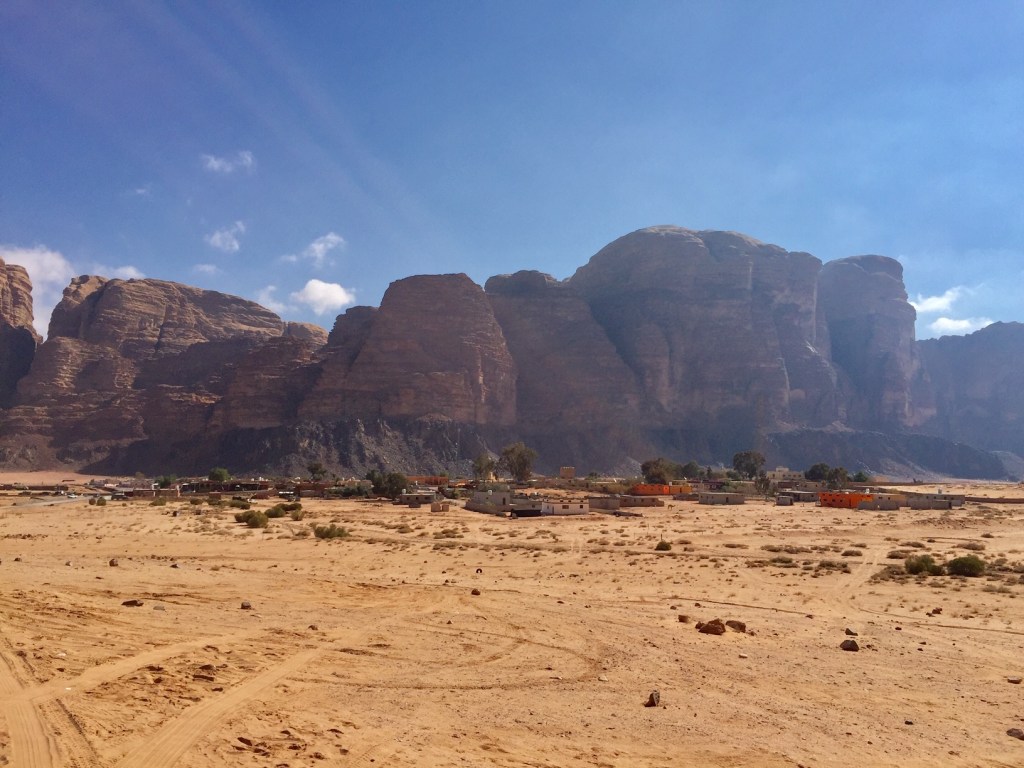
We passed through a small village. This is a place where the government settled the Bedouin, removing them from their nomadic lifestyle. It’s interesting to think about the critique that is made of the way the Israeli government has treated the Bedouin, and then ask oneself how the Jordanian government has dealt with the same issue. For an interesting paper on this topic, see here: https://halshs.archives-ouvertes.fr/halshs-01963959/file/Chatelard_Today_bedouins_Jordan.pdf This one is also quite interesting (although perhaps a bit of a puff piece): https://www.theturbantimes.com/2017/05/12/backbone-jordanian-culture-bedouins/ My sense is that because people want to paint Israel as oppressive, they talk about how the Bedouin are treated in Israel as if it were very different and more objectionable that how they are treated in Jordan — but in fact, it’s not clear to me that there’s a big difference. Semi-nomadic peoples are an inconvenience to modern life — and also, some of the semi-nomads themselves would prefer to opt into a more settled way of living if it brings them education, health care, and a higher standard of living. Although, of course, many would not!
I read in Wikipedia’s page about the Bedouin, In the 1950s and 1960s large numbers of Bedouin throughout Midwest Asia started to leave the traditional, nomadic life to settle in the cities of Midwest Asia, especially as host ranges have shrunk and populations have grown. For example, in Syria, the Bedouin way of life effectively ended during a severe drought from 1958 to 1961, which forced many Bedouin to abandon herding for standard jobs.[45][46] Similarly, governmental policies in Egypt, Israel, Jordan, Iraq, Tunisia, oil-producing Arab states of the Persian Gulf and Libya,[47][48] as well as a desire for improved standards of living, effectively led most Bedouin to become settled citizens of various nations, rather than stateless nomadic herders.
Governmental policies pressing the Bedouin have in some cases been executed in an attempt to provide service (schools, health care, law enforcement and so on—see Chatty 1986 for examples), but in others have been based on the desire to seize land traditionally roved and controlled by the Bedouin.
I would encourage you to read Wiki’s entries about Israel and Jordan in regard to the Bedouin. Then, of course, you can range further afield — it’s clear that the Wiki entry has been influenced by writers with various agendas. https://en.wikipedia.org/wiki/Negev_Bedouin
We stopped at a tiny outpost. Our guide pointed out that people do climbing on the rock faces here. He himself had climbed these rocks often, he said, when he was younger. We ascertained that he was my age — 56 — but he looked as though he might have been a decade or two older (although handsome in a rugged, weathered way). He wore desert camouflage, with he said was left from his days as a commando. “The Jordanians are a warrior people,” he said, proudly. “We have very few songs about love, our songs are all about war.” “Too bad!” said Hagai.
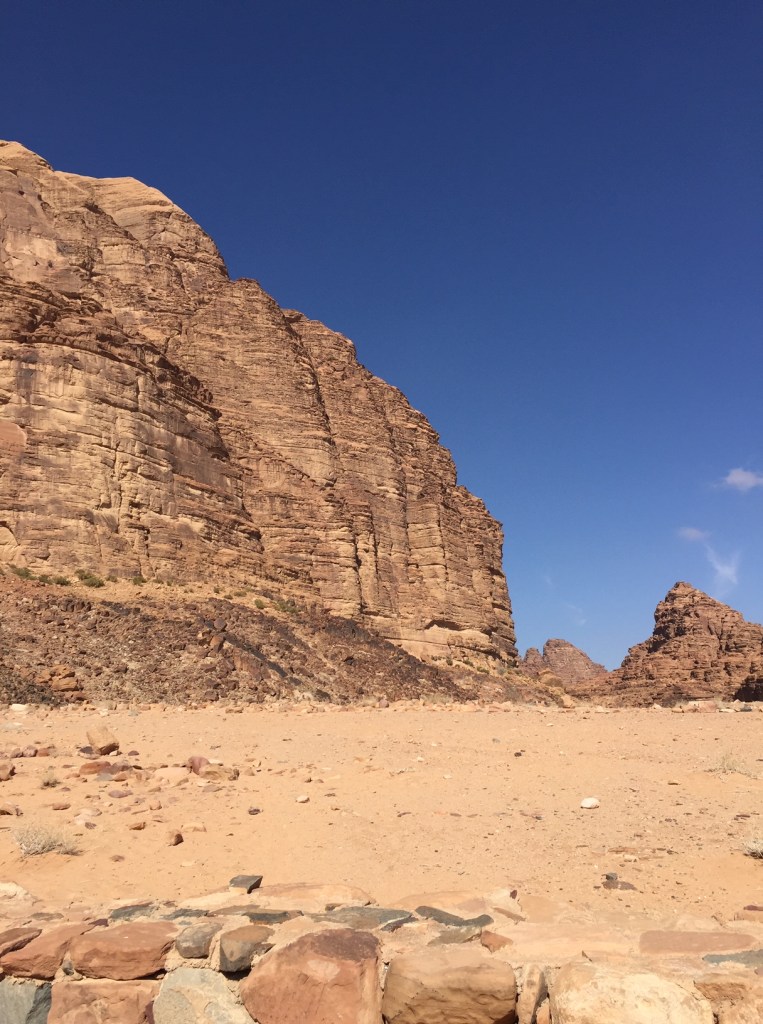
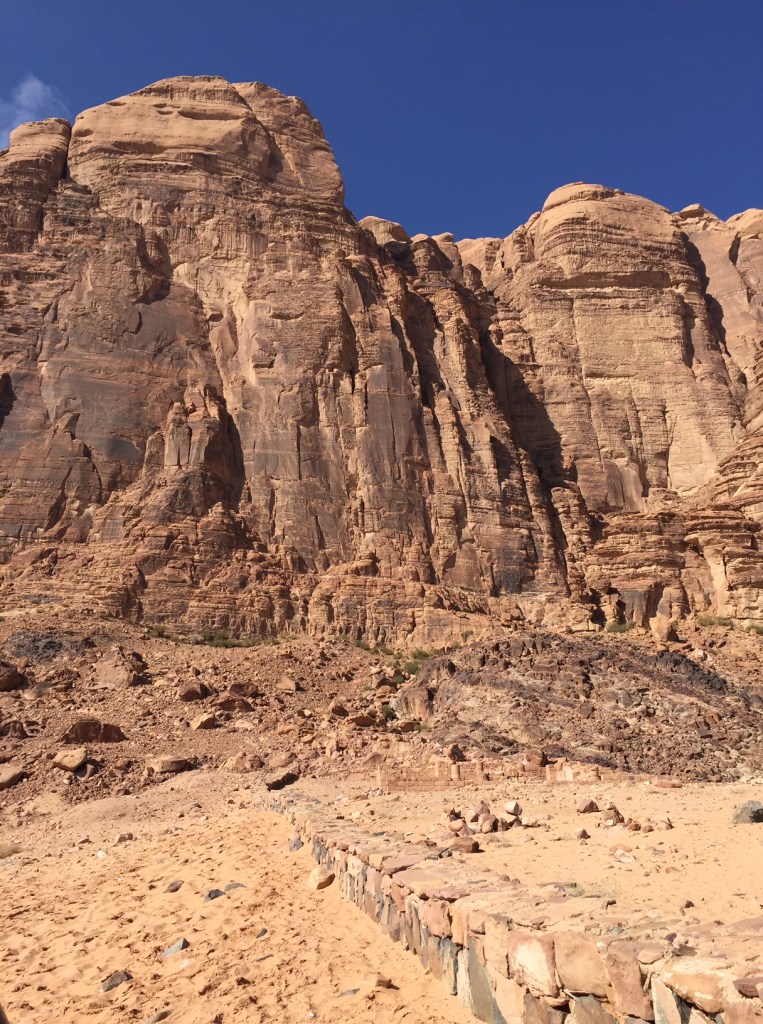
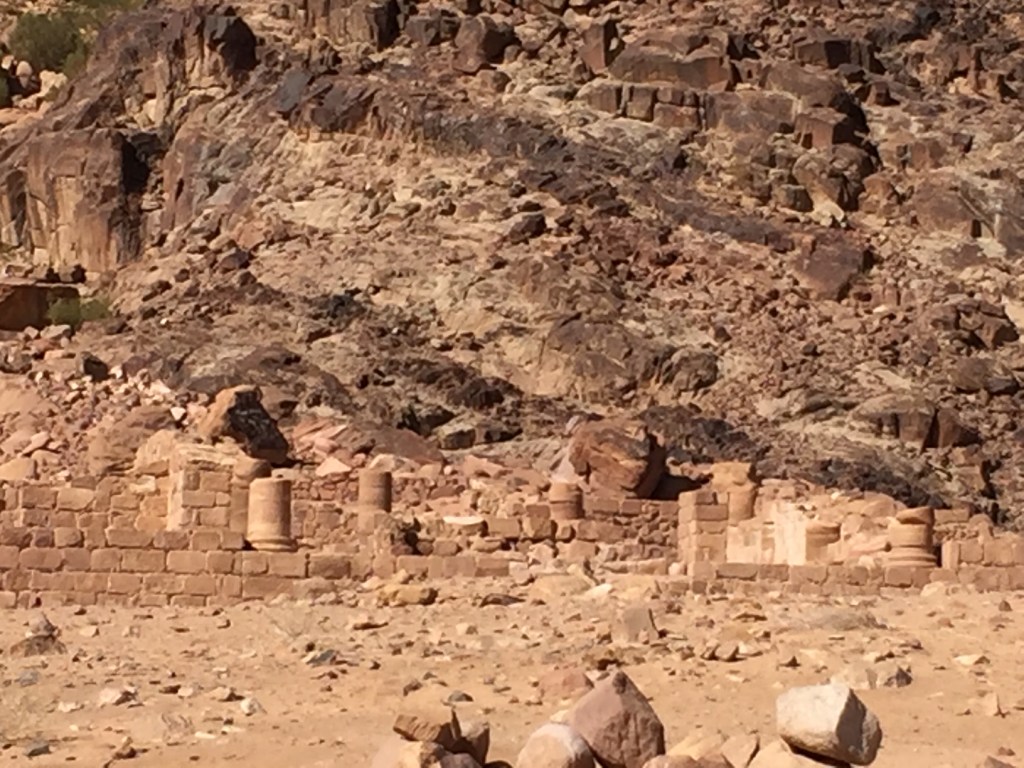
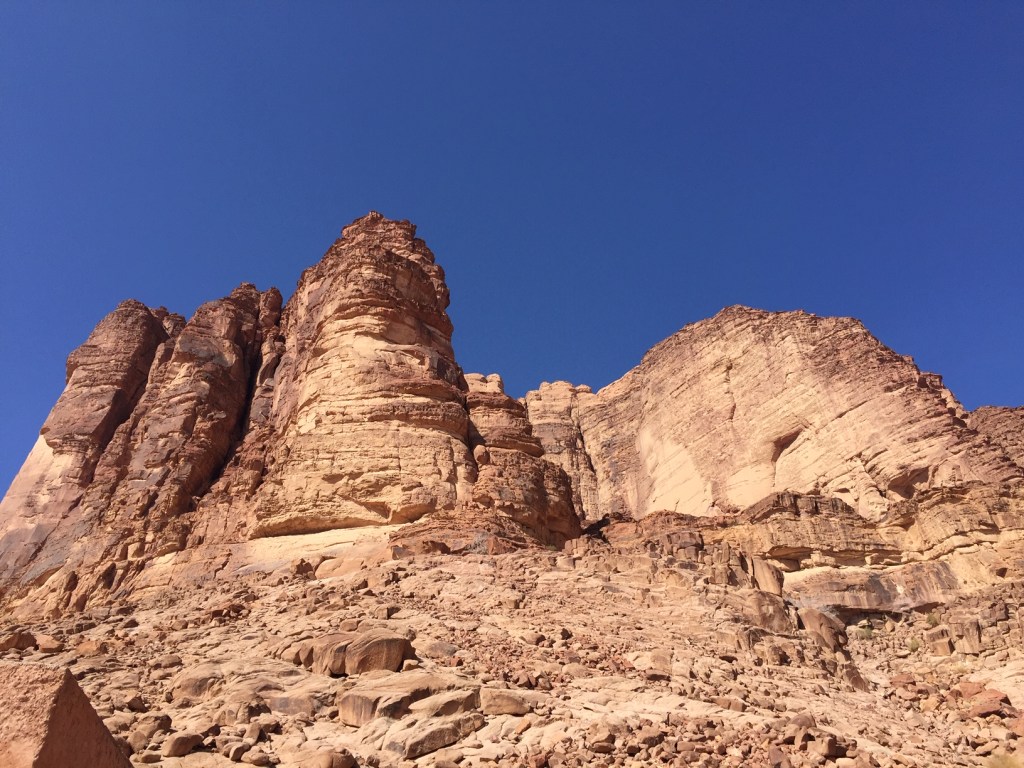
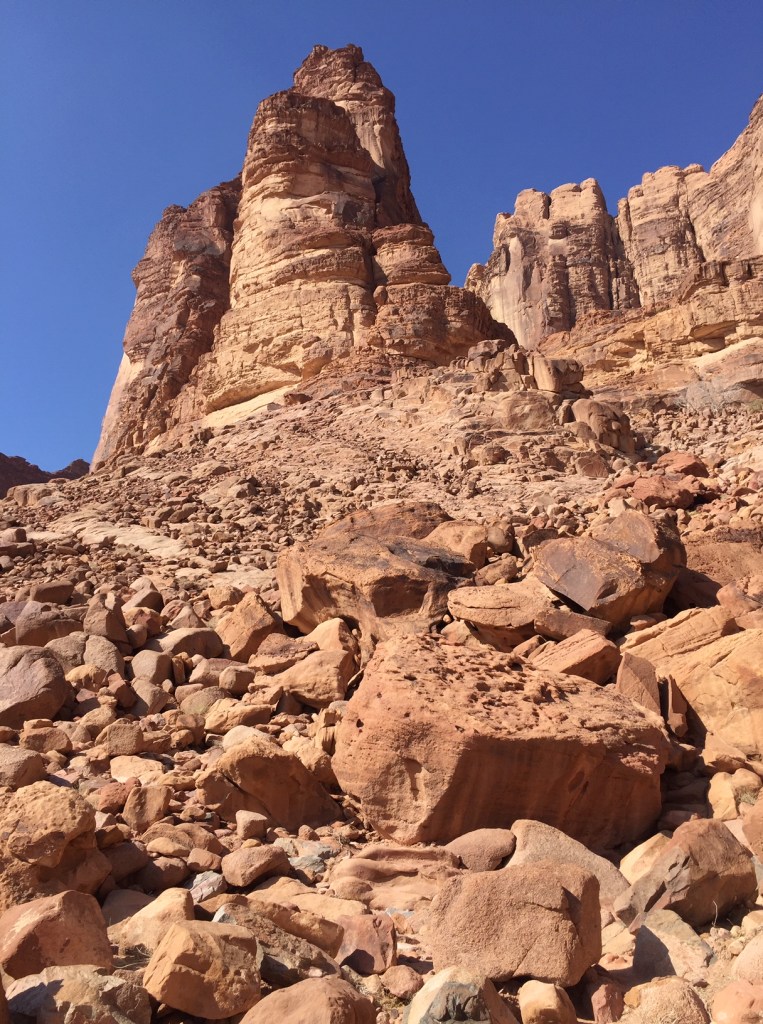
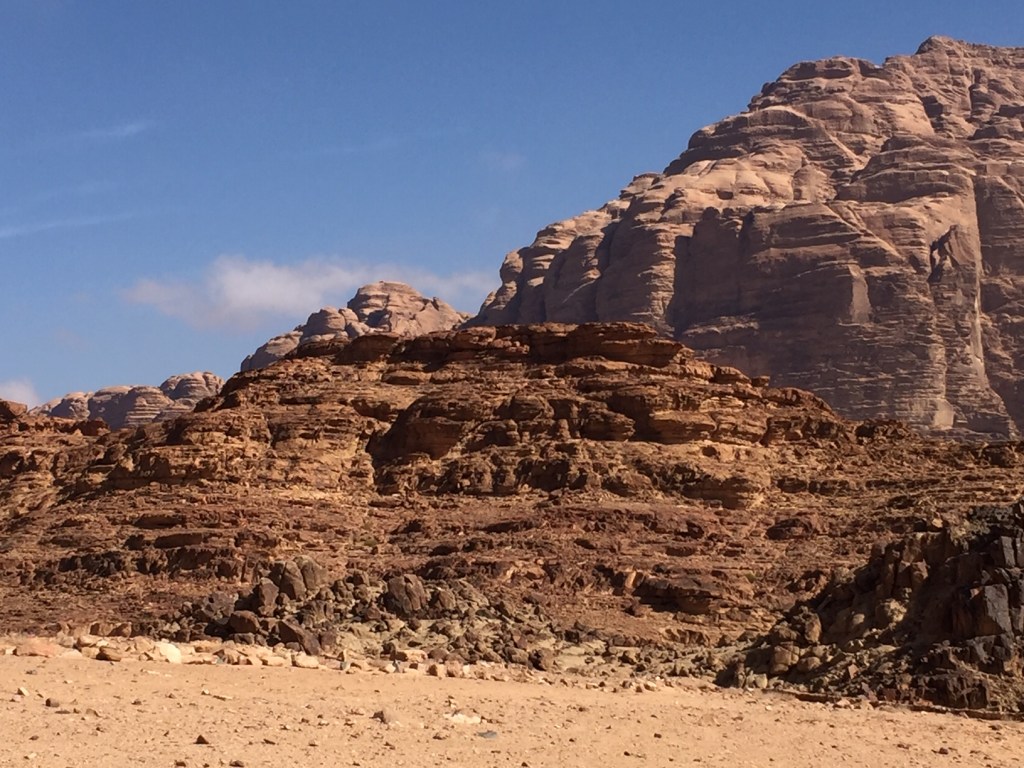
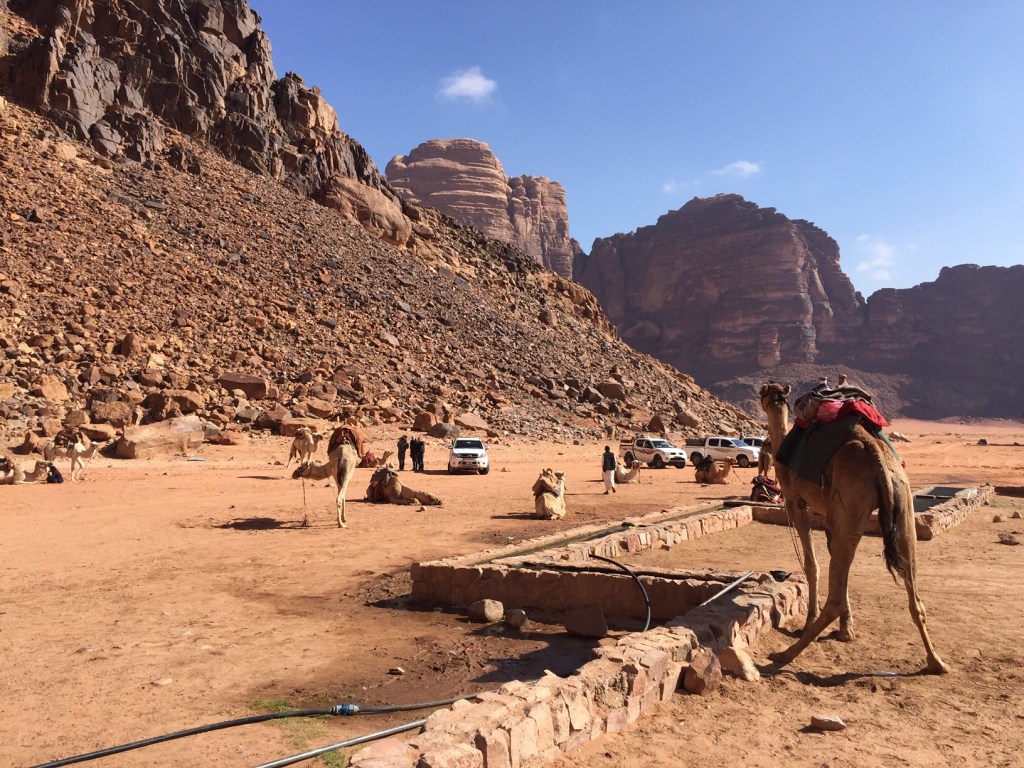
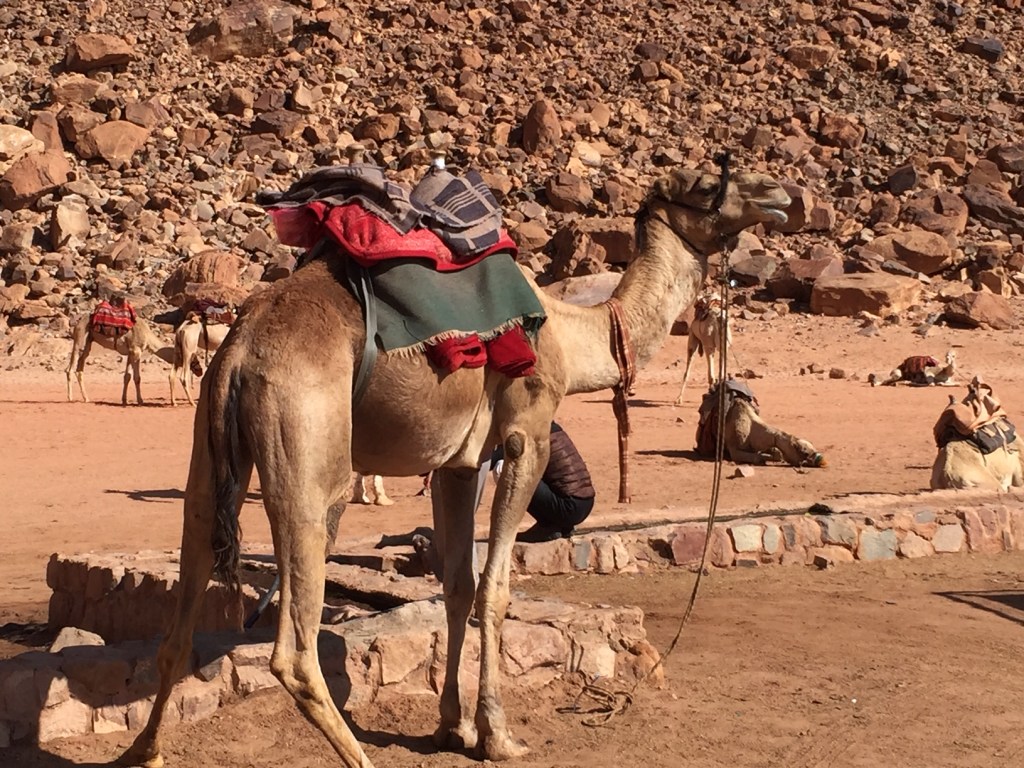
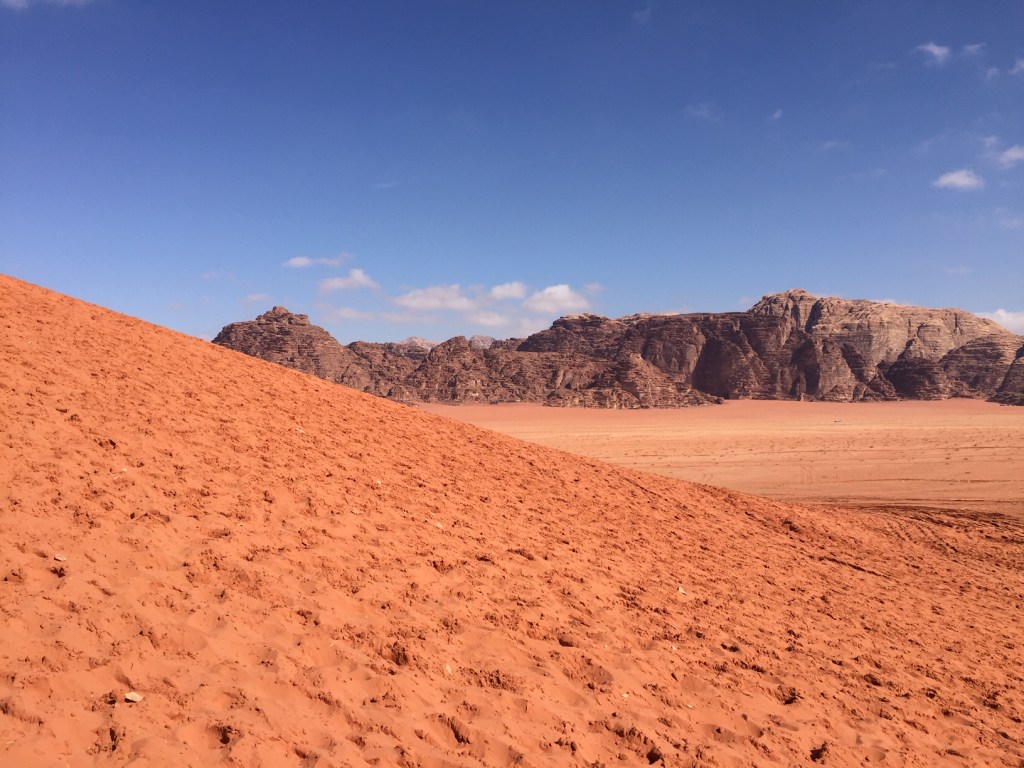
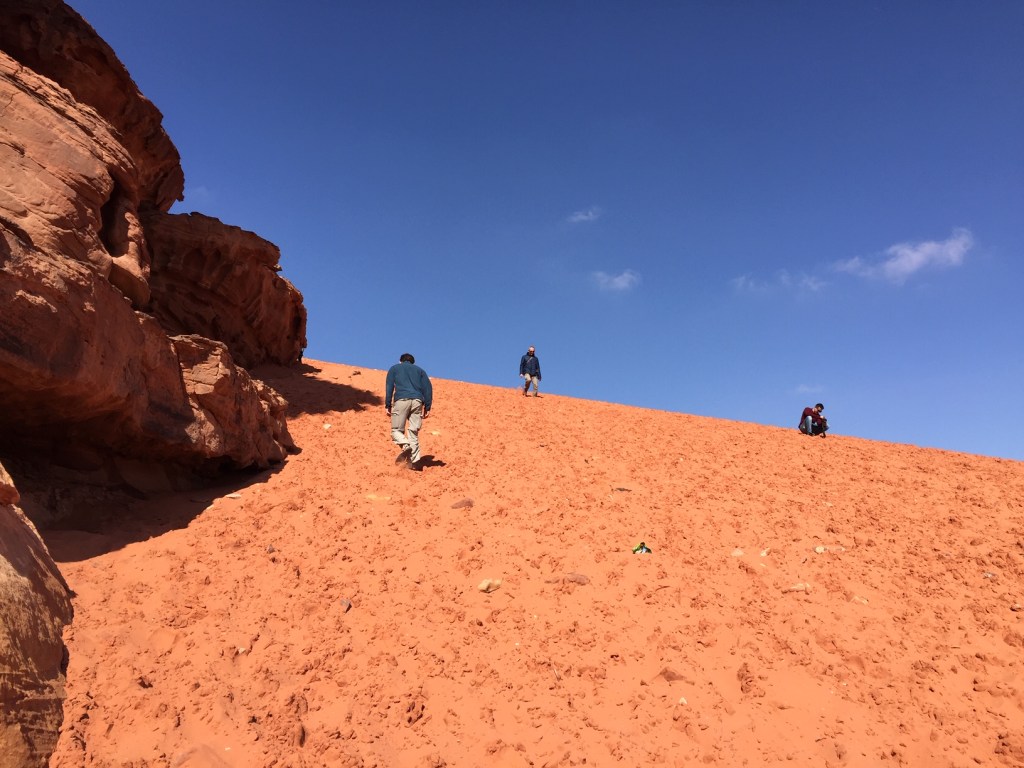
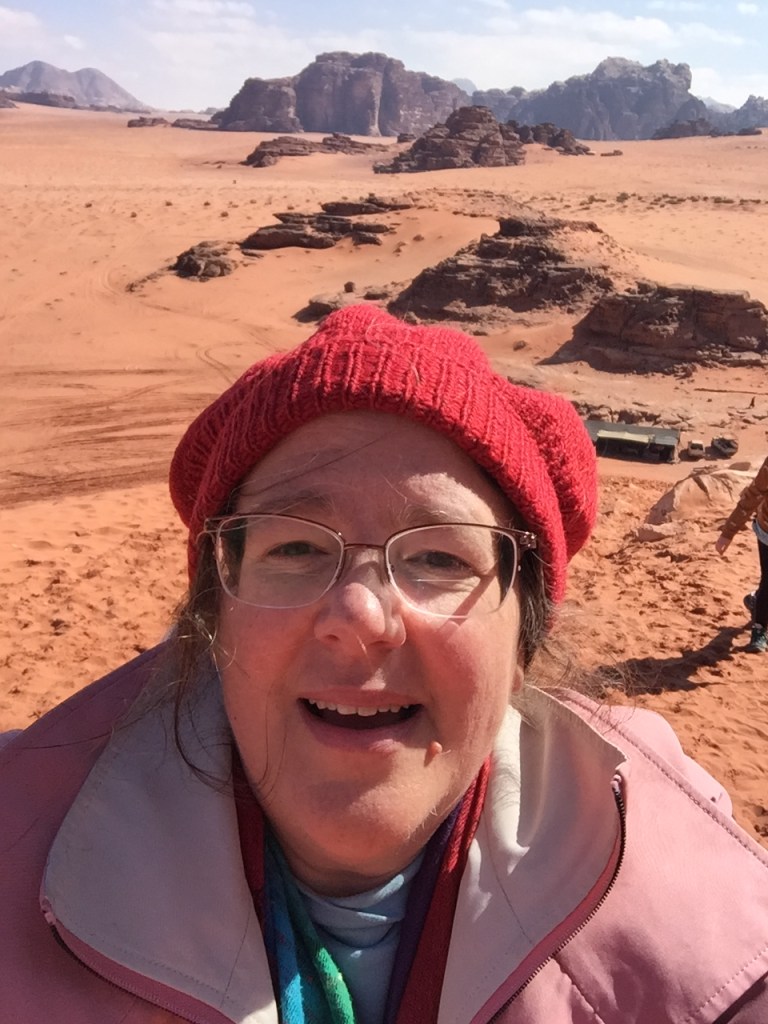
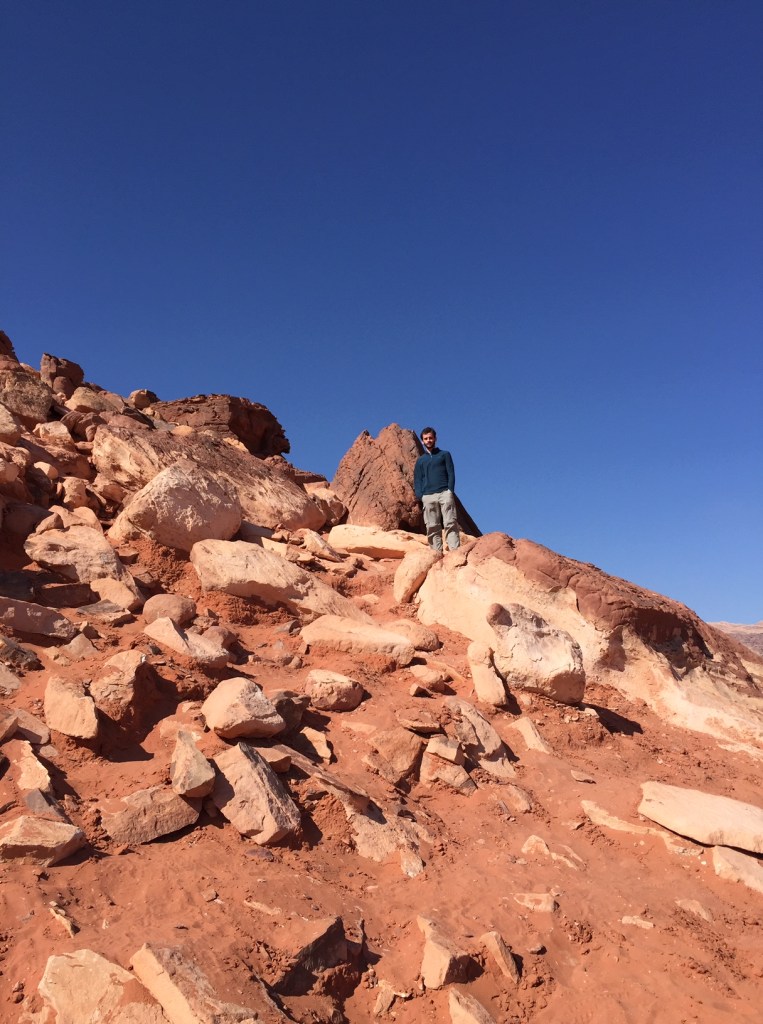
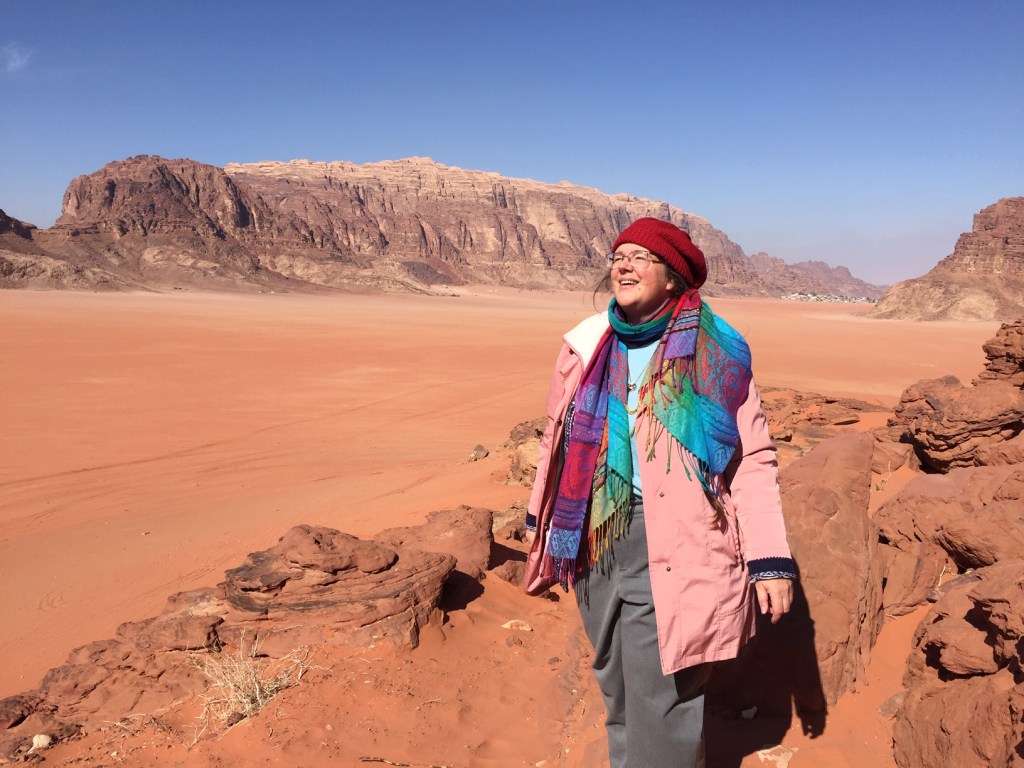
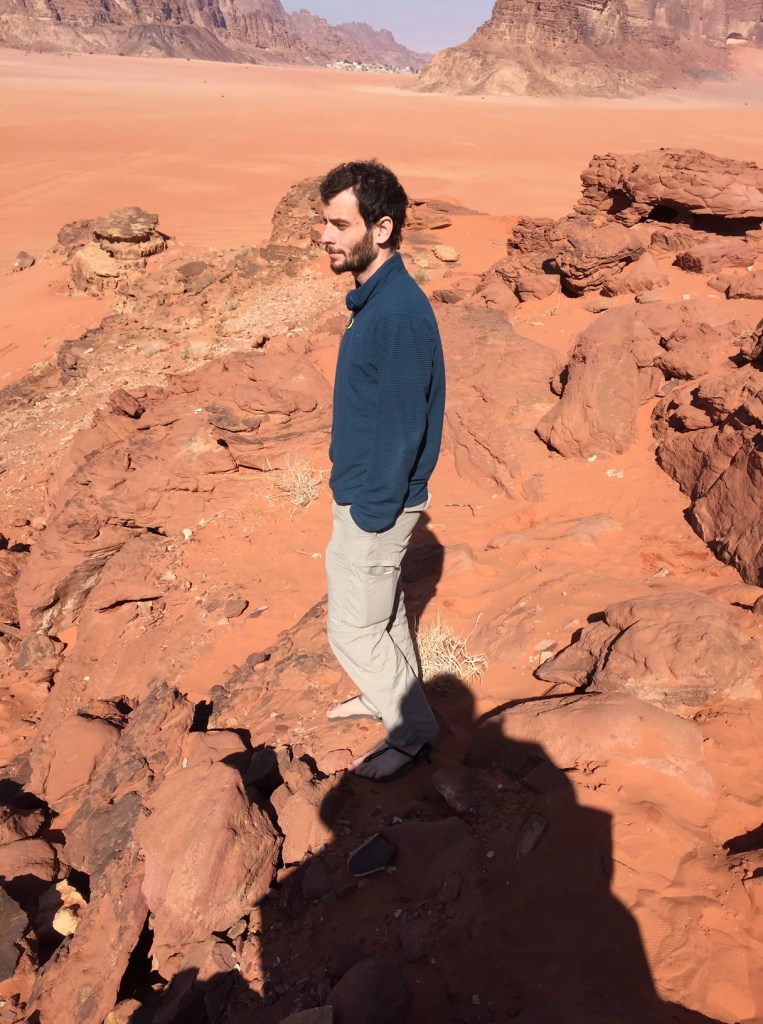
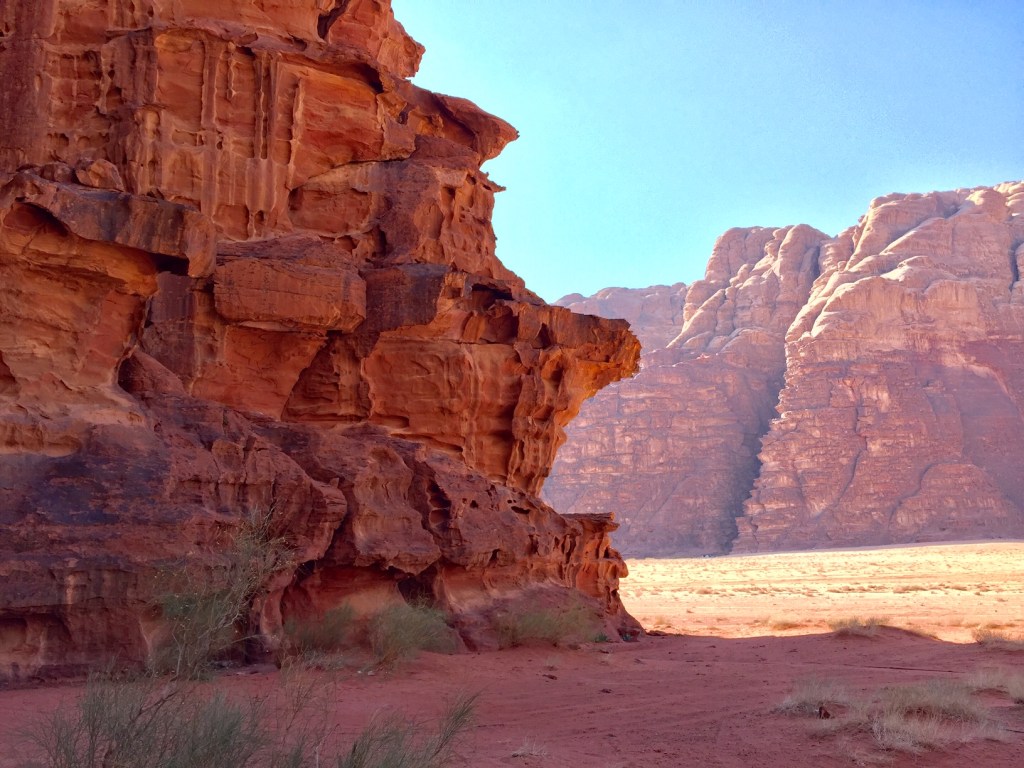
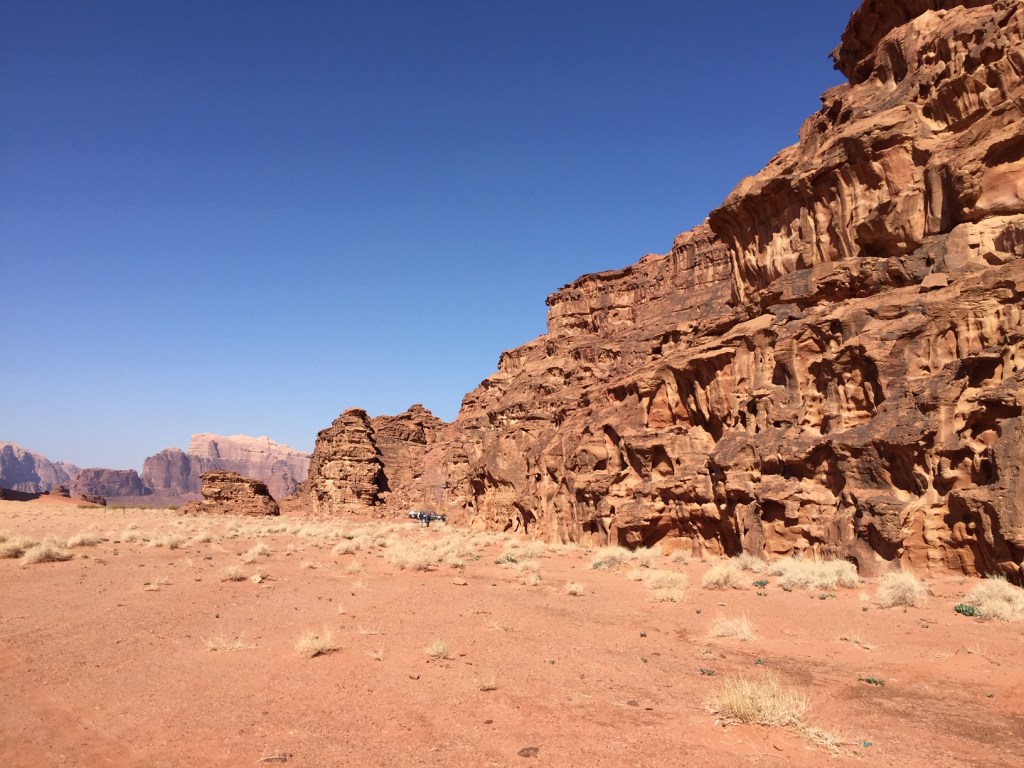
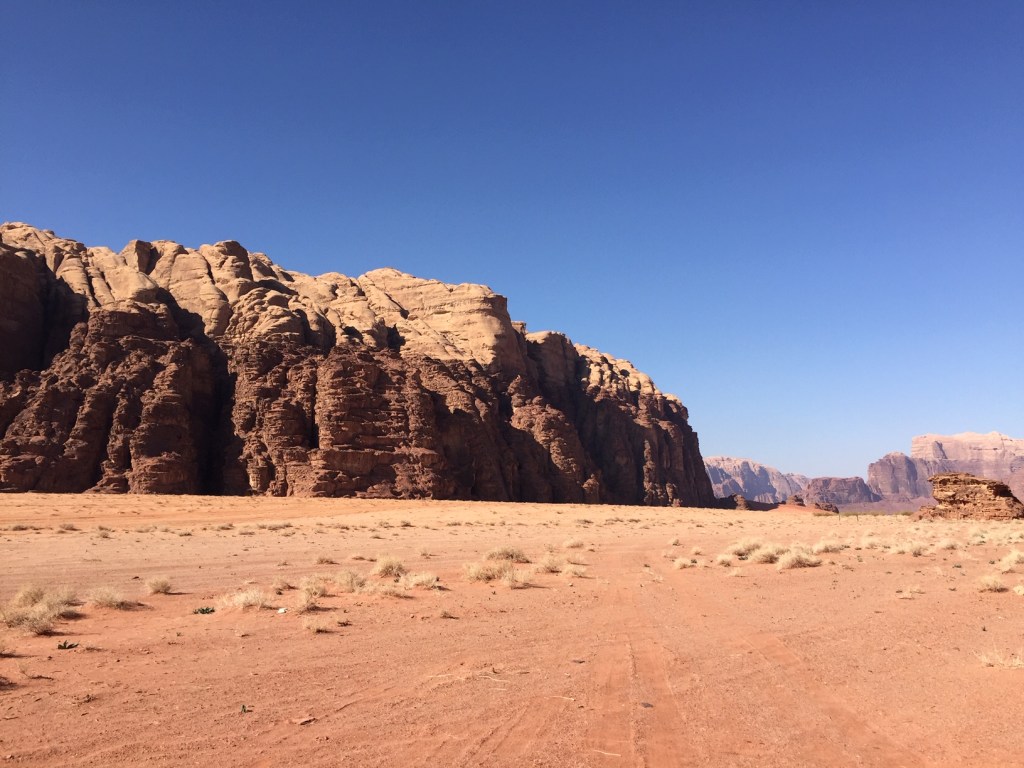
We drove on across the red sand. From time to time we could see encampments tucked against the foot of the towering rock formations — groups of twenty or thirty Bedouin tents, or in some cases more modern tent structures. These are tourist camps where people come to stay when they are on hiking trips or are in the desert to view the vivid stars at night. Film crews also camp in such places. Wadi Rum is now protected, though, and so a lot of the filming happens in other nearby desert areas. We stopped again, this time to climb a towering heap of red sand and get a view across the desert. Hagai went up like a mountain goat, and I slowly clambered after him. A group of Italian tourists was going up at the same time, exclaiming volubly in their native tongue.
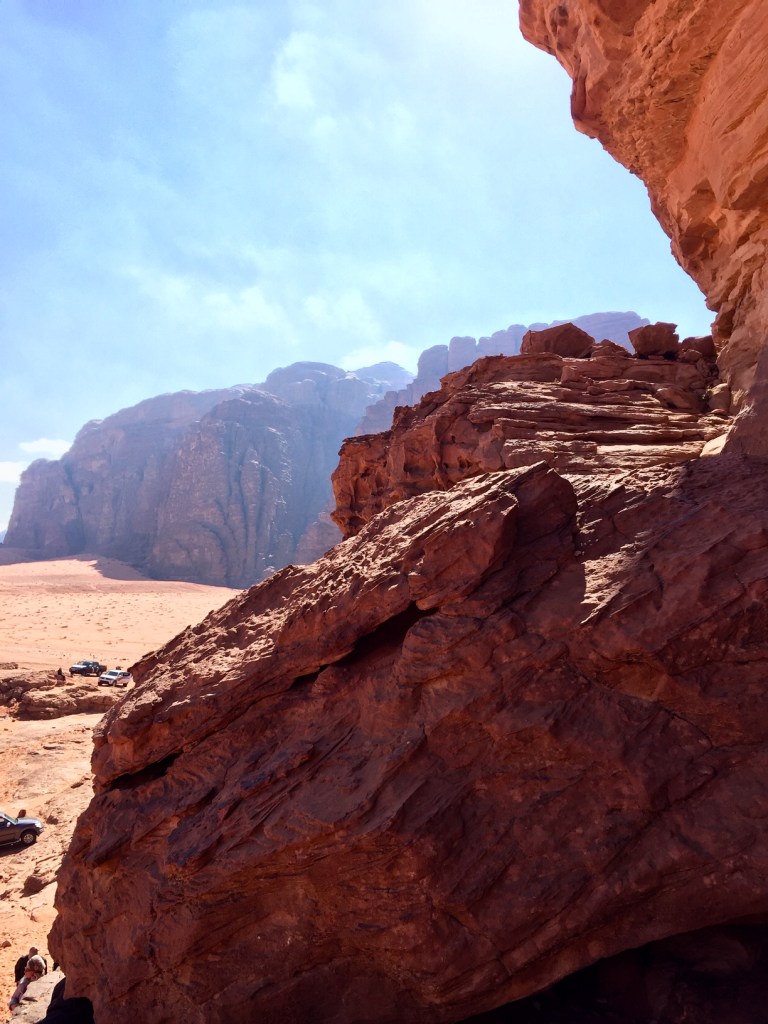
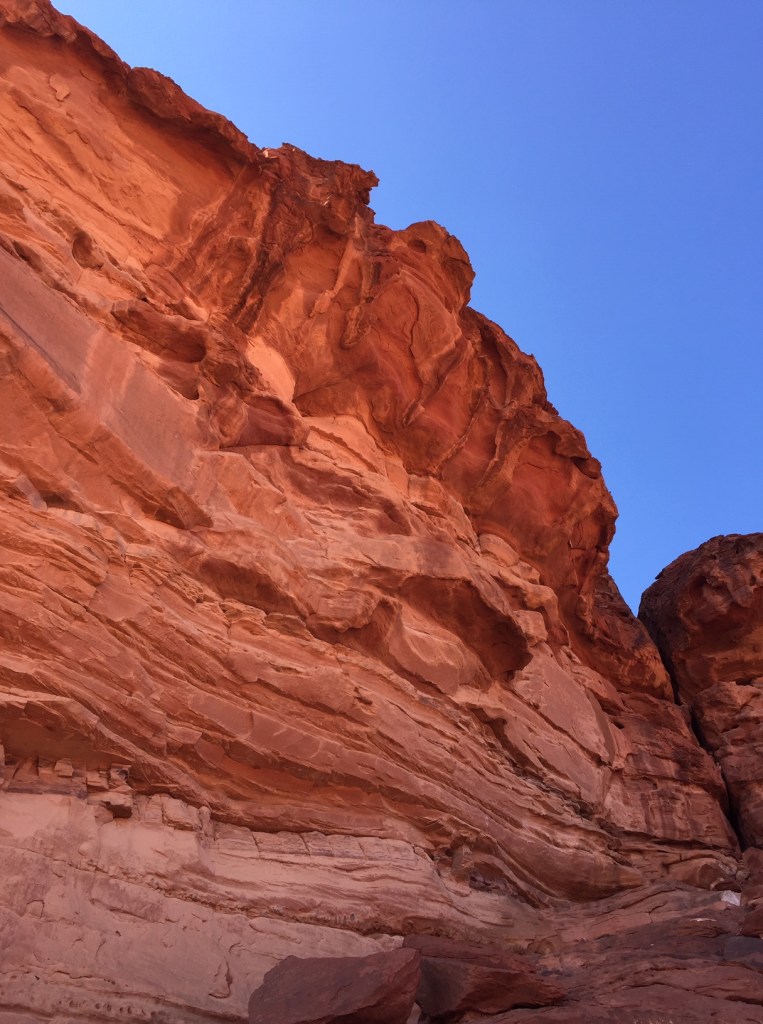
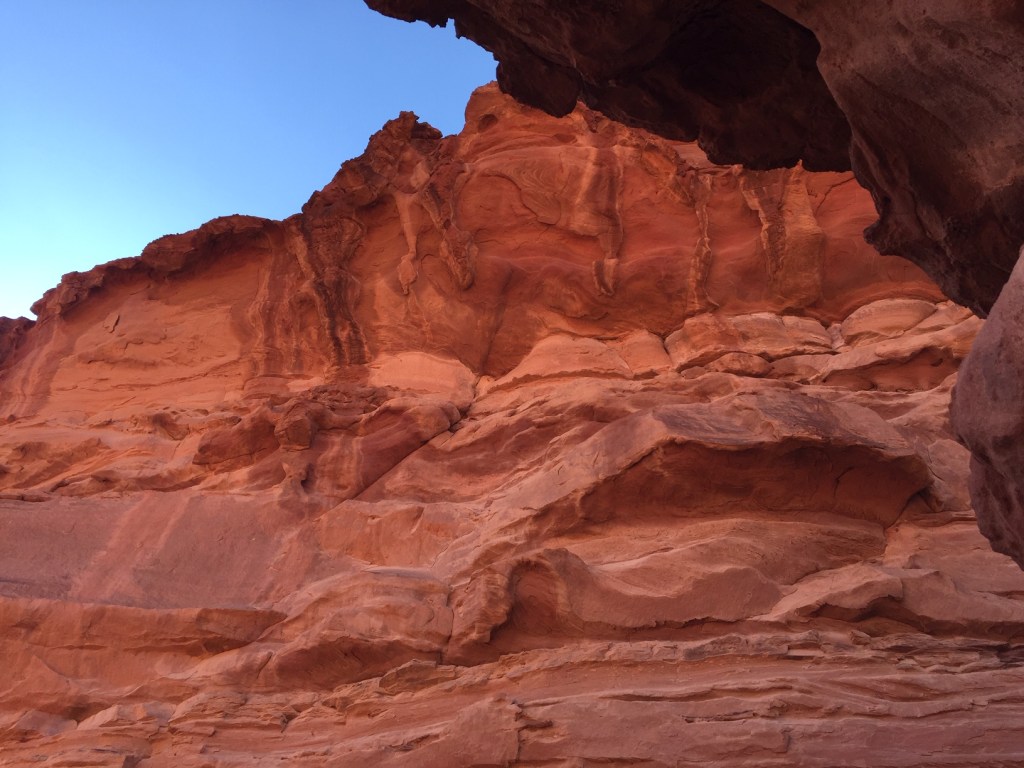
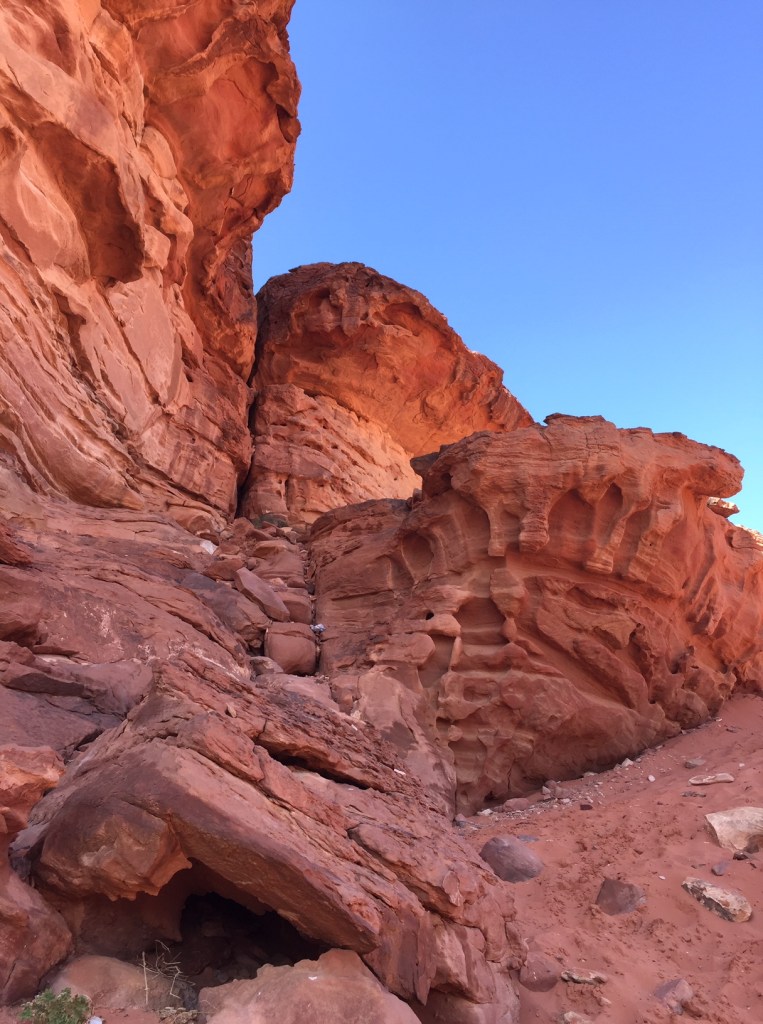
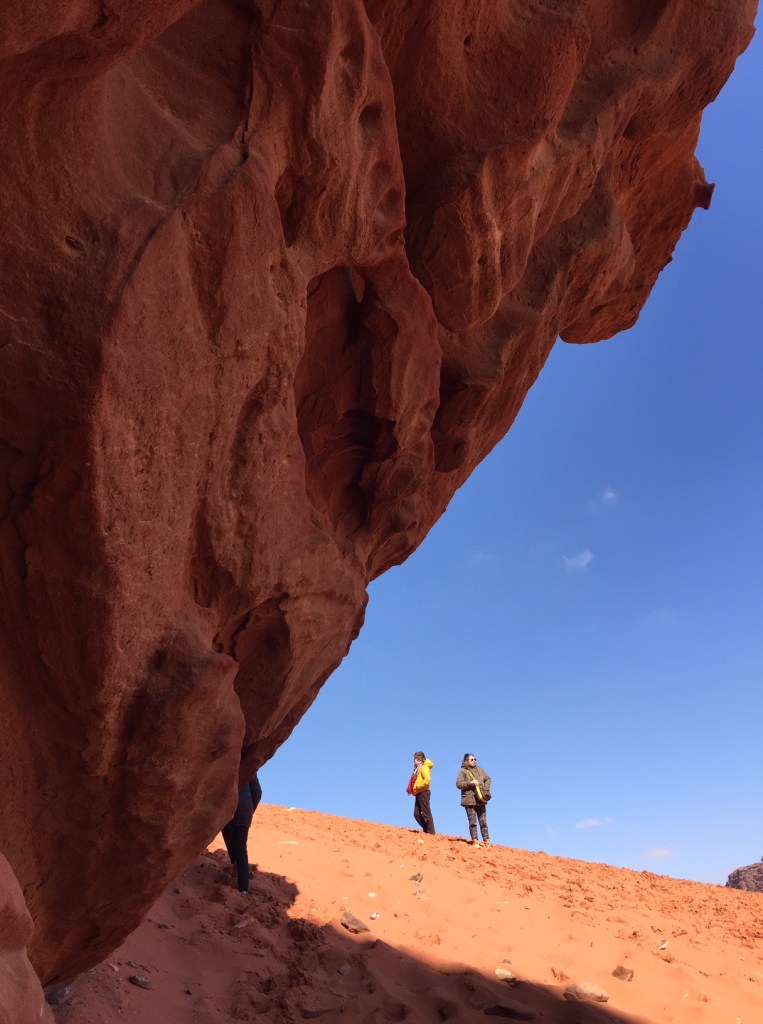
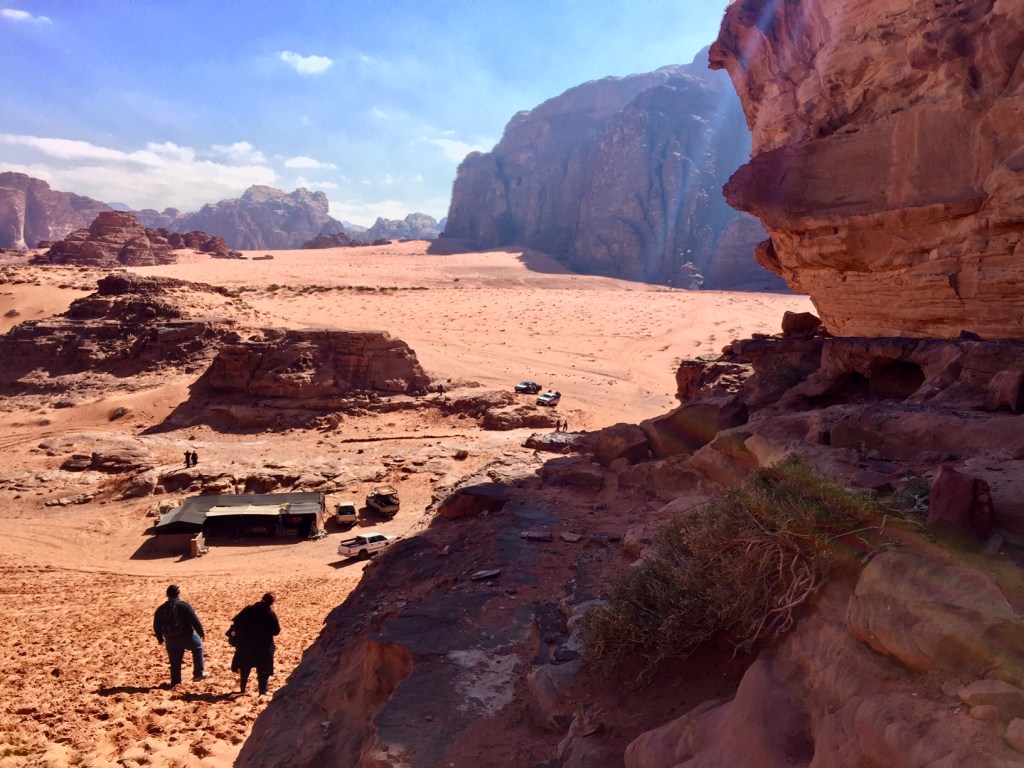
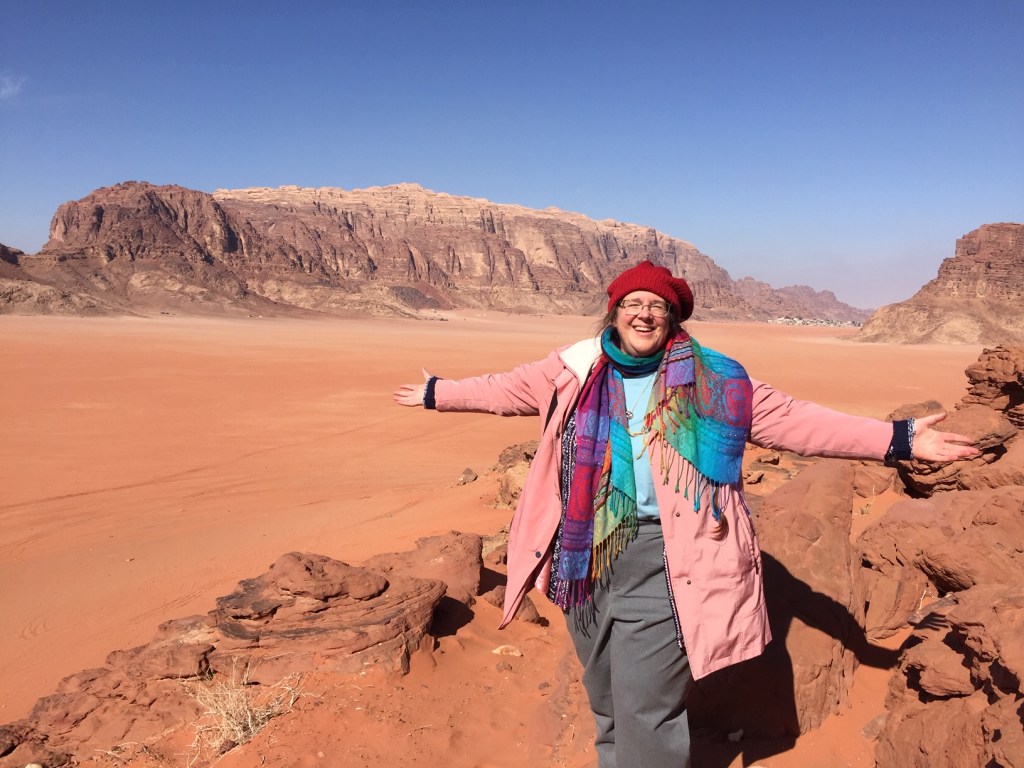
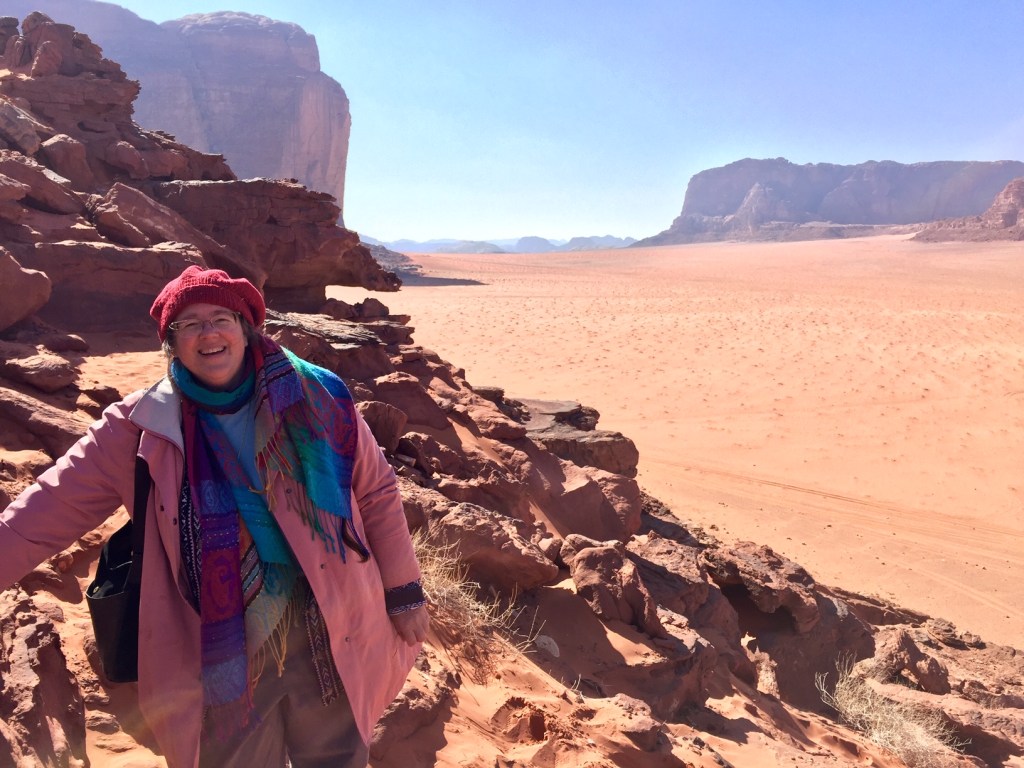
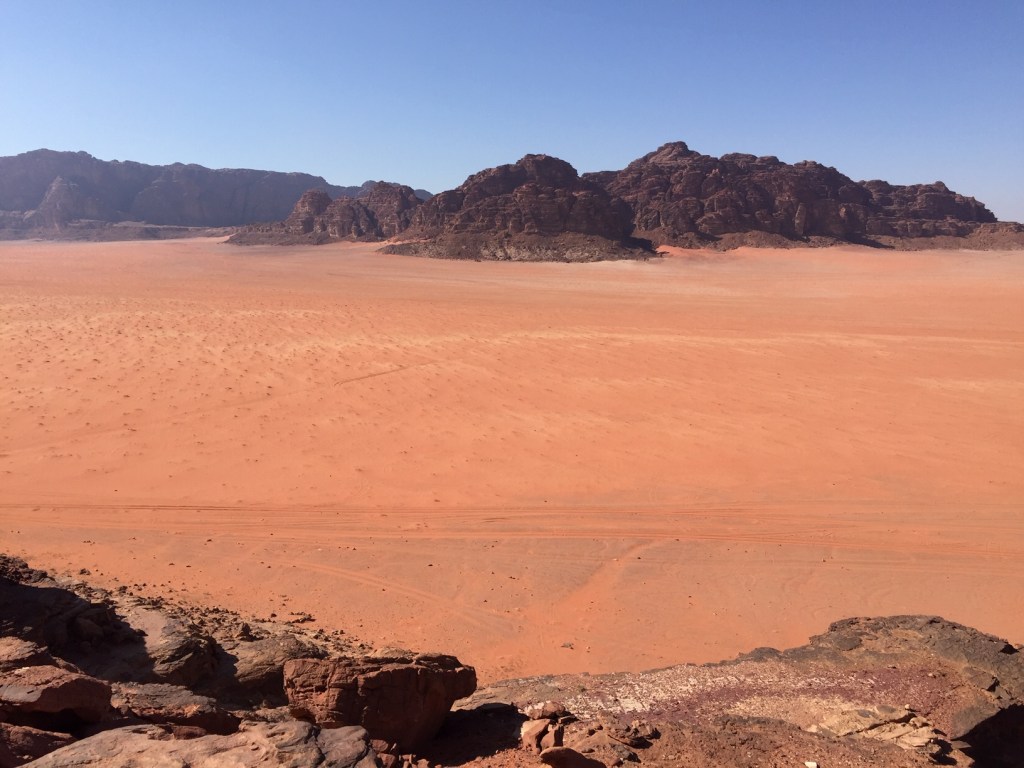
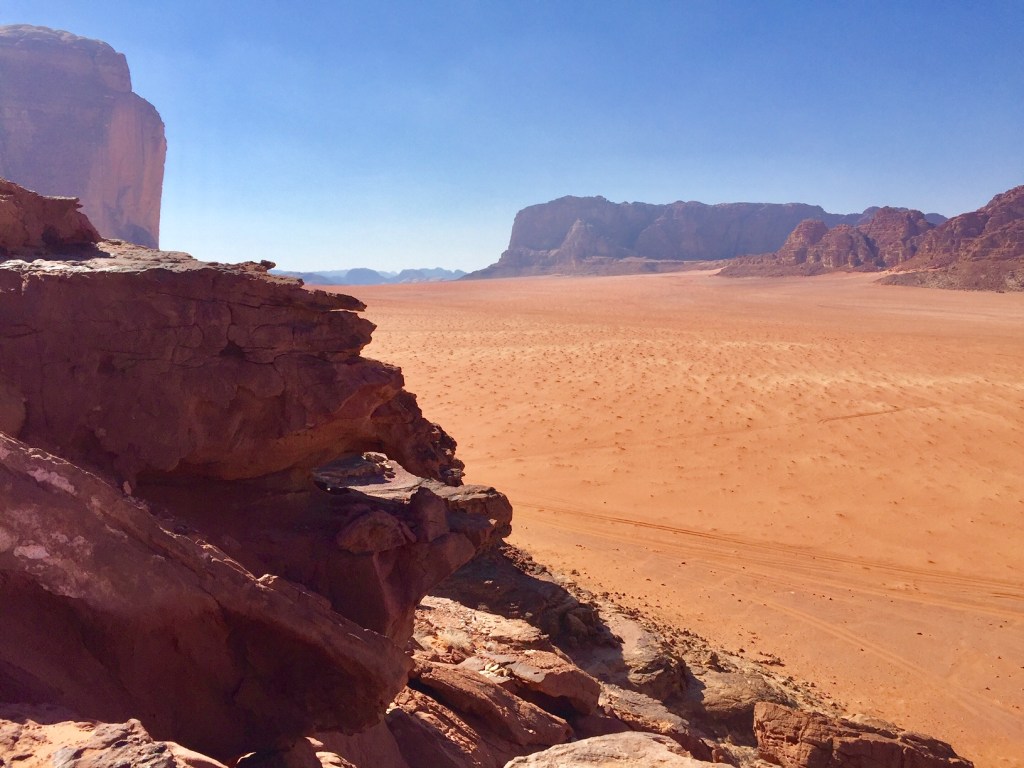
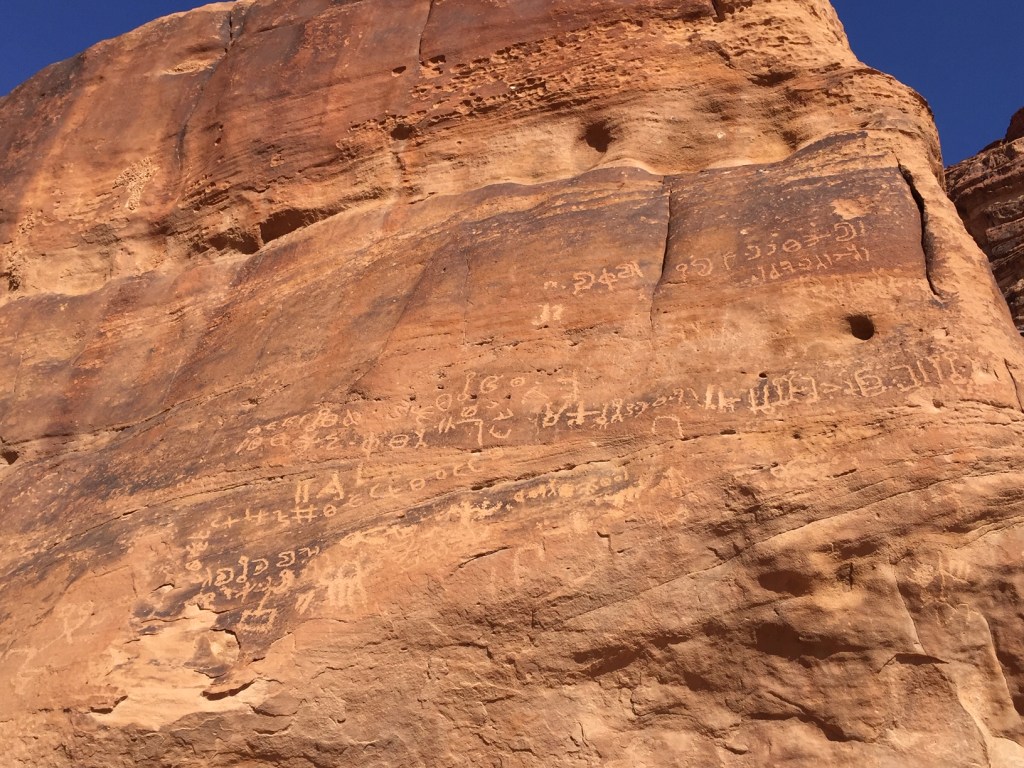
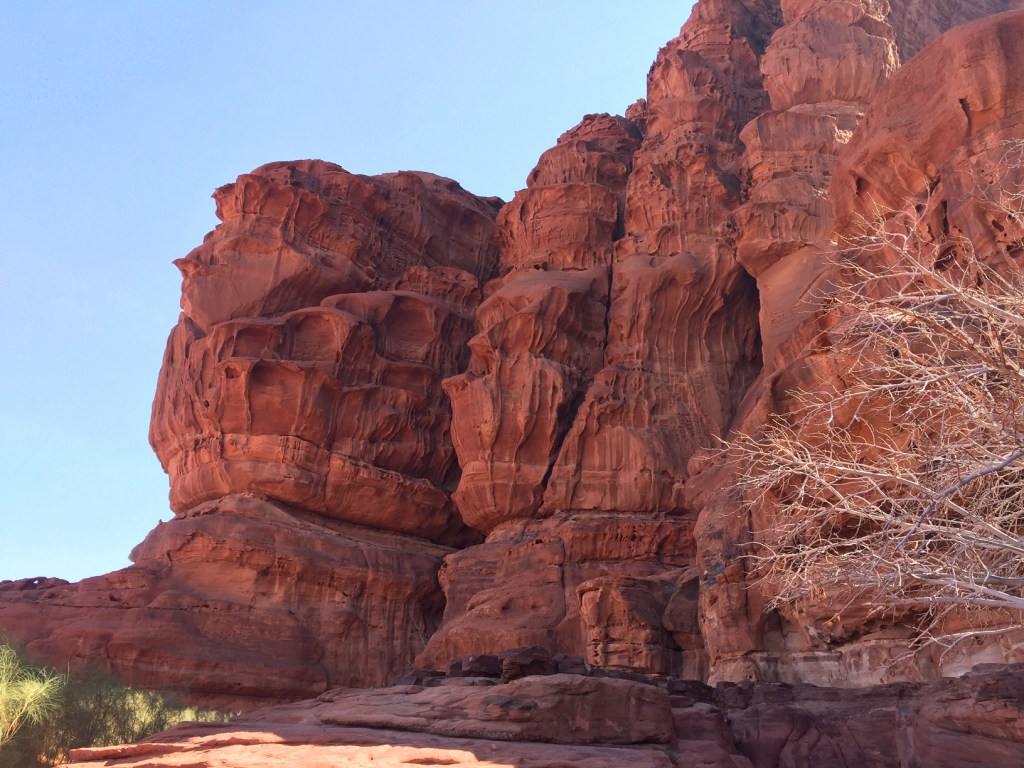
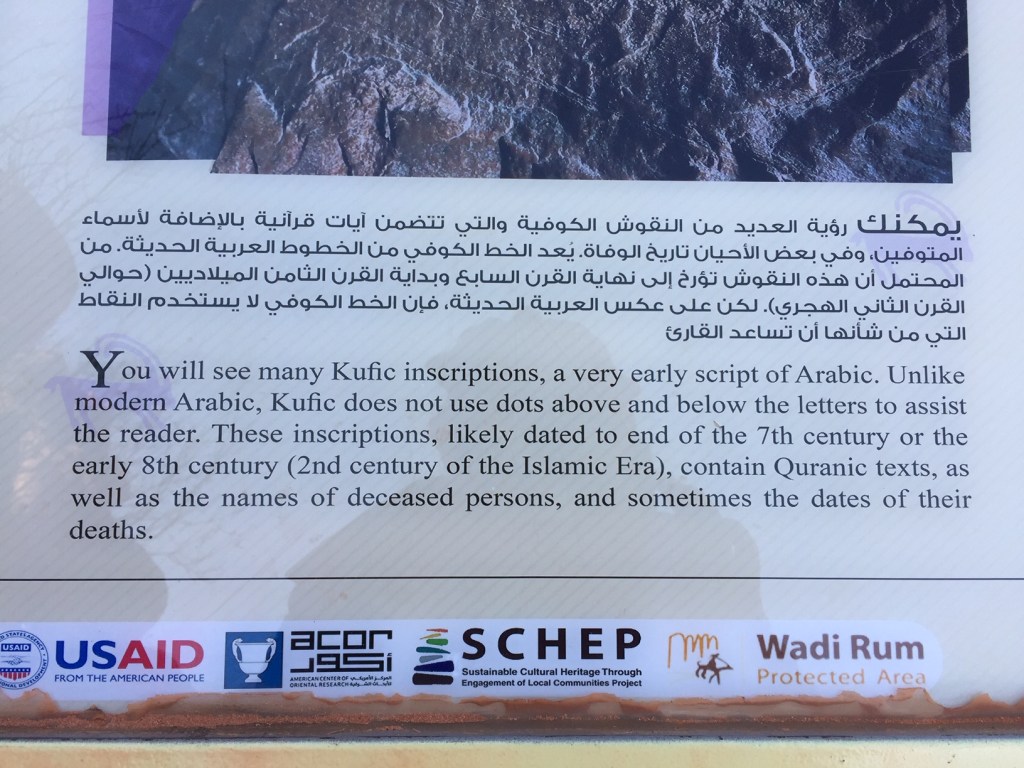
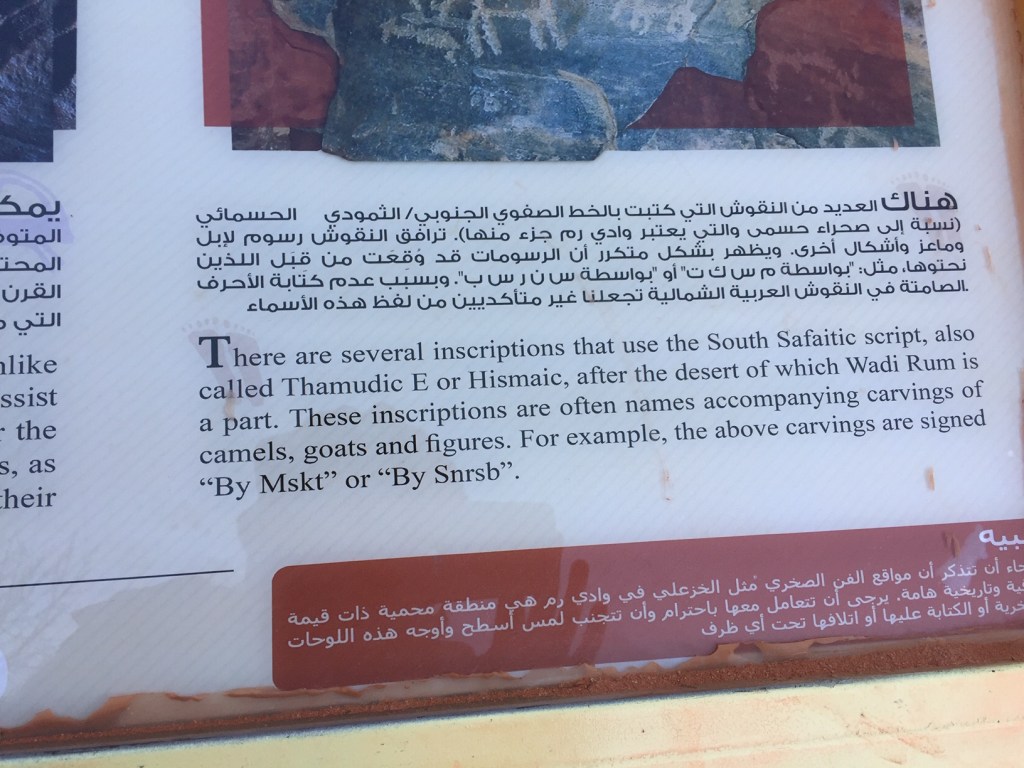
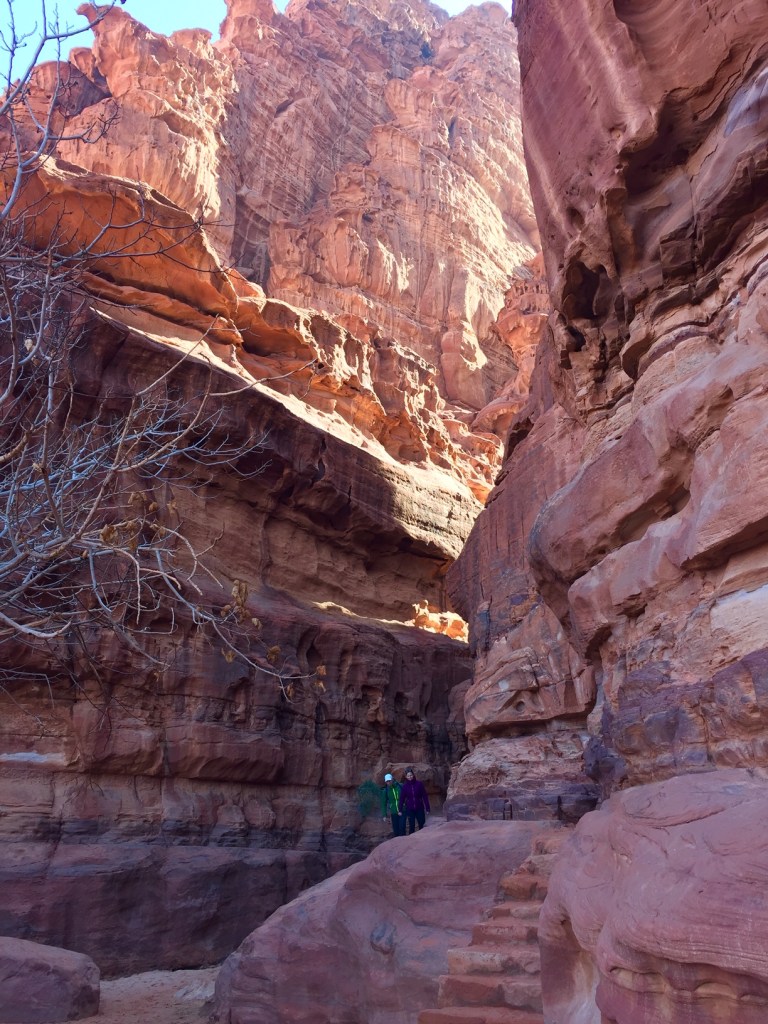
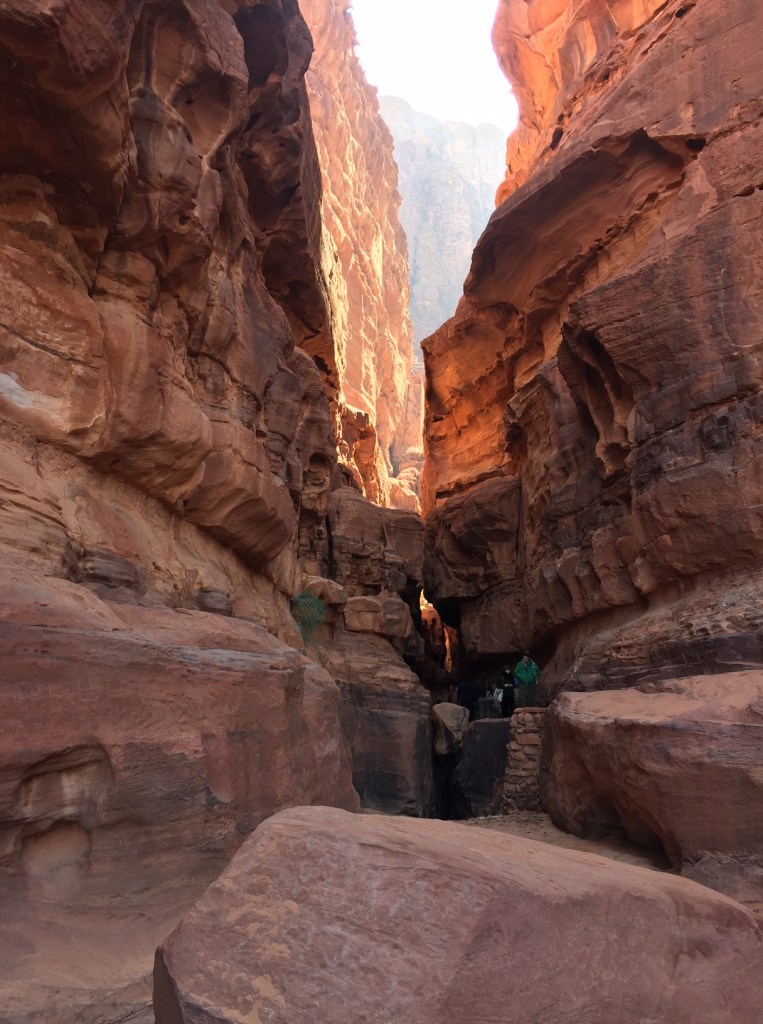
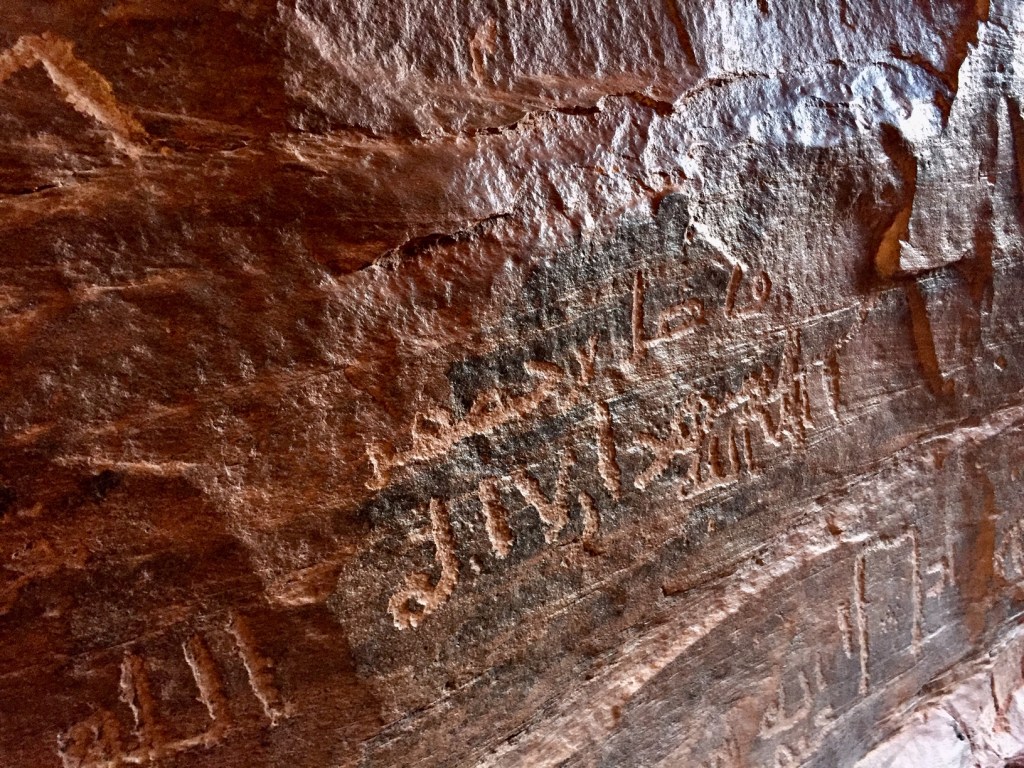
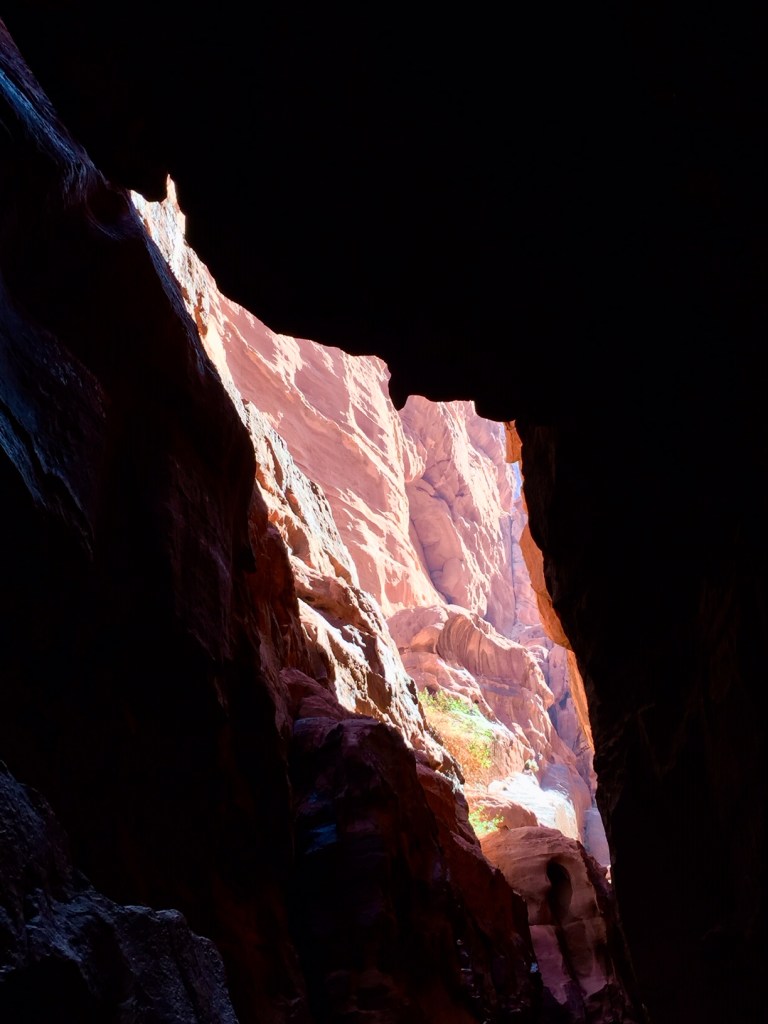
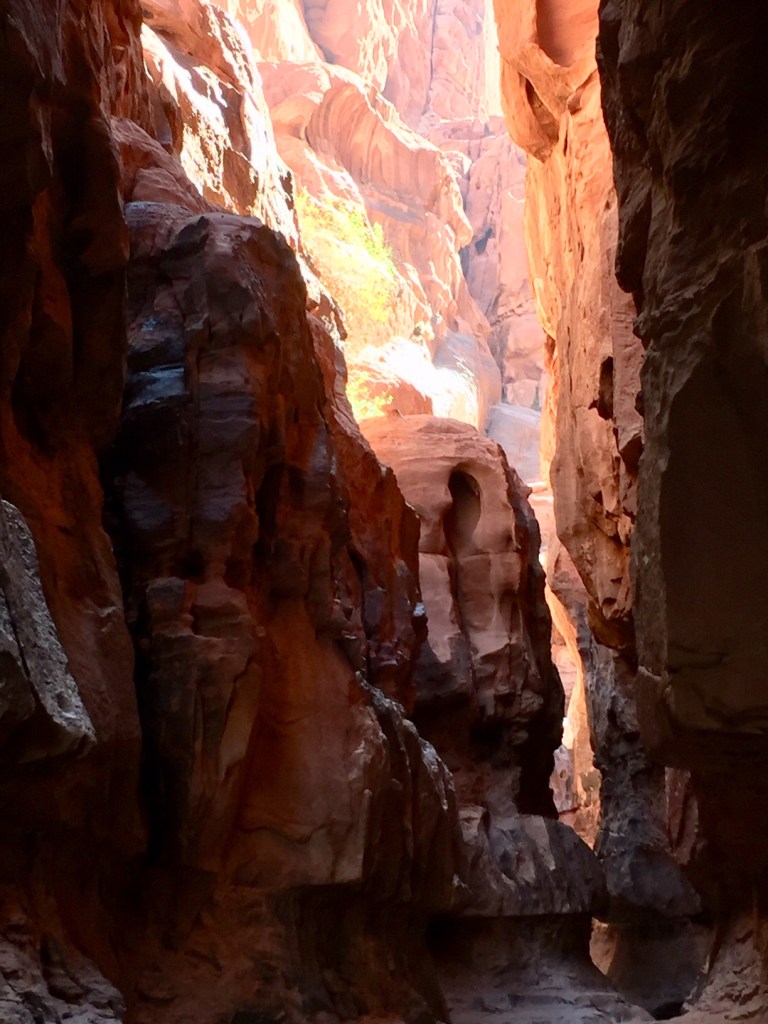
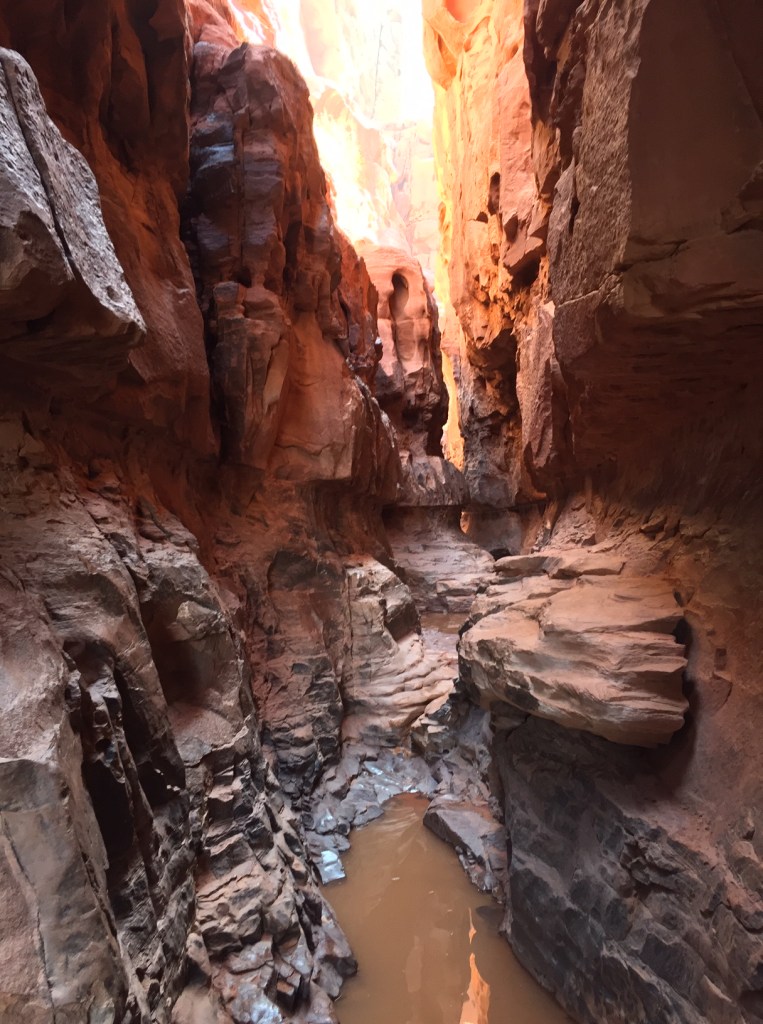
Our next stop was a narrow cleft in the rocks where there is ancient writing from three different civilizations.
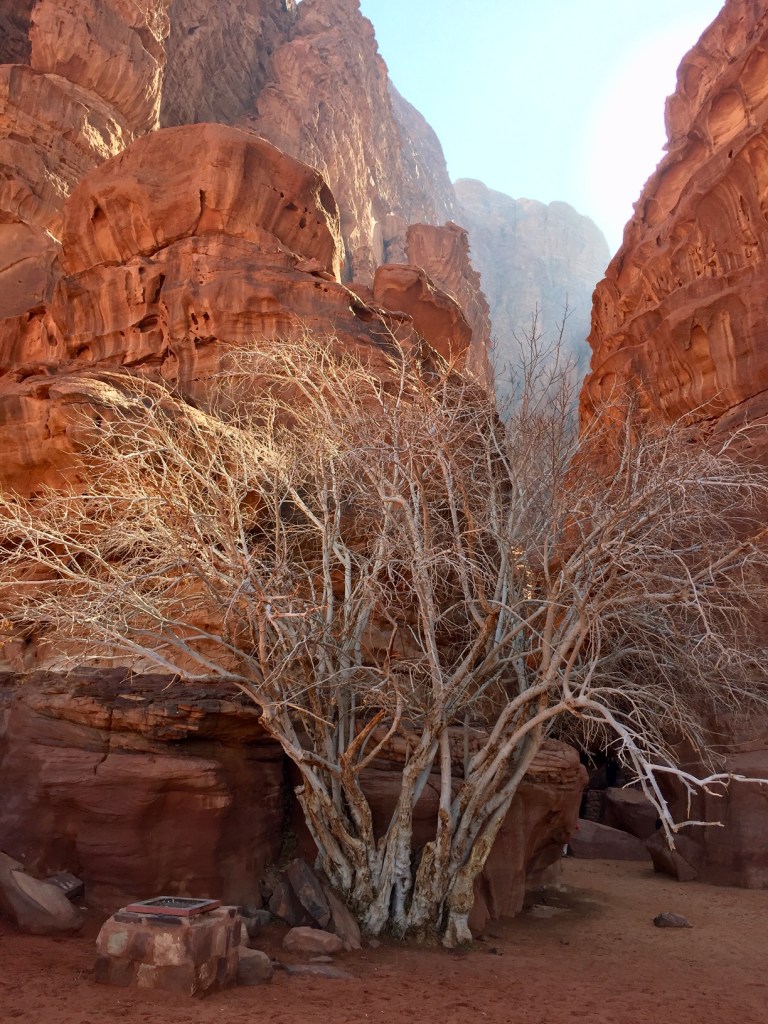
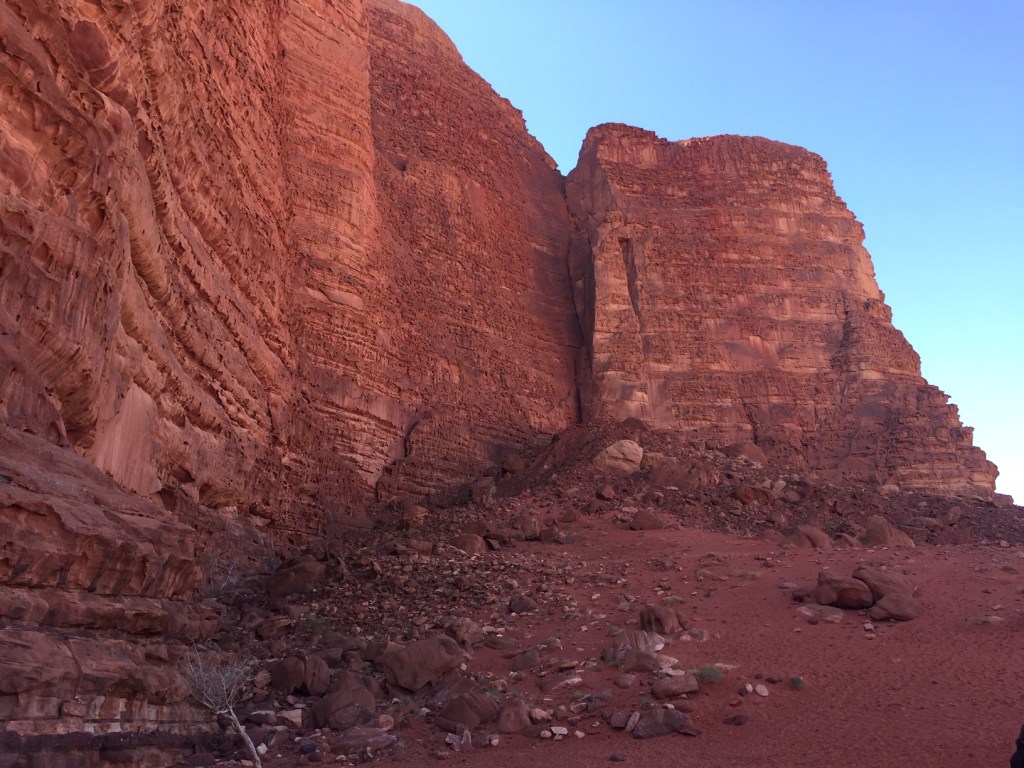
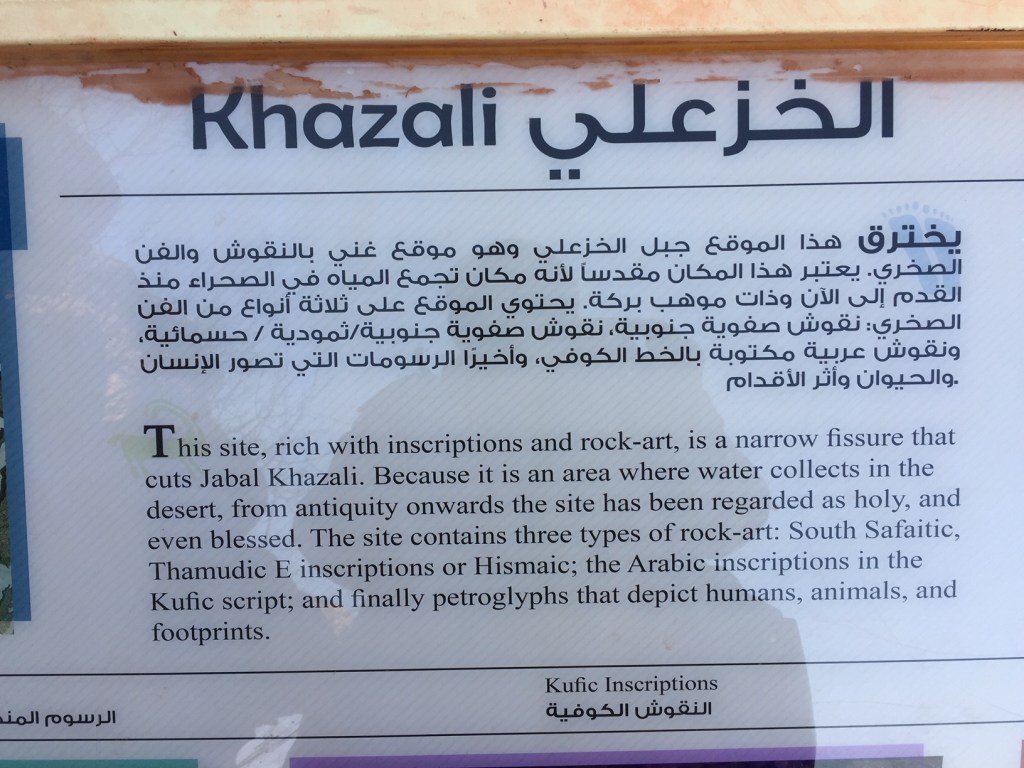
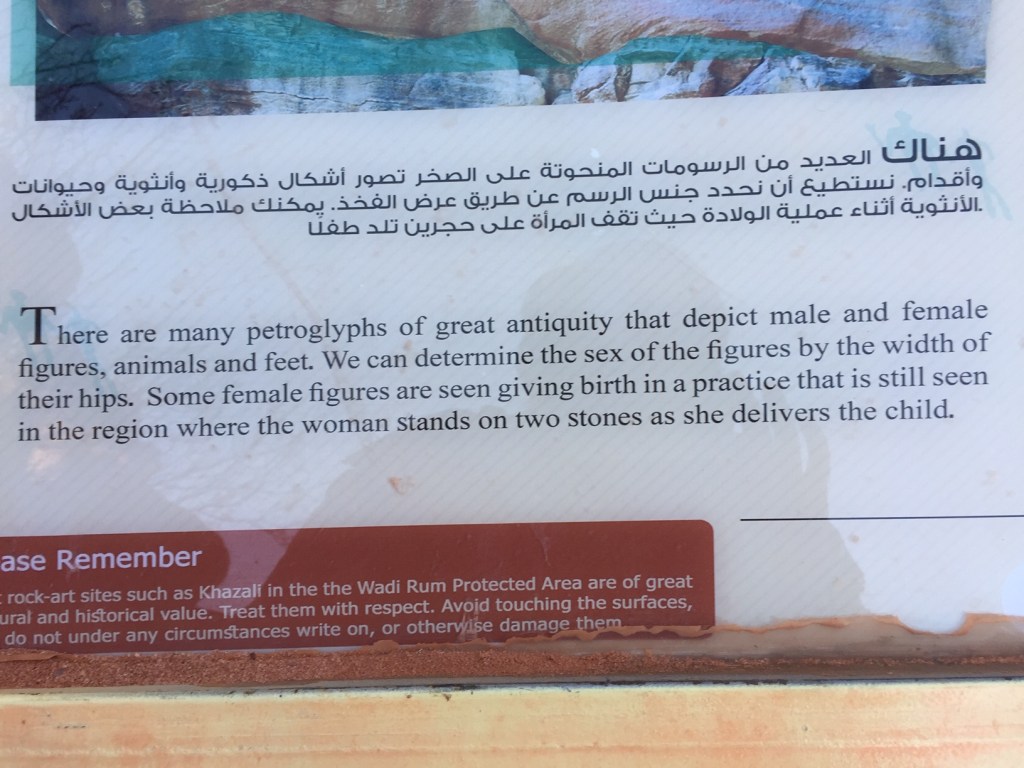
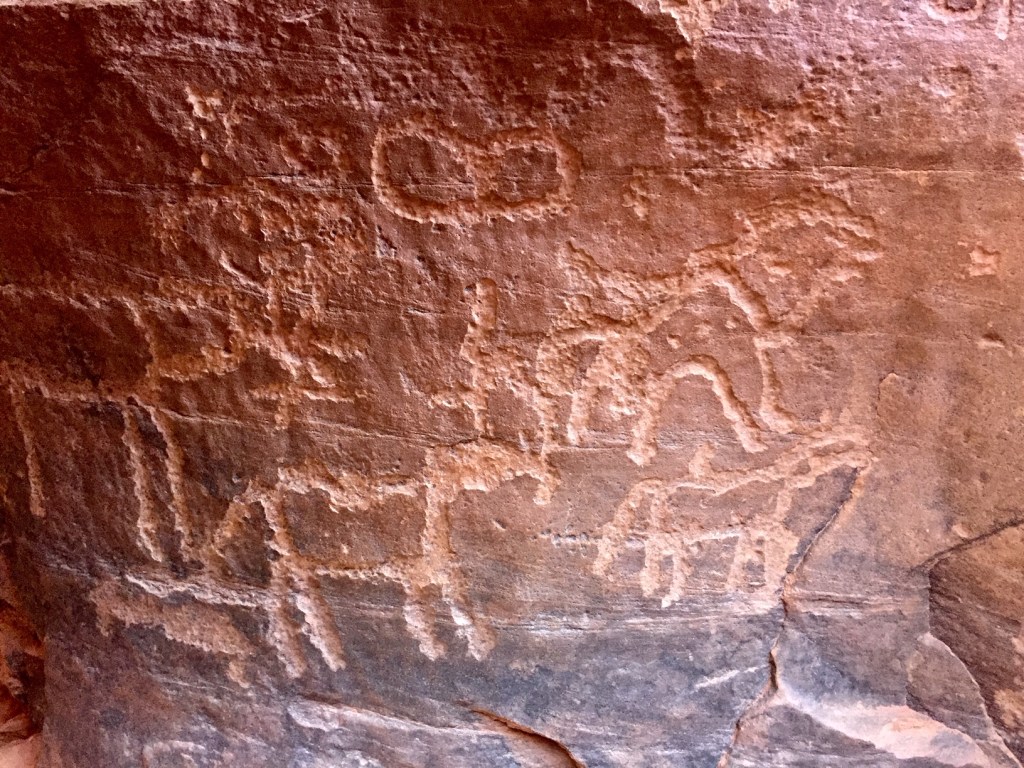
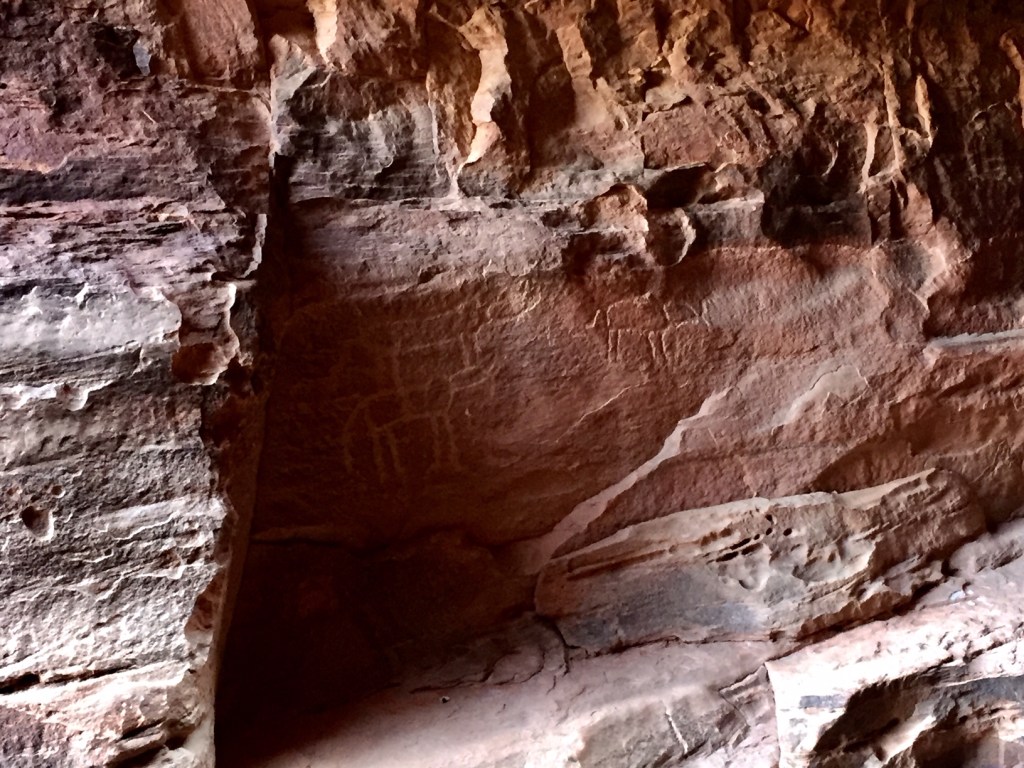
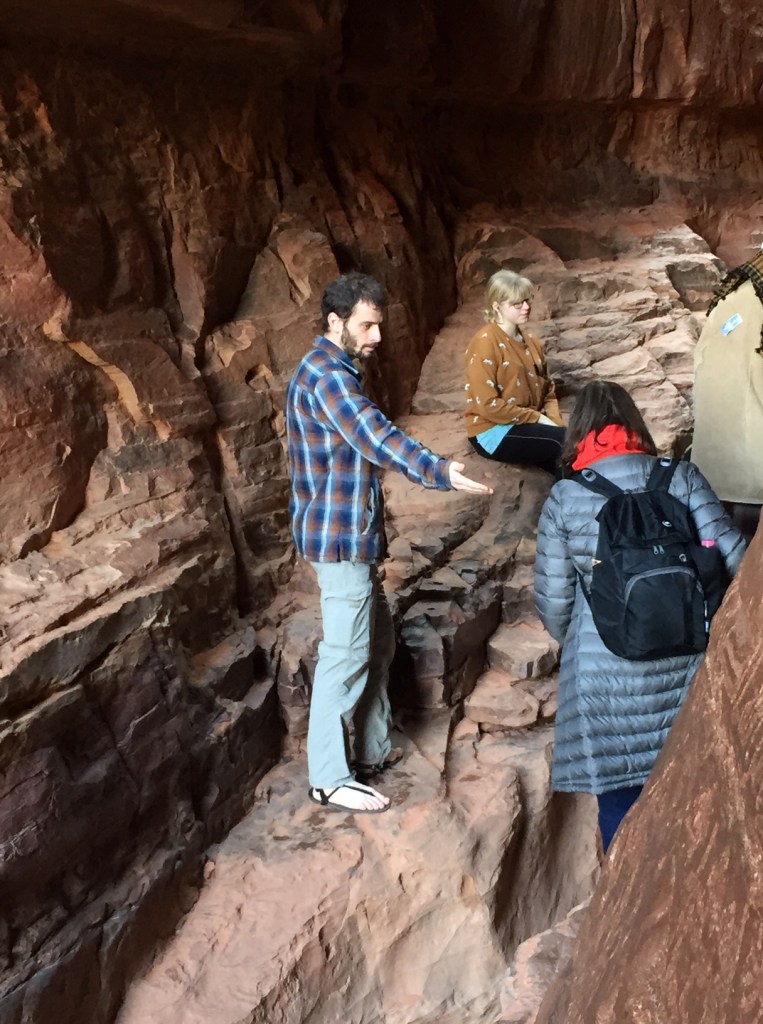
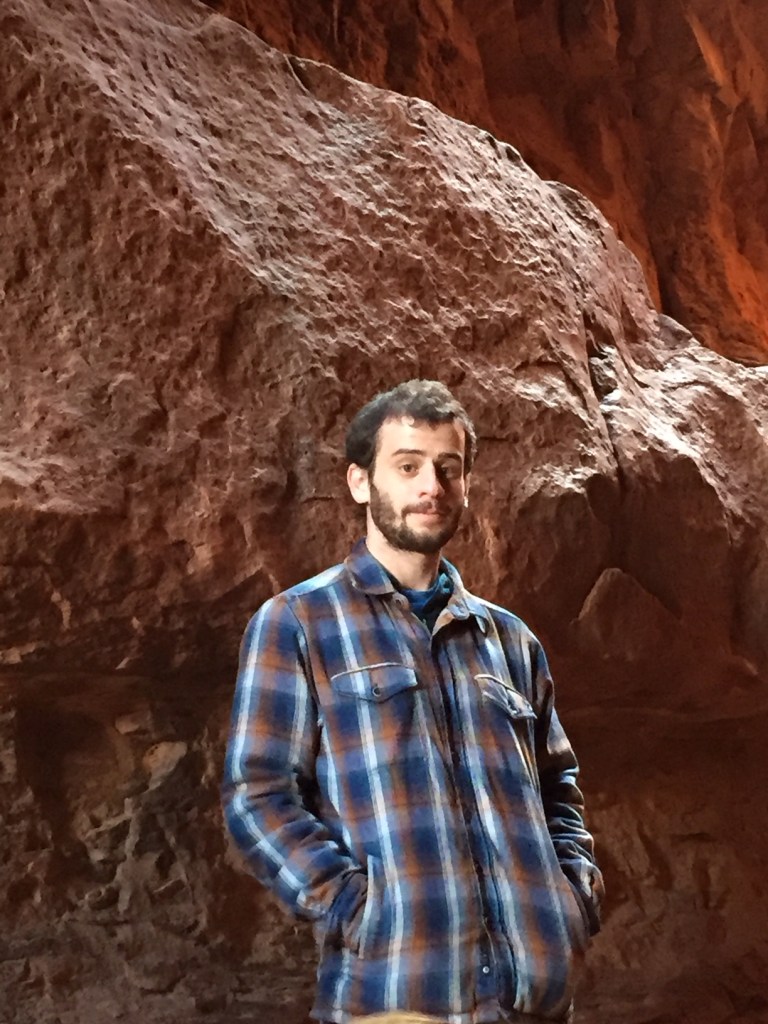
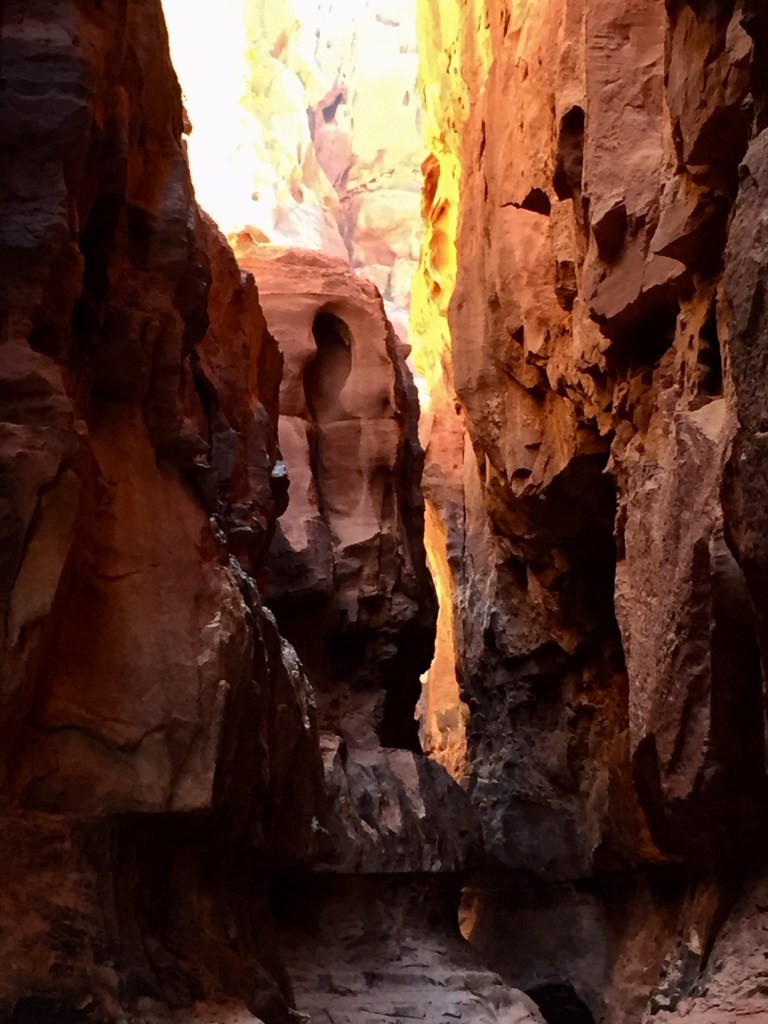
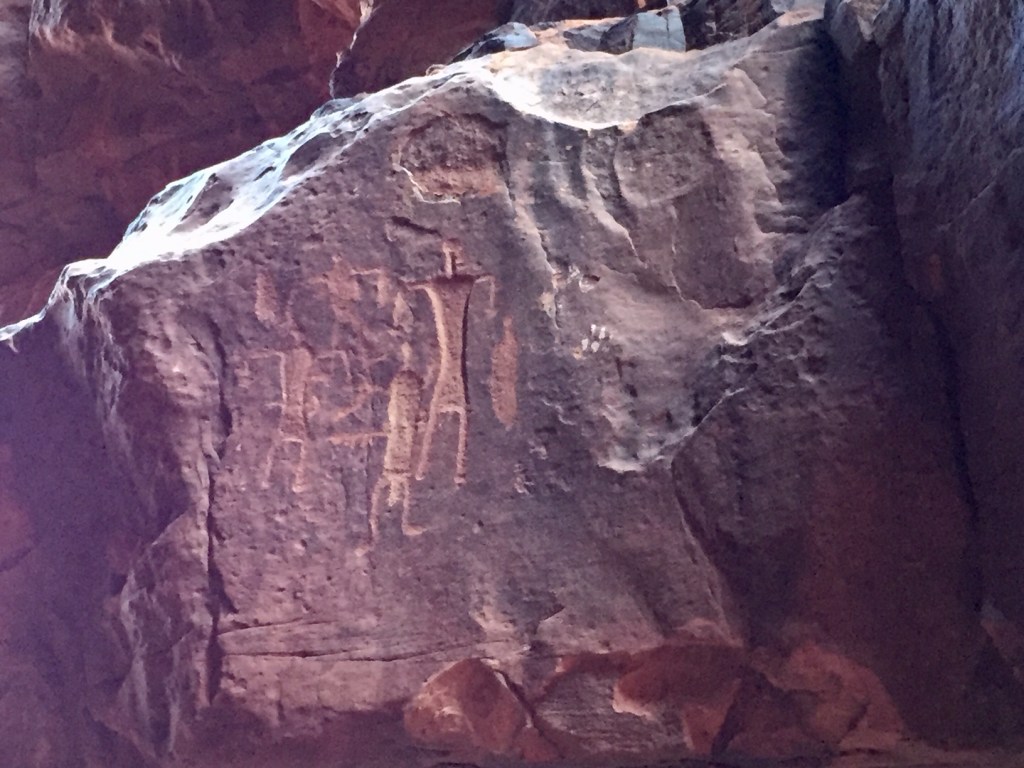
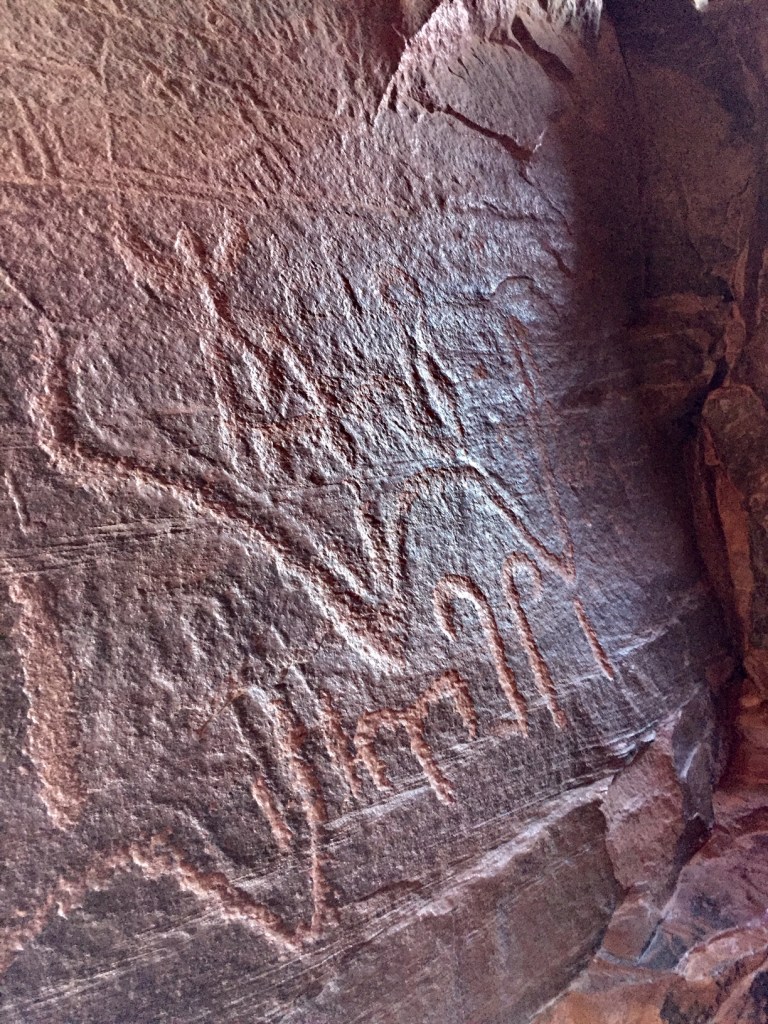
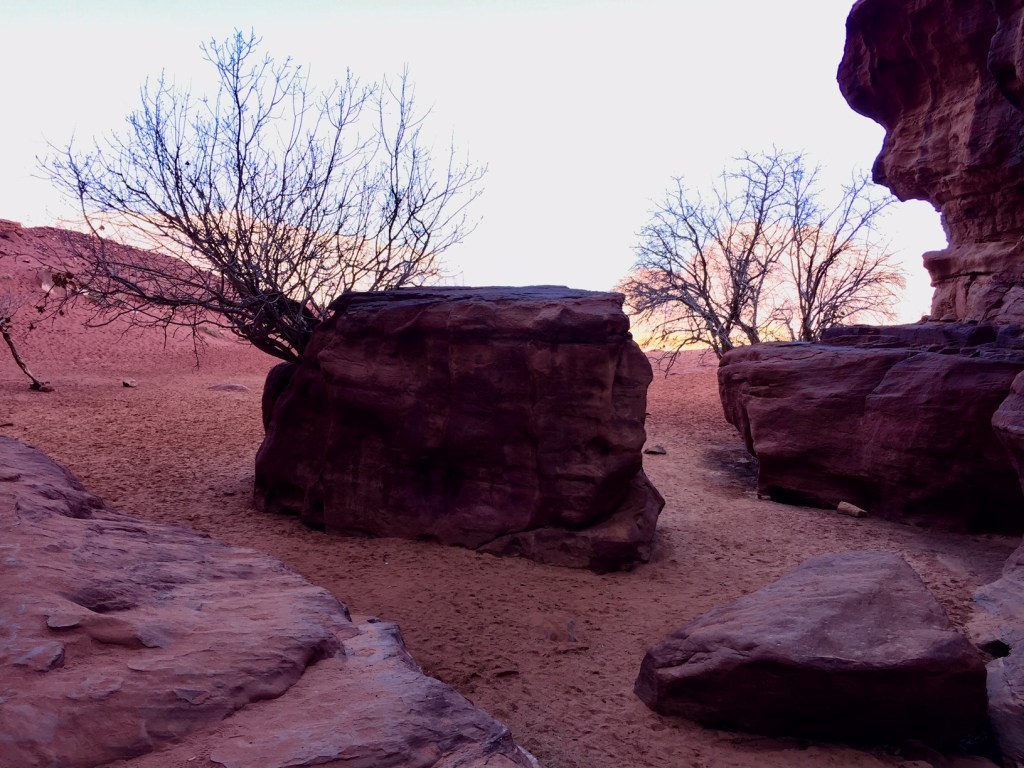
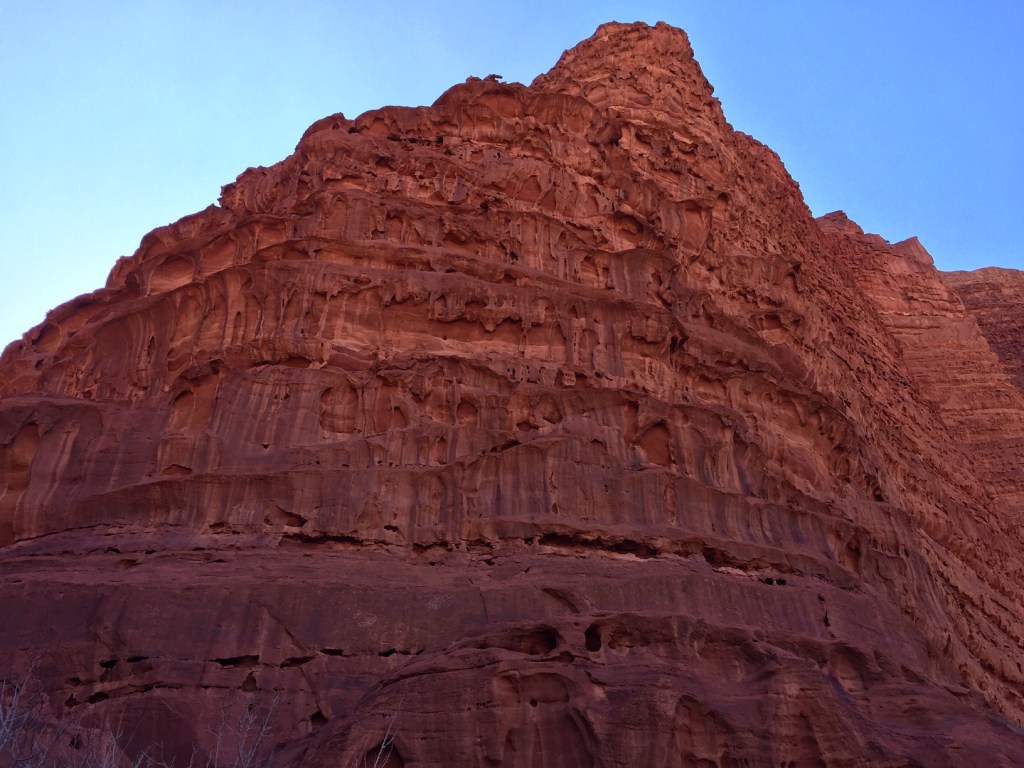
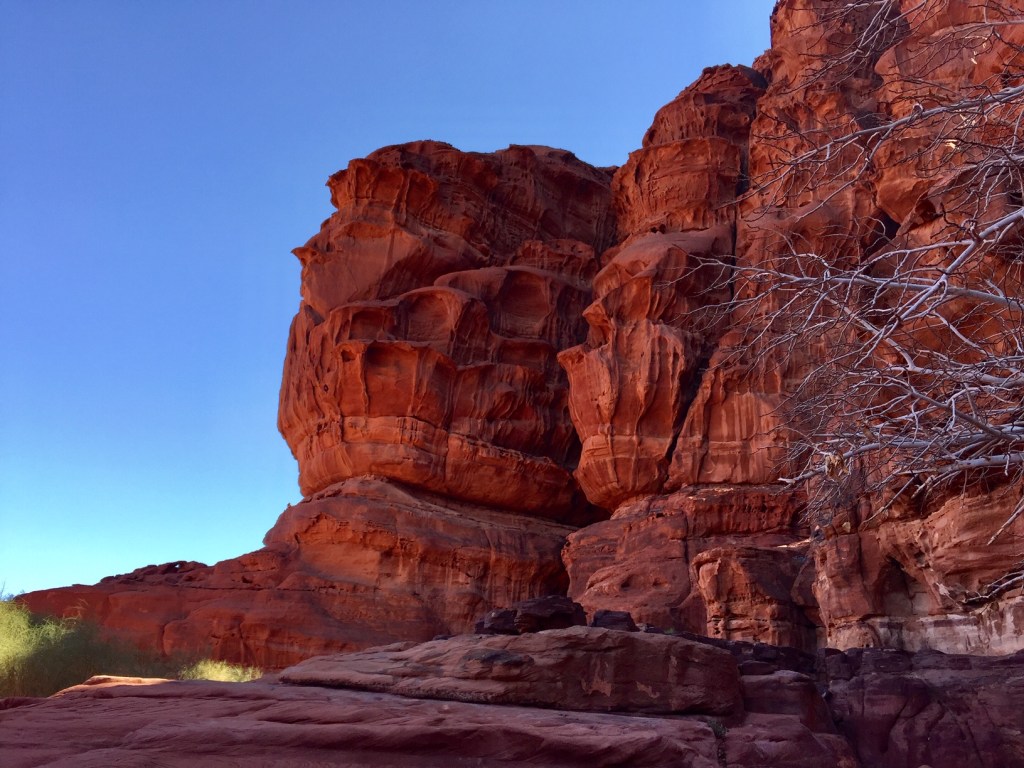
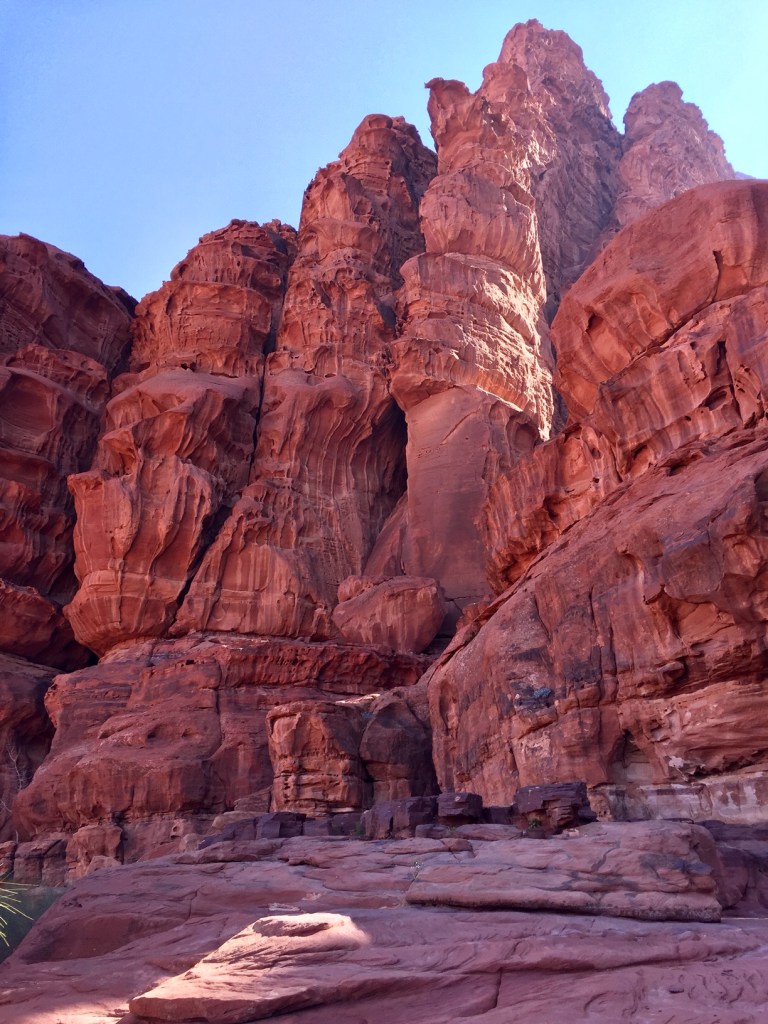
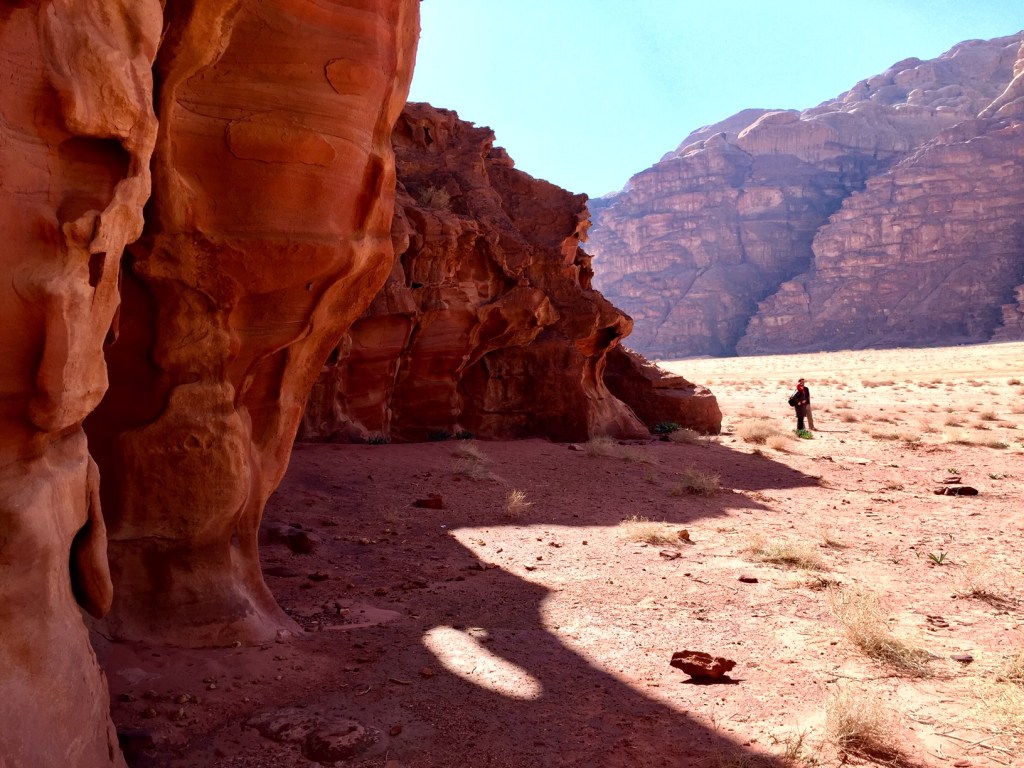
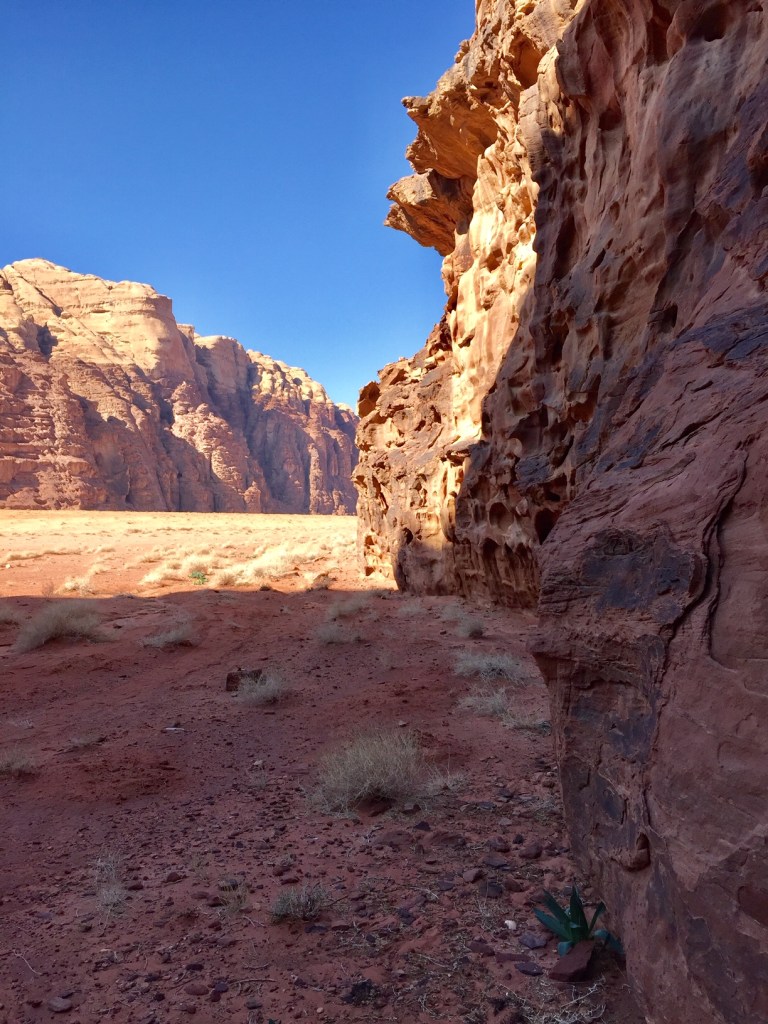
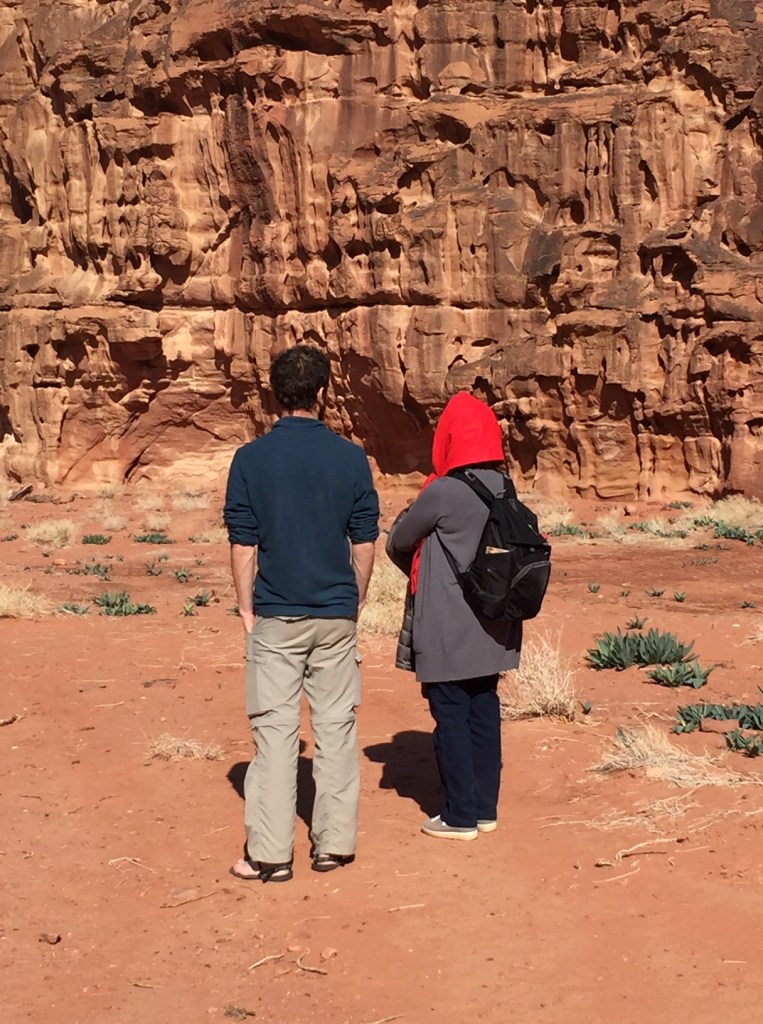
From here our guide drove us further out into the desert, stopping at last in a sunny spot against the rock. He shooed us away to “go about”, and set about making a fire to cook our lunch. I wondered if perhaps for a former commando and a mountaineer, cooking lunch for a bunch of tourists — and Jewish ones at that — might feel a big ignominious. We each wandered slowly across the sand. It was fairly warm in the sun, but chilly in the shadows. Rosettes of green leaves ere poking up out of the red sand. The silence was complete.
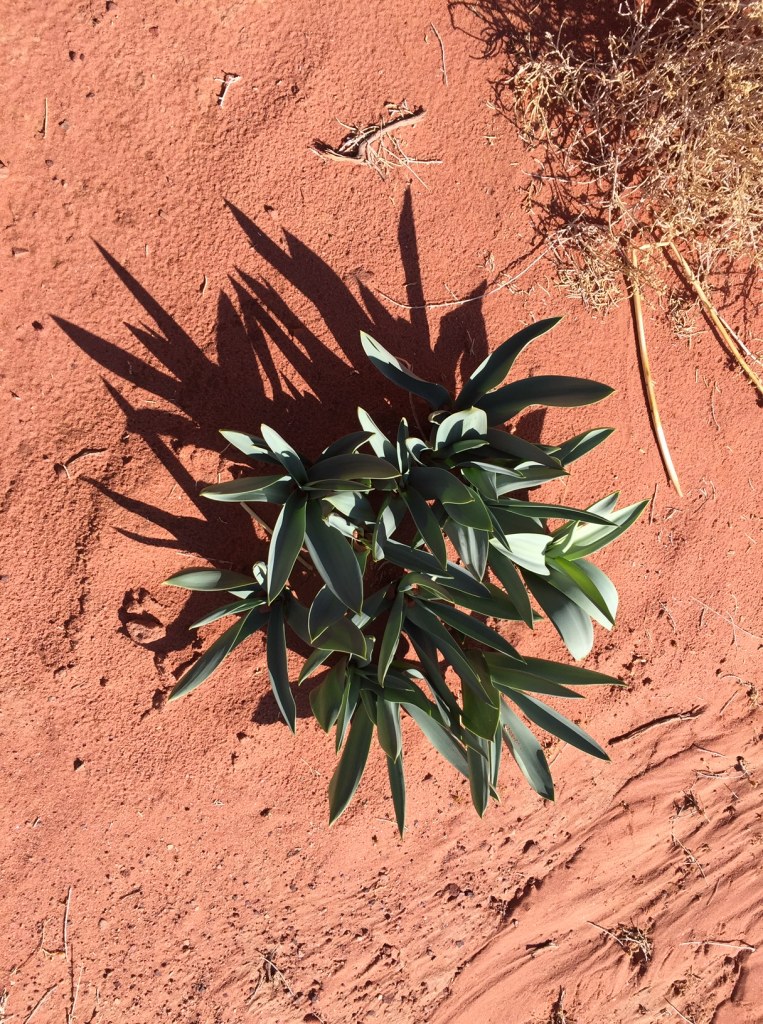
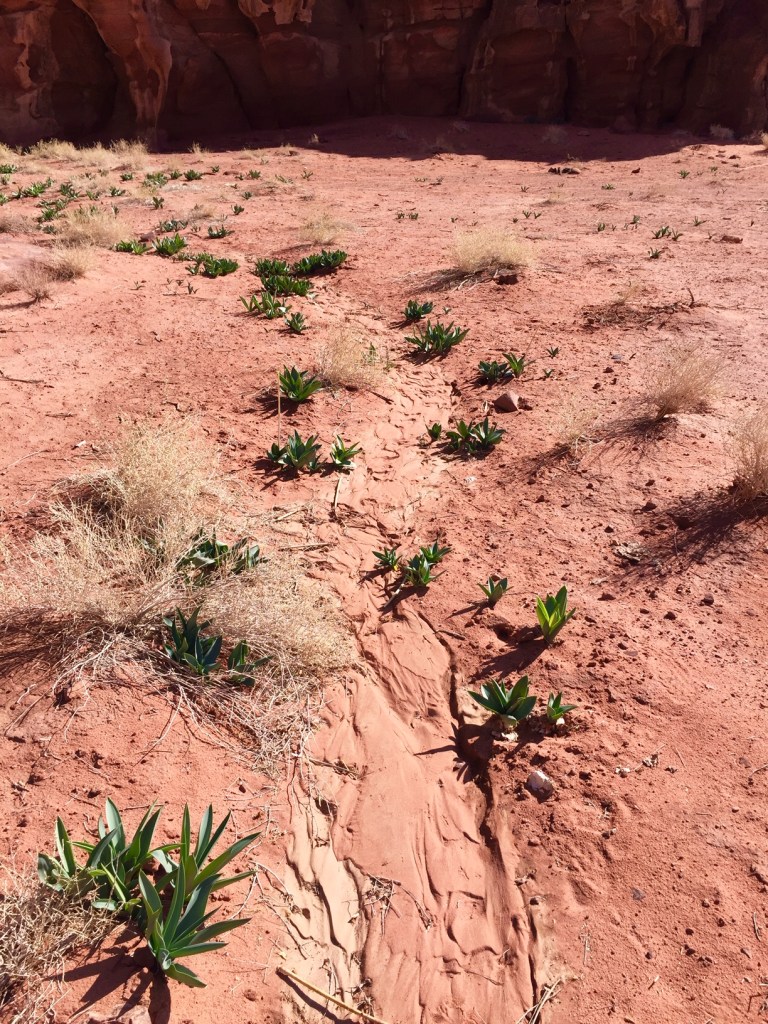
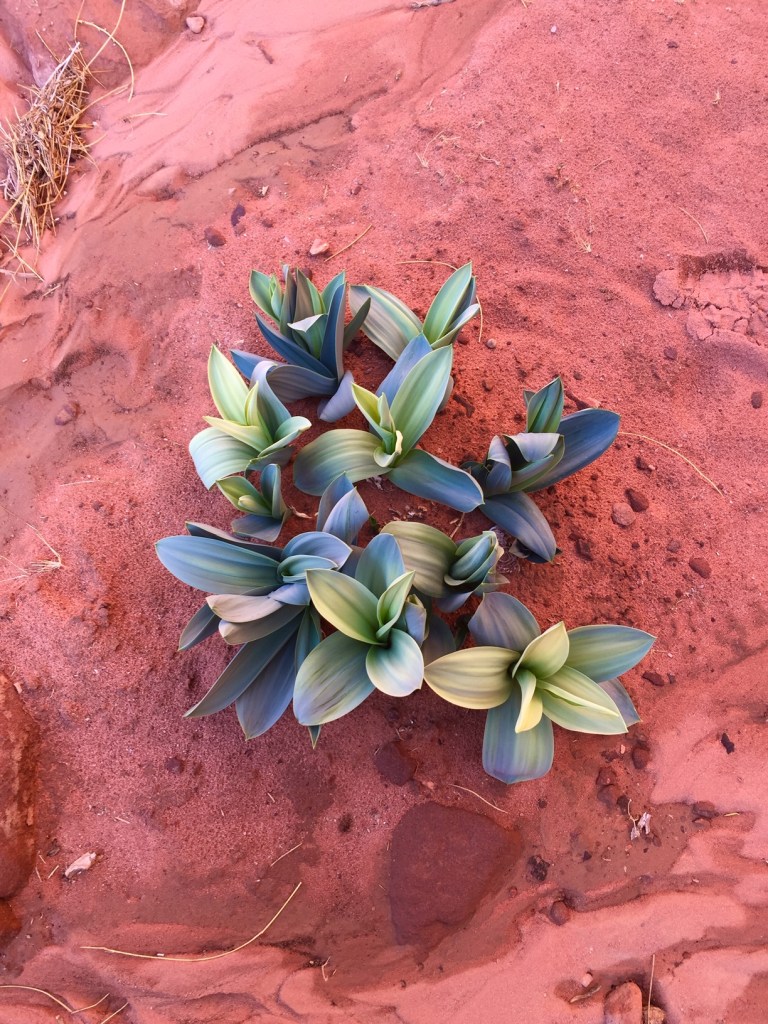
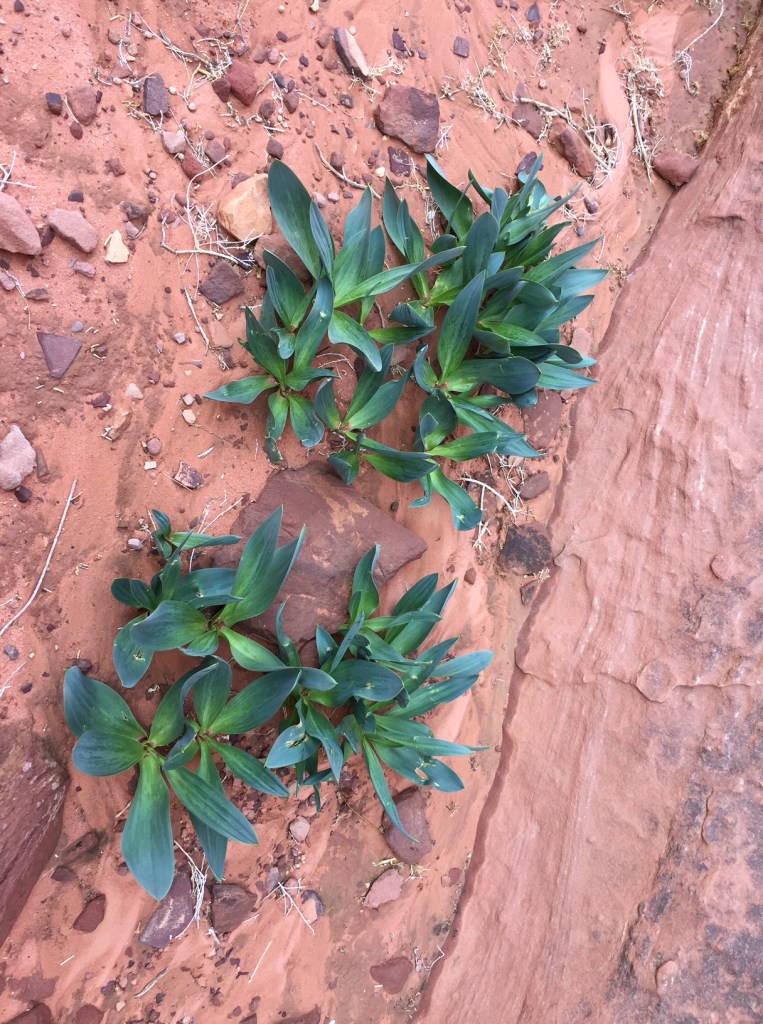
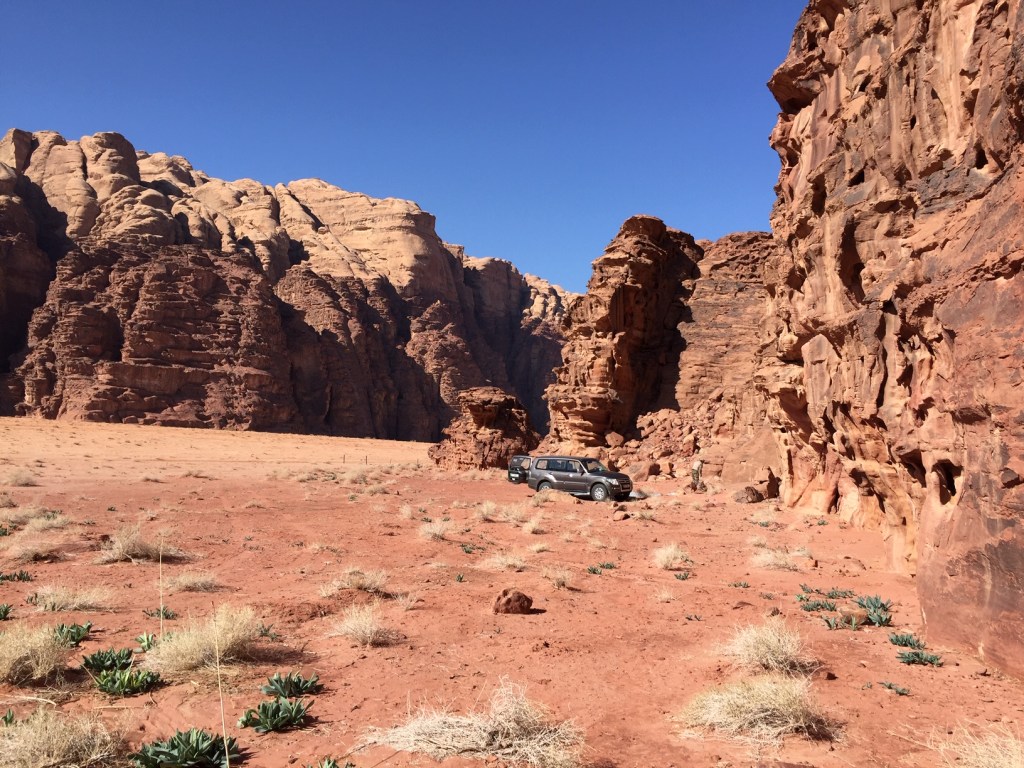
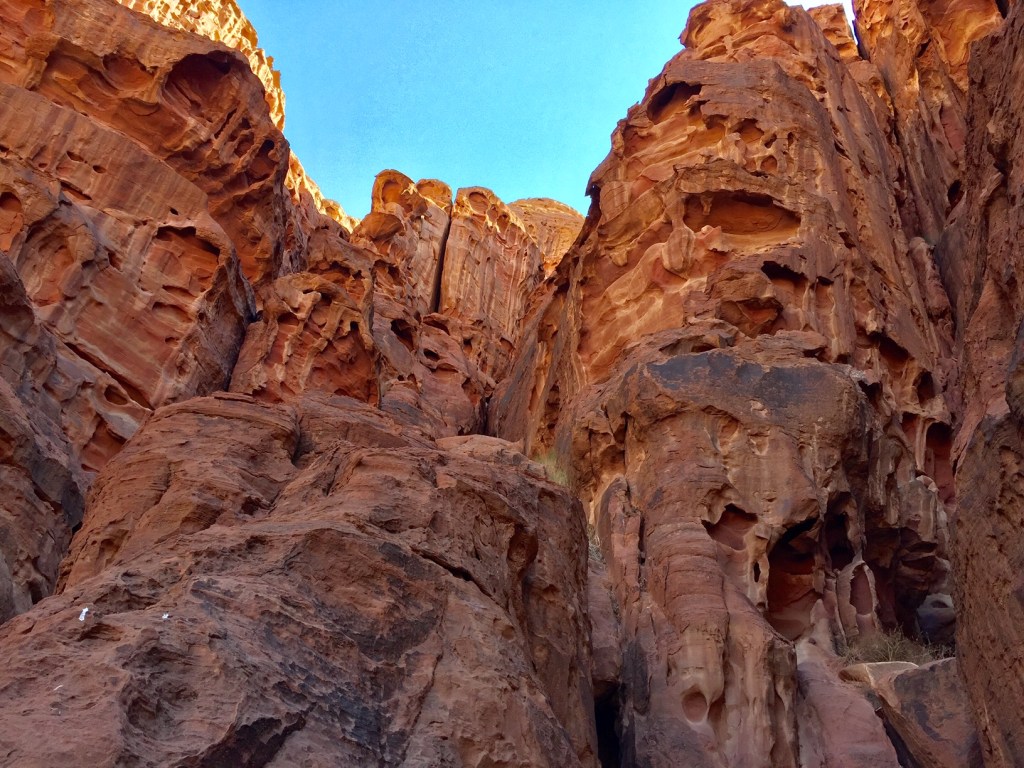
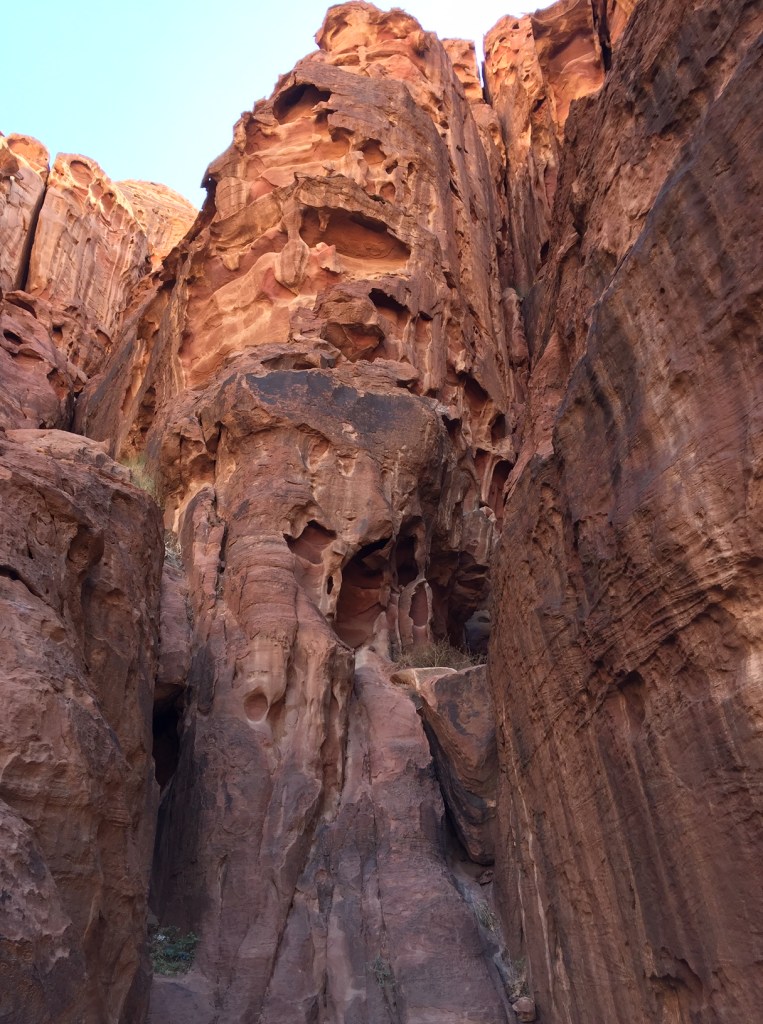
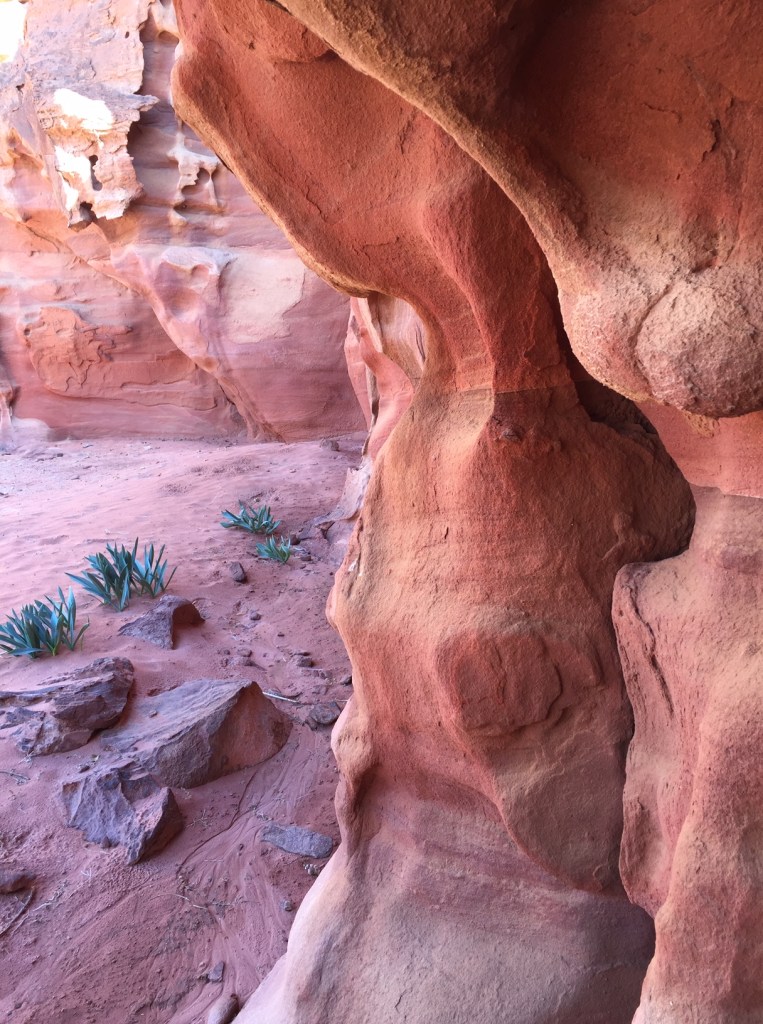
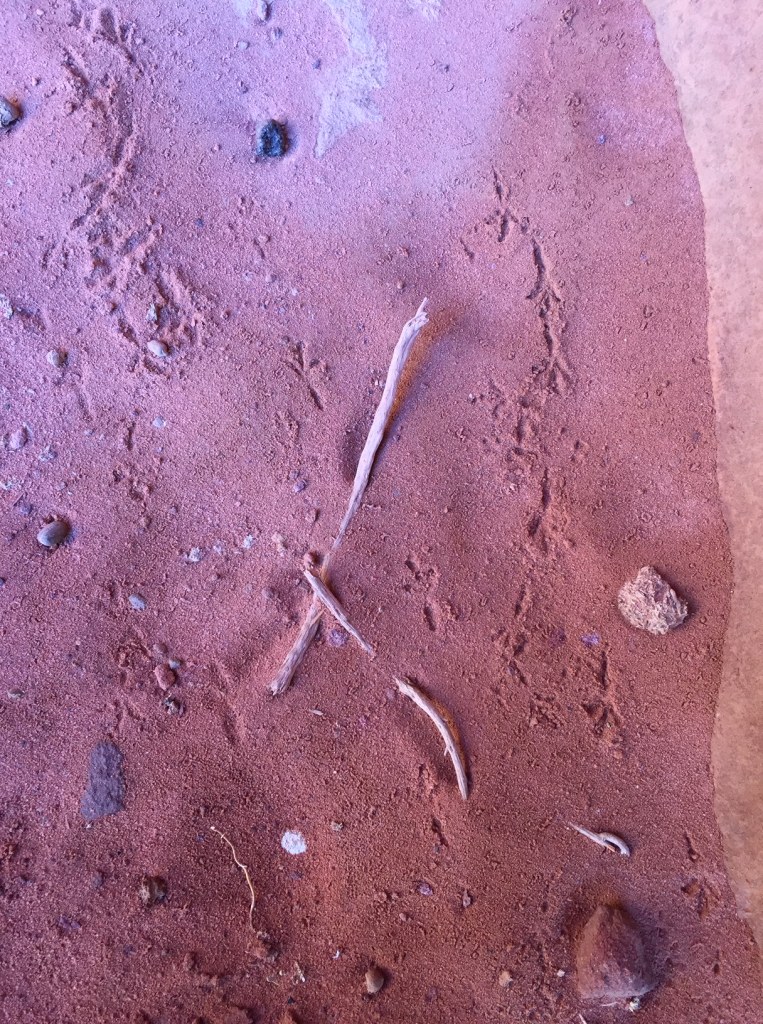
At last our meal was ready. Ali had cooked chicken kebabs over an open fire that he made with bits of wood he gathered from the desert. (You could hardly imagine that there would be enough wood to start one fire, never mind the many fires for the many tourists — but somehow he foraged a sufficient bundle of twisty, knotted branches. A liberal anointing with lighter fluid no doubt aided the process!) The hot well-seasons chicken was served with pita and humus and a freshly prepared salad — the best one I’ve had in the Middle East so far, I think, thought the ingredients were the usual ones: cucumber, tomato, parsley, scallion, and a liberal dose of lemon juice. Over our meal, Ali told us something of his work guiding hiking trips in the mountains further north. He also explained that the leaves I had seen are not tulips. The flower is tall and white, he said, and emerged in the fall. The leave come now, without flowers. Later, I recalled that I had seen the flowers of this plant in Israel in the fall, and had indeed read a piece about it in my Hebrew book when I was studying with Dalit years ago. A little research led me to the conclusion that it is (per Wikipedia) Drimia maritima in the family Asparagaceae, subfamily Scilloideae (formerly the family Hyacinthaceae). This species is known by several common names, including squill, sea squill, sea onion, and maritime squill. But apparently it not only grows on rocky coasts, but all over the Middle East and the Mediterranean area, well inland, surviving “in all but the driest deserts”.
After our lunch we bundled ourselves back into the Jeep, and took the long drive back to the Aqaba and the border with Israel. It was late afternoon when we arrived once again in Israel, and climbed back into Hagai’s car for the drive to Mitzpeh Ramon, where we would spend the night. It had been a truly wonderful and fulfilling trip. I never imagined that I would make it to Petra, and now, in addition to that extraordinary site, I had also seen the wild beauty of the Jordanian desert. If you ever have a chance to visit Jordan, I highly encourage you to do so. But of course, you must visit Israel first!


 Nine months in Israel
Once again, thank you for amazing pictures and wonderful accompanying text. You are quite intrepid!!! I don’t think I would have ventured into that cleft in the rocks—even when I was 56! Keep having—and enjoying— wonderful experiences!
>
LikeLike
Dear Faith, you’re welcome! No, I’m not, really — That cleft was not terribly deep, and I went in clinging to the rock face and scared of falling the while time. The worst of it was that besides us there were other tourists, and so passing one another on a ledge that was really only wide enough for one was unpleasant. But I know you would have done it — you, who used to ski down mountains at high speed (which is something you’ll never catch me doing!)
LikeLike
amazing adventures — and it is part of a history that is forever etched into your psyche i vividly remember my trip to petra and the wadi way back in the early nineties and also remember entering jordan through eilat and feeling is this what peace might look like selma
On Sun, Feb 16, 2020 at 8:54 AM Nine months in Israel wrote:
> cantorkate posted: ” Our new guide picked us up at 8:30 in the morning, > and we set off on the drive to Wadi Rum. The new Ali (yes, same name) as > not nearly as loquacious as his predecessor. However, when we commented on > the snow, he talked for some time about how the vil” >
LikeLike
It’s a real pity that right now things are so strained between Jordan and Israel — largely due to Bibi’s posturing, I believe.
LikeLike