Once we had returned to Jerusalem, Deborah and I had a day to do something touristy around town. She was interested in visiting the Israel Museum, where she and I and Ariel’s husband Chris had all been together back in 2014. I suggested that we stop on the way and visit the Monastery of the Holy Cross, which sits in the valley below the museum. I’ve passed it dozens of times in a car, bus, or on foot, and had always wanted to see inside. So after a leisurely breakfast we set out to walk over the hill and down to the Monastery.
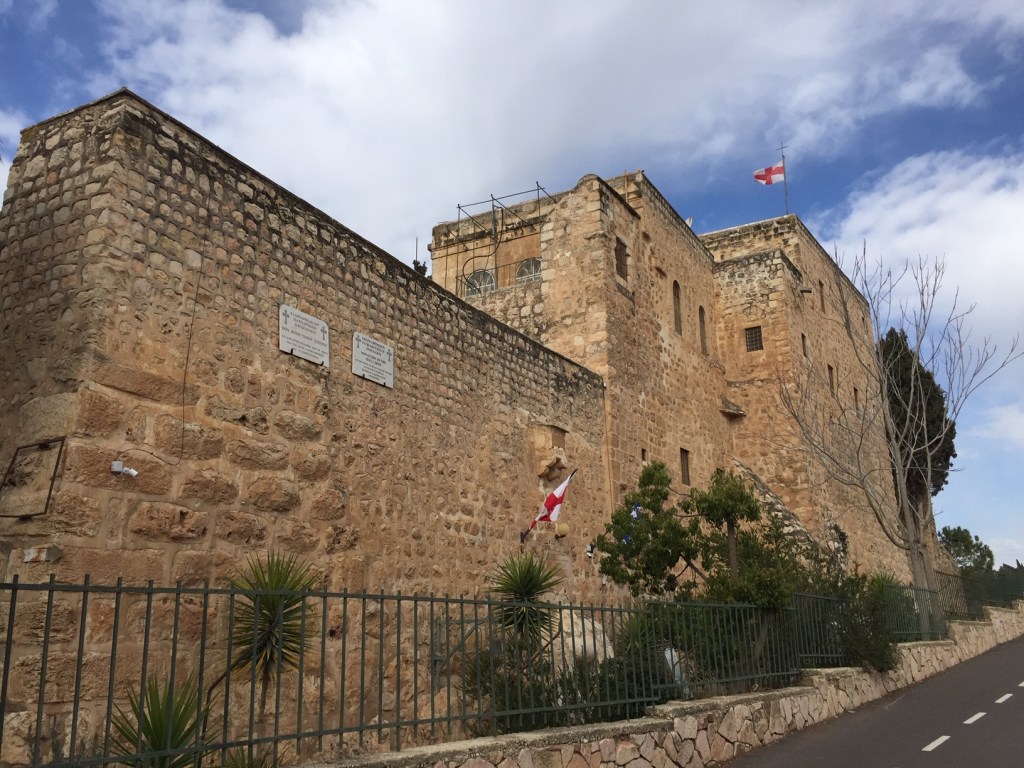
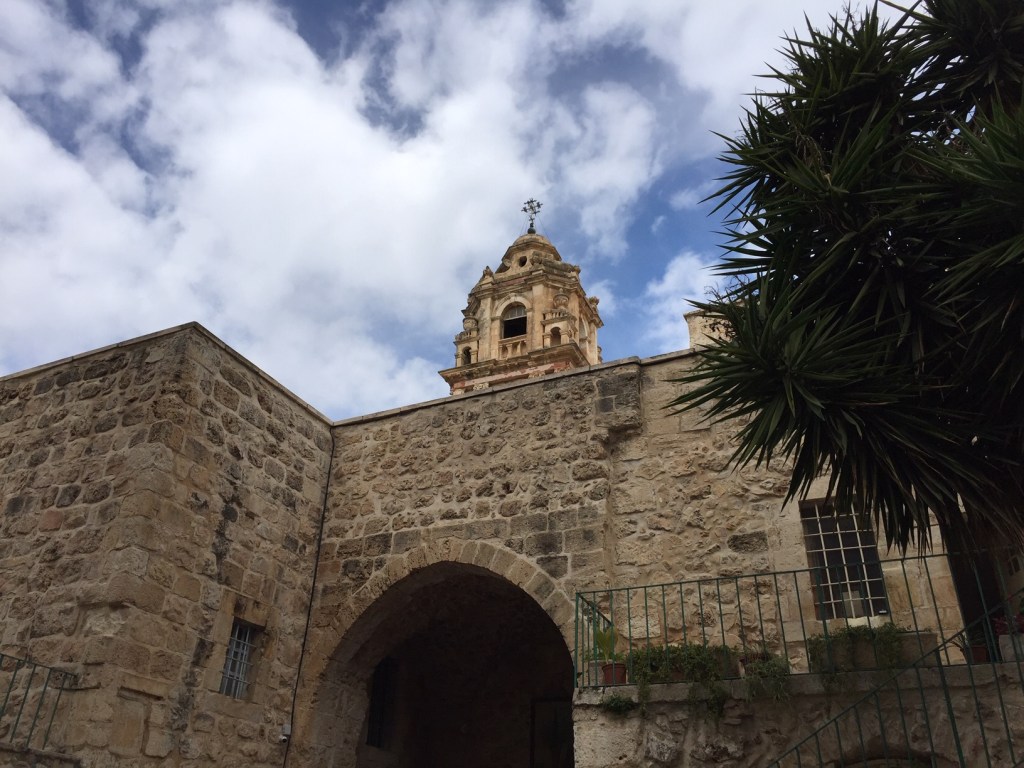
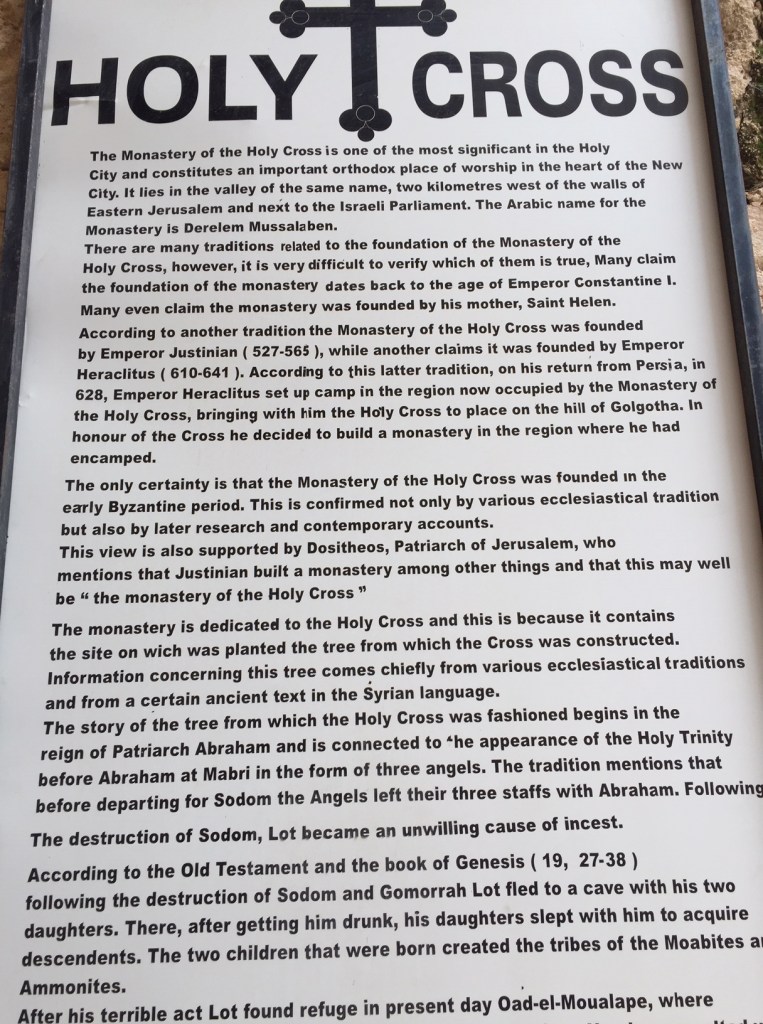
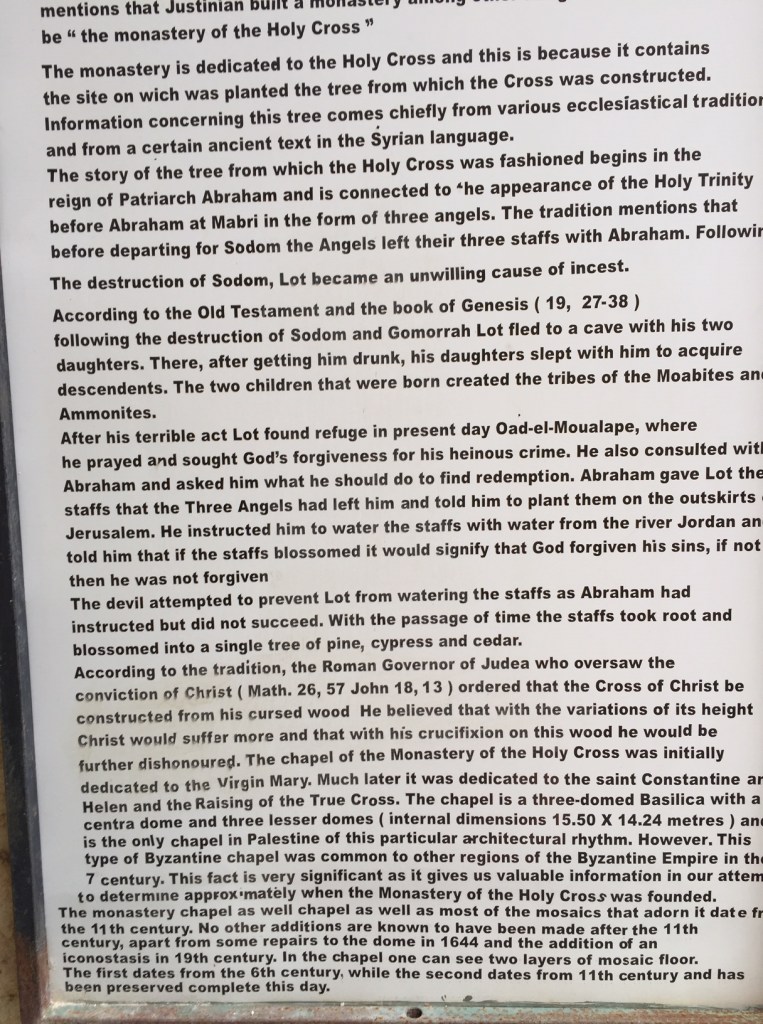
From the outside, the Monastery is rather forbidding. You wouldn’t guess what a wealth of beauty awaits you inside. We came in on the heels of a group of Greek Orthodox tourists — but even if we hadn’t, there didn’t seem to be anyone taking admission. As we entered, the tourists were chanting a prayer. One sweet soprano voice soared above the others in the resonant space of the sanctuary. Here below is the history of the Monastery.
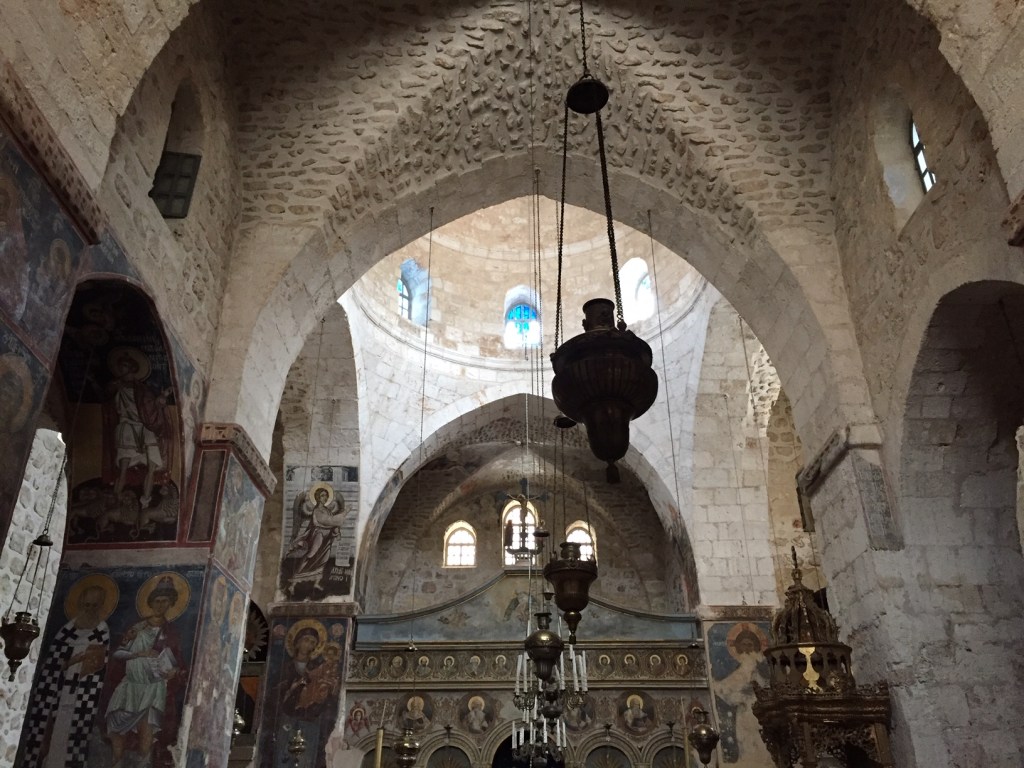
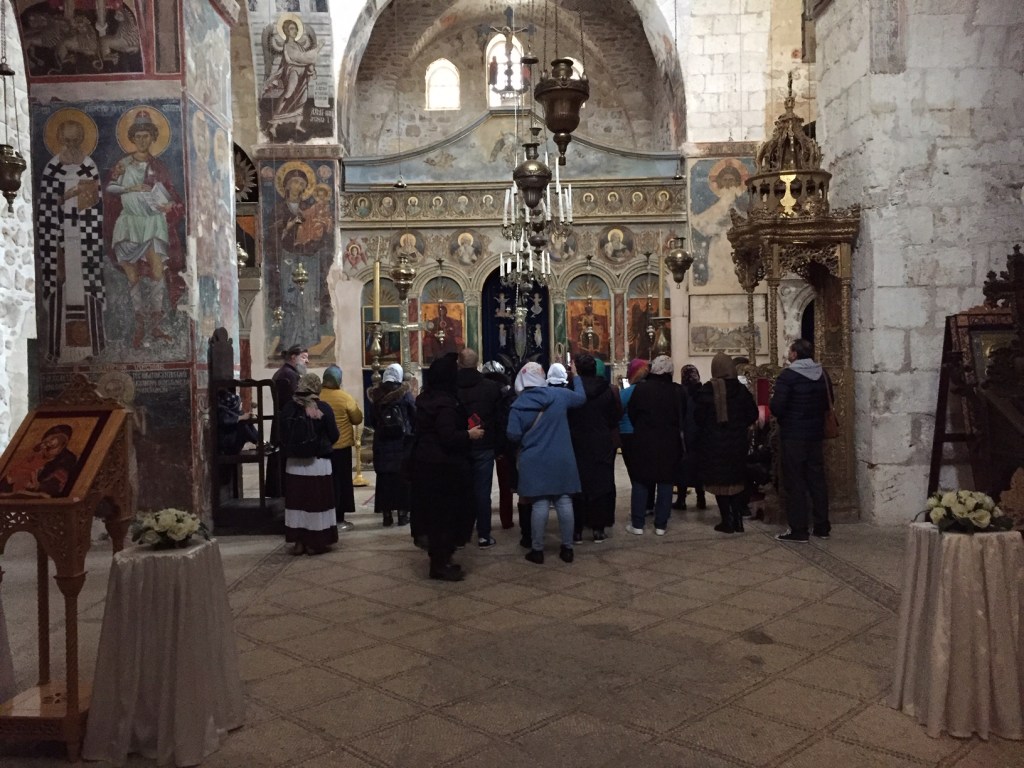
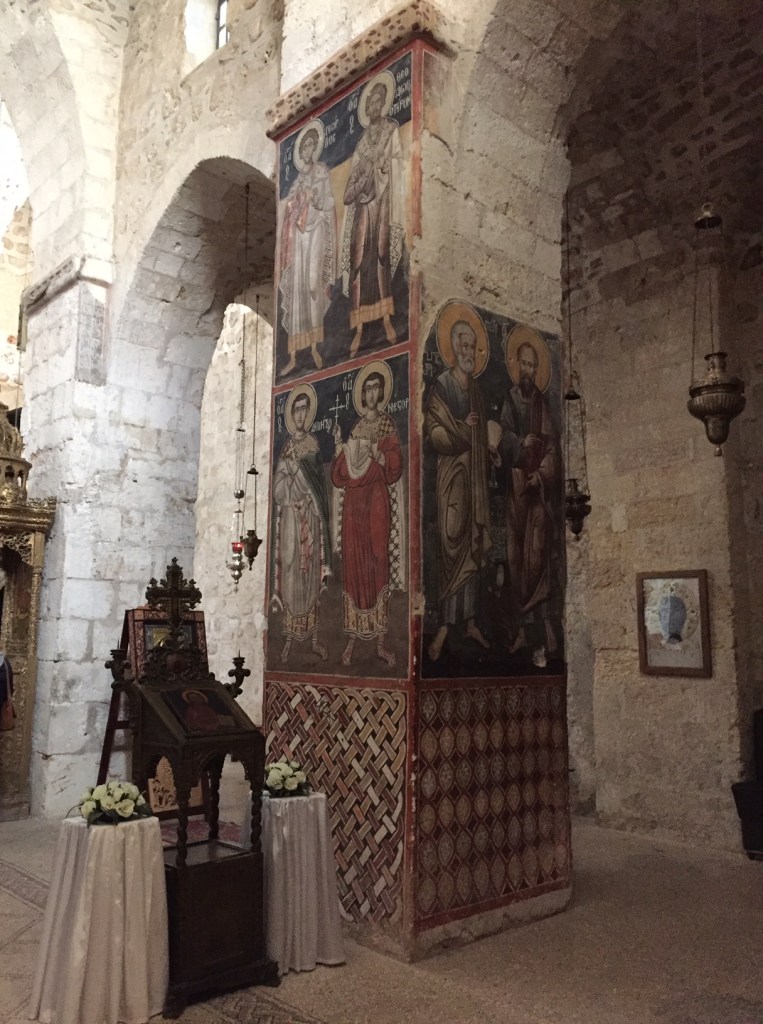
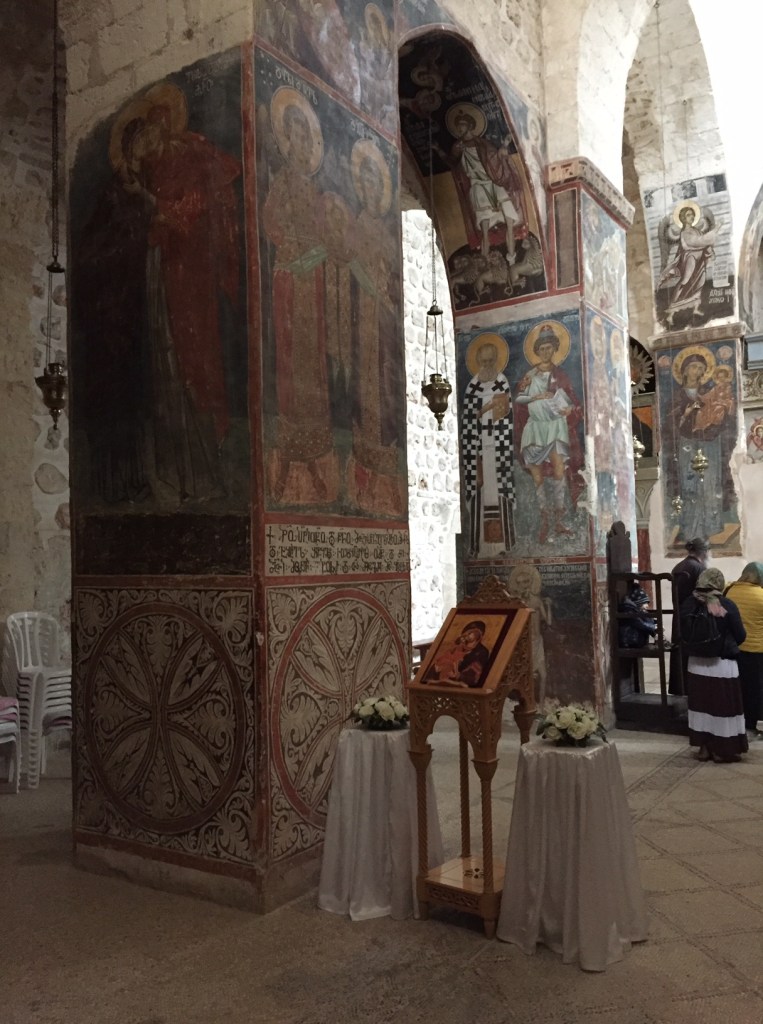
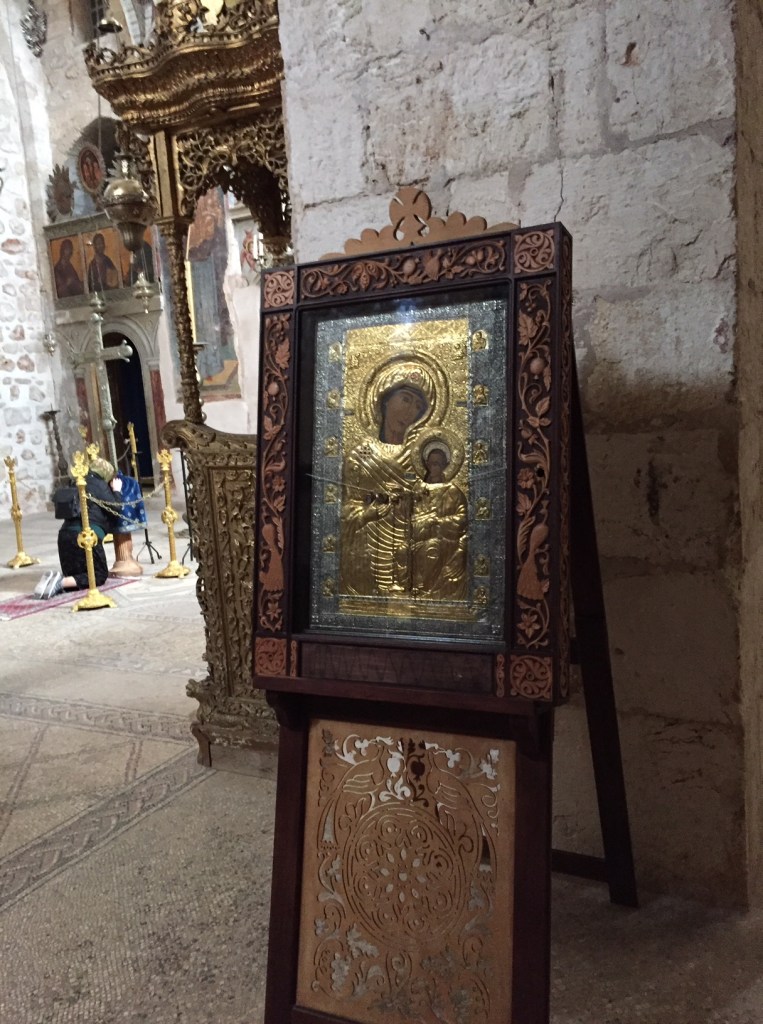
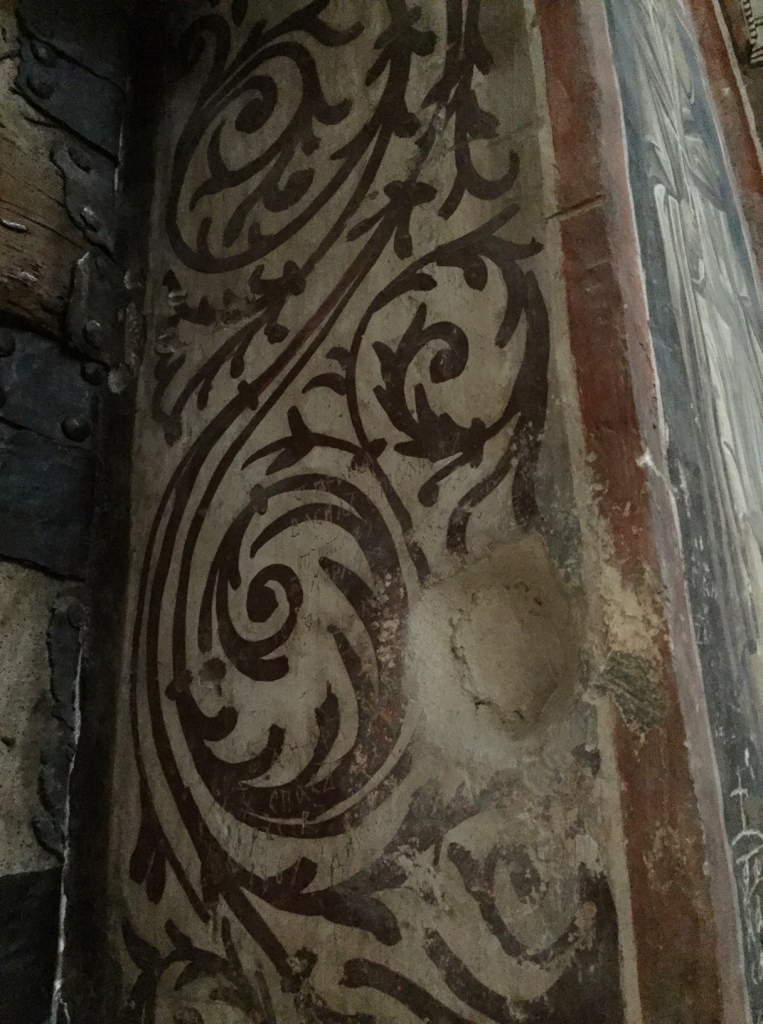
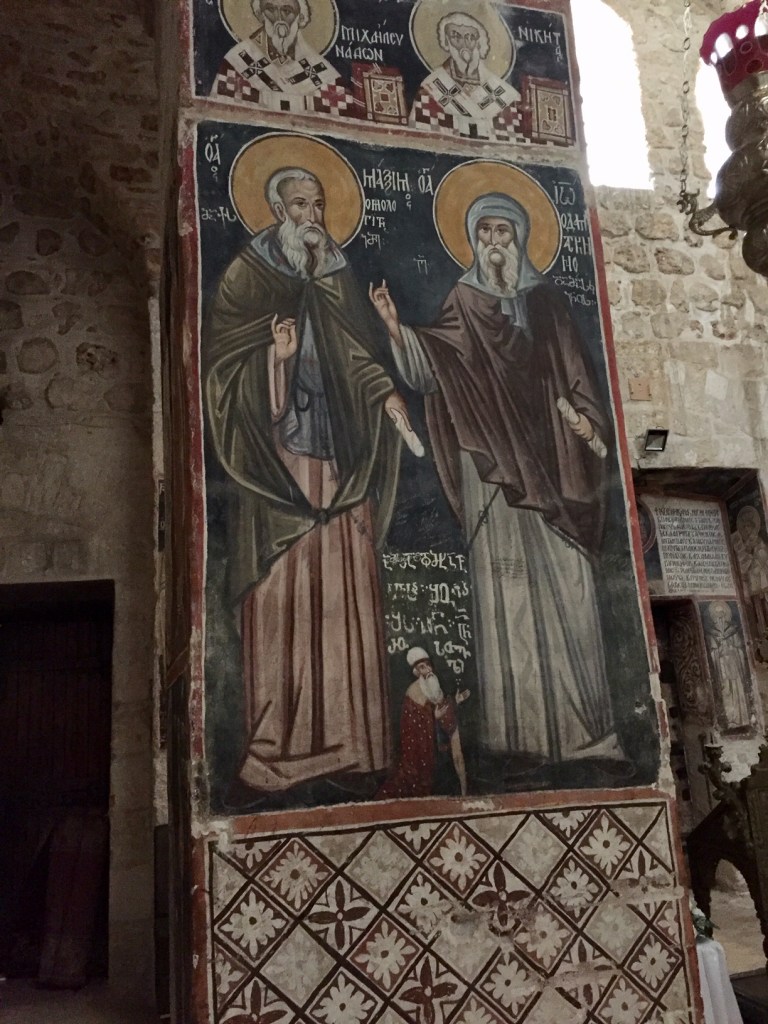
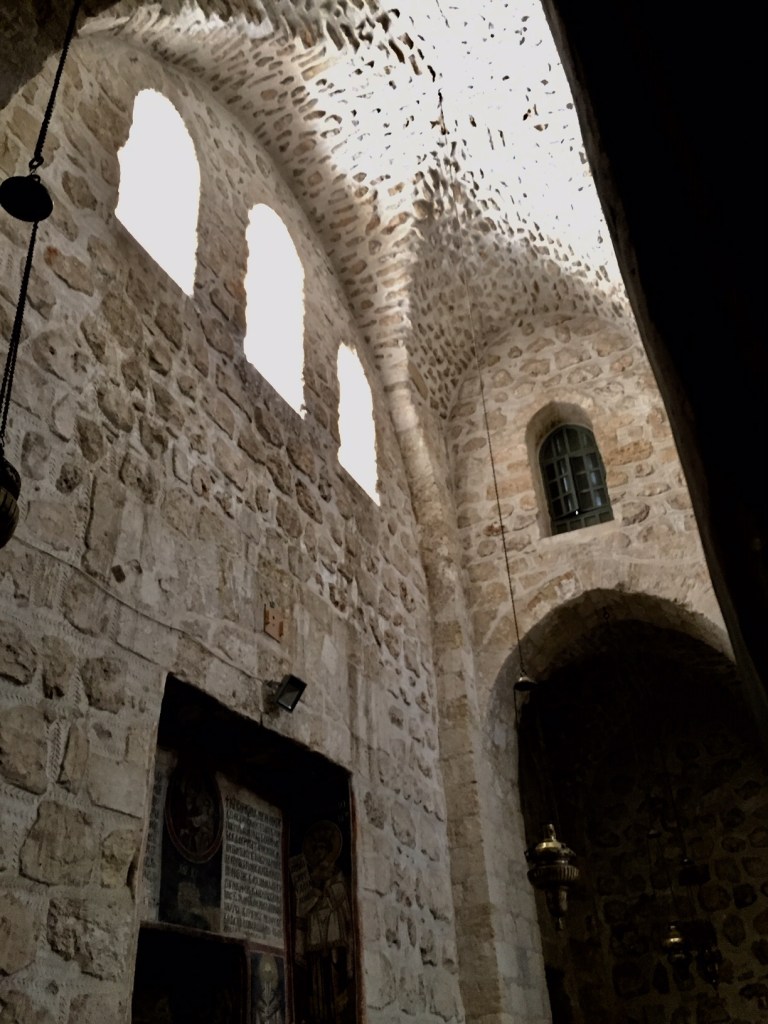
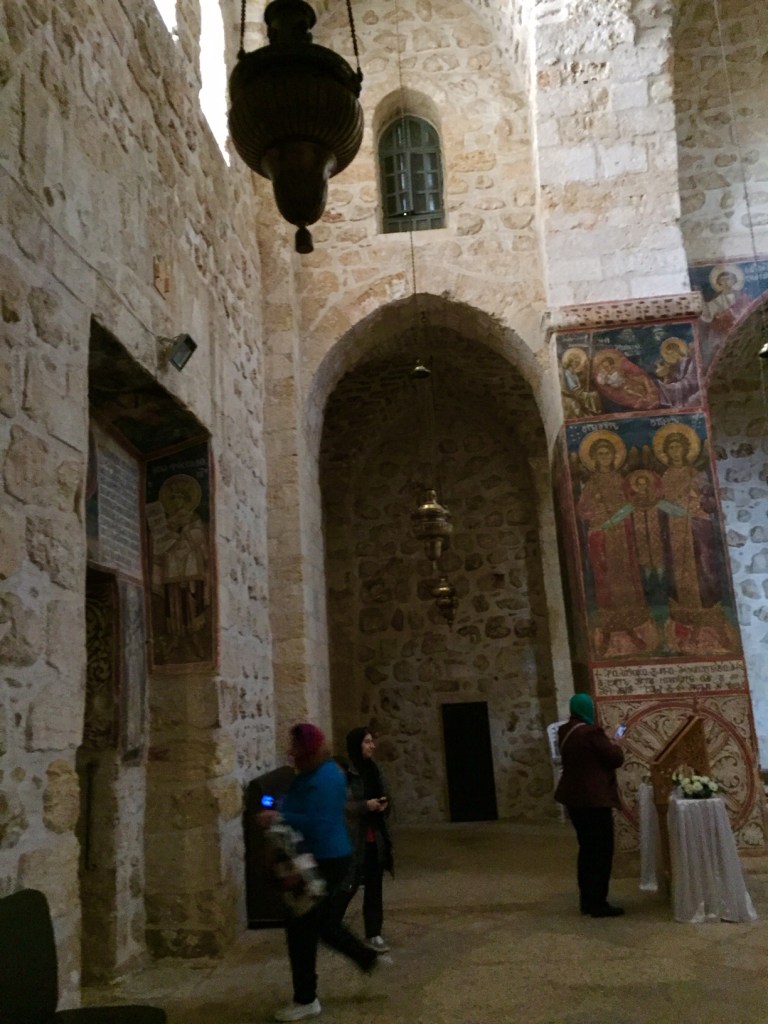
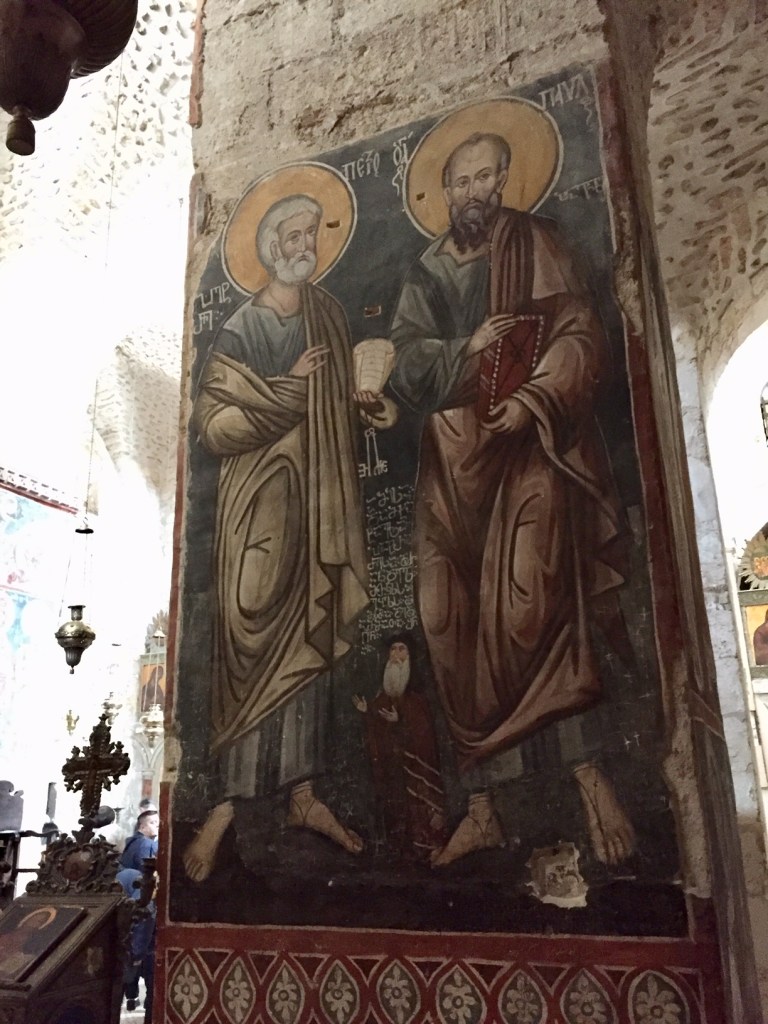
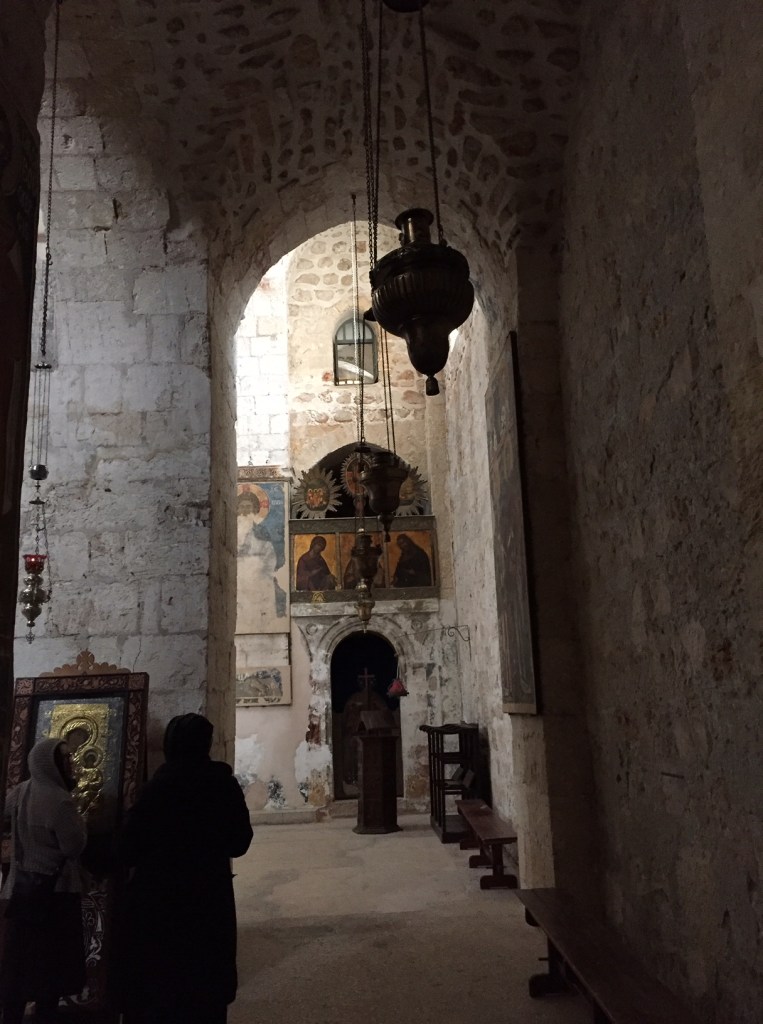
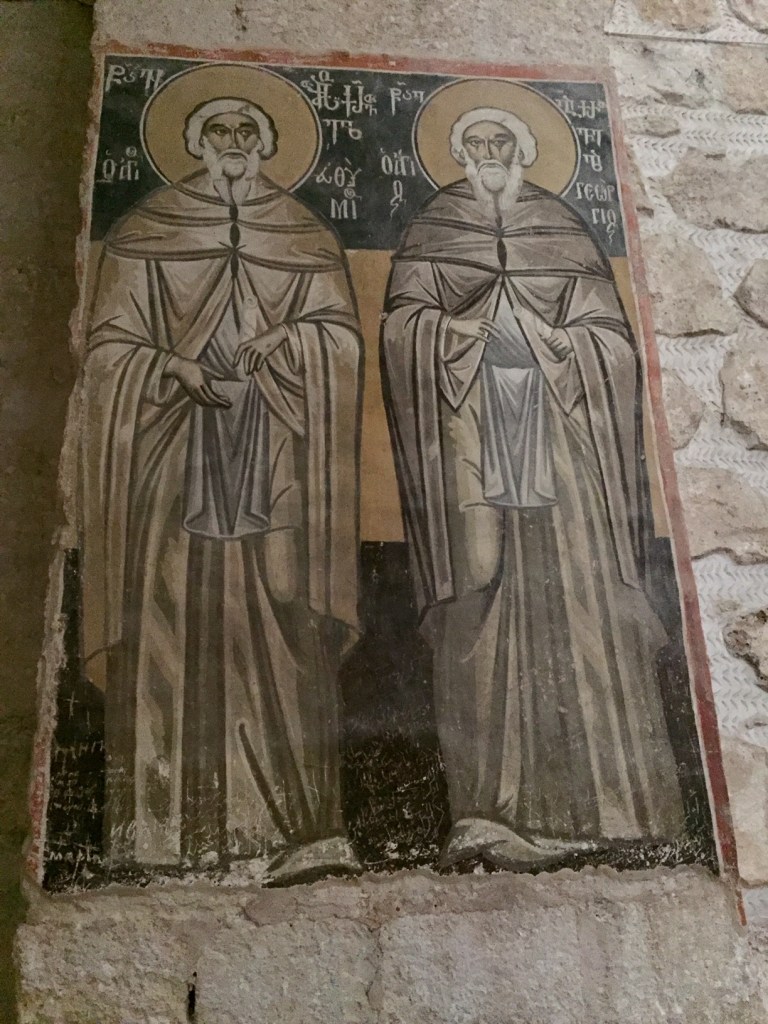
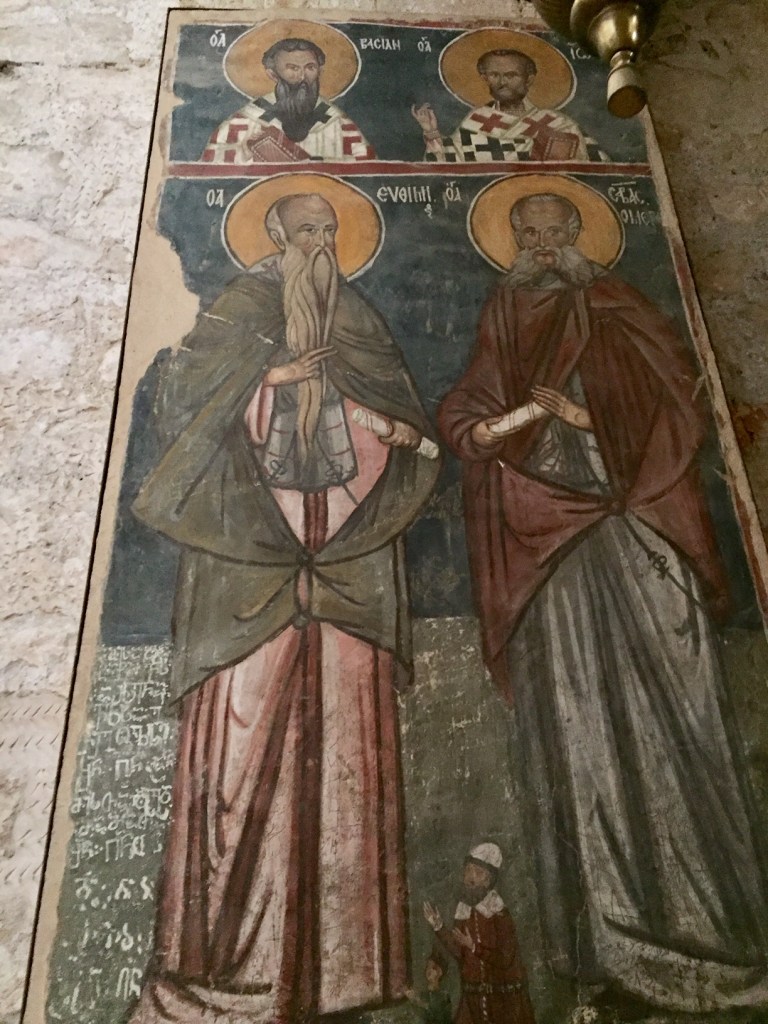
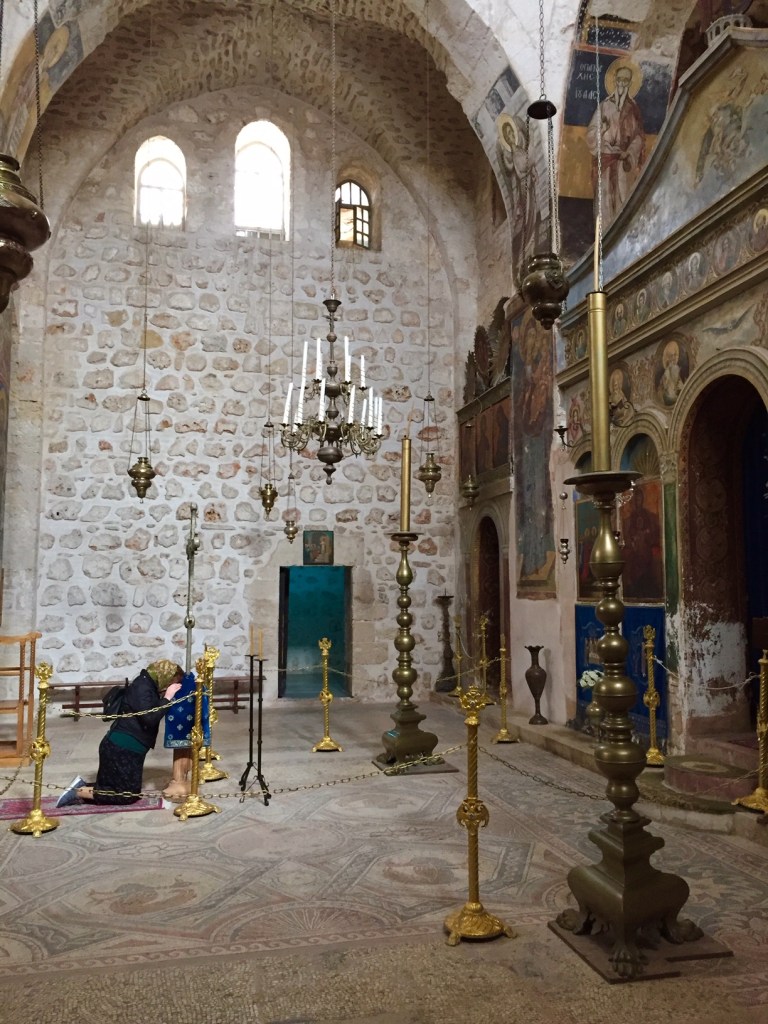
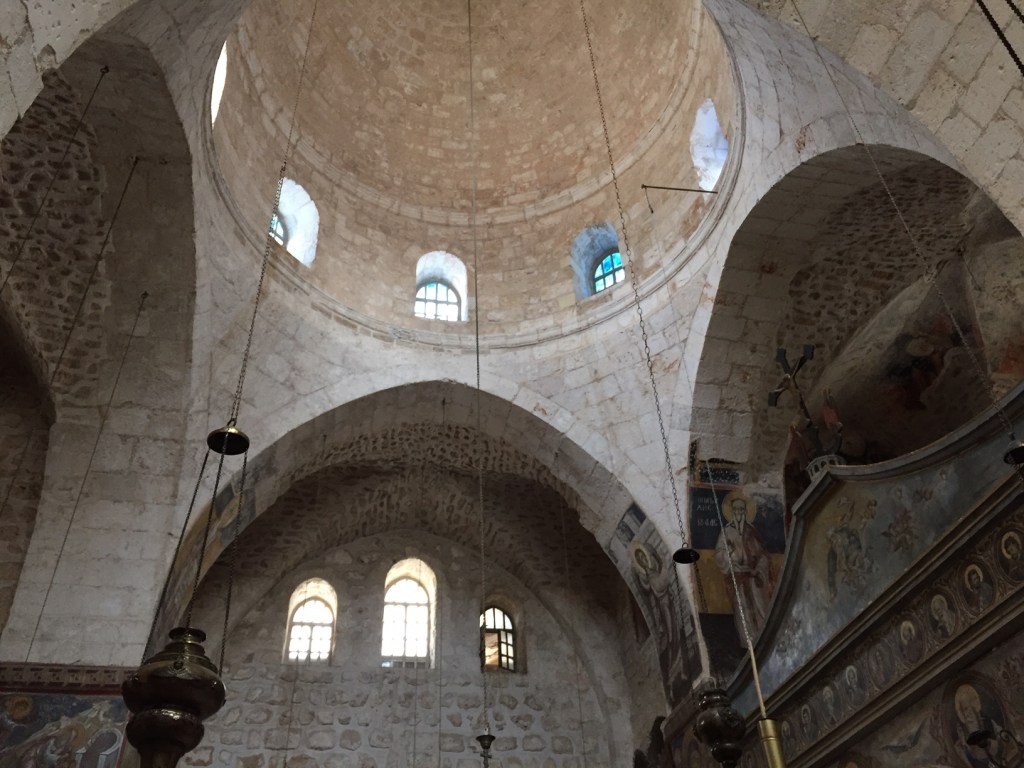
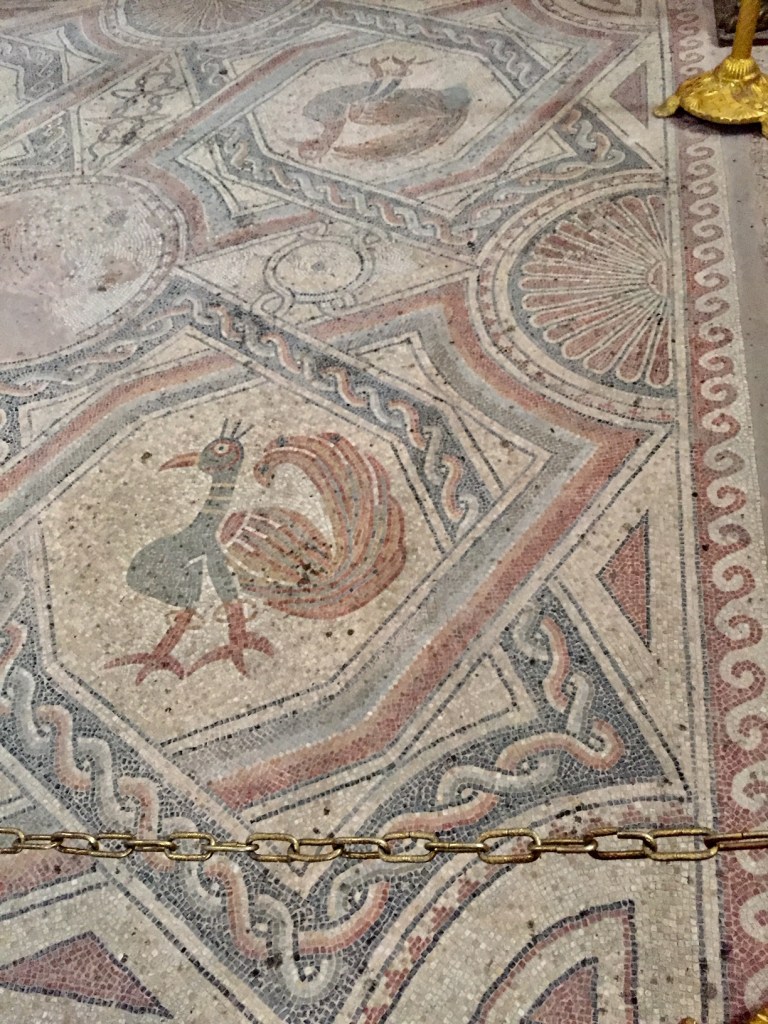
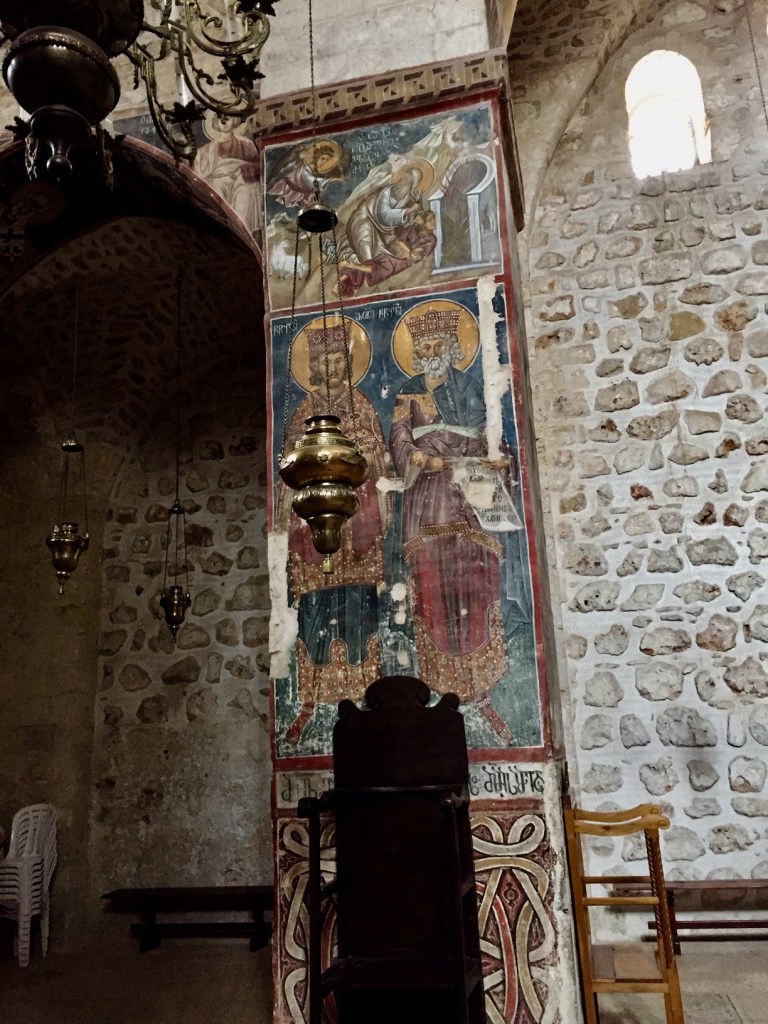
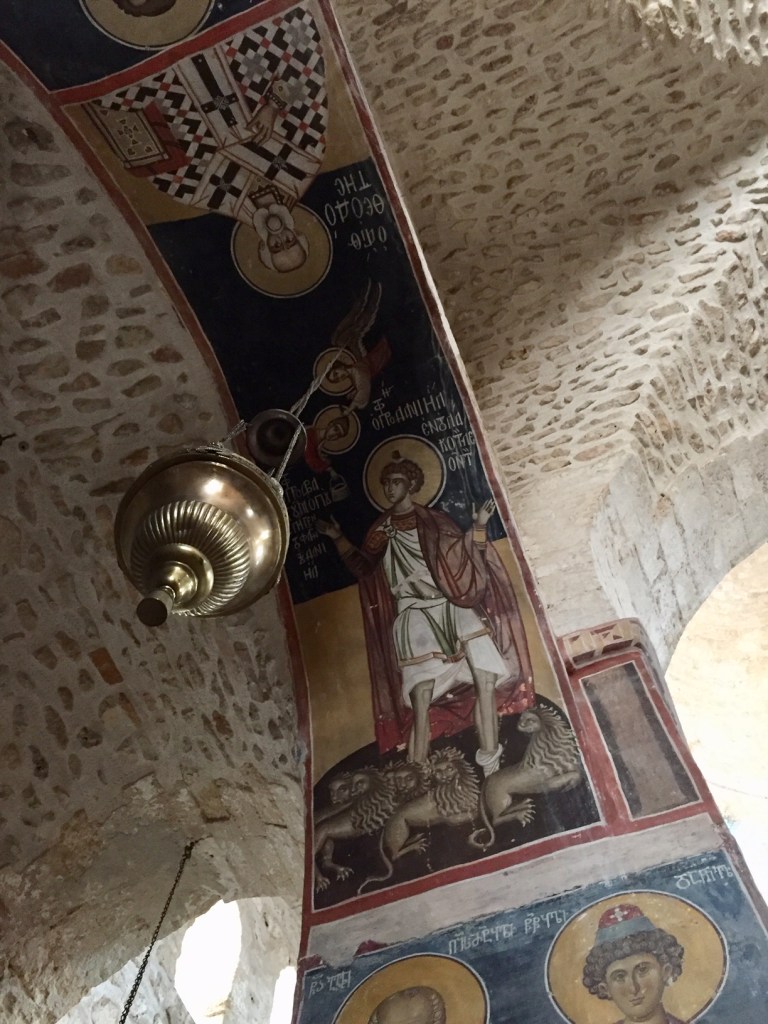
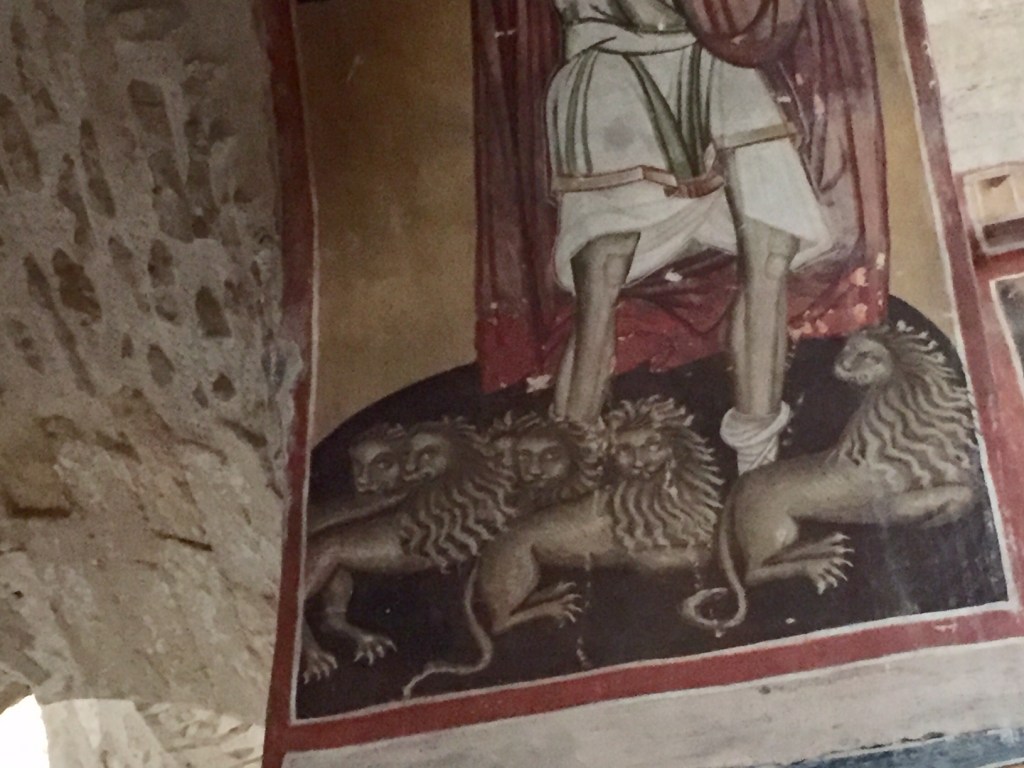
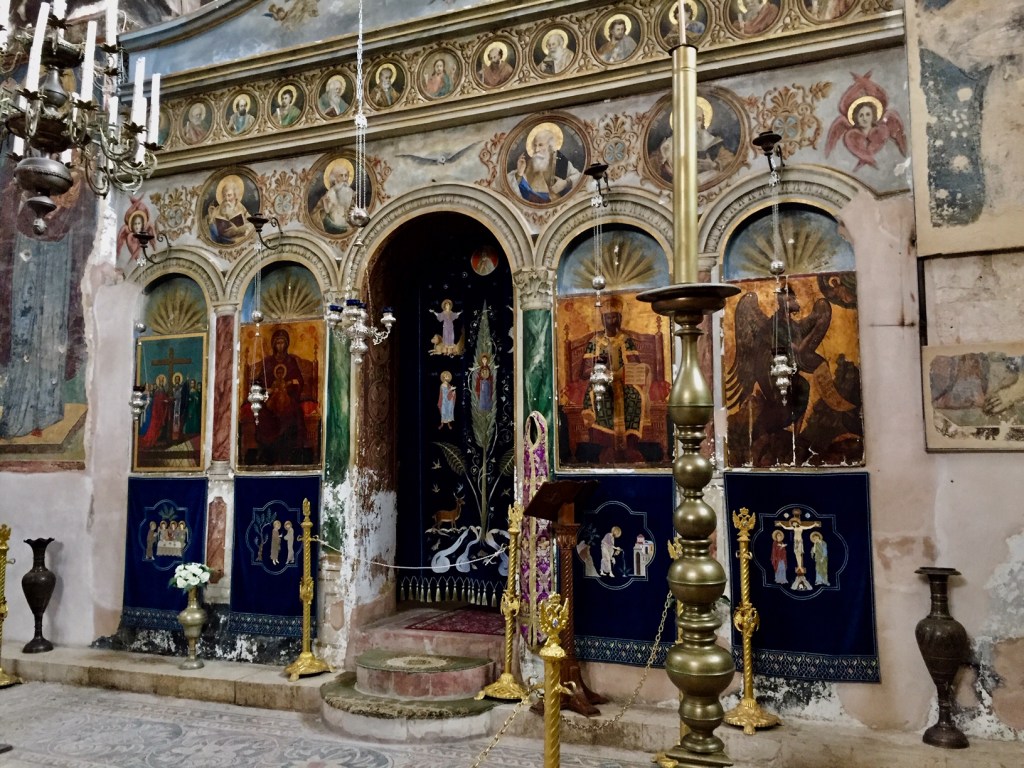
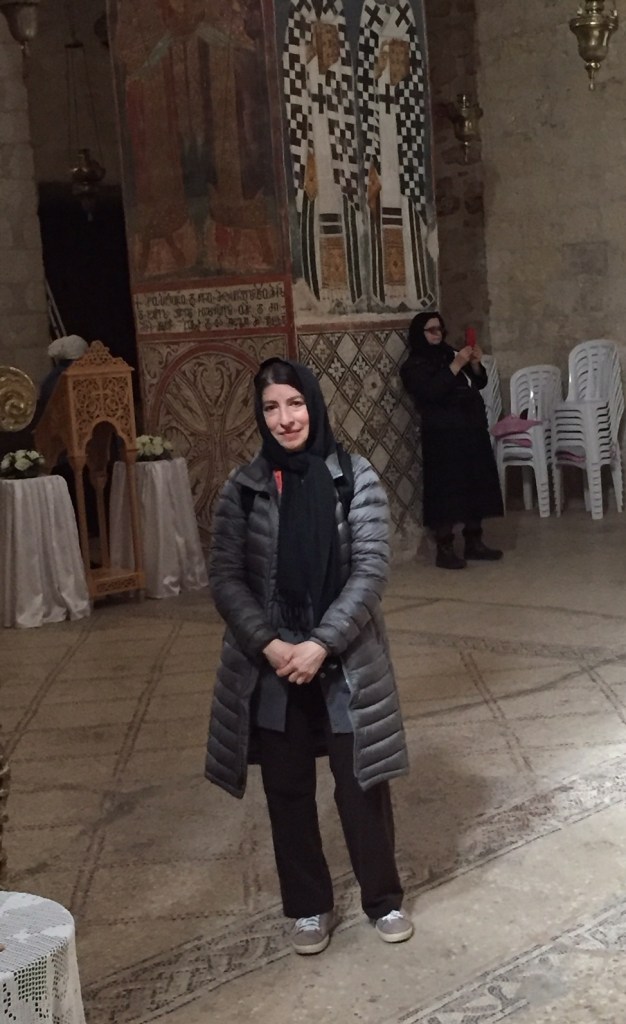
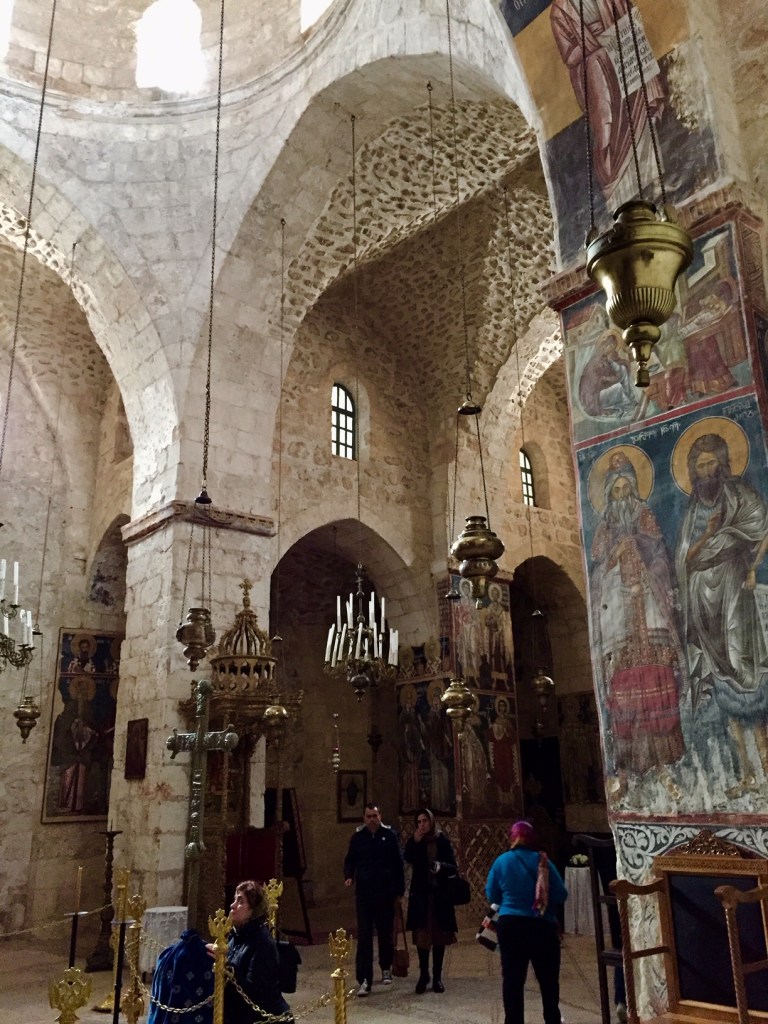
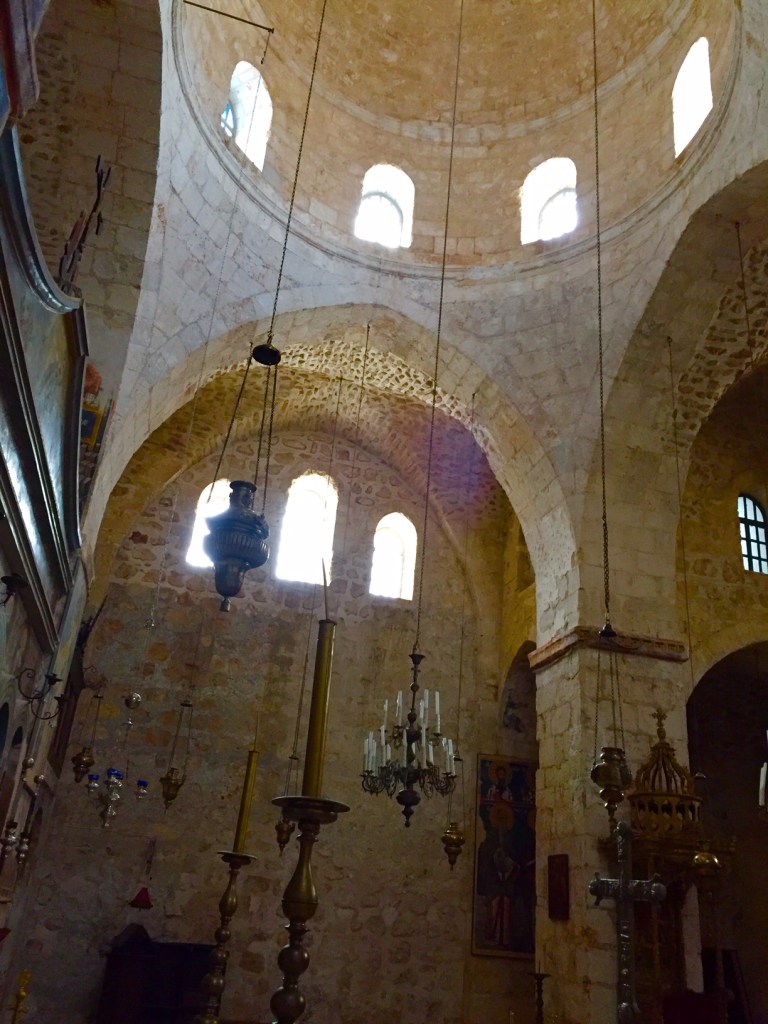
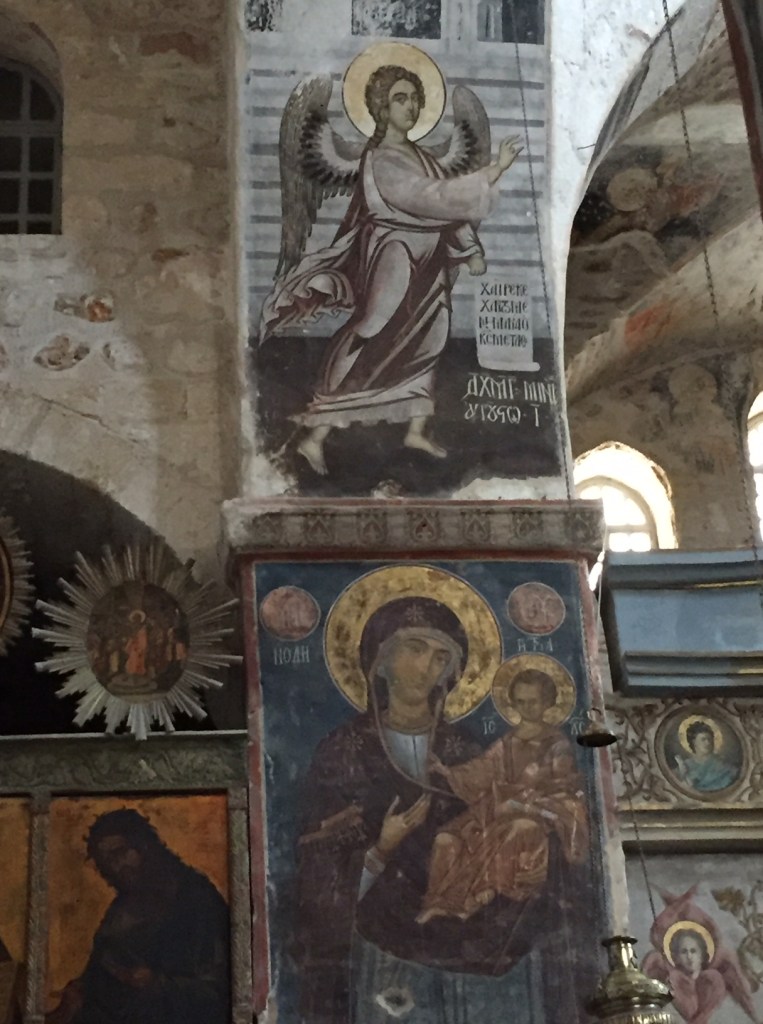
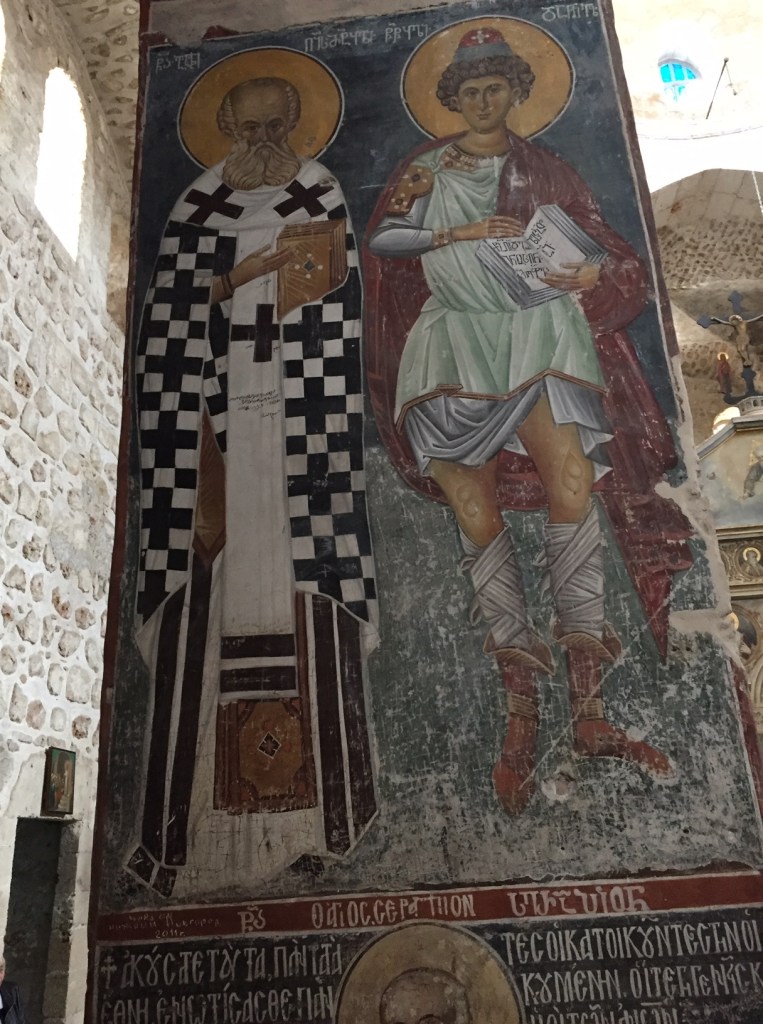
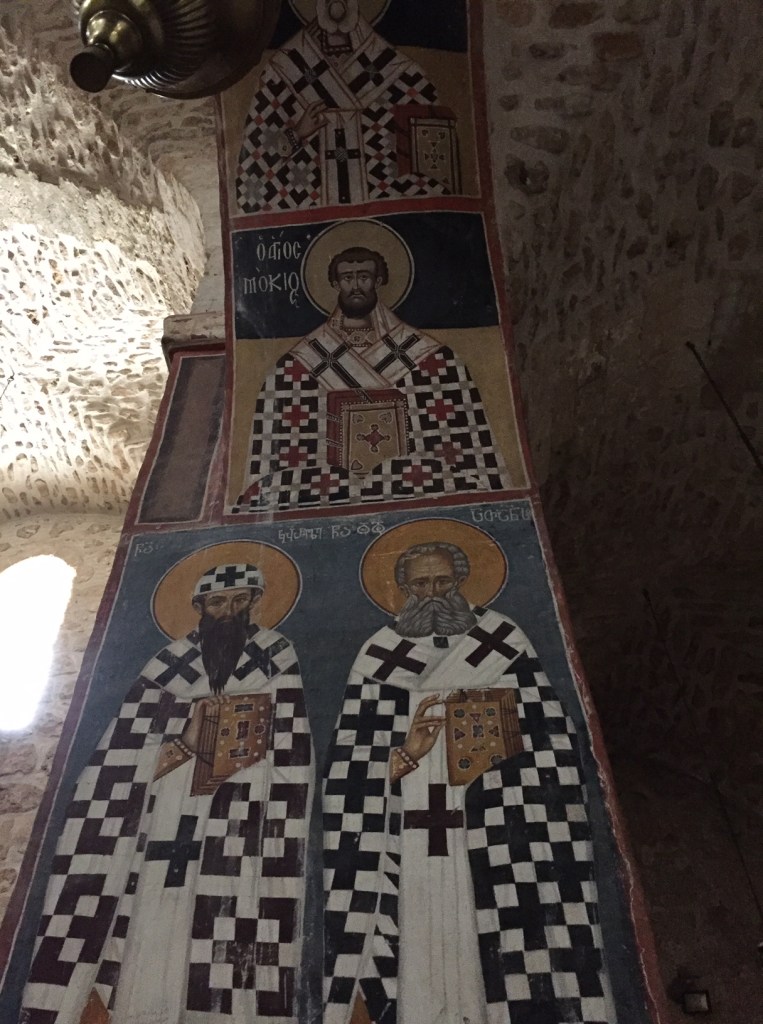
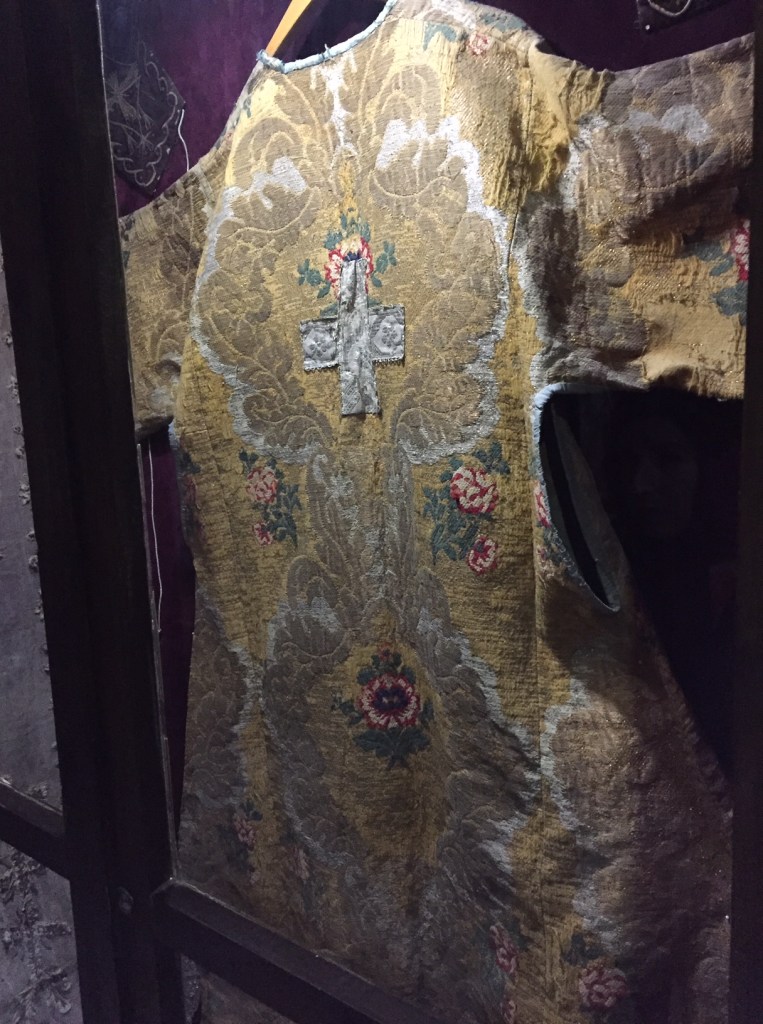
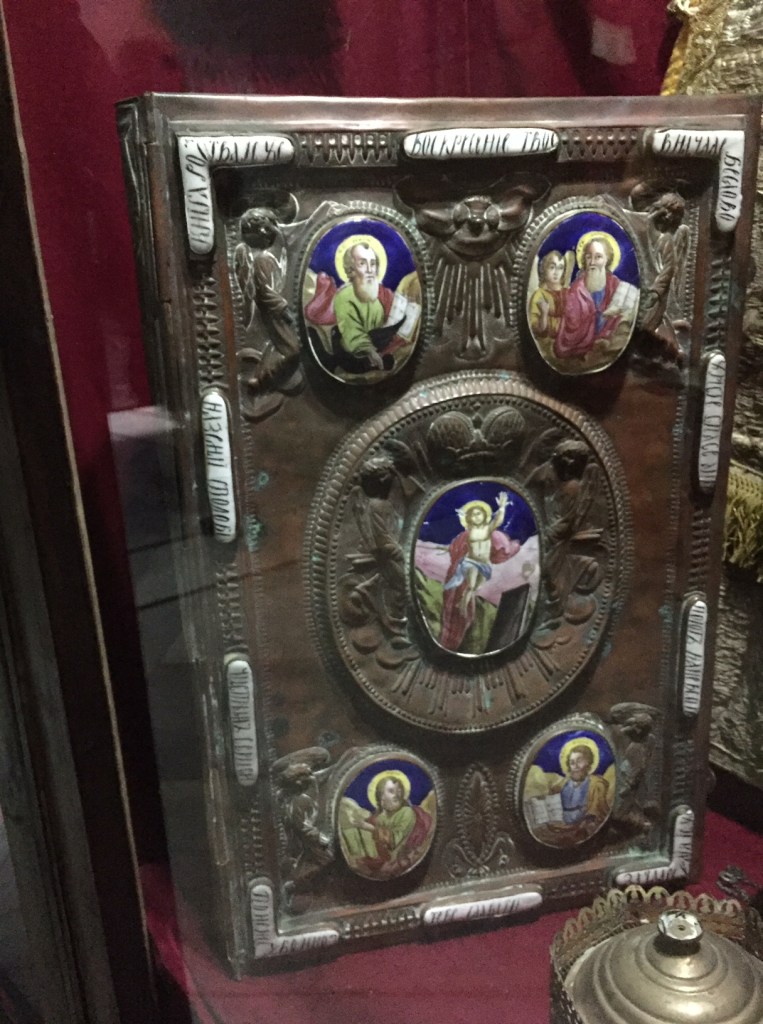
We left the stillness of the sanctuary, and went in to the little hall behind it. There were glass cases full of church relics. At the very back, the pilgrims were involved in kneeling to kiss what I seem to recall was meant to be a fragment of the cross. If all the purported fragments of the “True cross” that are kept in churches around the world were put together, you could build a whole new church! We tiptoed away, back through the sanctuary and out into the beautiful crisp day.
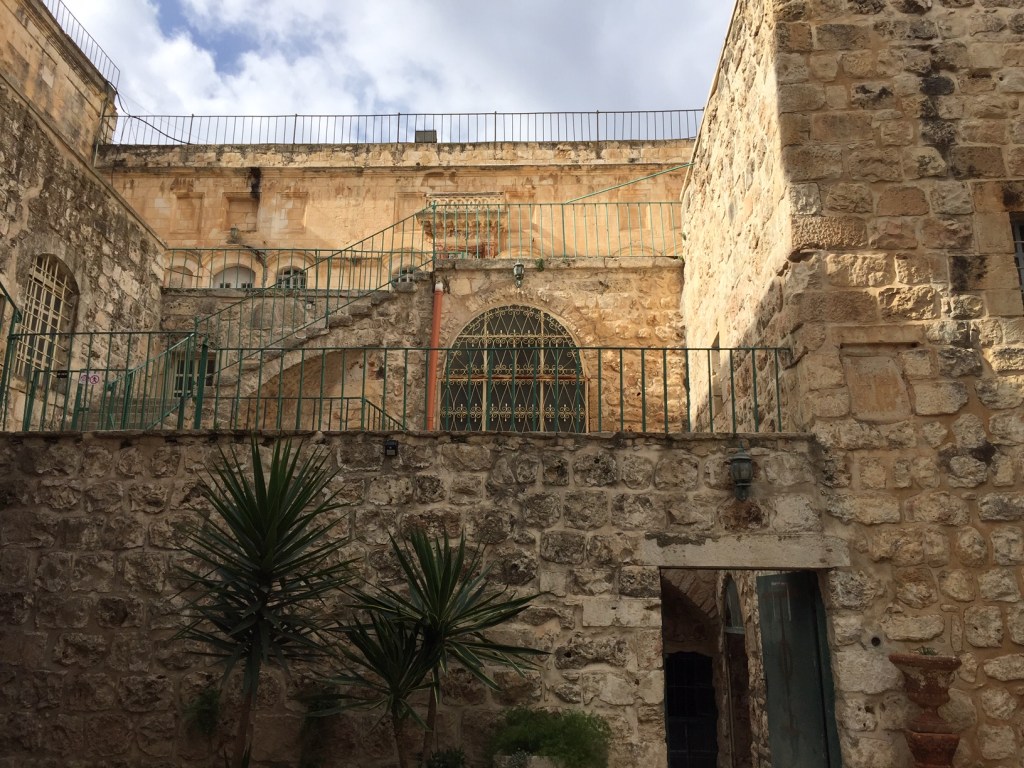
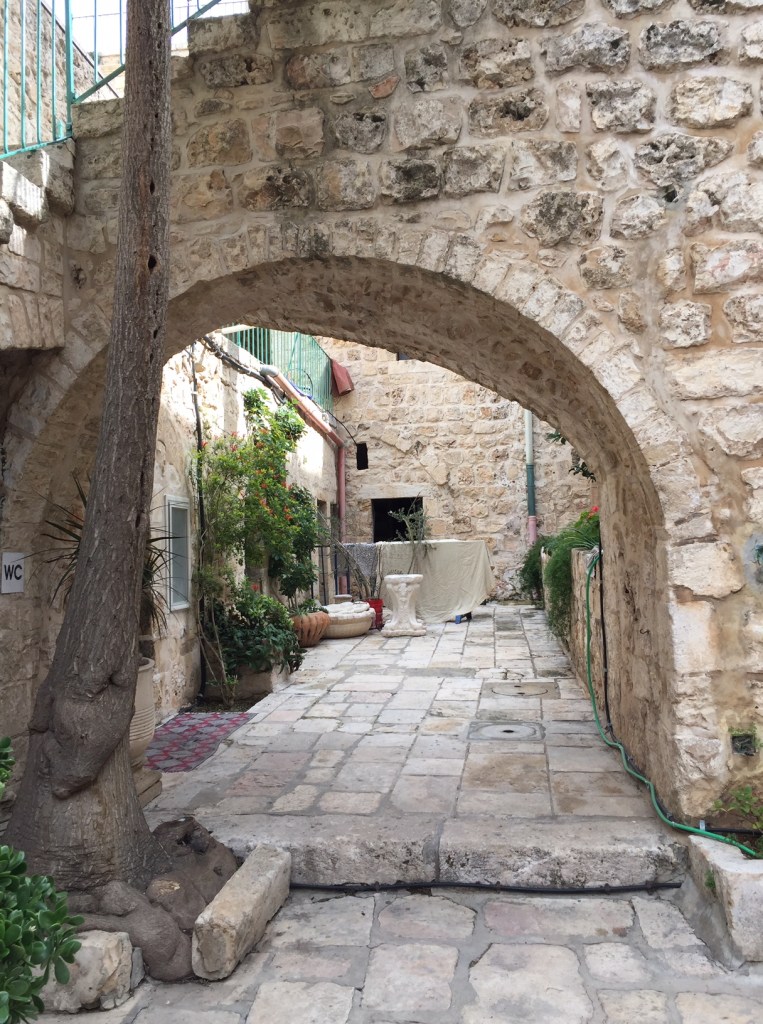
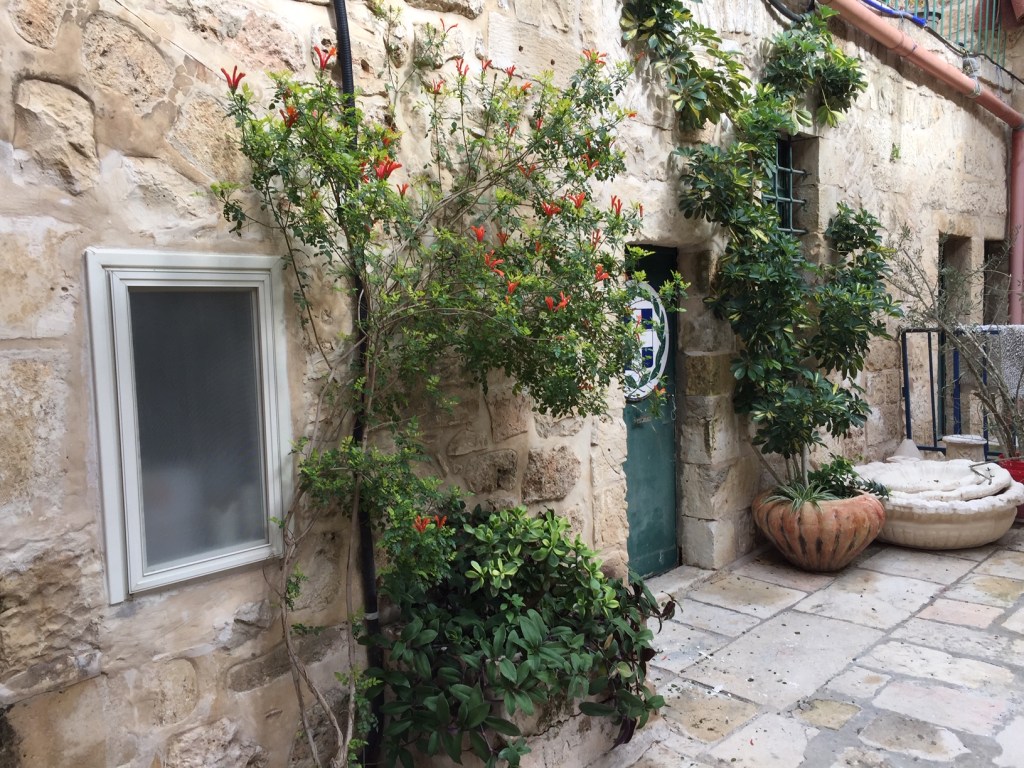
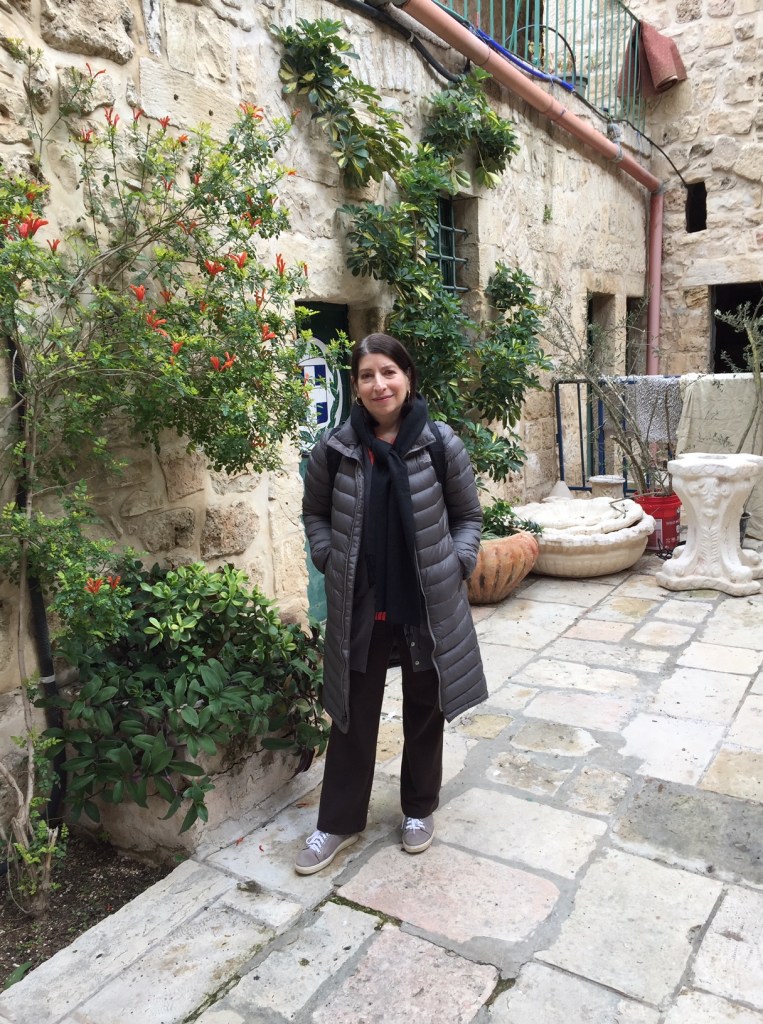
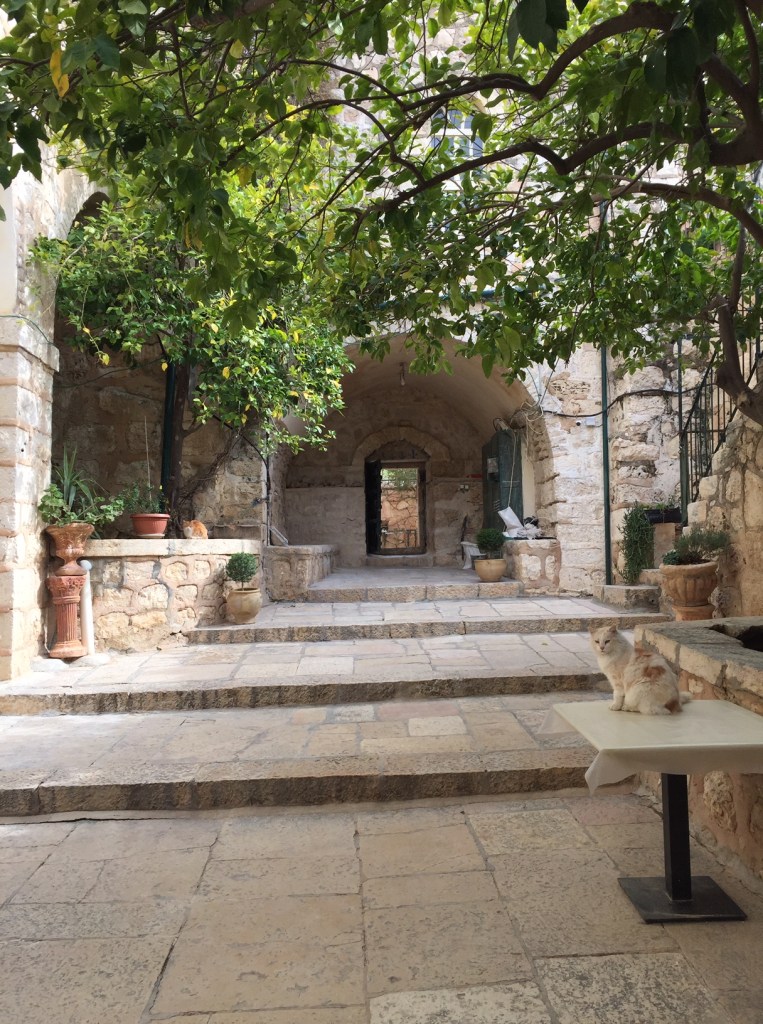
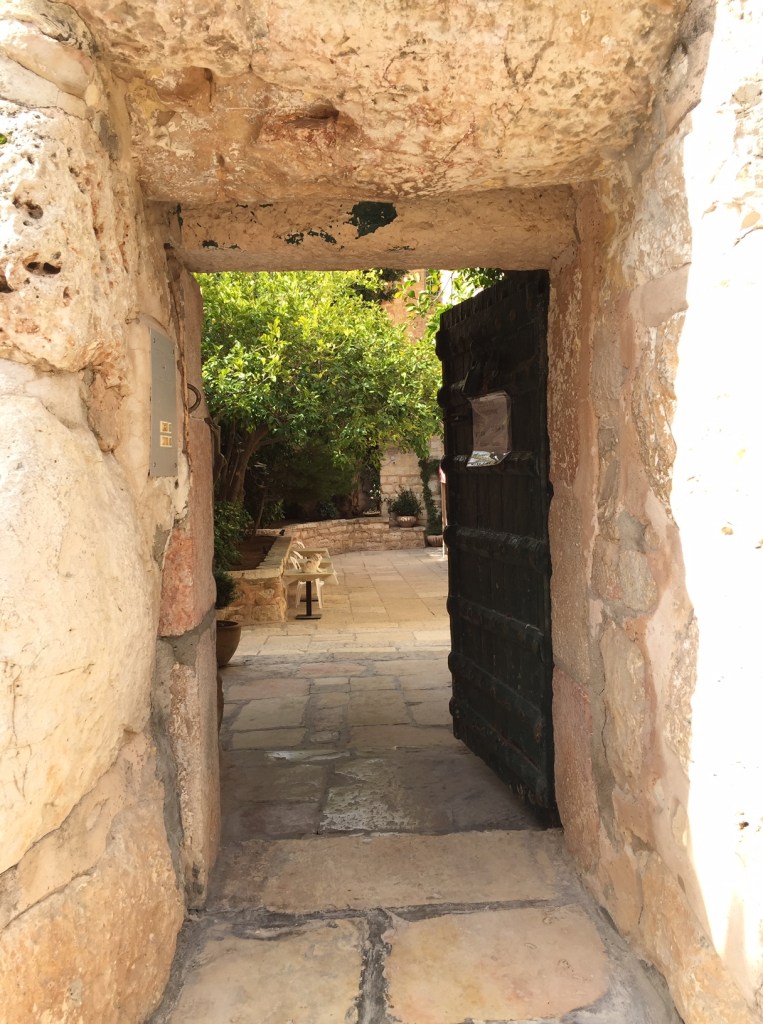
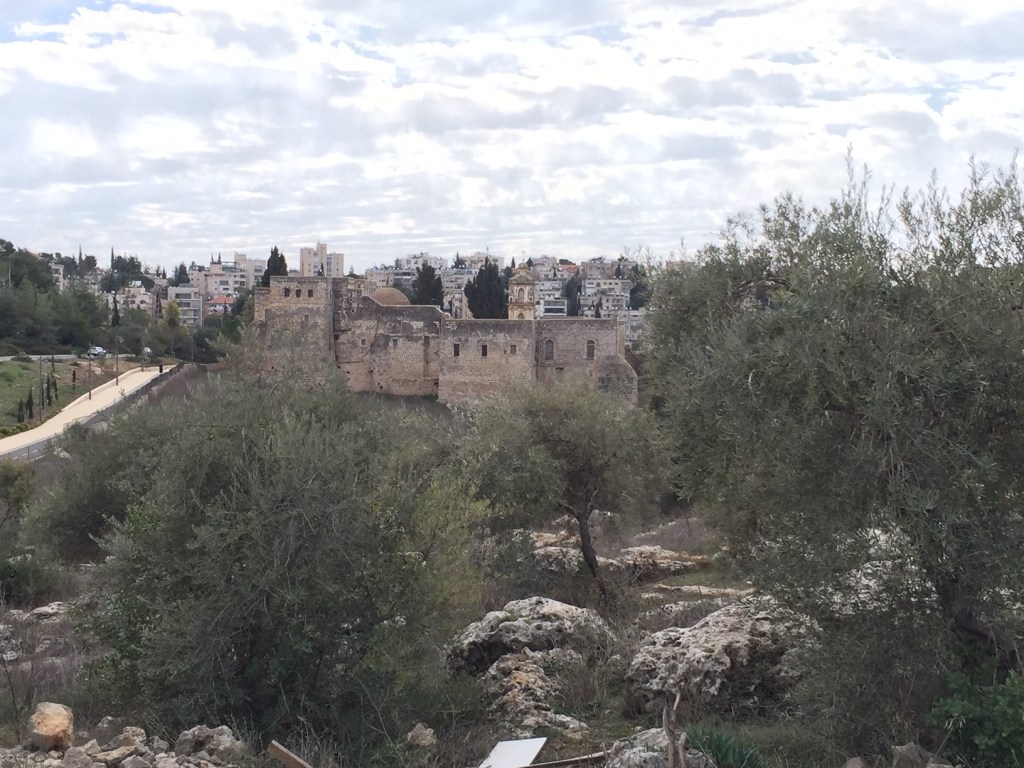
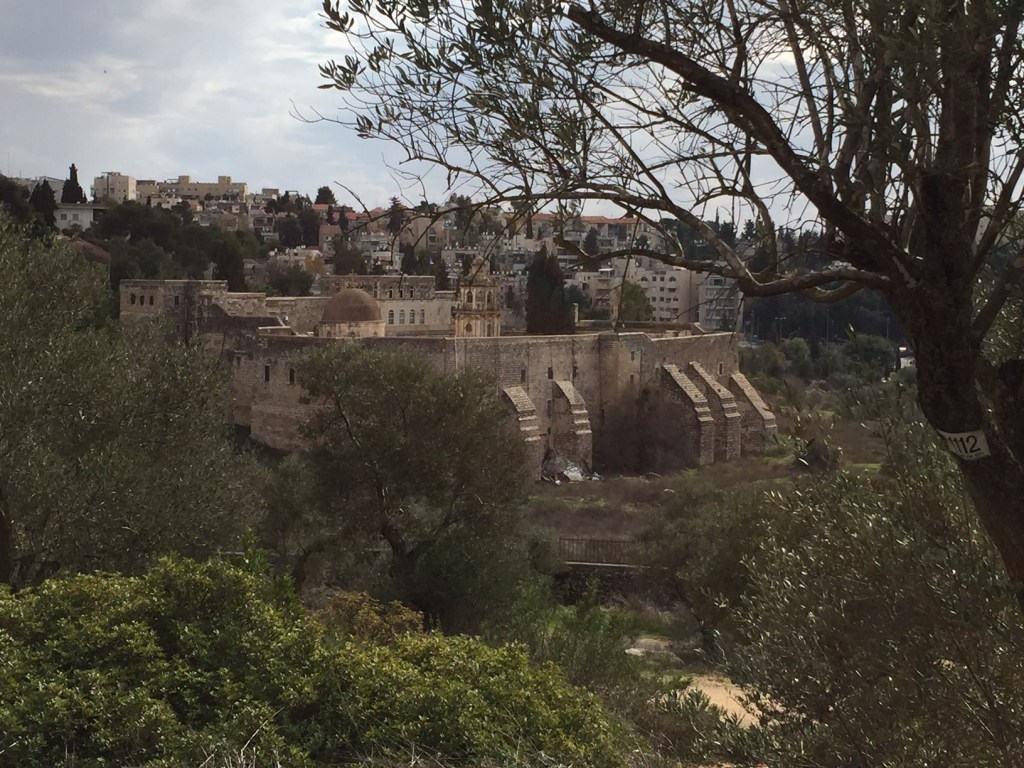
From the monastery it was short walk through a nice park to reach the Israel Museum. From the park there were good views of the monastery. It is really a very stern building from the exterior.
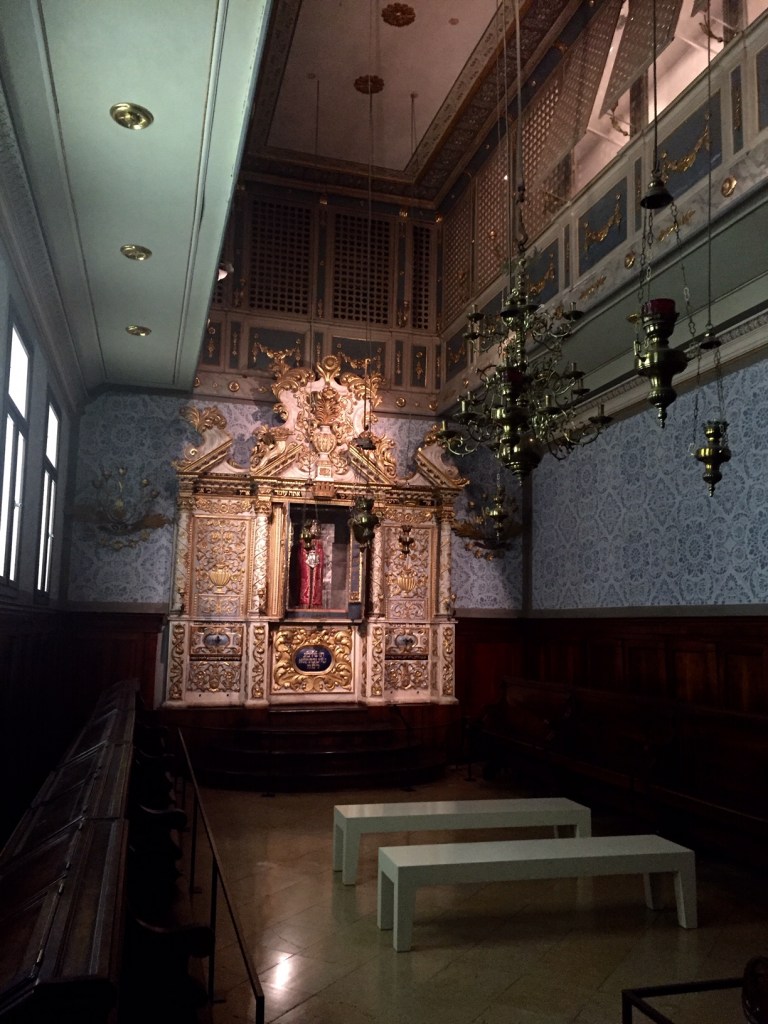
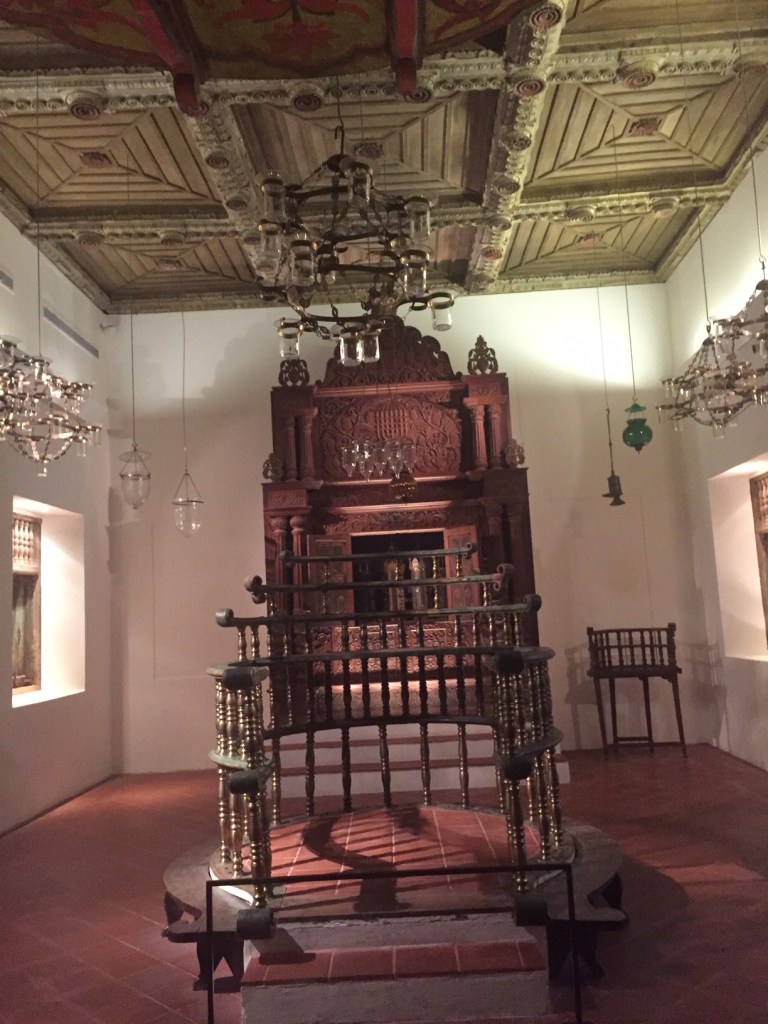
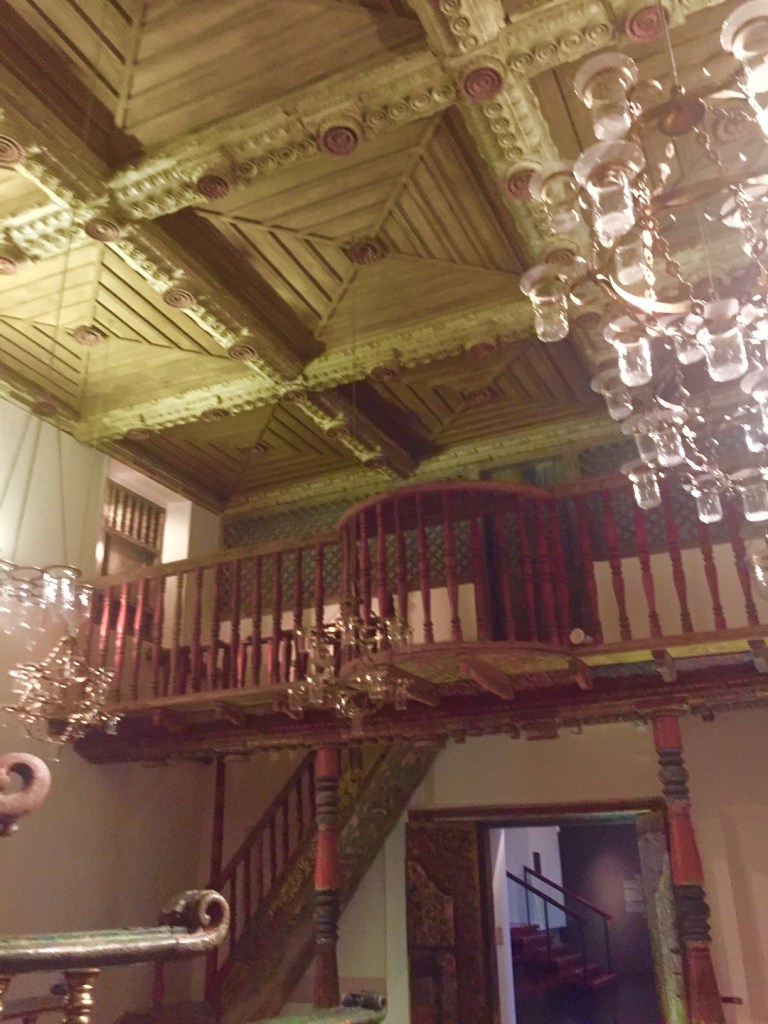
We spent a happy couple of hours in the museum’s Judaica collection, which includes all sorts of torah covers and crowns, havdalah spice boxes (for the end of Shabbat), wedding garments, burial garments, baby garments, illuminated manuscripts which put the lie to the notion that Jews don’t believe in representational art, chanukiot (menorahs for Chanukah), and the insides of three old synagogues plus the ceiling of one more. As the website of the museum informs us, “The synagogue from Vittorio Veneto, a small town in northern Italy, was built in 1700. Its interior is elegantly decorated in typical Italian Baroque style, reminiscent of a reception room in an aristocrat’s palace. The Kadavumbagam synagogue from the town of Cochin in southern India, built in the 16th century is a wooden structure, with an exquisitely carved and painted ceiling directly influenced by the decorations of mosques and Hindu temples. The Tzedek ve-Shalom synagogue from Suriname, northern South America, was built in the 18th century, and it tells the story of the Spanish-Portuguese Jews who came from Europe to the New World.” The thing I love most about this radiant synagogue is its white sand floor! The ceiling comes, as the website tells us, from “The wooden synagogue from Horb, southern Germany, [which]was built in the first half of the 18th century. Its walls and the ceiling were completely covered with paintings and inscriptions, thus being one of the rare testimonies of an old tradition of painted Synagogue common in Poland and Germany.”
I took no pictures at the museum, because I’ve been so many times before. However, here are a few that I took in 2015. For more wonderful pictures and information about the museum’s “Jewish Art and Life” galleries, you can look here: https://www.imj.org.il/en/wings/jewish-art-and-life
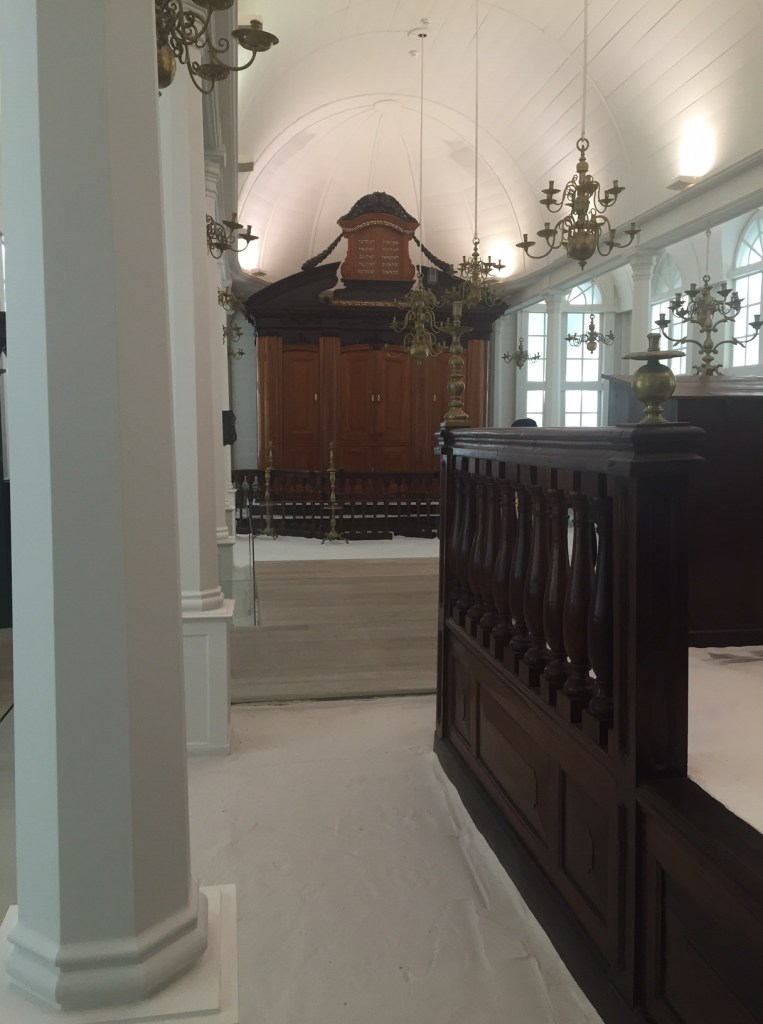
Deborah and I were quite tired out after all the looking and seeing we’d been doing, so we repaired to the museum restaurant and had a tasty lunch. Then we took a taxi back to my apartment. Deborah finished her packing as we awaited the arrival of Hagai in one car and Yochi and Yoni in the other, who were coming to take us all to Kiryat Ono (a suburb of Tel Aviv) where Avishai and his family live. I was sad to see Deborah go — we had had a lovely visit and seen many amazing sights together.


 Nine months in Israel
Oh thank G-d Kate —
You’ve cleared up something that has been a puzzle to me lo these many years: whatever happened to those trees that Abraham planted that grew into staffs that the Romans found a thousand years later and put to such (questionably) good use?
This revelation, as far as I’m concerned, makes your sabbatical year well worth all your suffering through those trips to the Jordanian desert, visits with the Bedouin, and having to eat all that yummy food!
What a time you’re having there!
LikeLike
Absolutely! Doesn’t it strike you as a “midrashic” story? Although I don’t know if they derive it the way w would — by taking an actual Biblical quote and embroidering it. I’m taking a wonderful class with Rabbi Levi Cooper on midrash, and two other great classes that deal with midrashic and aggadic material — “Rabbinic Personalities” and “Rabbinic Heroines”. The latter, with Gila Fine, is a superb literary analysis of some of the few stories of women in the Talmud — so fun!
LikeLike