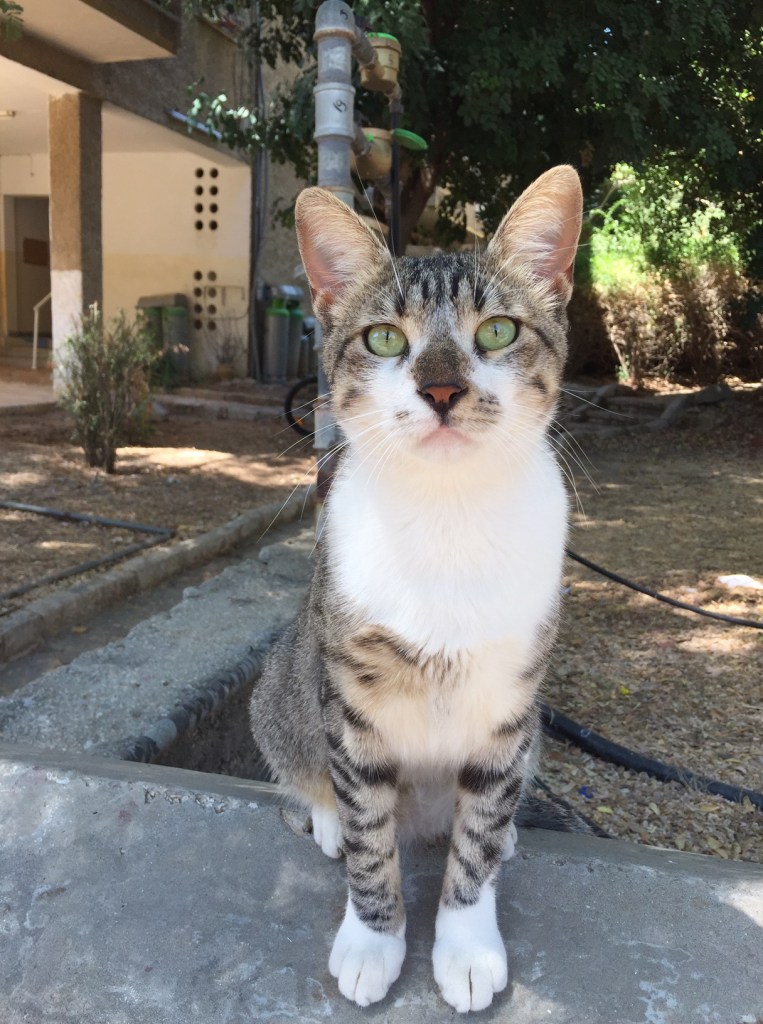
A visitor to Israel from another country is likely to be astounded at the number of cats he or she will encounter in the course of a day, or even an hour. A recent sub-headline in Arutz Sheva reads “With city’s stray cat population hitting 240,000, Jerusalem officials mull solutions to burgeoning problem.” The article continues, “With nearly 2,000 cats per square kilometer (mile), [the Holy City] has a total of some 240,000, in a city of more than 900,000 residents, the Israeli official in charge of its veterinarian services, Asaf Bril, said.” Vets are currently managing to spay or neuter 15 cats per day here in Jerusalem. However, “Only a large-scale, rapid program to sterilize some 80 percent of the cats within a six-month period would be capable of bringing the population under control,” according to Bril. ” To achieve that result, 25 clinics like mine would be needed to sterilize 500 cats per day,” he said.

I have long been aware of Israel’s cat problem. As most of you know, I like cats. Indeed, I have some lovely photos of cat encounters from my last trip here, in November 2018.
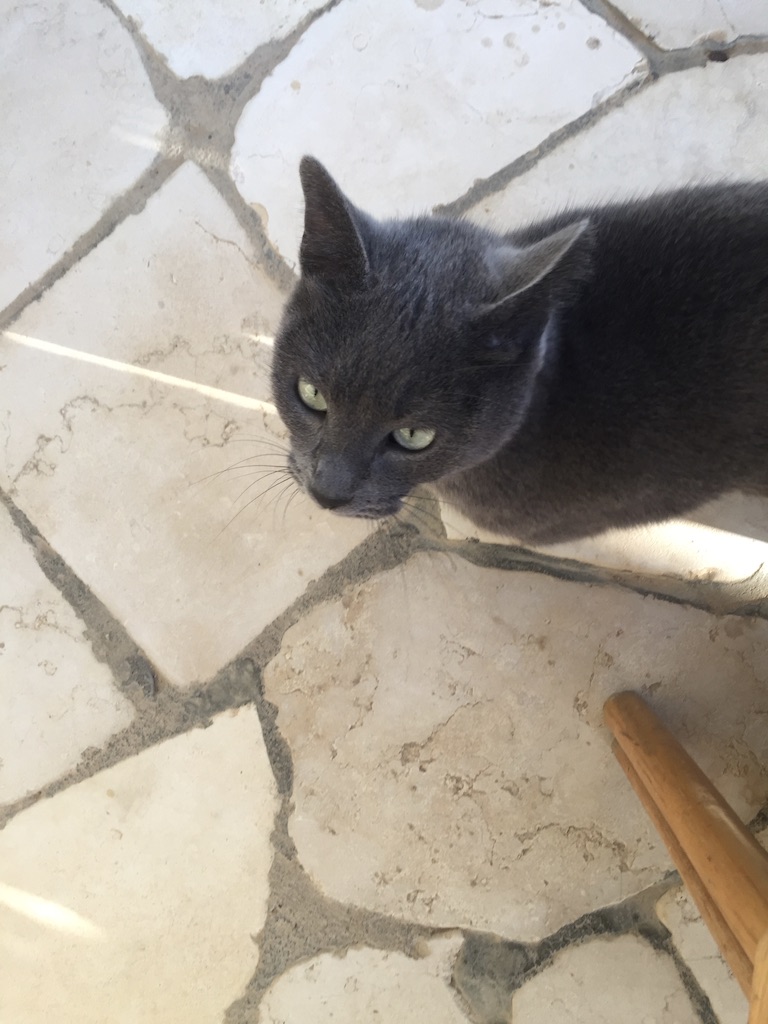
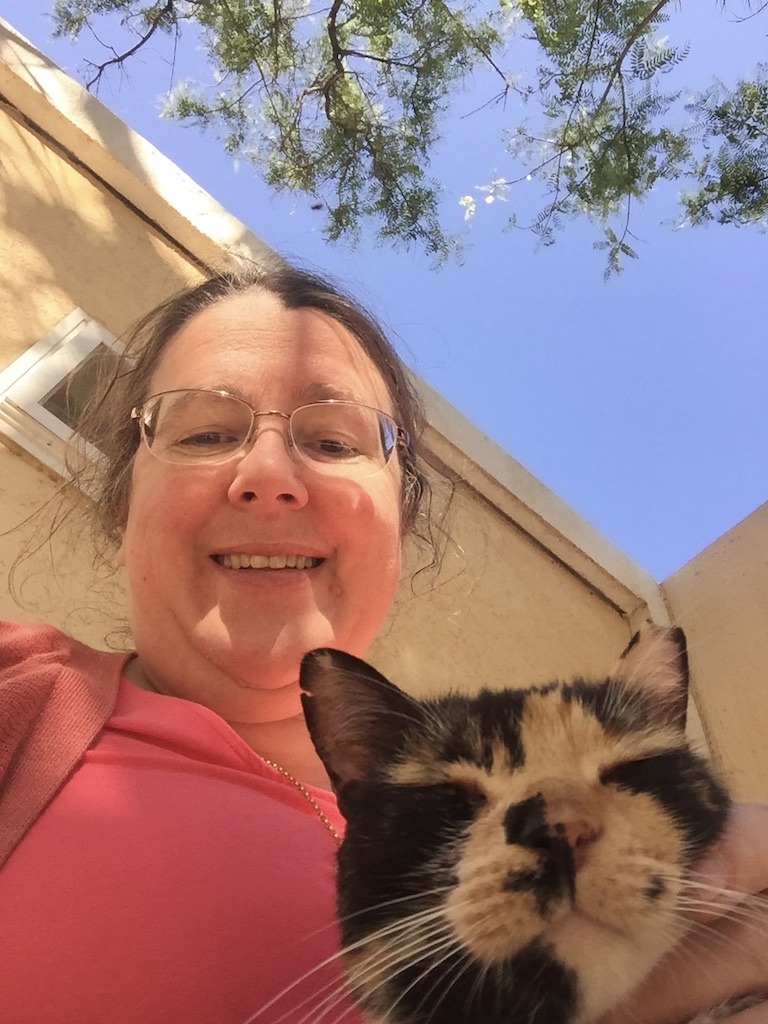
Some cats one encounters are quite friendly. It can difficult to distinguish between what we Americans would call “pets” and “strays” or “feral cats”. This is because, as the article notes (and as my landlady recently bemoaned to me ), on every street there are always some people who put out food for the cats. Also, Israelis do have pet cats sometimes — although another source notes that only ten percent of Israeli’s actually keep cats as pets. Israel has a total population of 8.5 million people — and an estimated 2 million cats. Clearly, most of the cats running around — like the one currently meowing outside my window — are not pets in the formal sense.
The Israeli sensibility on their cat-astrophe is extremely startling to a foreigner. (I guess, to be fair, they have a lot of other things to worry about! When you don’t know if your country will survive, if peace in your own land seems eternally elusive, if you are wondering how to feed and house and employ the continuous stream of Jewish folks coming to your shores, if you are concerned that the country is the size of New Jersey with a population of 8.5 million — so nu, what’s a few cats?)
In the US, at least where I live, the understanding nowadays is that cats should be kept indoors. This both for their own protection (so that they don’t catch diseases, and are not eaten by fishers or owls), and also to protect the wildlife. I once read in an Audubon Society magazine that the average cat kills 50 birds a year. Here, when one brings up the cat issue, the response is usually some form of a verbal shrug. It may be shrug of “Who cares?” or it may be shrug of “What can one do?”, but either way, there is little sense of urgency about reducing the cat population. It is little wonder that I see few birds here except for the feral parakeets — who are large and aggressive enough to fend off a cat, I imagine. I fear for the lives of the pair of Syrian Woodpeckers who frequent the nearby telephone pole.
And if one is not met with a shrug, then it is with something worse. I read, “In 2015, Agriculture Minister Uri Ariel refused to use $4.5 million (four million euros) in government funding made available for the sterilization of stray cats… As an Orthodox Jew, the minister had said that castrating cats was contrary to Jewish religious law and had proposed sending stray cats and dogs to other countries instead.” Yup, this was serious, and it’s still mooted in some quarters. Let’s see, we’ll catch every cat, identify its gender, and ship the females to one country and the males to another….Anybody want a million cats?
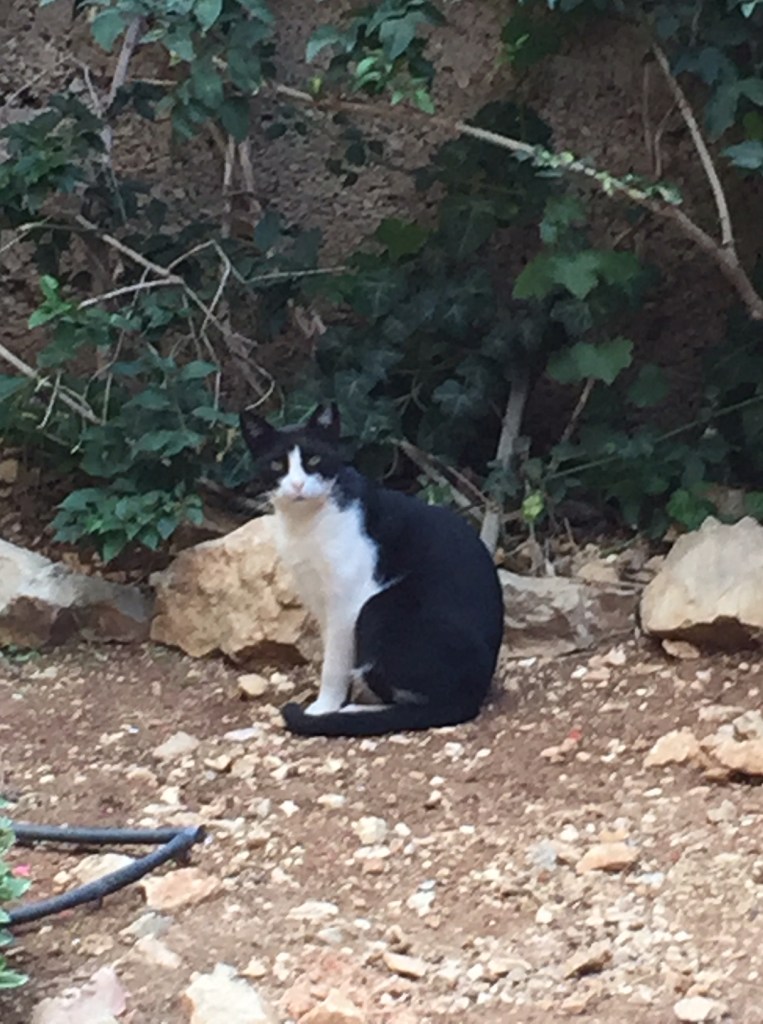
Not too surprisingly, the notion of shipping the cats off to some other land was not met with enthusiasm by the larger Israeli population. Perhaps they feel some identification with the cats — after all, it isn’t so long ago that someone had a plan to ship all the Jews off to anywhere that would have them… My impression, on the whole, is that Israelis view the cats with affection, tolerance, and sometimes pity. They don’t seem to see what seems so obvious to me as an American, that letting masses of feral cats roam free is not a kindness to the cats or the environment. (Actually, any idea of “environment” is a recent comer to Israeli discussions. But look, there are plenty of places in the States where it’s not a topic of discussion either…)
Here in my apartment, the cat problem is very plain to experience. When I close up my windows to go out for the day (since it is on the ground floor, it is not advisable to leave them open, even with the bars), I come back to a stench of tom cat urine throughout the rooms. The earth along the side of the building, which was recently dug up to put in some new pipes, also makes a lovely litter box. At night, what is known, for obvious reasons, as caterwauling, frequently keeps me awake. Some nights little faces appear outside the french doors. My landlady advises that the previous tenant fed the cats. She suggests throwing water on them. I haven’t been able to bring myself to do this, but I am not feeding them. It doesn’t matter, though, because someone down the street certainly is….
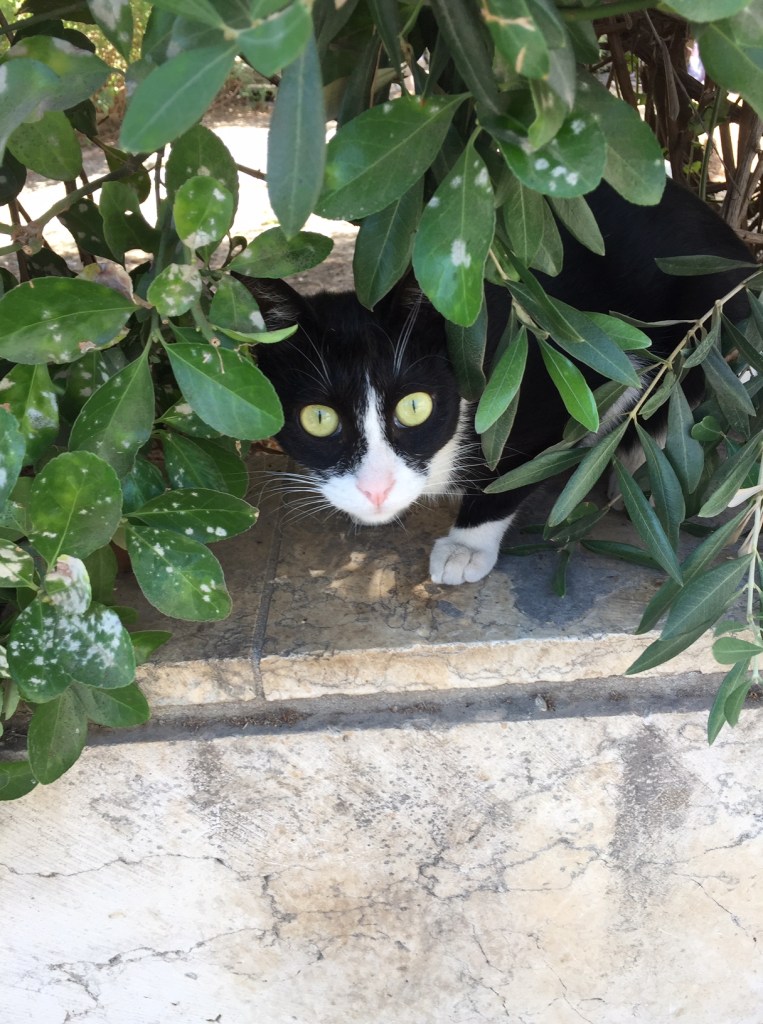
By the way, the story — apocryphal or not — is that the cats were brought in back in the 1930’s by the Brits to keep the rat problem under control. So you can blame it on the British, like so many things in this mixed up world!

