One of the better aspects of Pardes, for me, is the efforts they make to expose their students to a wide variety of ideas and opinions about what it means to be an Israeli and what it means to be a Jew. I have found these lectures, discussions, panels, and educational trips to be uniformly thought-provoking. Even though I came here to follow my dream of studying Talmud, in some ways I feel I am learning more and being more deeply challenged by these other aspects of my studies.
I want very much to share everything with you, dear readers. Toward this end (as well as to deepen my own learning and reflection), I’ve taken copious notes at most of the programs I’ve attended. Now I have pages and pages, and I wonder where to begin. In some cases I feel I might simply summarize the lecture and refer you to the lecturer’s book. In others, I feel that I am continuing to accrue information and that my own view is continuously evolving. This is particularly true when it comes to the whole matter of Israel/Palestine, Settlements/Occupied Territories/Judea and Samaria, and so on. I’ve just come back from a talk/discussion with a Palestinian Christian activist and citizen of Israel which I found both deeply enlightening and profoundly discouraging. I want to tell you about that, and the trip to Hebron, and the faculty panel on “The Green Line and Me”, and so on…
But on this rainy cold day, as the dark draws in at 4:30 pm — a true Israeli winter day — I feel the need to share some hope and sunshine. So let me tell you about my weekend, and about my past week, which I spent more as tourist than as a student.
On Tuesday I set off for the Old City. I got off the bus beside the Bloomfield Park.
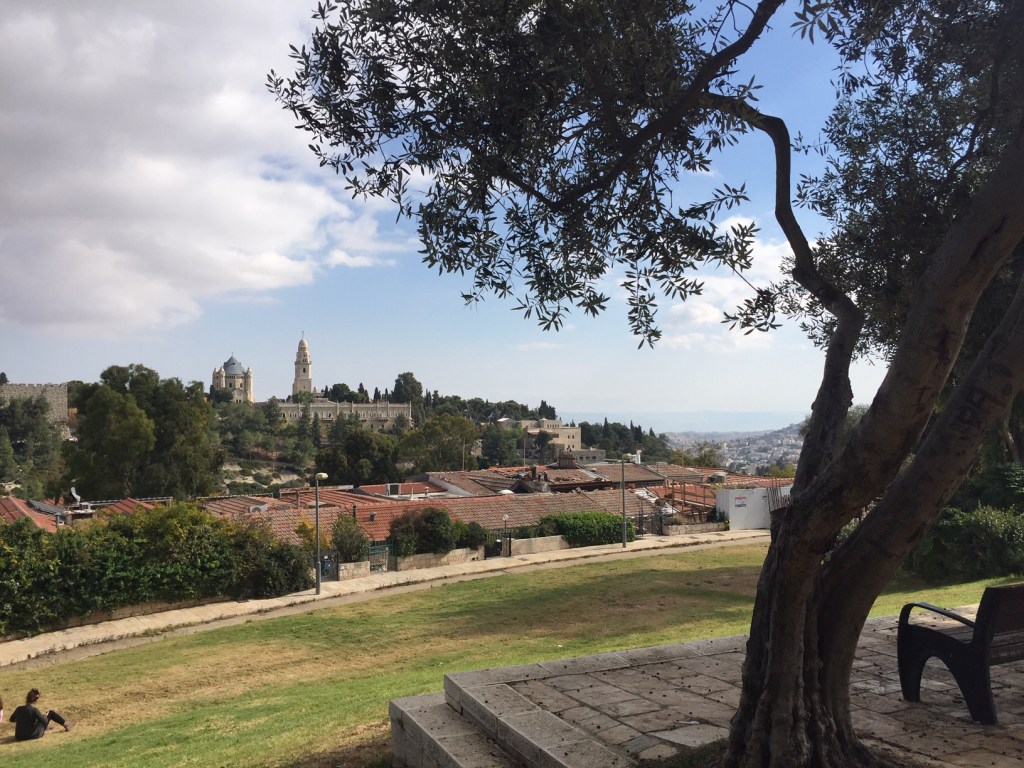
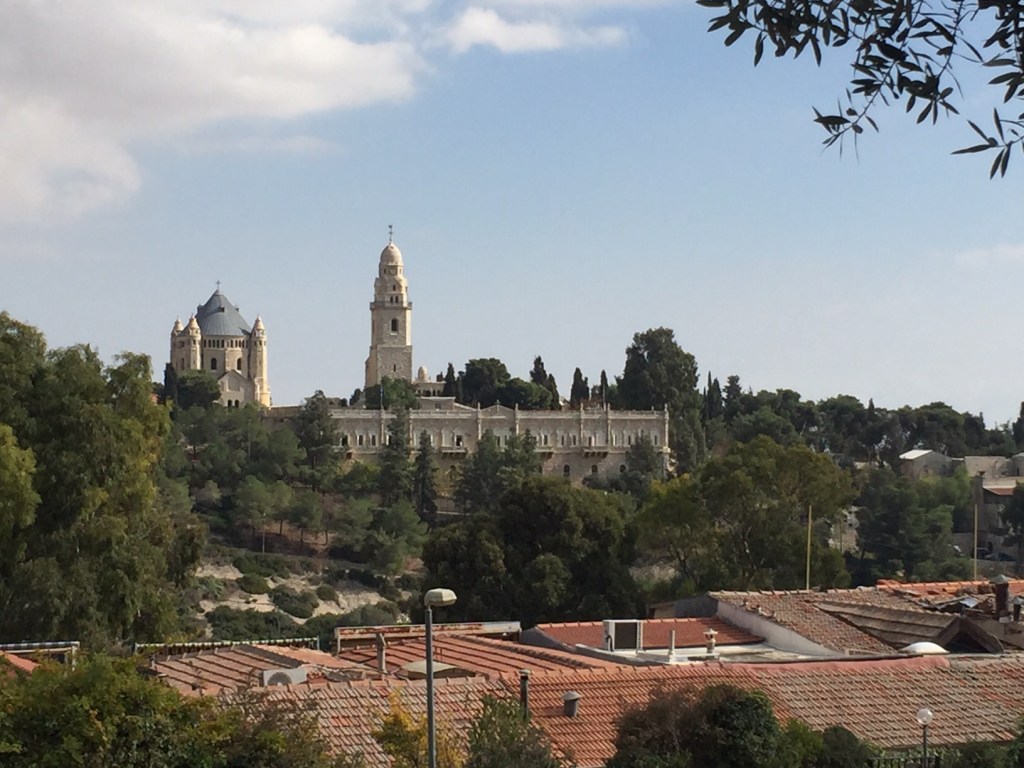
I walked around the park looking at the view.
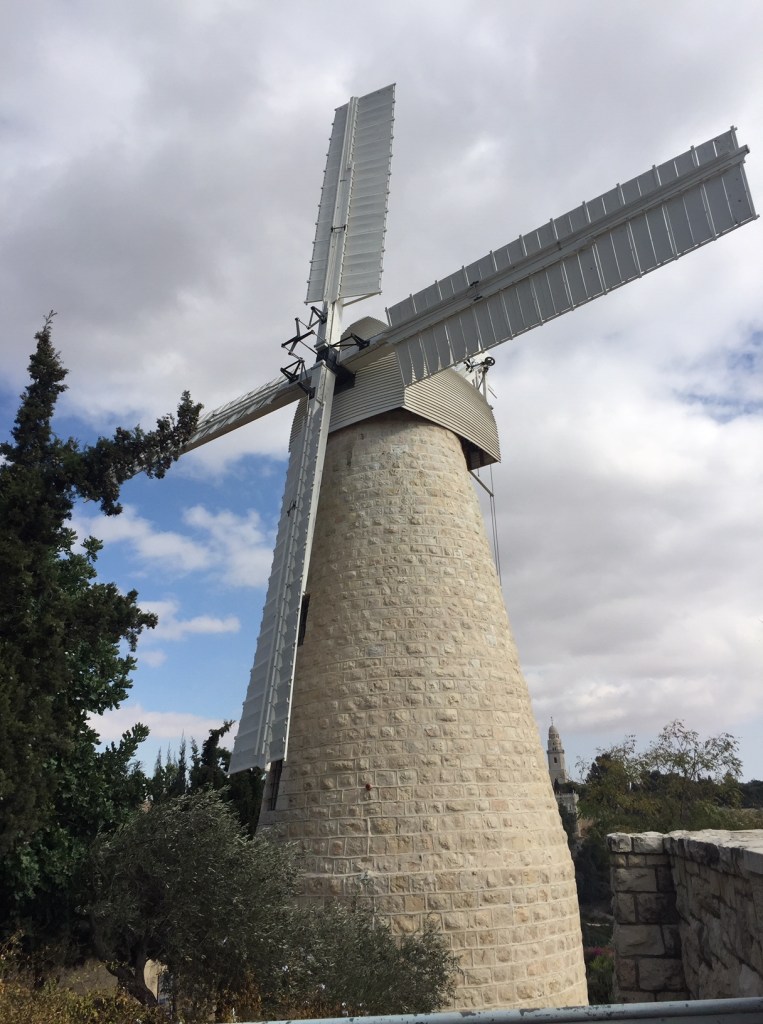
Below the Bloomfield Park is the Montefiore Windmill. According to Wikipedia, “The Montefiore Windmill [was] designed as a flour mill; it was built in 1857 on a slope opposite the western city walls of Jerusalem, where three years later the new Jewish neighborhood of Mishkenot Sha’ananim was erected, both by the efforts of British Jewish banker and philanthropist Moses Montefiore. Jerusalem at the time was part of Ottoman-ruled Palestine.”
I wandered down the slope from the windmill, through the extremely picturesque streets of Mishkenot Sha’ananim. Montefiore also built this neighborhood, in 1860. It was originally built as an almshouse, with the intention of getting people out of the crowded, dirty, and disease ridden Old City. People were frightened to live outside the city walls, however, because banditry was not uncommon. Montefiore actually paid people to live there in the beginning. After the 1948 Arab Israeli War, “when the Old City was captured by the Arab Legion, Mishkenot Sha’ananim bordered on no man’s land in proximity to the armistice line with the Kingdom of Jordan, and many residents left in the wake of sniper attacks by Jordanian Arab Legionnaires.[6] Only the poorest inhabitants remained, turning the complex into a slum.”
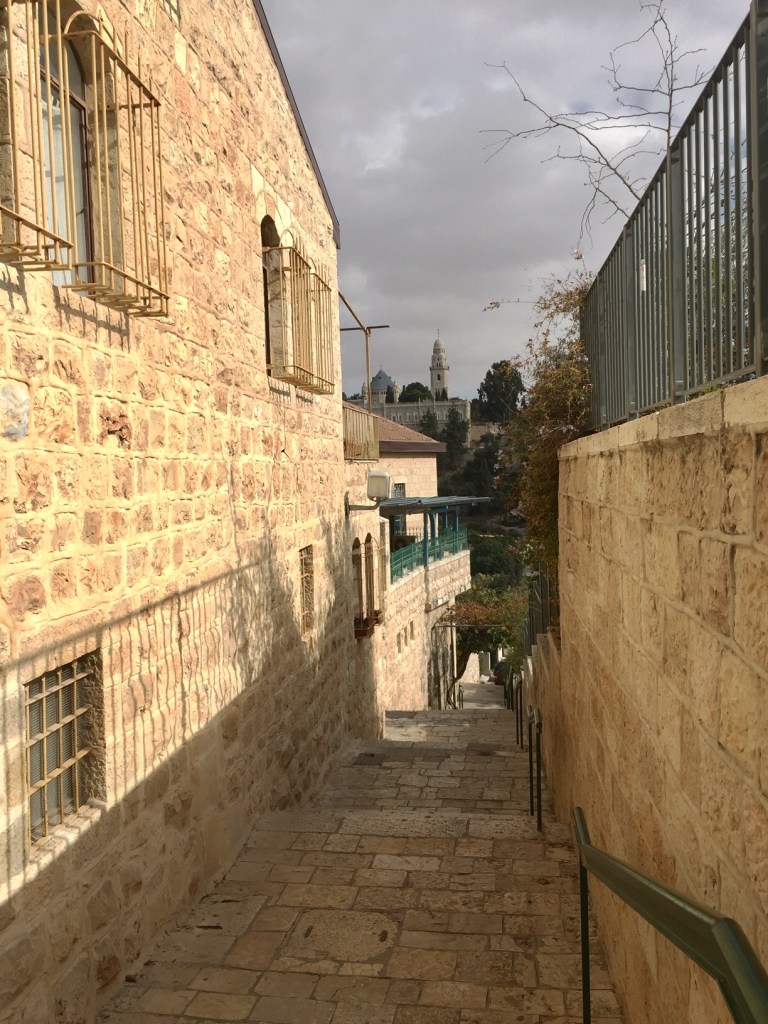
It’s far from a slum nowadays! “The no-man’s-land bordering Mishkenot Sha’ananim was occupied by Israel during the 1967 War, together with the rest of Eastern and Old Jerusalem.In 1973, Mishkenot Sha’ananim was turned into an upscale guesthouse for internationally acclaimed authors, artists and musicians visiting Israel. Apart from guesthouse facilities, it is now a convention center and home of the Jerusalem Music Center.” (Wiki)
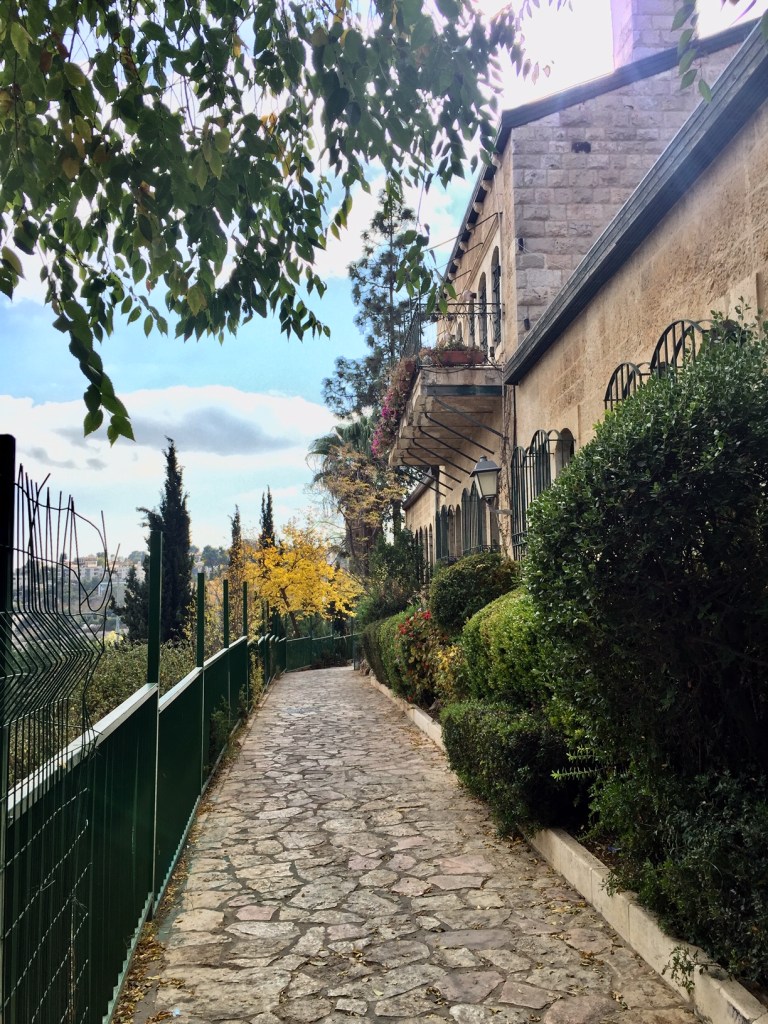
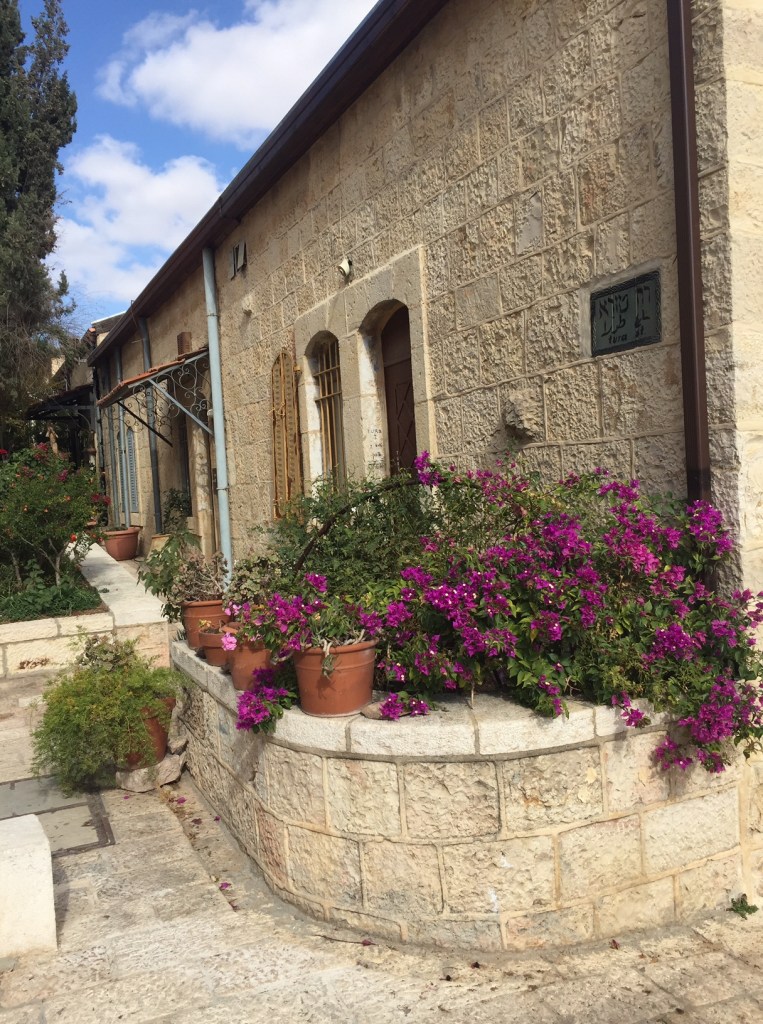
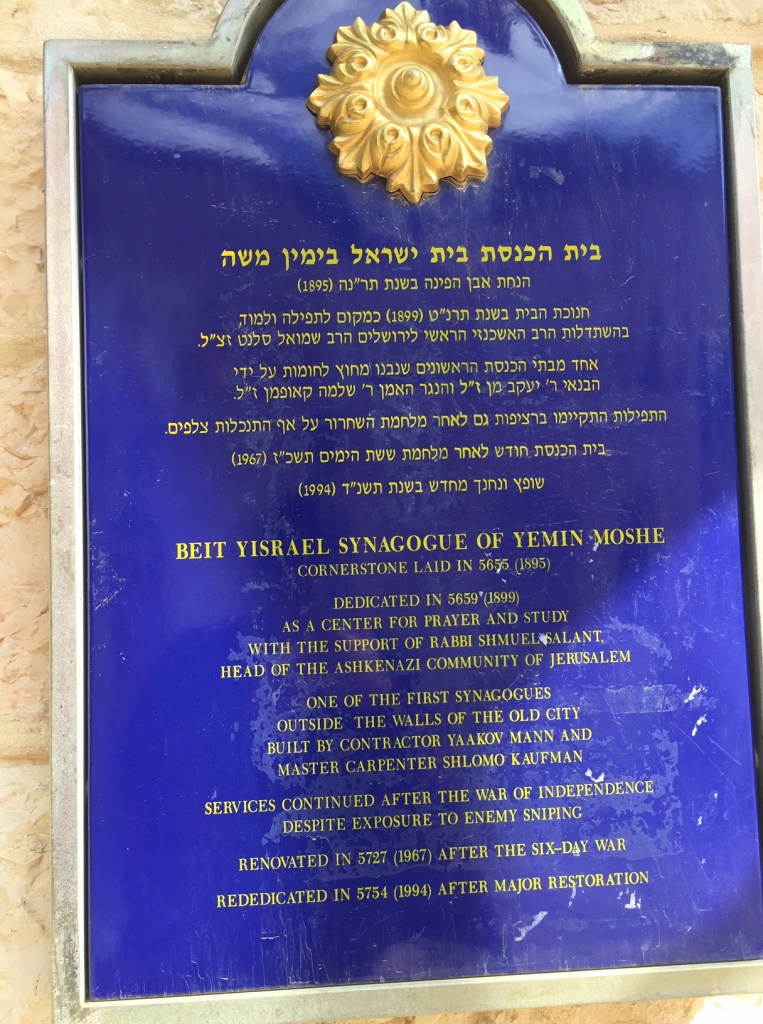
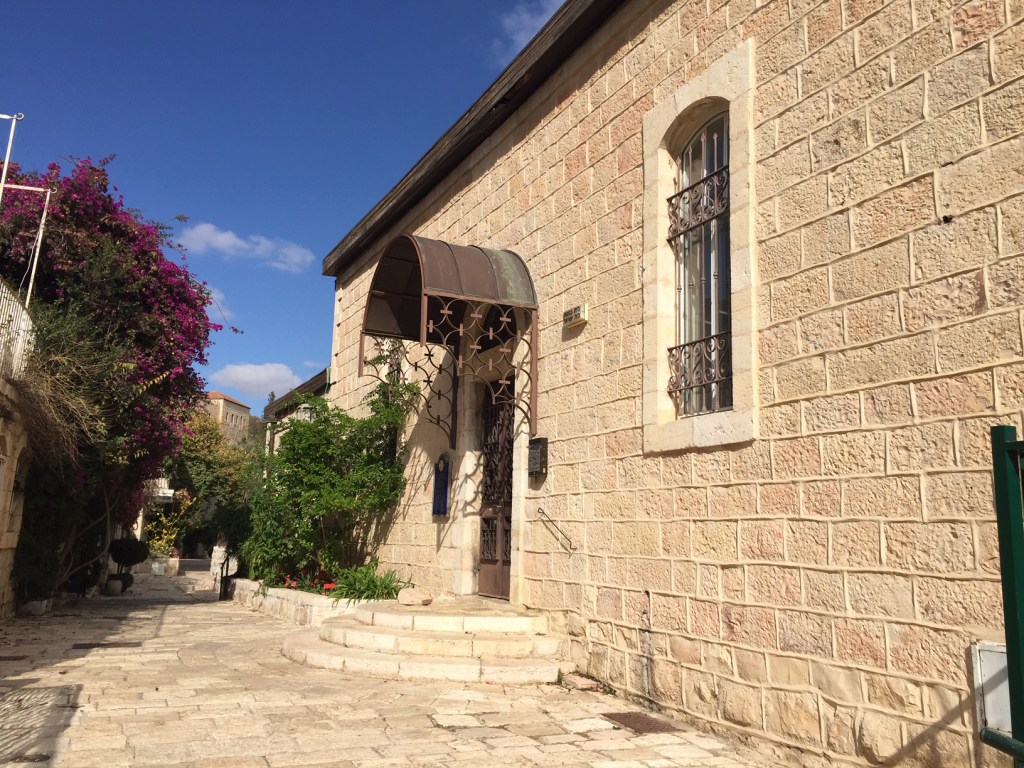
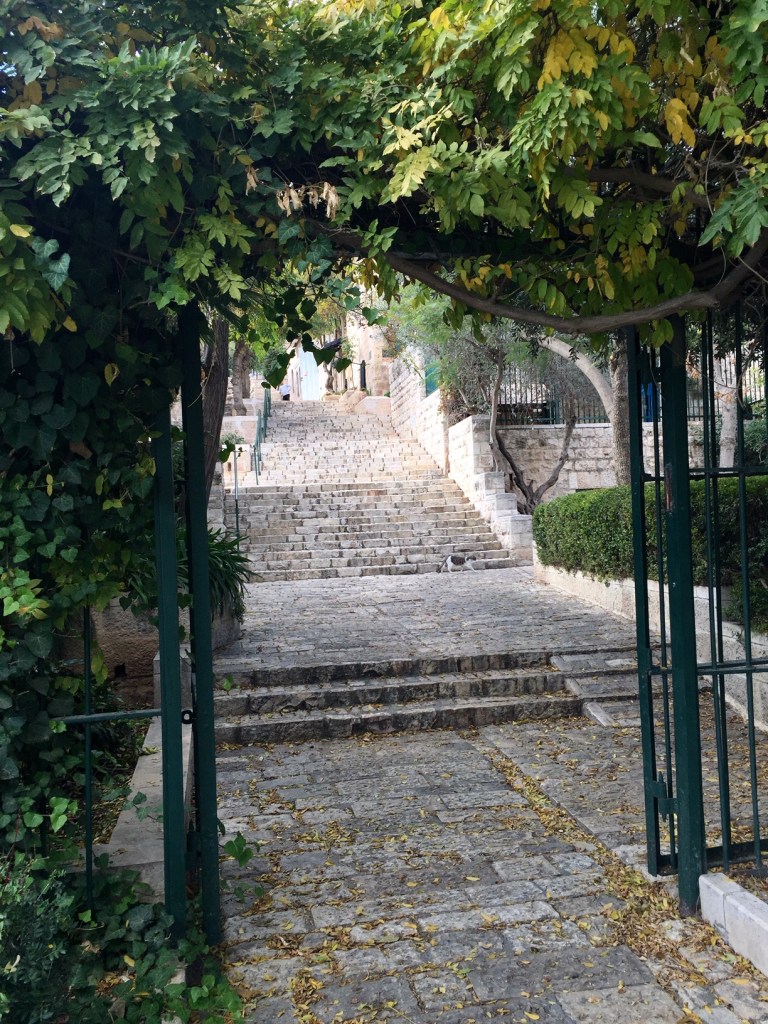
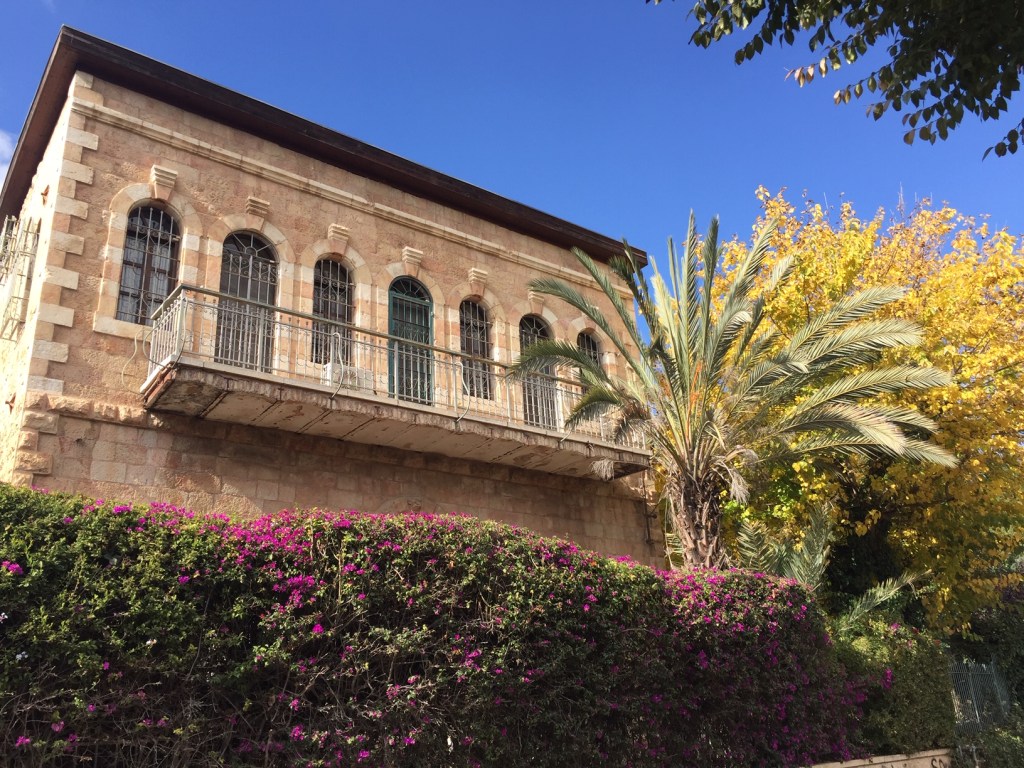
Below Mishkenot Sha’ananim is the Geh Hinnom — know to some as Gehenna. In Rabbinic tradition Geh Hinnom became synonymous with Hell — some say because idolators used to sacrifice their children there in pre-Israelite days. Nowadays it is a very placid park with an amphitheater for concerts. It does have a peculiar configuration with regard to the Green Line — I invite you to look at a map:
https://www.google.com/maps/place/Jerusalem/@31.7713833,35.2258959,16z/data=!4m5!3m4!1s0x1502d7d634c1fc4b:0xd96f623e456ee1cb!8m2!3d31.768319!4d35.21371 The dotted line is the Green Line.
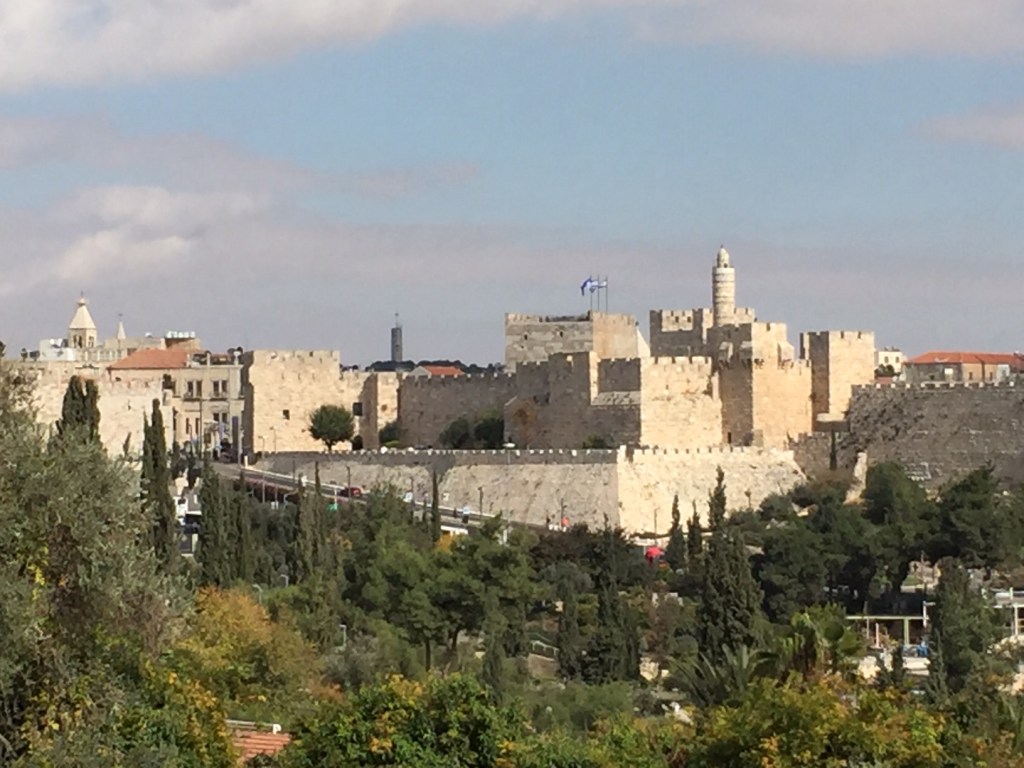
I climbed up out of the valley of Hinnom, and arrived at the Citadel of David.
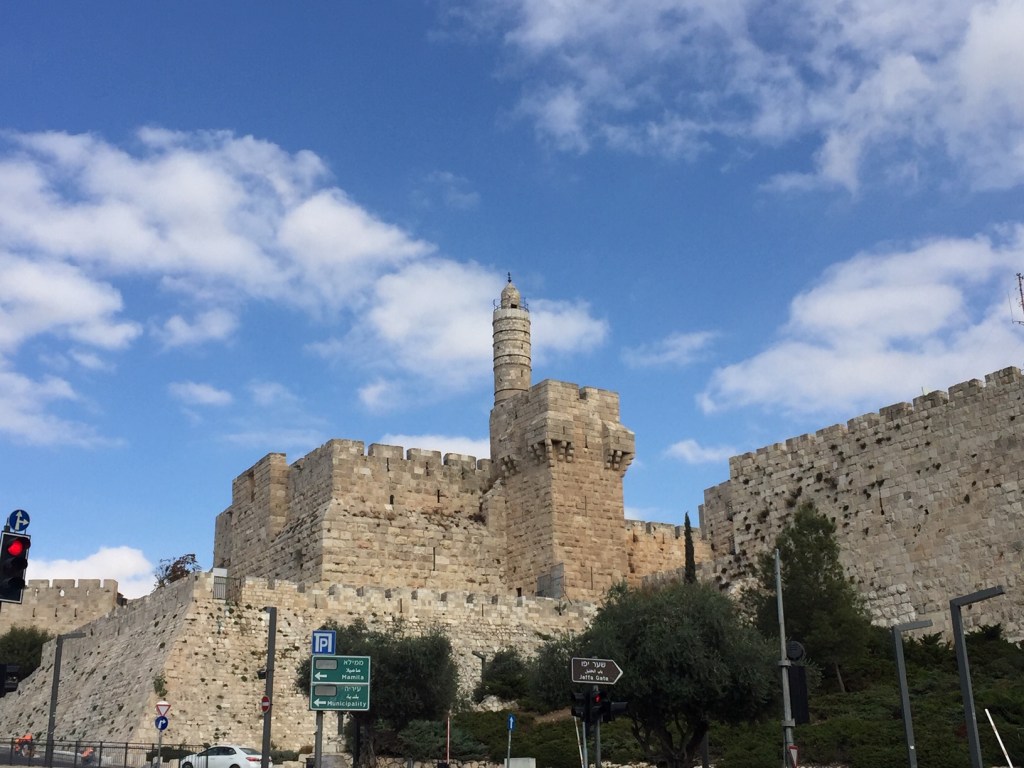
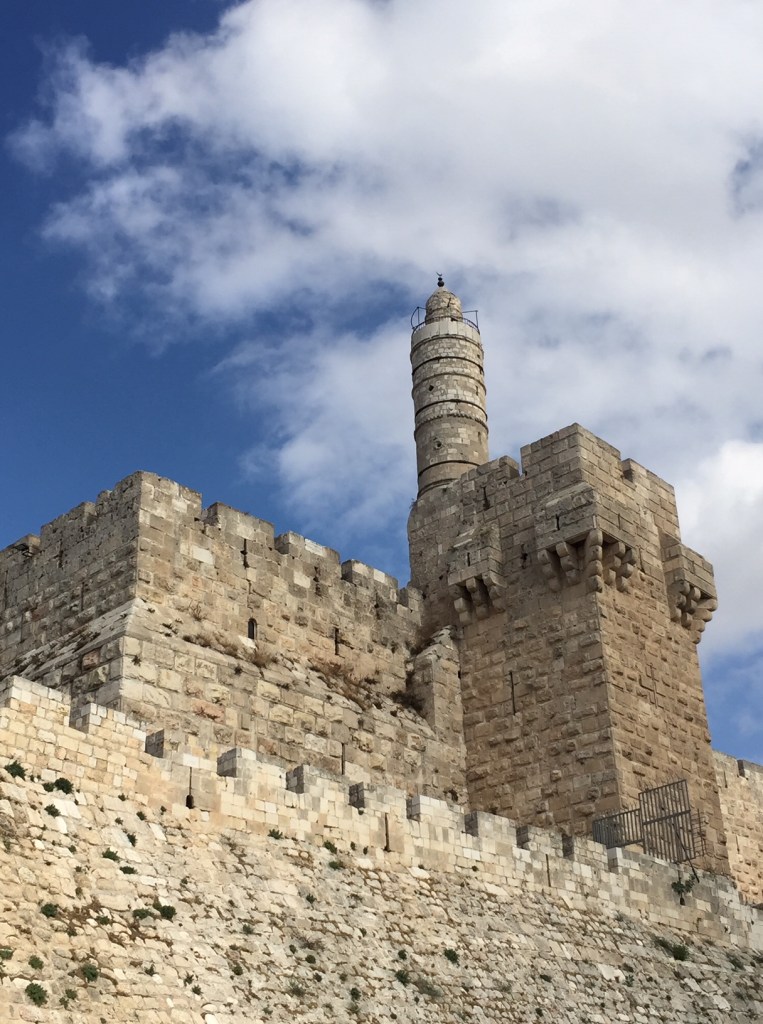
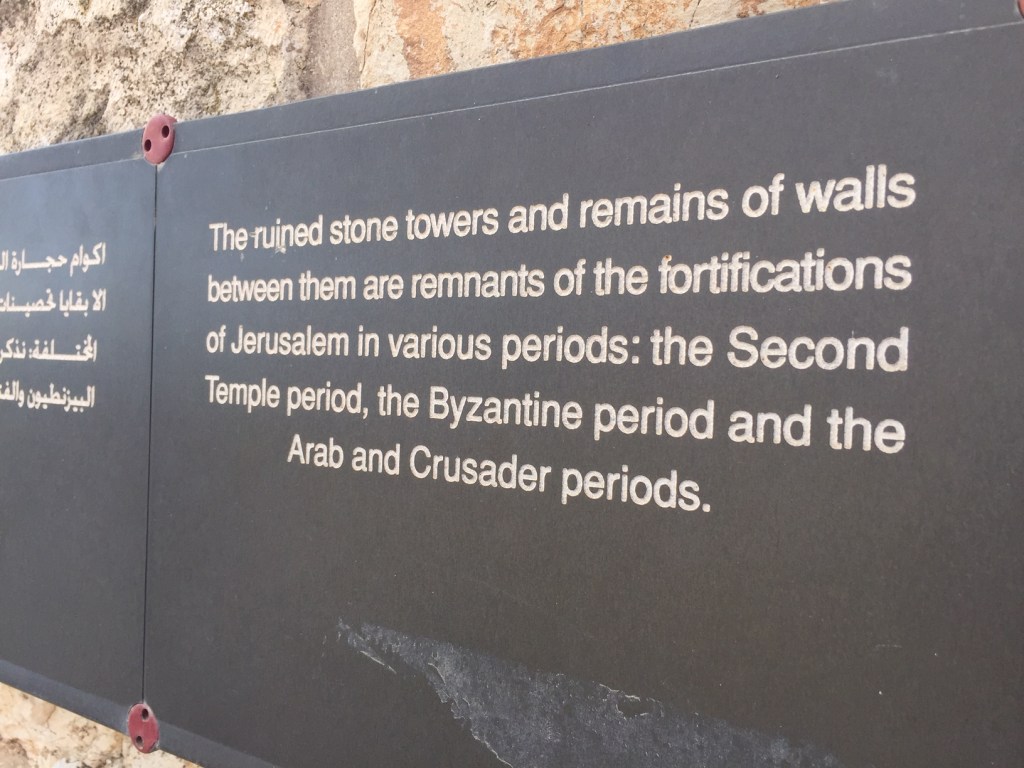
I decided to retrace a walk that I took with my husband Bob back in the mid-90’s, when we made our one trip together to Jerusalem. We walked along the top of the wall around the Old City — the southern half of the walk, which is broken by the Temple Mount. So up I climbed, to see the view again.
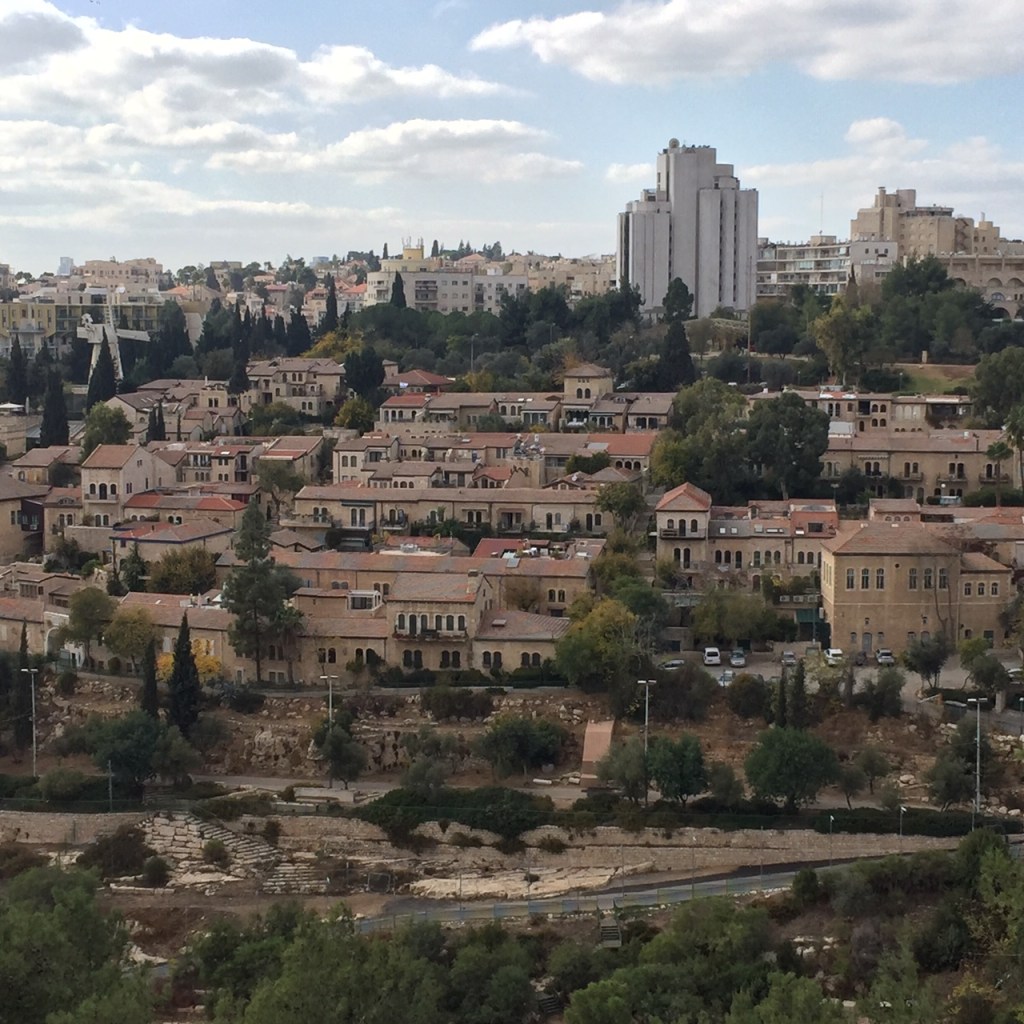
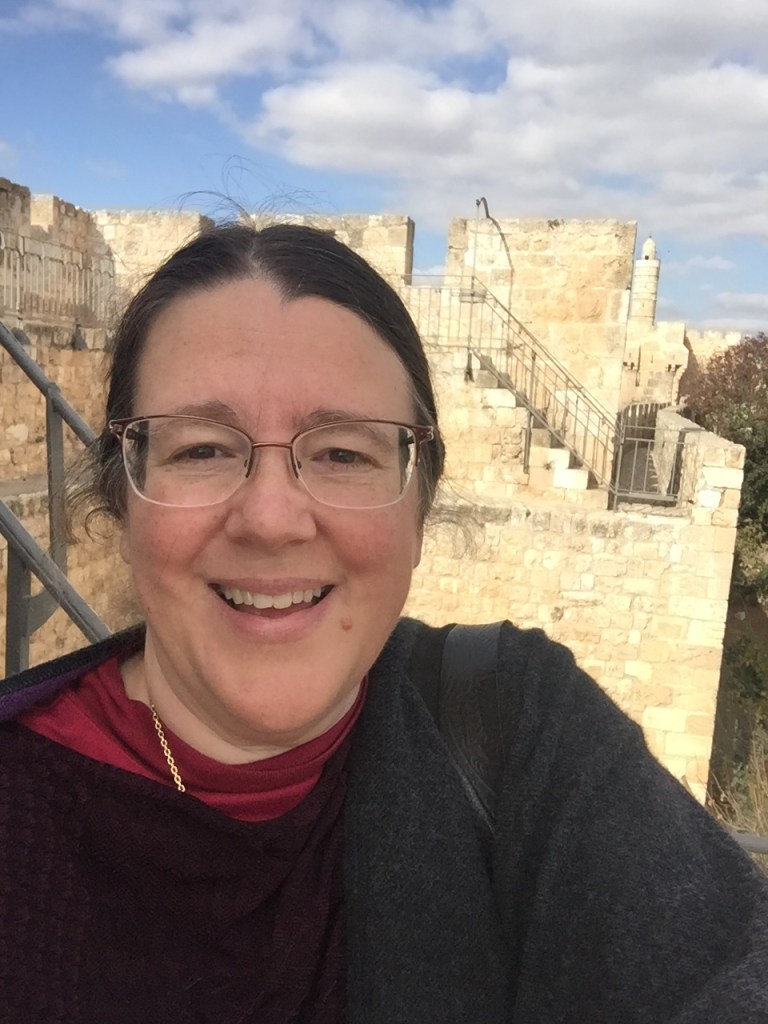
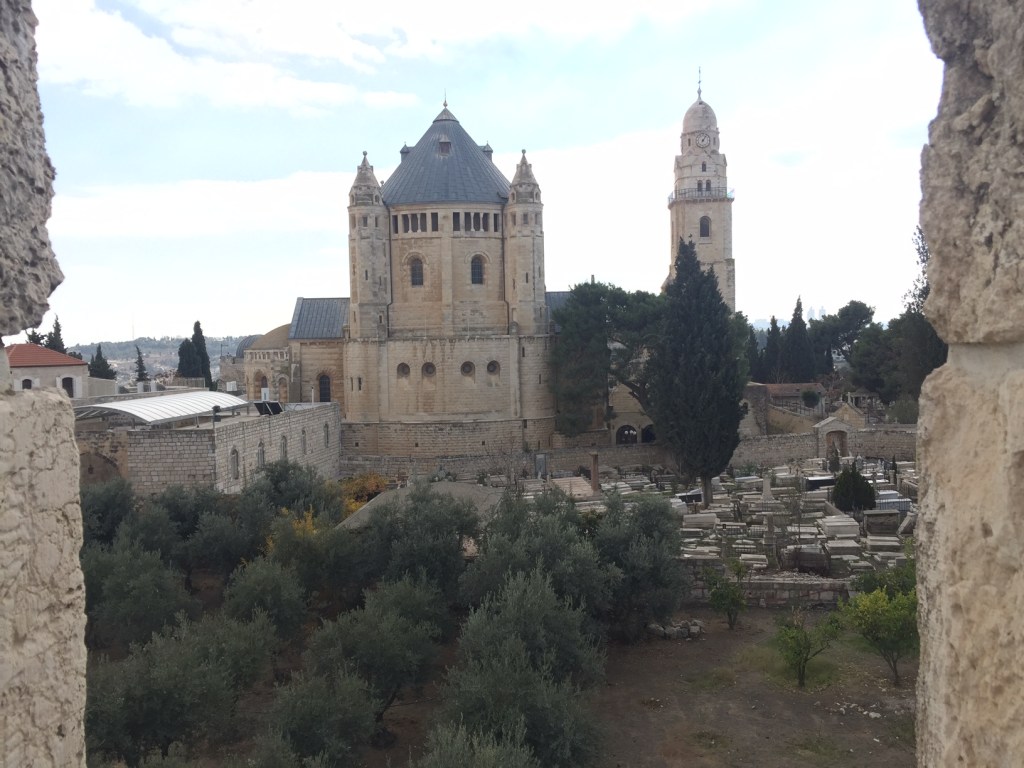
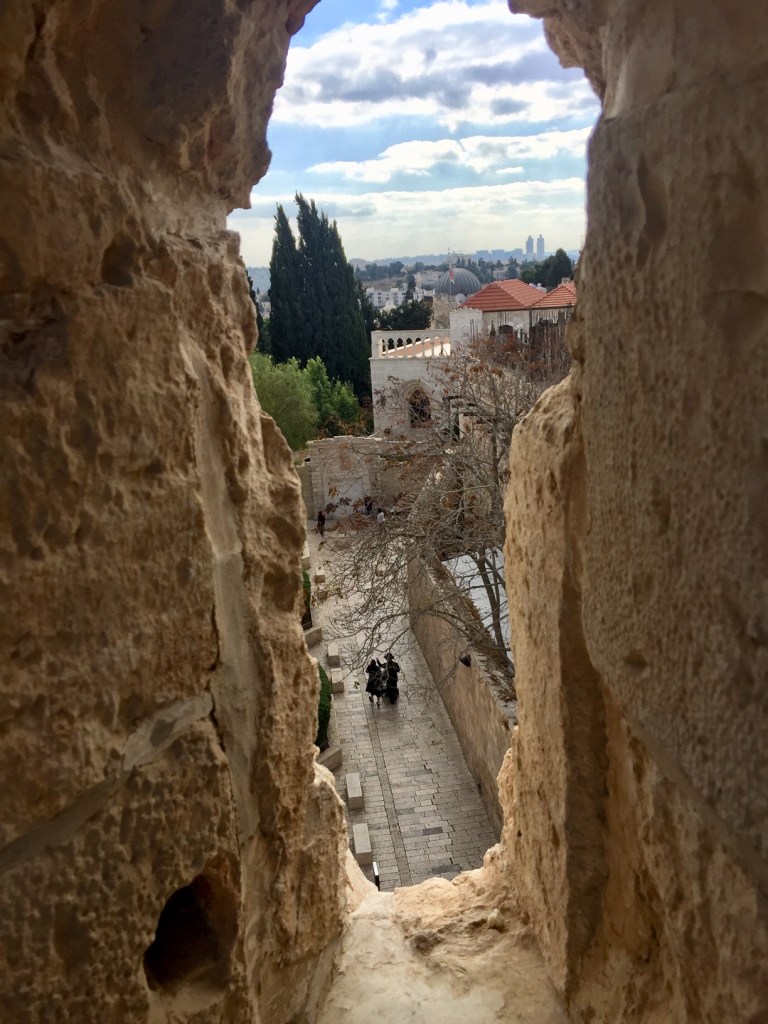
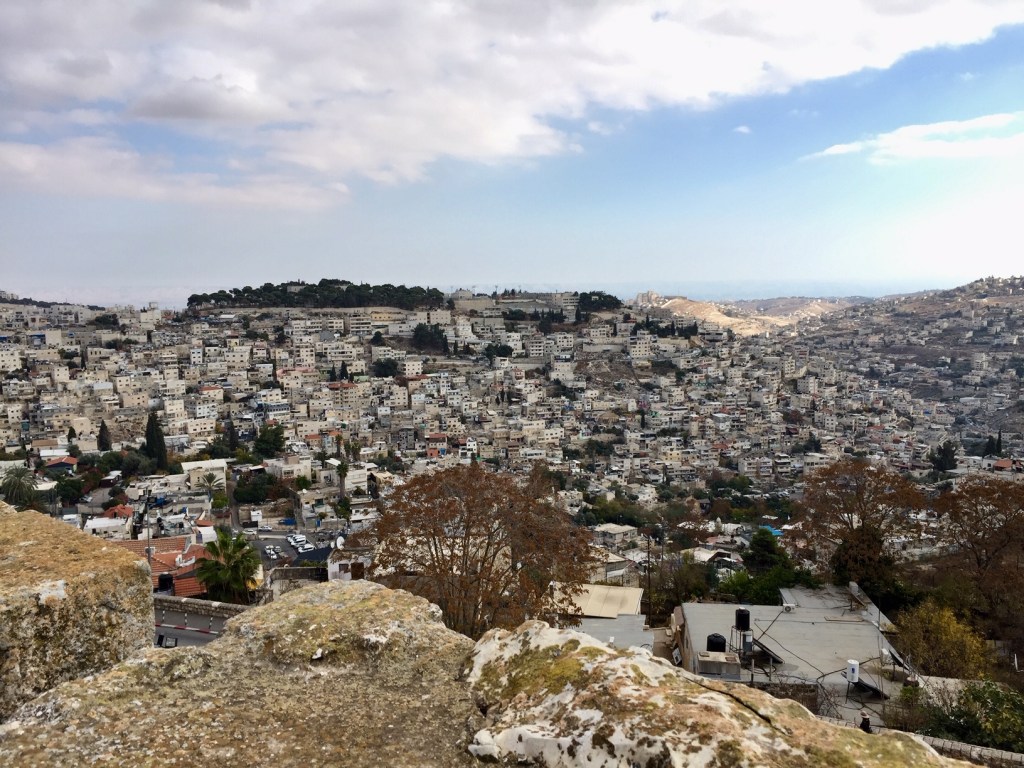
After completing my walk on the wall-top, and eating my lunch up there, I climbed down by the security gate that leads to the plaza of the Western Wall. I had last been there with Women of the Wall, making a futile attempt to enter with Torahs. Now it was easy to go through security and make my way to the womens’ section. It was a very different feeling to be there alone — but not necessarily less conflicted. I found a siddur (prayer book) and davened mincha (afternoon prayer) sitting in one of the chairs that have been set up for davenners. Then I went up to the Wall. After a bit a space opened (it is always crowded, and one has to wait). I stood close to the Wall, and tucked into its cracks the prayers of two Christian pastors whom I encountered in two different locations last summer. I’ve been carrying them around in my pocketbook, never looking — one from a Haitian Uber driver and evangelical pastor I encountered in Florida, and one from a Church of the Brethren pastor I met at my friend Steve’s retirement party in California. I leaned my forehead on the Wall for a little, and thought about the people I’ve loved and lost. It’s a holy place for me, but not comfortable. I feel the oppressive presence of Orthodoxy, the weird proximity of the Mosques above that I may never enter, and generally a sense that we should pray where we find ourselves, and not fetishize locations so much. And yet…
I didn’t take pictures at the Wall, because I’ve been several times over the years and have many. But after I’d left the plaza and begun to wend my way toward the Christian Quarter (which I never previously visited), I did take a couple of pics.
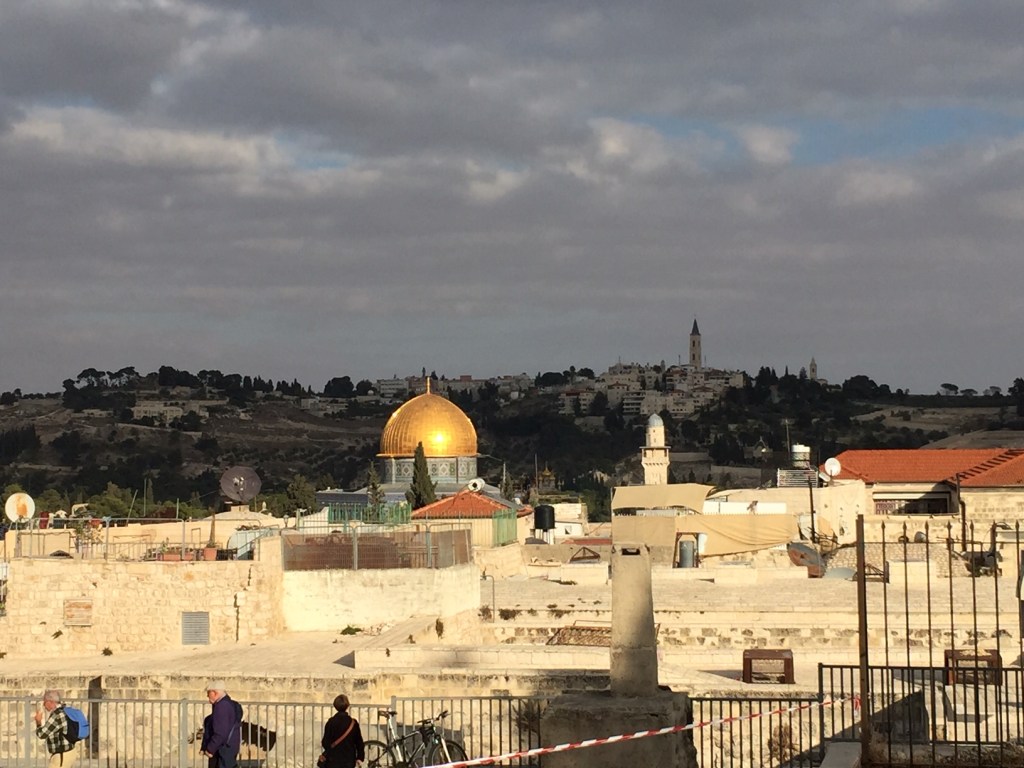
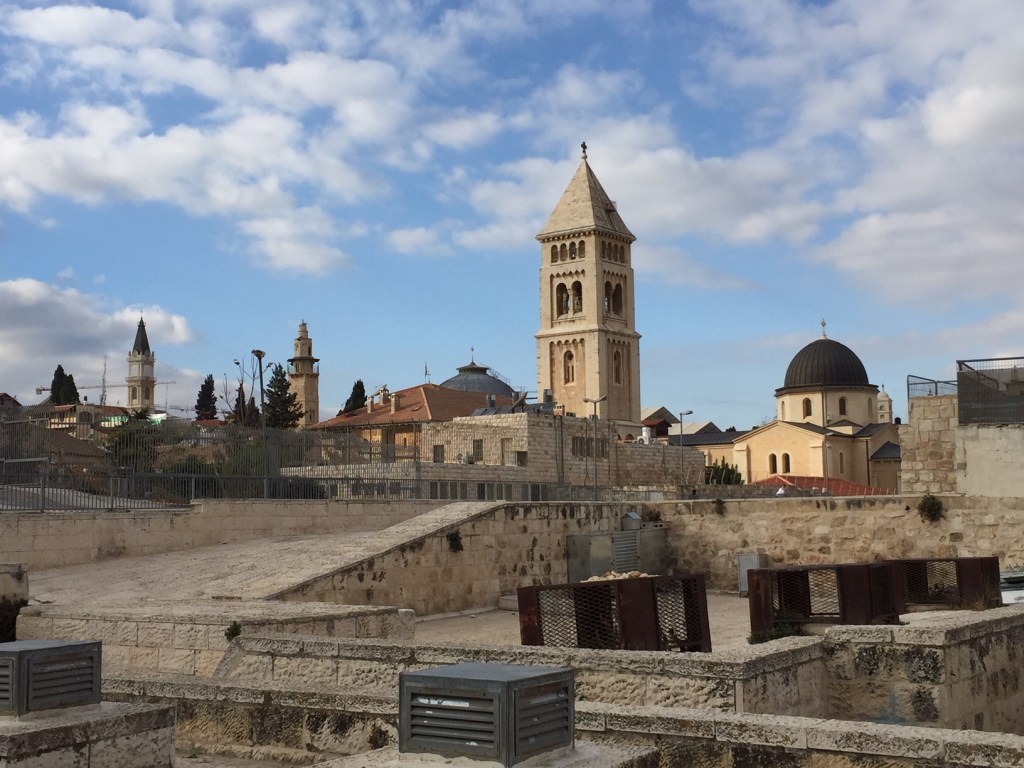
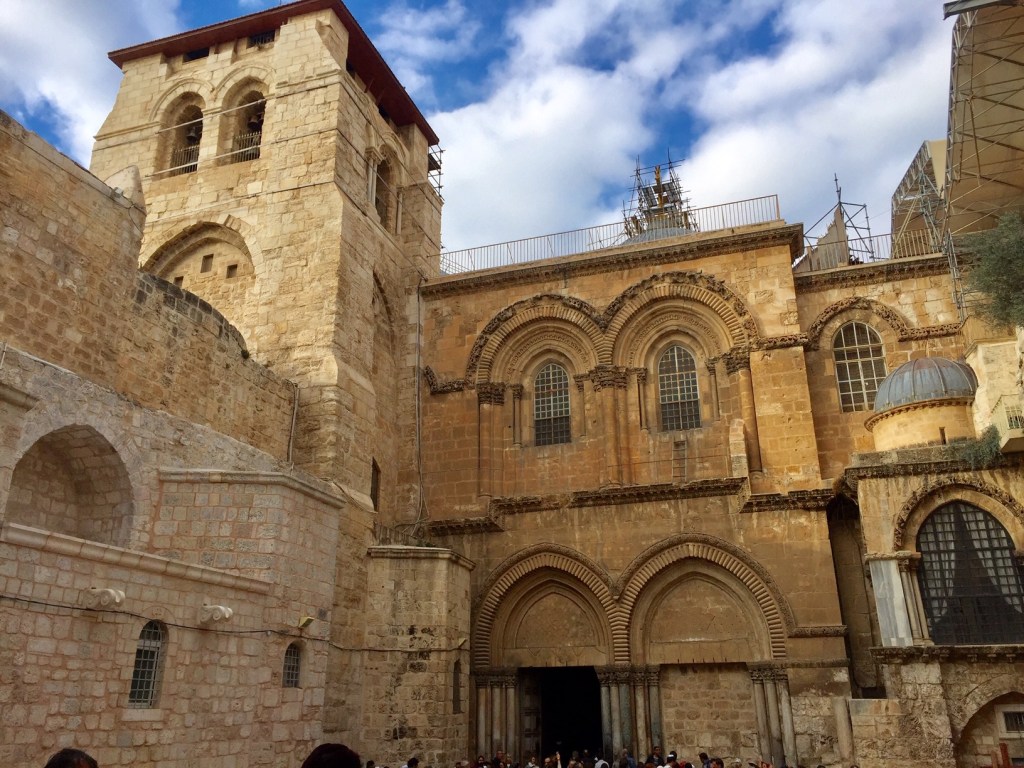
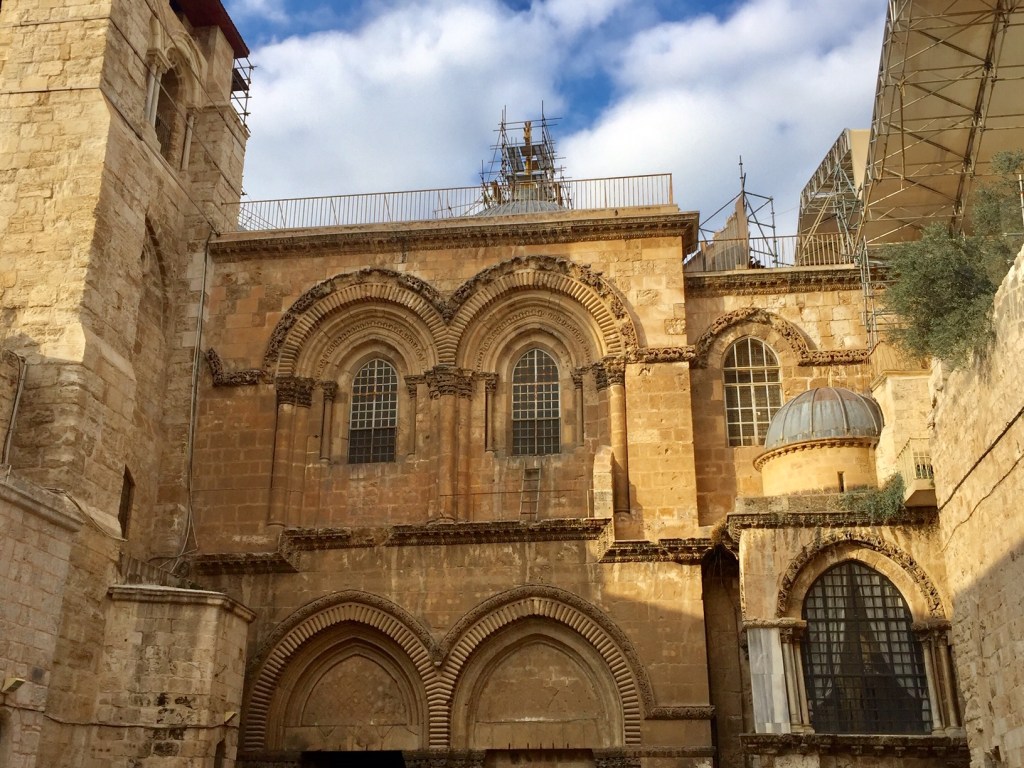
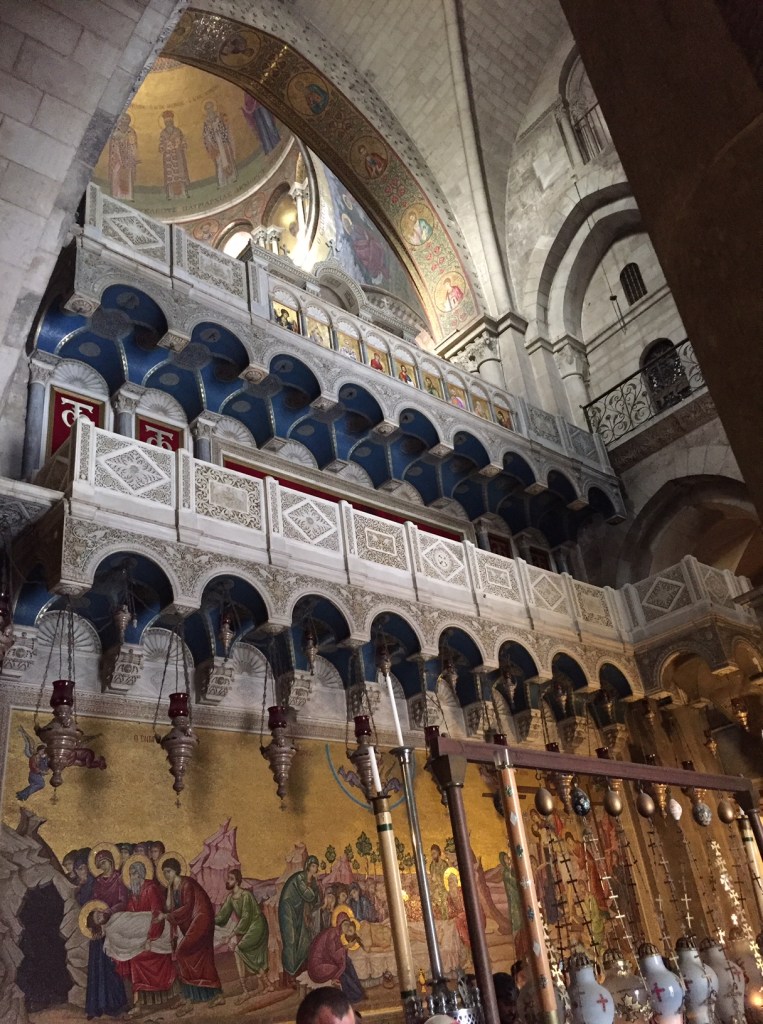
I was determined to visit the Christian Quarter, which I’d never done, and in particular the Church of the Holy Sepulchre. This church marks the end of the Via Dolorosa — the path Jesus is said to have walked on his way to be crucified. Jesus is supposed to have been crucified on this site — there’s a piece of rock sticking up in one part of the church that is supposed to have his blood on it. (The whole blood and suffering thing is one of the aspects of Christianity that has always creeped me out…). His tomb, from which he arose, is also reputedly here. You can read all about the church here: https://en.wikipedia.org/wiki/Church_of_the_Holy_Sepulchre
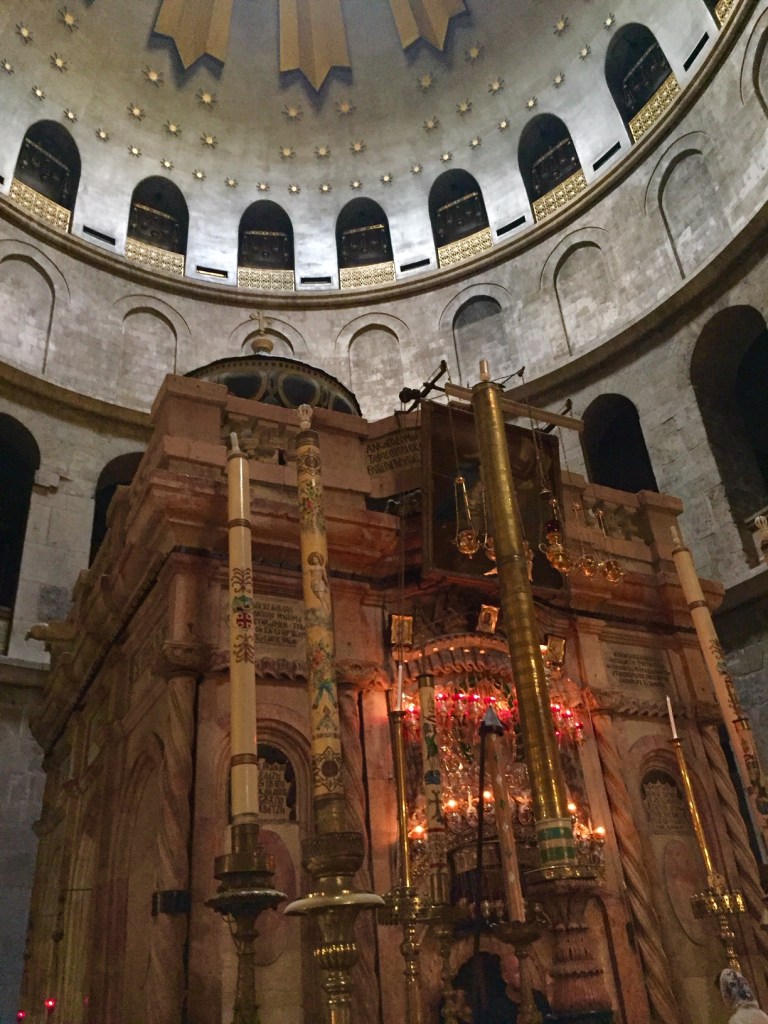
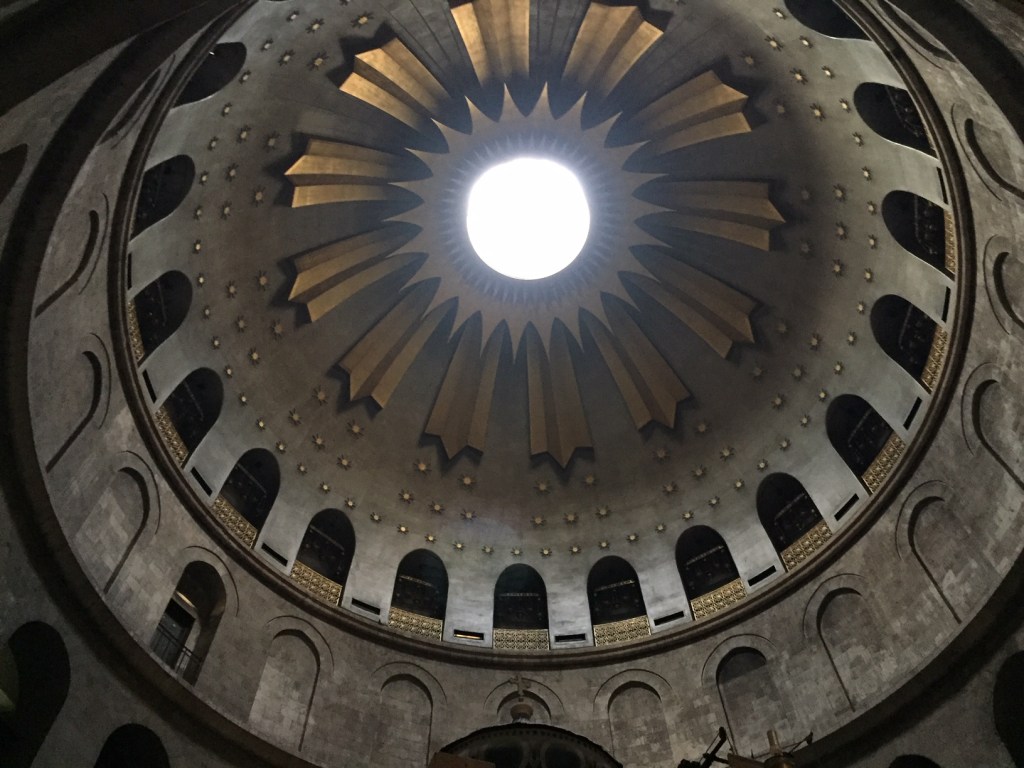
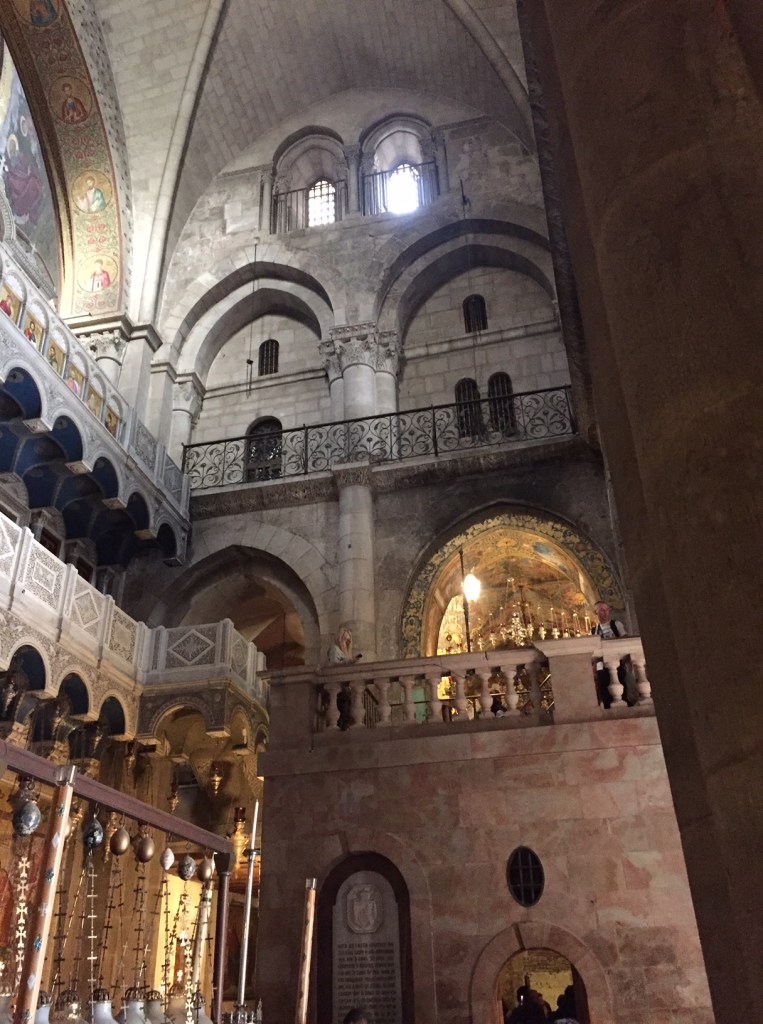


 Nine months in Israel
Thank you for this tour which has so much resonance for me. In the years my late husband & I lived in Yerushalayim we often went on the Municipality’s shabbat walking tours. [do they still exist?] In the mid to late 80’s we were even able to visit Silwan but that was well before settlers began moving in… As you’re longer in Yerushalayim you’ll discover that the Anglicans have a different location for Golgotha! If I remember correctly it’s located about a mile from Damasacus Gate. Could that put it near the American Colony Hotel? Foggy recollections of a somewhat more harmonious time there.
LikeLike
Hi Lynn — how long did you live in Jerusalem? What brought you here? Yes, I think there may still be such walking tours — not sure. Since I am not a citizen of Israel, I have more freedom to go over the Green Line, but as a Jew, would not necessarily be welcome — or safe…
LikeLike