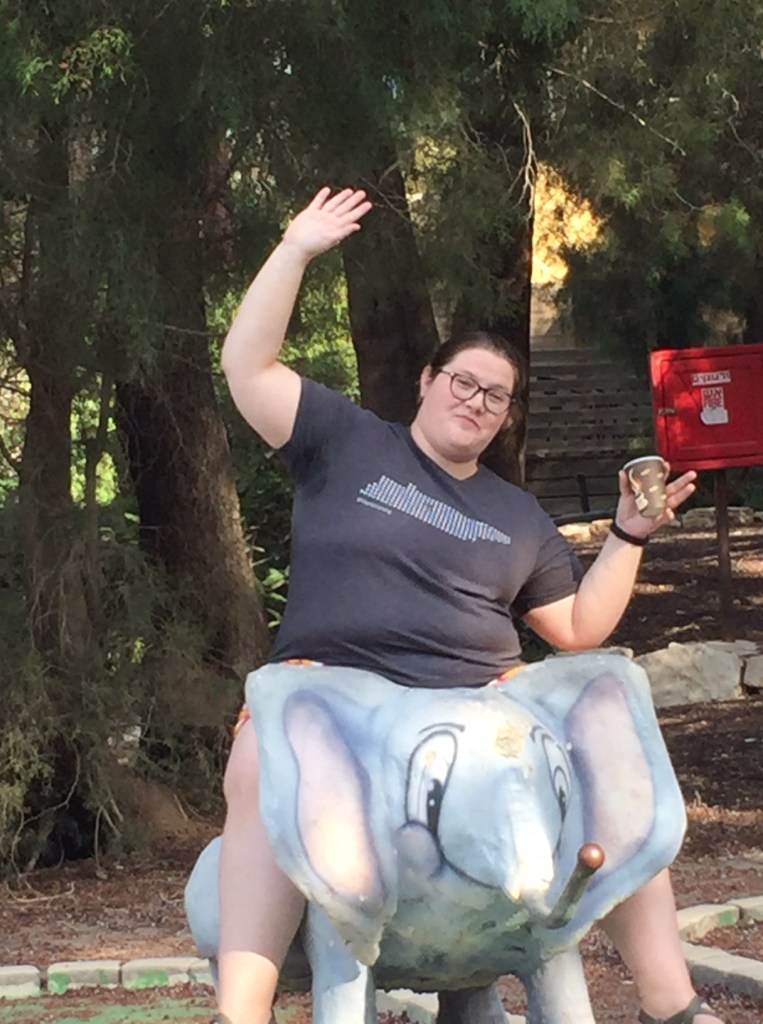
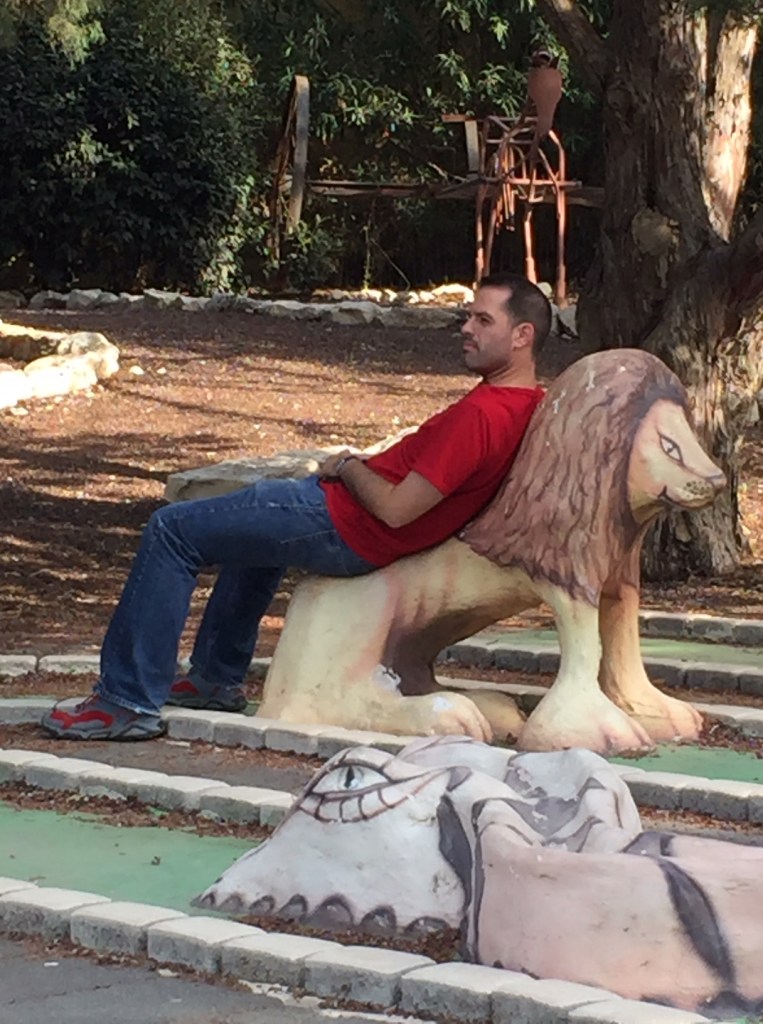
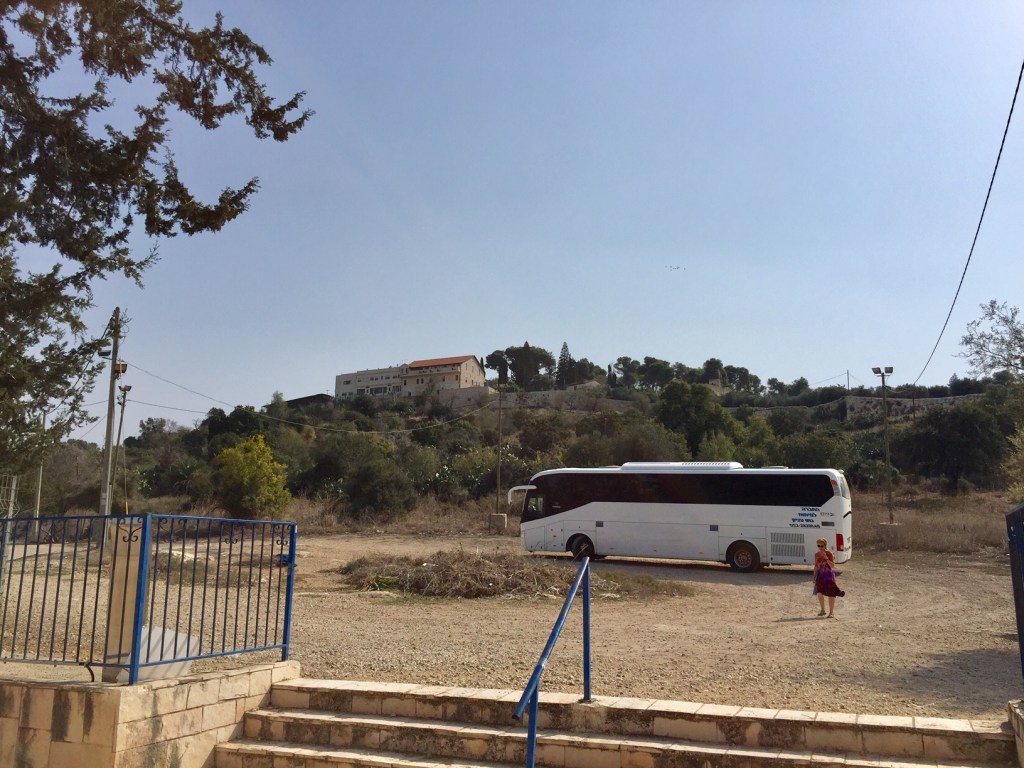
Our second day of the “Rabbinic Seminar” began with a tasty breakfast buffet at Kibbutz Daliya. (For more on what an Israeli breakfast buffet consists of, please refer to my post from August 30.) Then we climbed back on the bus and set off for Tzipori. In his old age, when his health was not good, Rabbi Yehuda haNasi relocated the Sanhedrin and the seat of Jewish learning from Beit Shearim to Tzipori. Tzipori was a major Roman town. It was considered to be a more salubrious place to live, with good plumbing and Roman baths. There’s is a major archeological site there, but we actually didn’t visit it. Instead we visited a former Pardes student on his guest houses out in the countryside. Jamie, our guide, was rather mysterious about this man, and “something surprising” that he had discovered in his backyard. Our suspense was further increased as our large bus traversed narrow alleyways, finally resorting to backing up the hill for about a quarter mile to the gate of Tzippori Village. (We clapped for Tzion, our driver — he was definitely showing off the skills of an Israeli bus driver, and impressive skills they are.)
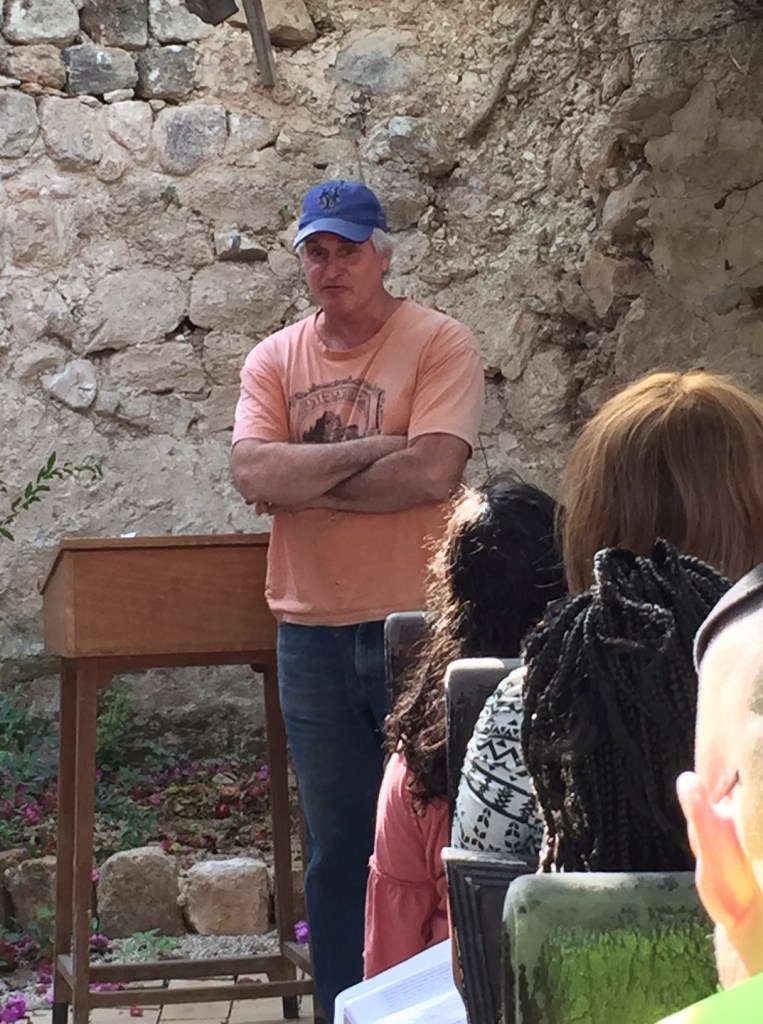
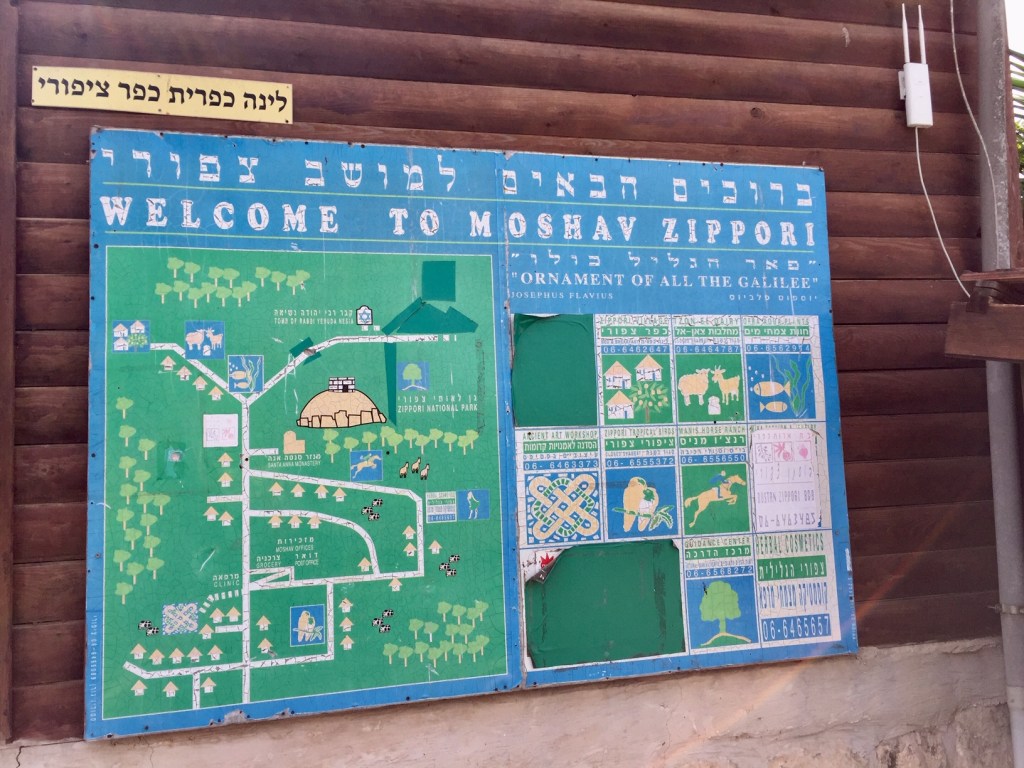
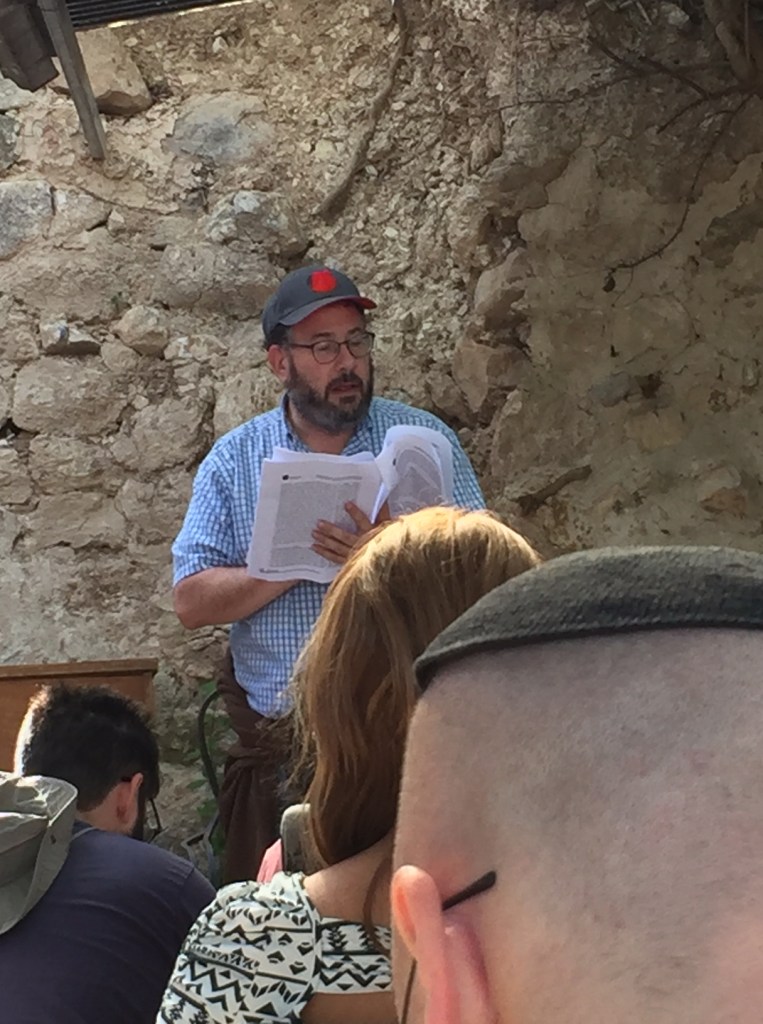
In the 1970’s Mitch moved to Israel, and after living for a time in Jerusalem, he decided to buy some land in the country next to a rather dilapidated village. He built the whole guest village himself, including a scale model reproduction of a Crusader castle. (Take a look here: http://zippori.com/?lang=en) At some point, he was beginning to dig a place for a swimming pool, and he came upon something surprising. This is us listening to his story:
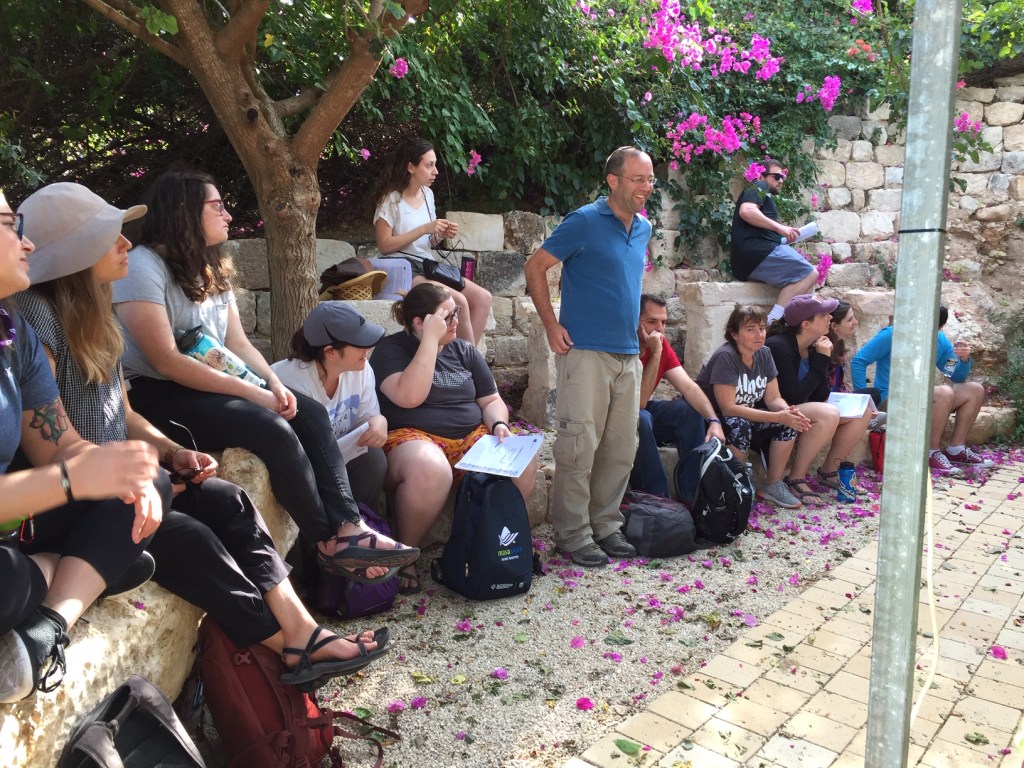
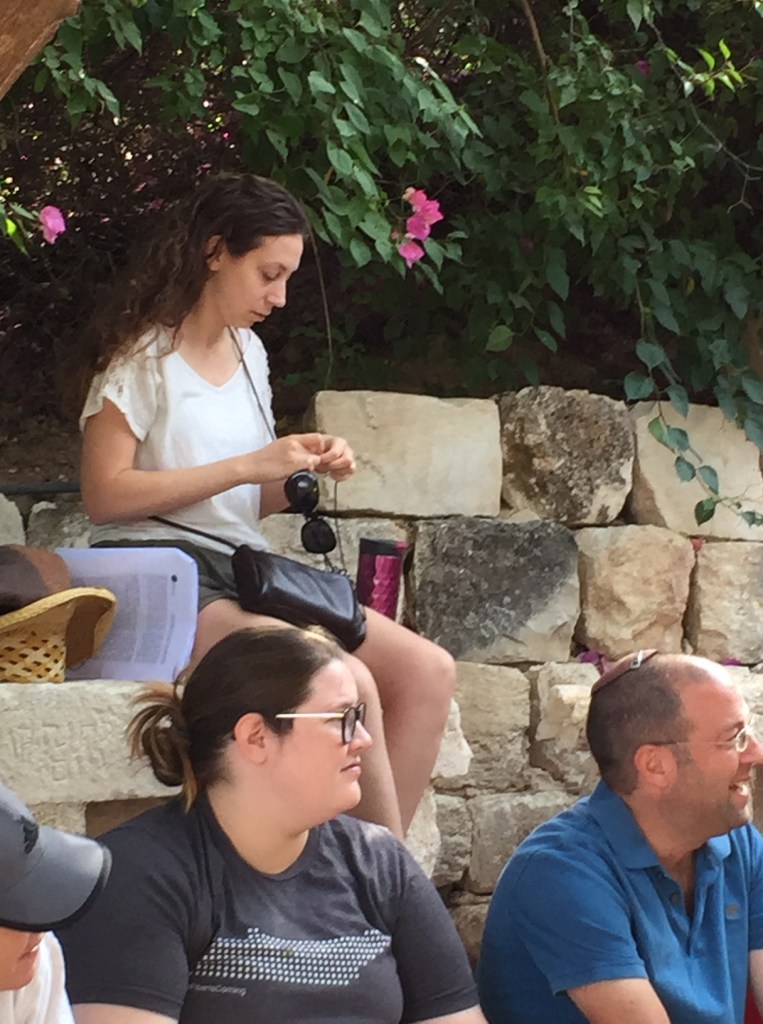
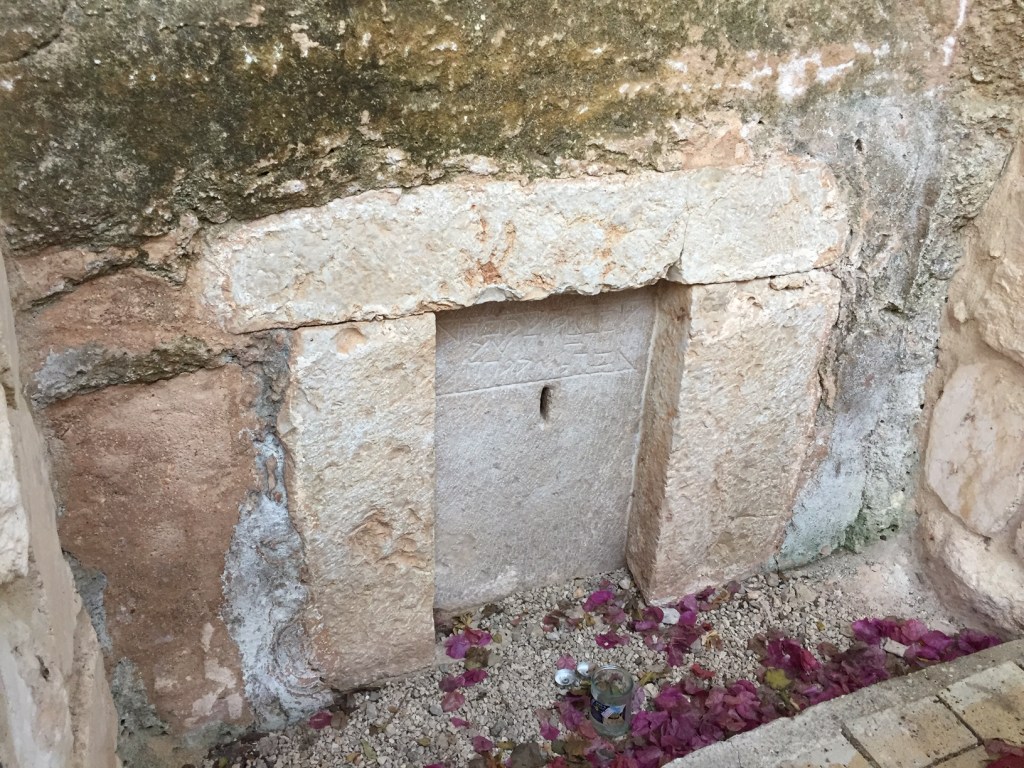
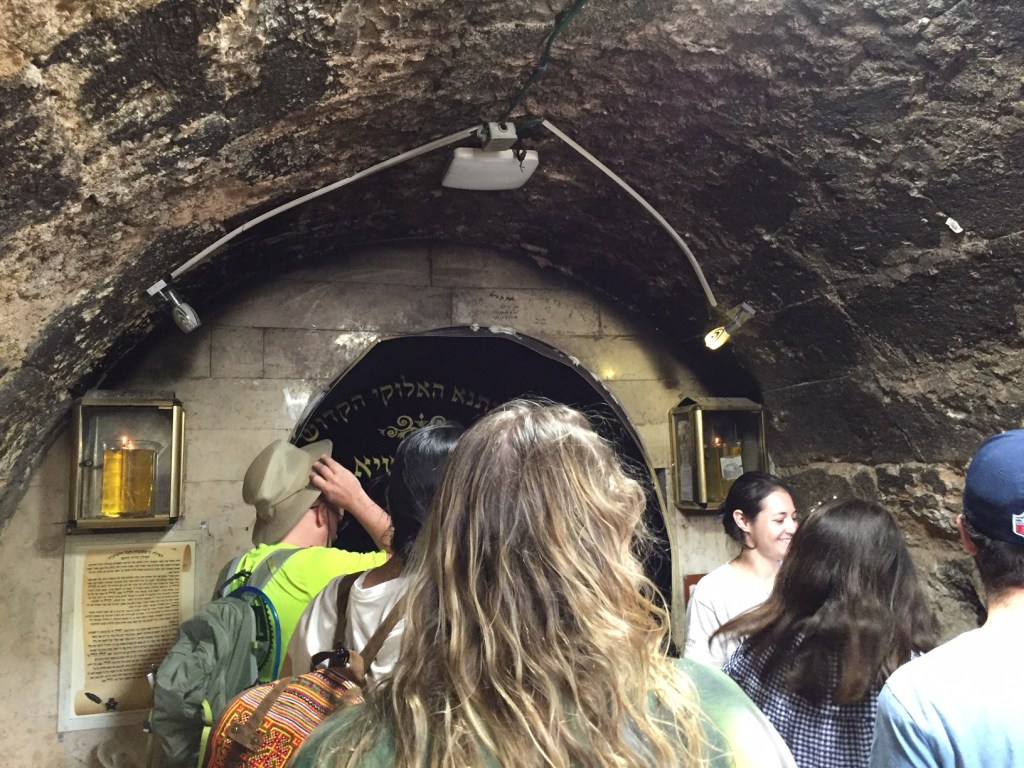
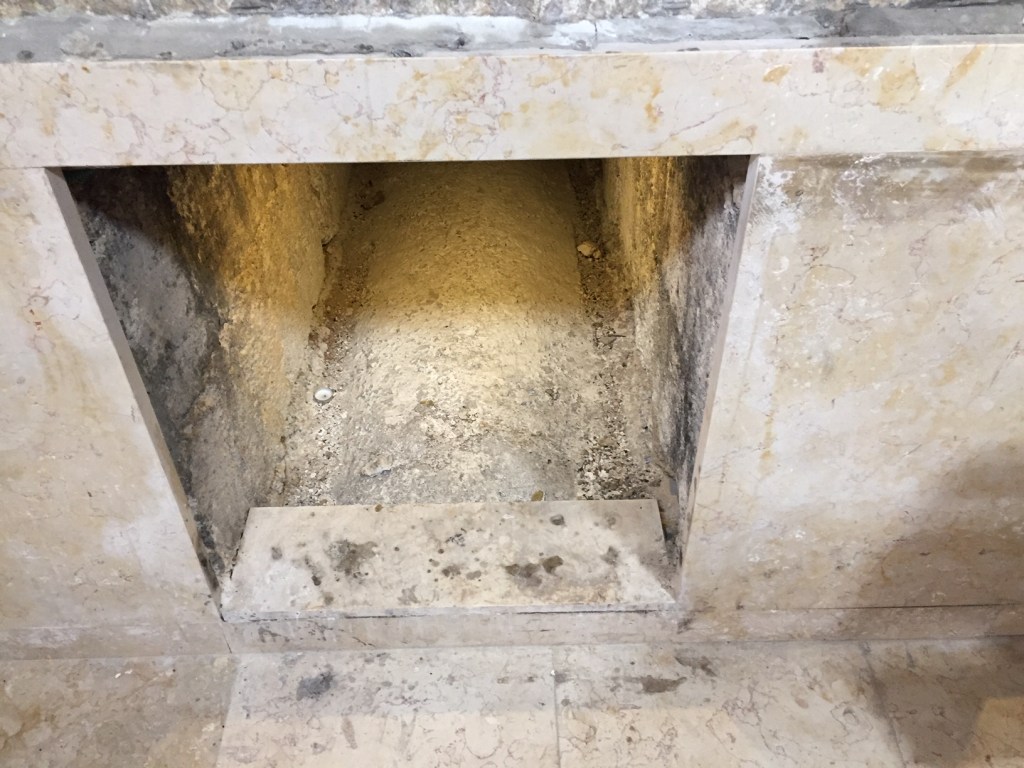
What Mitch discovered, as he soon realized, was a stone marking what is apparently the real, actual grave of the Talmudic figure, Rabbi Yehoshua ben Levi. By his own account, he was excited, but also worried. Once word got out that he had such an important holy site on his property, the Haredim might step in and make the place unlivable. He was still working on his guest houses, and developing his business. Also, he knew that if the government knew he had an important antiquity on his property, there would be no end of red tape. He called his lawyer. You can read the whole story (un to 2012, anyway) here: https://www.jpost.com/Opinion/Columnists/The-Human-Spirit-Bucking-authority Eventually, archeologists uncovered tomb, and entered it. Inside, there are apparently stone shelves for five people. One has a sealed tomb on it.
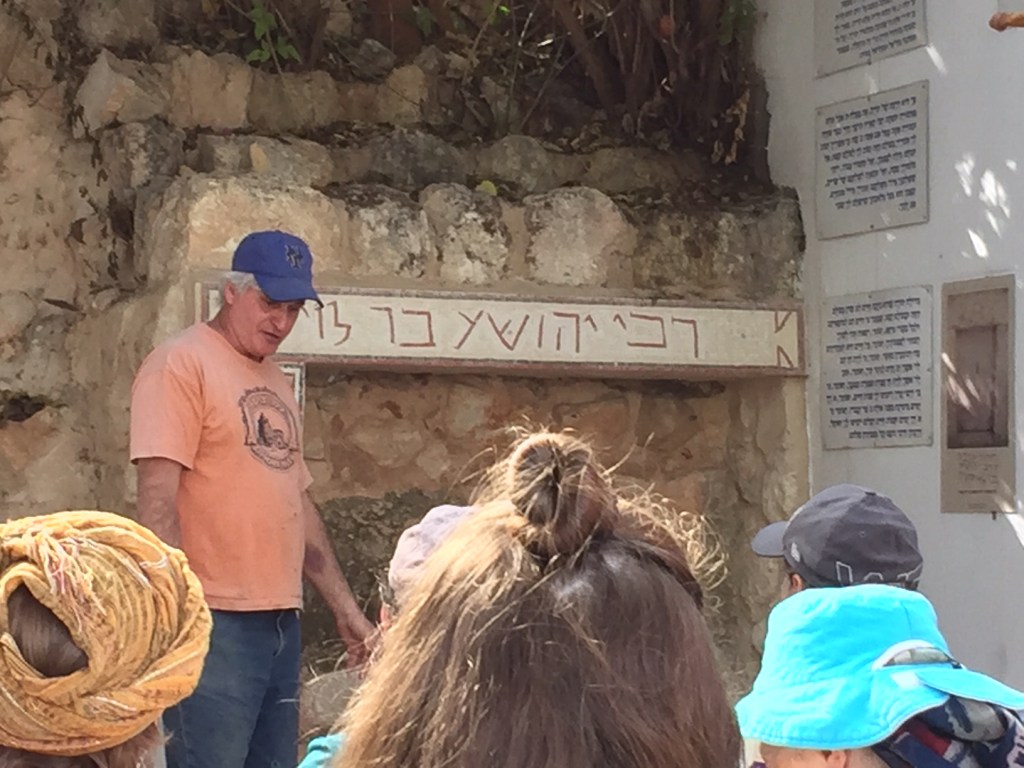
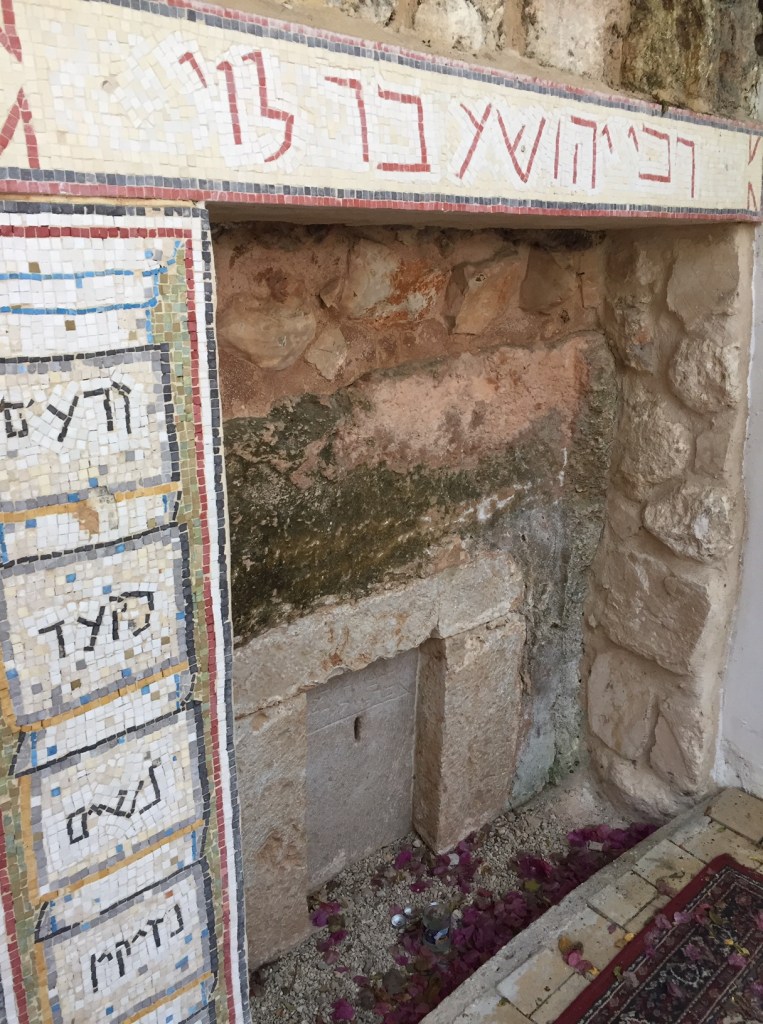
After we heard the story of the tomb from Mitch, we did some learning with Tzvi about Rabbi Yehoshua ben Levi. There are several wonderful midrashim about this rabbi. We read from Masechet Ketubot 77b that several other rabbis were very wary of catching diseases (possibly leprosy) from those who were poor and ill, but Rabbi Yehoshua ben Levi would sit and study Torah with them, “Saying: the Torah is a loving hind and a graceful doe [Prov. 5:19]. It bestows grace on those who learn it, does it not protect them?” When R. Yehoshua was subsequently dying (not, presumably, from a disease he caught from those he studied with), “The Angel of Death went and appeared before him. Rabbi Yehoshua ben Levi said to him, ‘Show me my place in paradise.’ [The angel] said to him, ‘Very well.’ Rabbi Yehosua ben Levi said to him, ‘Give me your knife lest you frighten me on the way.’ He gave it to him. When he arrived there [in Gan Eden — the Garden of Eden, or Heaven] he lifted Rabbi Yehoshua and he showed it to him. Rabbi Yehoshua jumped and fell into that other side.” Having made his escape into Paradise, Rabbi Yehoshua refused to hand back the angel of Death’s knife, until ordered to do so by God — “Give it to him, it is necessary to kill the created.” He seems to have been hoping to save others from death, but God had other ideas. The good rabbi remained in Gan Eden, where he was warmly welcomed by Elijah the the Prophet and Rabbi Shimon bar Yochai.
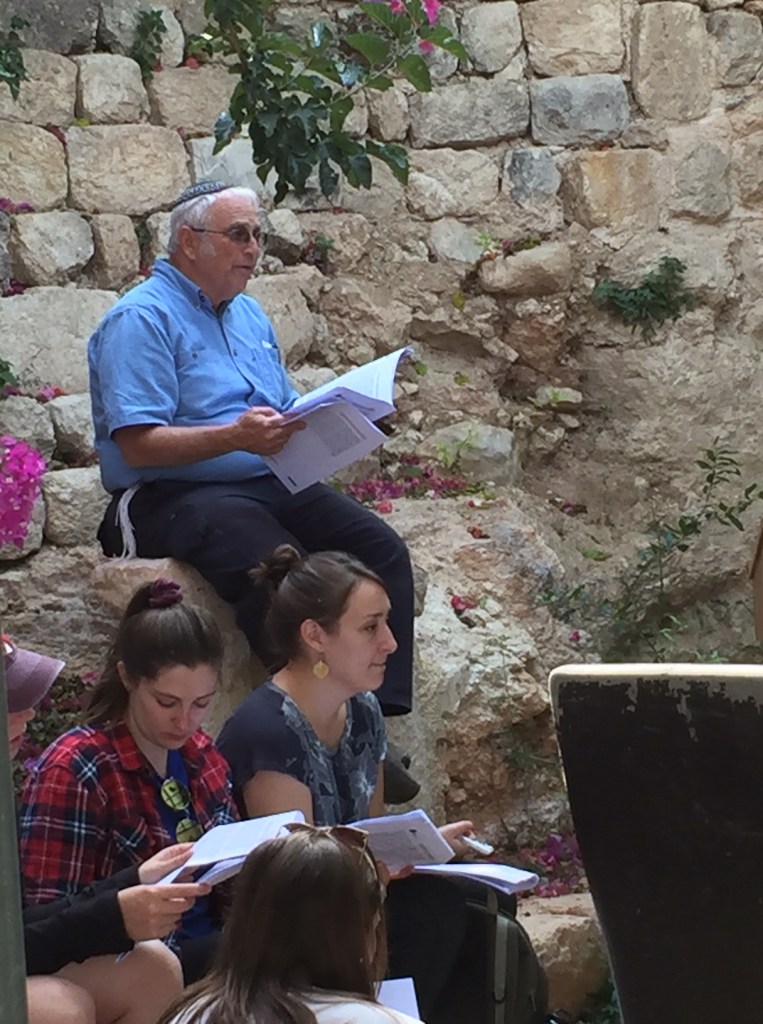
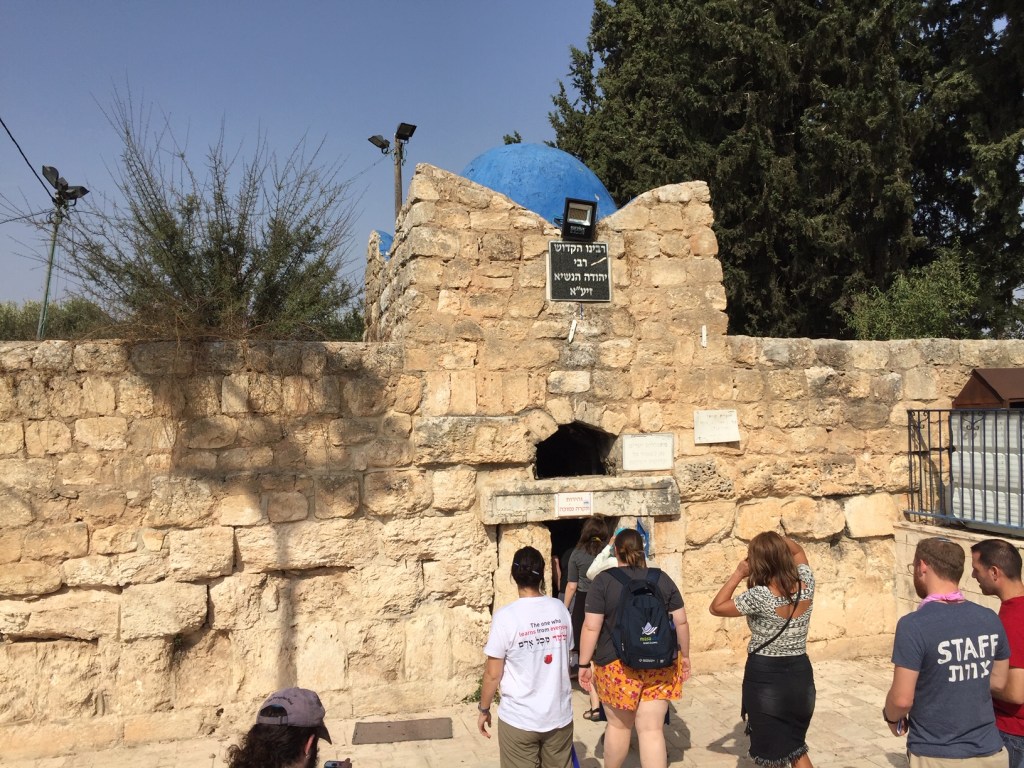
We would have been happy to linger at Mitch’s, I think — and he was clearly enjoying showing us around. We went down into the olive grove where the olives were being harvested — by beating the trees with a stick and letting the olives fall into white sheets underneath. But we had to get back on the bus and drive onward. Our next stop was the putative tomb of the grandson of Rabbi Yehuda haNasi — confusingly also called Yehuda haNasi. Here, we did some learning about rabbinic history with Jamie and Meir.
We drove onward across the country, winding our way uphill to the beautiful Arbel National Park. Here, we sat at picnic tables and made sandwiches with the ample fixings sent along by the man we all know as Chef. It was unseasonably hot — we jockeyed for shade. There were numerous school groups and tourists also visiting the park. After a convivial lunch we set out on a hike through the dry grass on the high hills looking down on the Kinneret — the “Sea of Galilee”. My classmate Bruce had brought his binoculars, and we got a good look at a hawk, but I don’t know my Israeli birds very well yet. We tentatively identified it, by its hovering behavior, as a harrier of some kind.
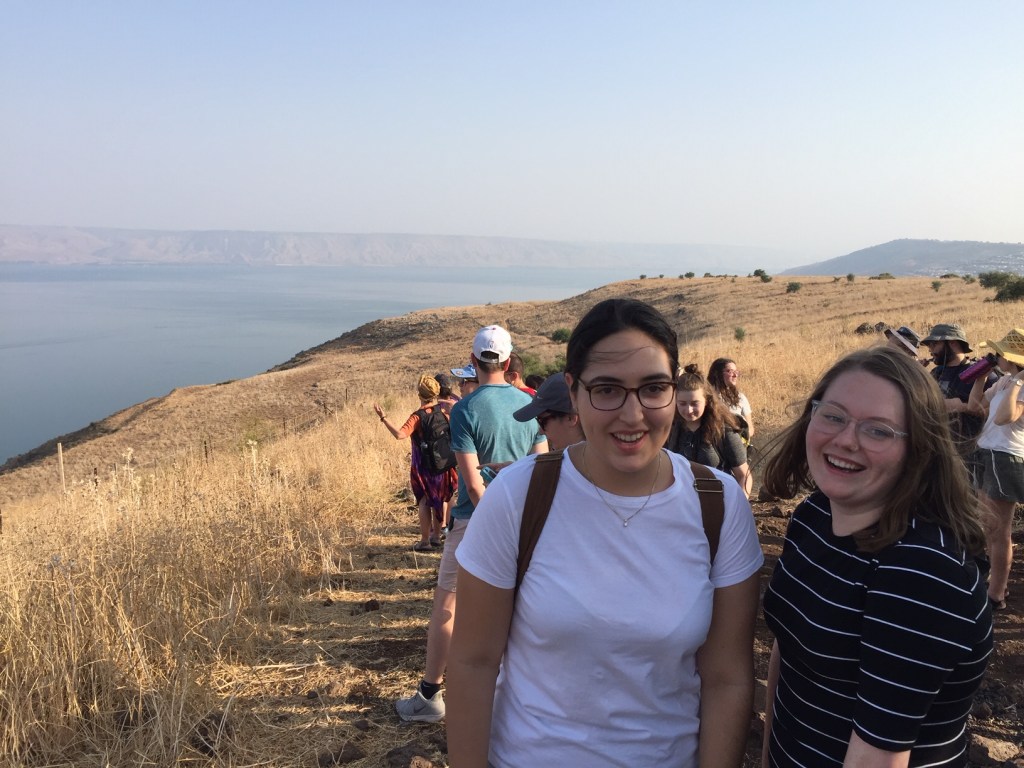
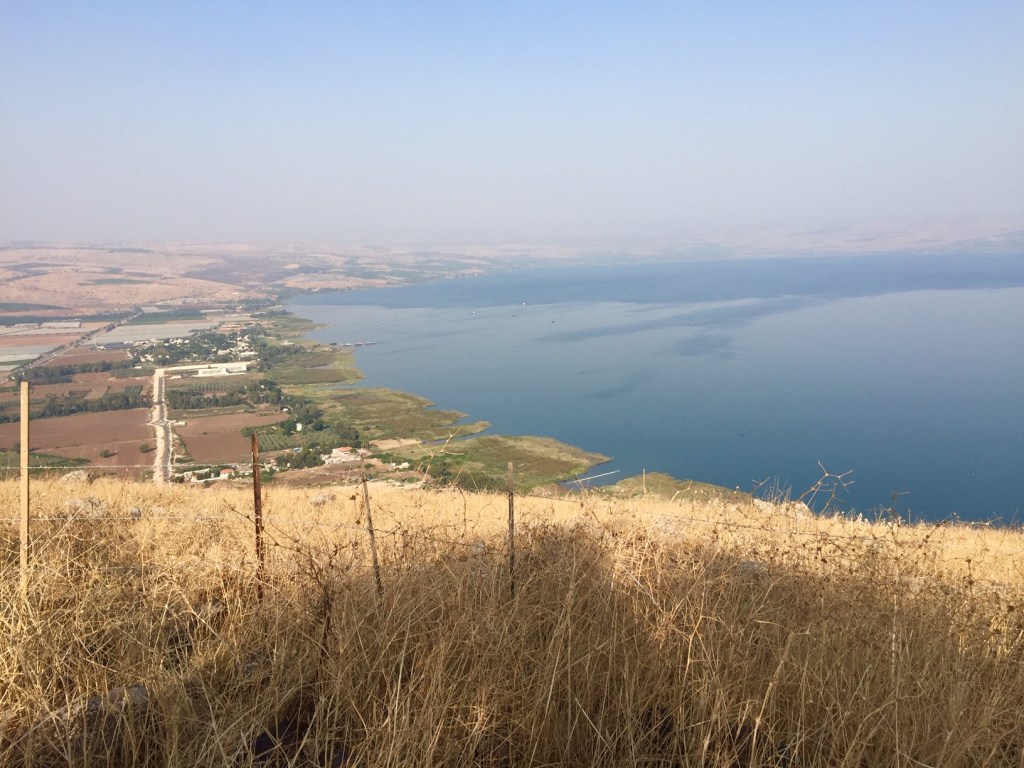
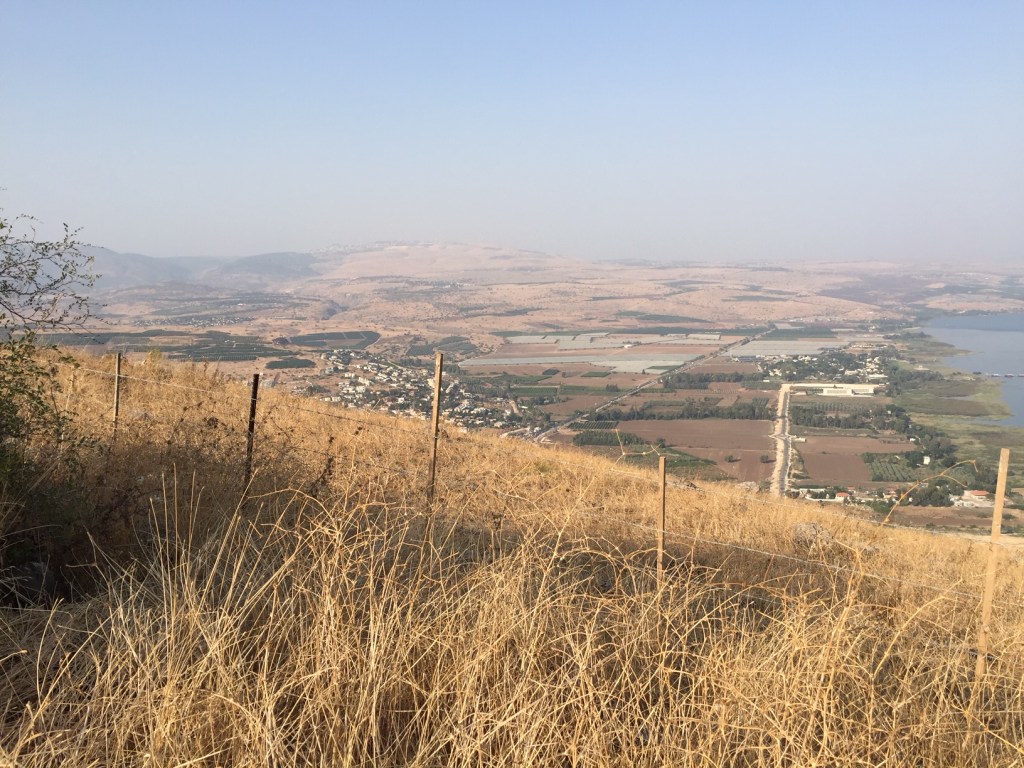
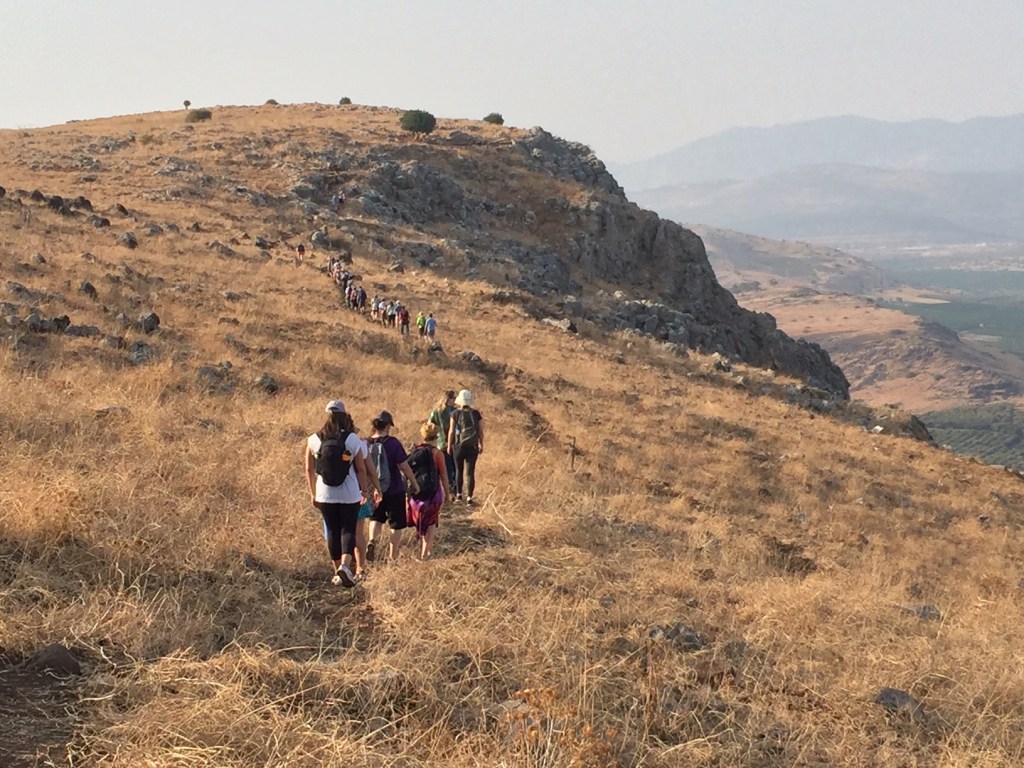
We stopped for a bit at a look out. I know we did some learning here, but to be honest, I was tired and hot and overwhelmed by the scenery, and I had not brought any paper to make notes, so…
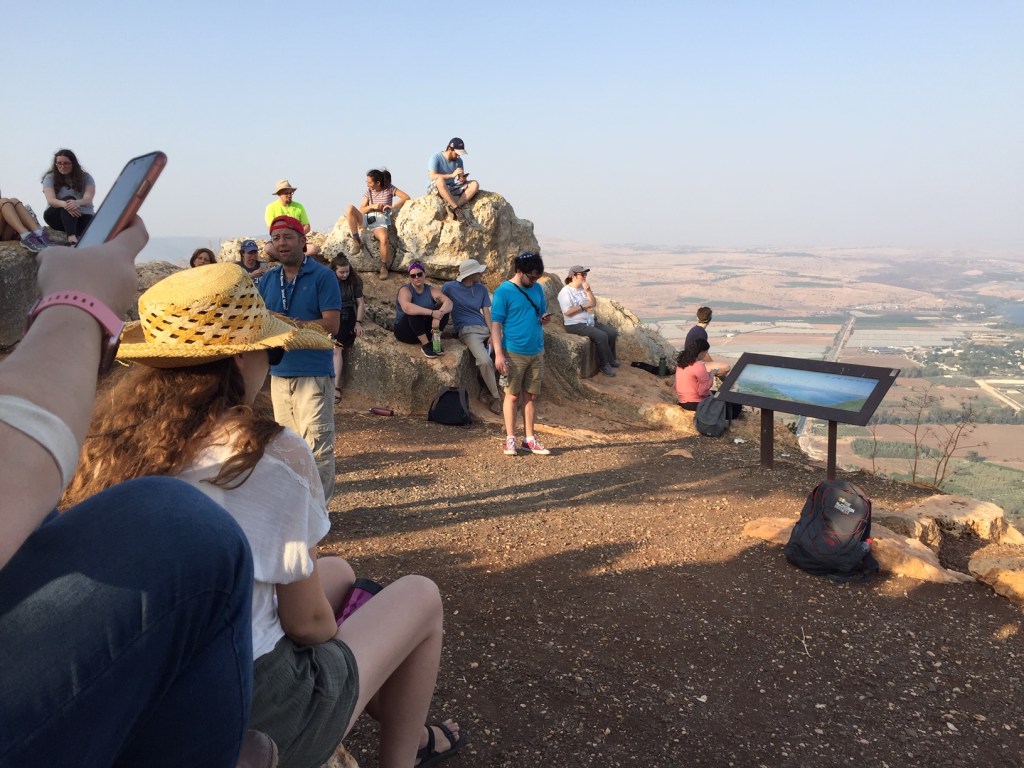
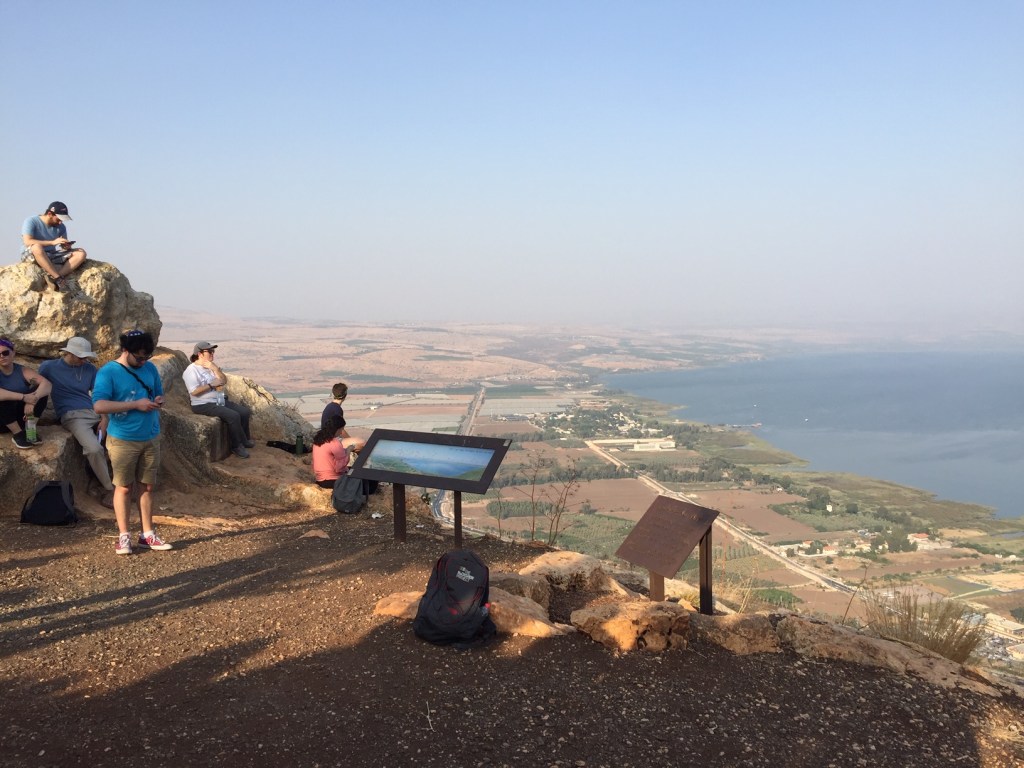
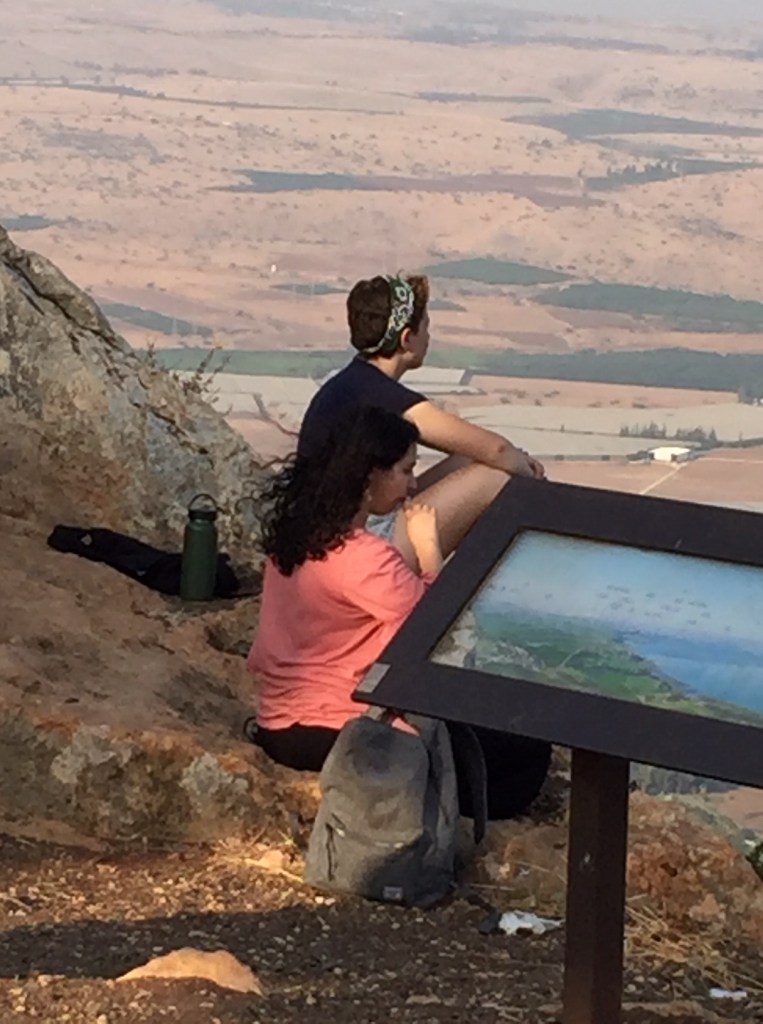
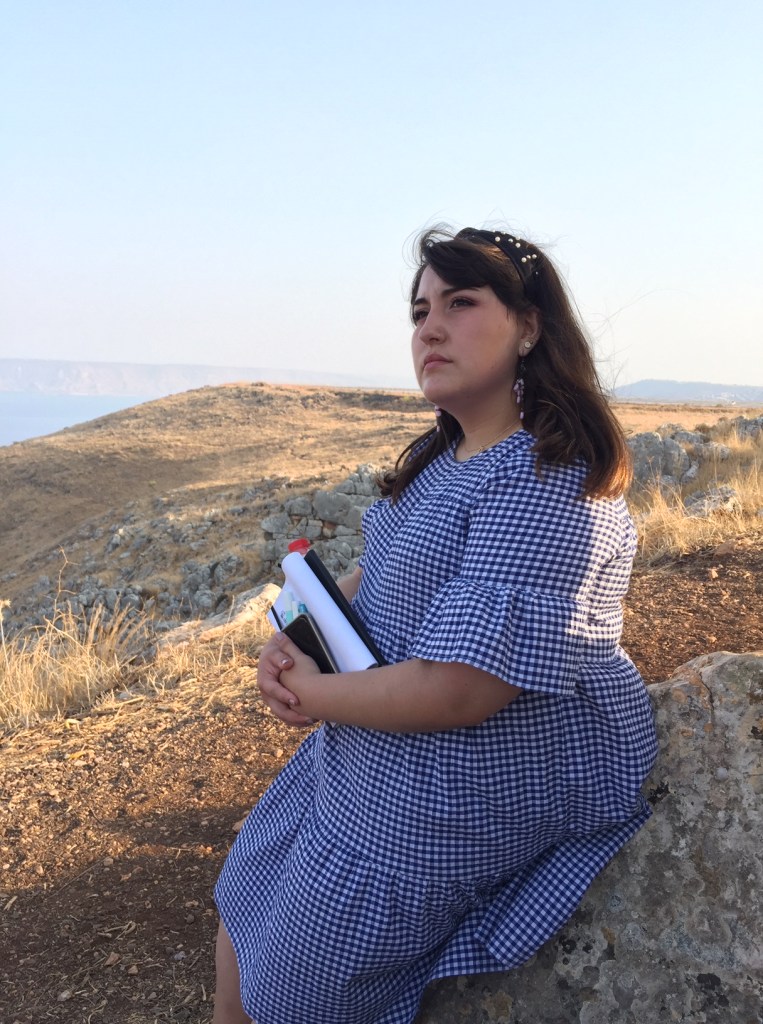
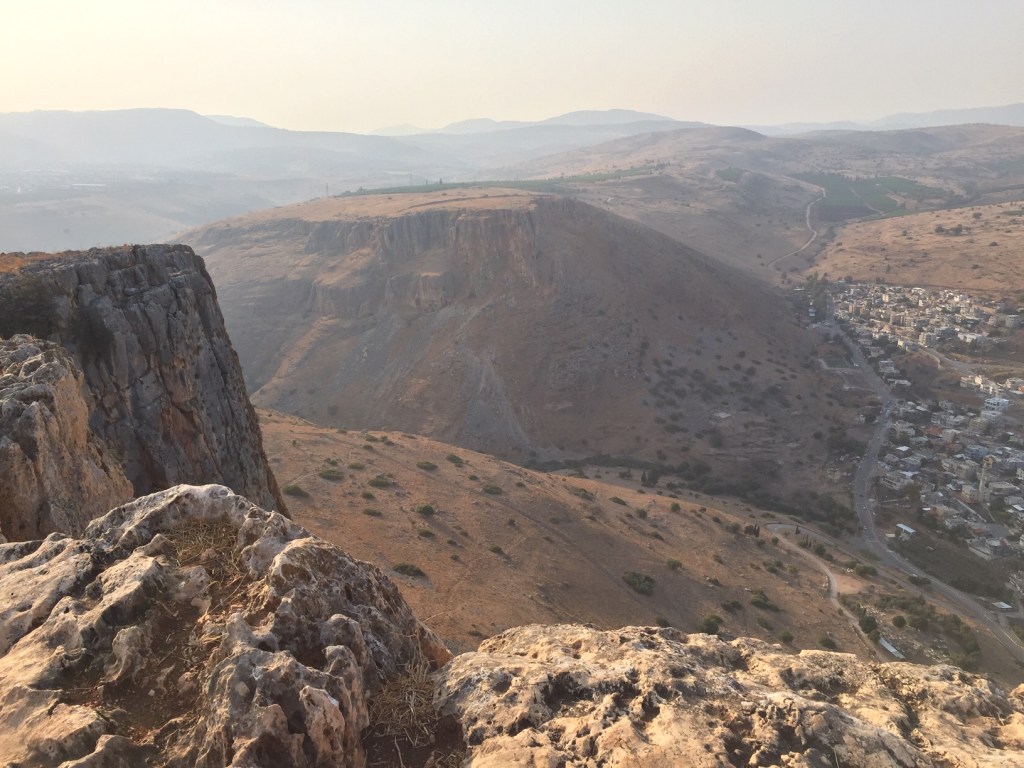
After a pause for popsicles at the snack bar (I had mango and passion fruit — it was amazingly good), we hopped back on the bus and drove a little way down the road to an ancient synagogue. Here we split into two groups — egalitarian and traditional — to daven mincha. The sun was setting, and it was very beautiful.
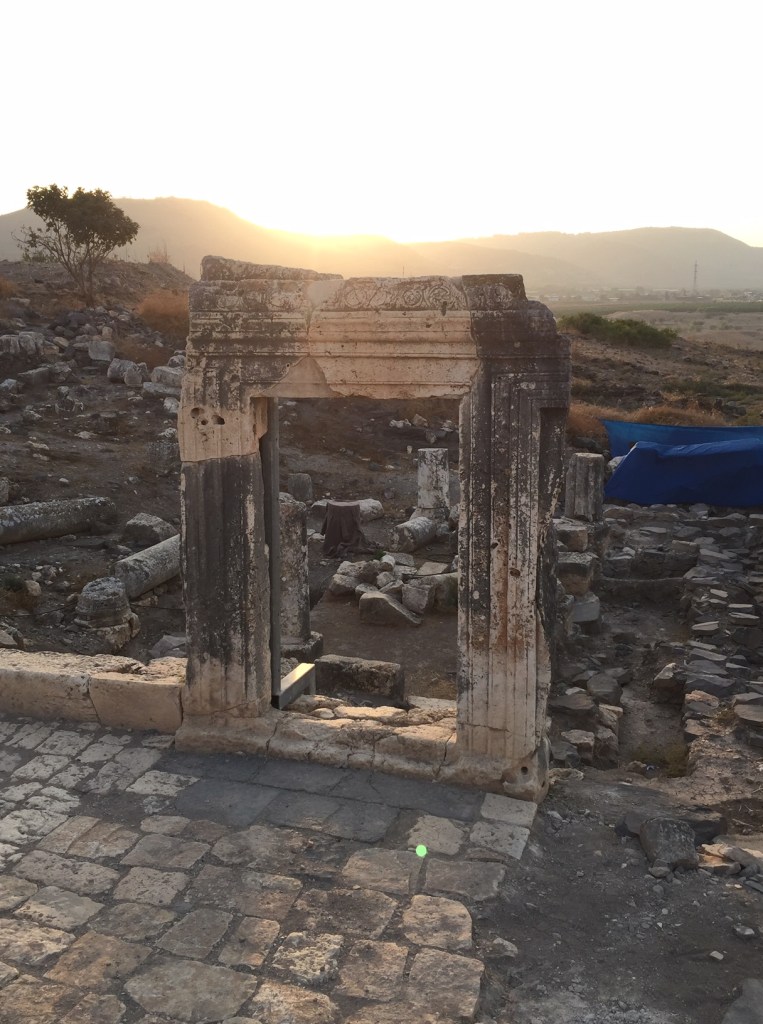
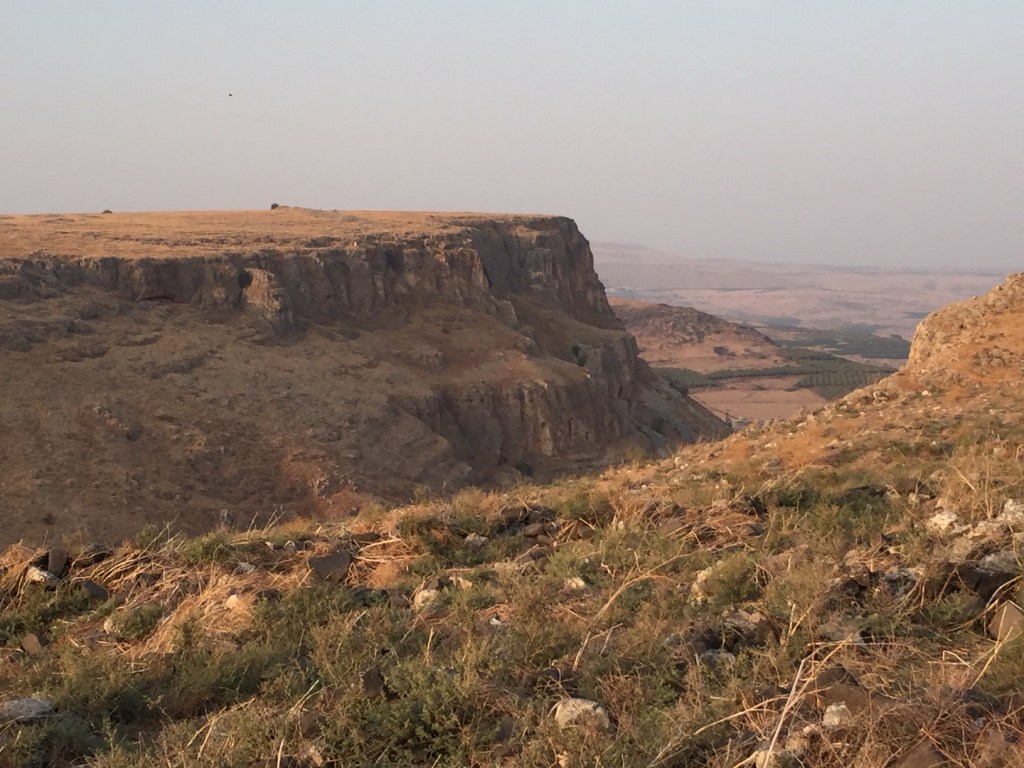
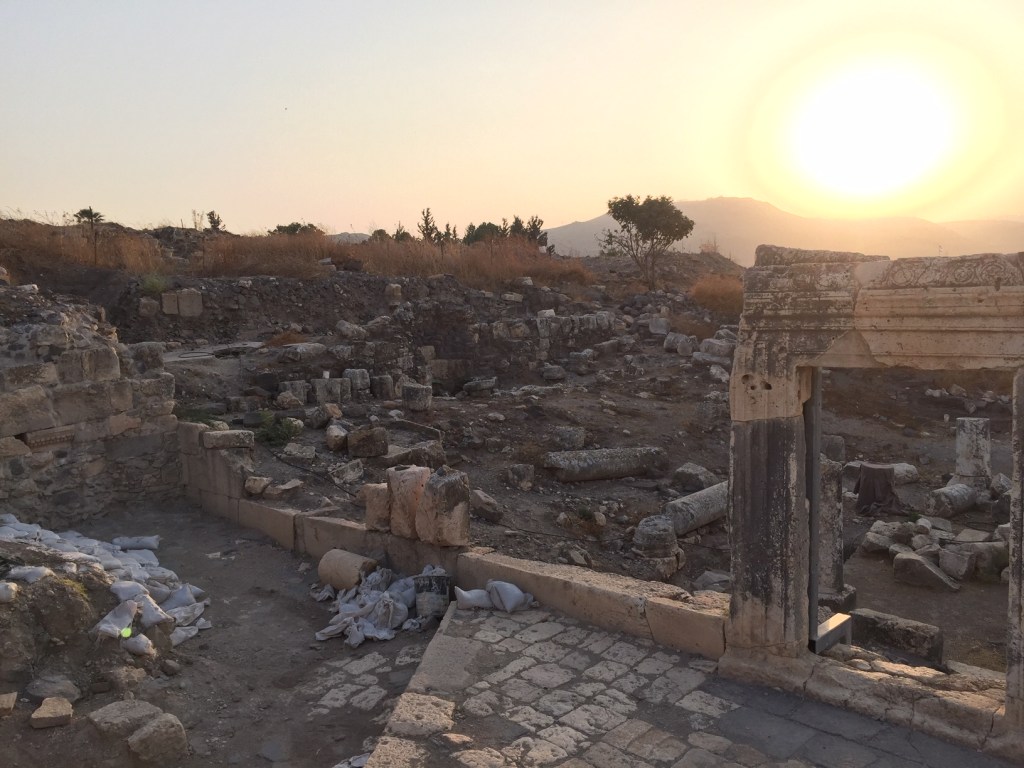
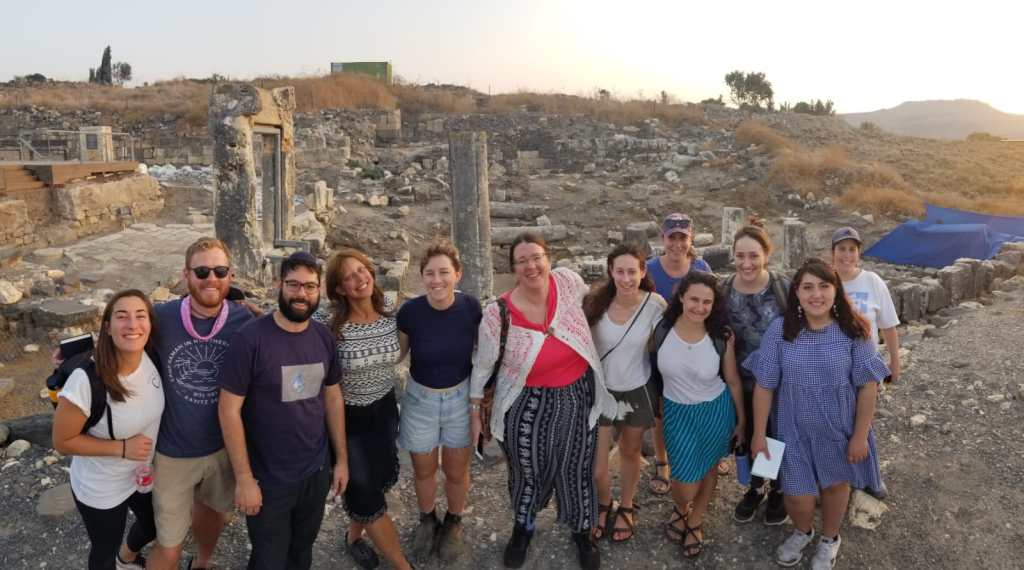
Our tiyyul had ended. The sun was setting — it was too late to spend time in the city of Tiberias, where the Sanhedrin had its last location. We drove down to the resort town briefly to drop off Yarden, who was going off to pend her weekend doing more hiking (!). As for us, we set off back to Jerusalem, in the gathering dark.


What a wonderful and awesome tiyyul, Kate!
And spectacular photos too!
I loved the comment about the increased importance of the teachers who had no titles…having lived for so long without a formal title, I was somewhat reluctant to accept the s’mIcha offered to me by Rabbi Naomi here in Eureka…but now that I have it, I wonder if my “wisdom” will start to decline!?
Congrats on yet another fine account of your wonderful 9 months…
Bob R.
LikeLike
Hi Bob — yeah, it really was! The school is off on another tiyyul today — to the Negev — but it is all hiking, so I decided to stay in Jerusalem and see/do some of things I haven’t had time to do here.
I’m sure your wisdom remains! I think it’s only right that you finally got s’micha.
I was just talking with a young person who thinks Arcata is the best place in the world. He’s only here for a semester, then he goes home to San Francisco (which he doesn’t love) and then to Middlebury for the summer Hebrew program. He’s trying to find out what to do with his life, it appears. We had a nice chat about Eureka/Arcata, and I told him about your recent s’micha, and how Rabbi Naomi is the sister of the BAJC former Board President — such a small world…
LikeLike