Our trip to the “periphery” took us from the Bedouin town(s) of Lakiya across to the town of Sderot. https://www.google.com/maps/dir/Laqiya/Sderot/@31.5301928,34.5524799,12.61z/data=!4m14!4m13!1m5!1m1!1s0x15025fd4cbf7a083:0xe2e3b39e8c2cb837!2m2!1d34.866219!2d31.324884!1m5!1m1!1s0x15028152b5bc422b:0x9eca44351ad2130a!2m2!1d34.595581!2d31.522694!3e0
We were met by a woman named Orgenia (sp.?) who works for the Sderot Media Center. (https://sderotmedia.com/) She took us on a tiyyul around this small and surprising vibrant town, which has clearly decided to not only persist but thrive, even though it is a regular recipient of rockets launched from Gaza.
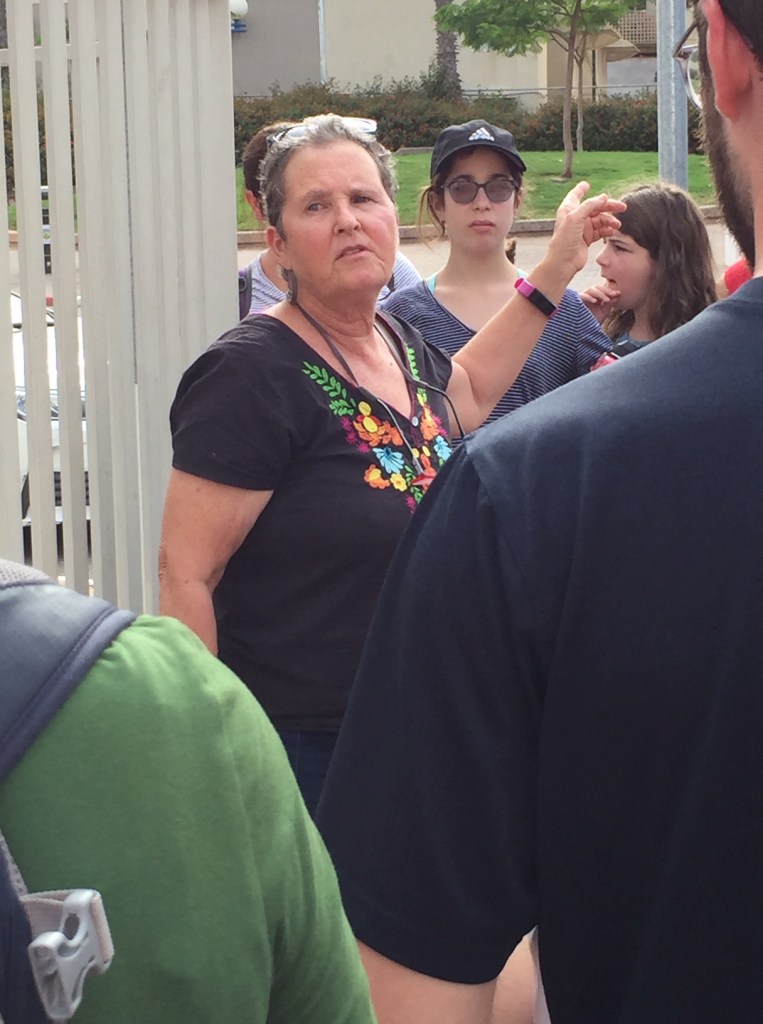
Sderot is a town of 25,000 people. It’s important to know that it was originally settled by emigrants from other countries in the Middle East (Mizrahi Jews) and from Russia. They did not arrive in Sderot or other periferia towns of their own accord. After the formation of the State of Israel, Ben Gurion thought that it was important to settle the whole of the country. When refugees began arriving in Israel, hoping and expecting to live in Tel Aviv or in Jerusalem, Ben Gurion put them on buses and trucks and shipped them off to the hinterlands, without telling them where they were going. While Sderot appears to be thriving now, in spite of its proximity to Gaza and its perennial rain of rockets, it was originally a rather hardscrabble place, settled by poor people who had been sent there against their intentions, if not their wills.
Home-made Kassam rockets from Gaza began to fall on Sderot beginning with the Second Intifada in 2001. Rocket landings increased drastically after Israel withdrew from Gaza in 2005. At that time, 1,000 missiles a year were falling on Sderot. Yes, one thousand. Though home made, the missiles can do a lot of damage, including, obviously, killing people. This is aside from the trauma and stress caused by having missiles falling without warning.
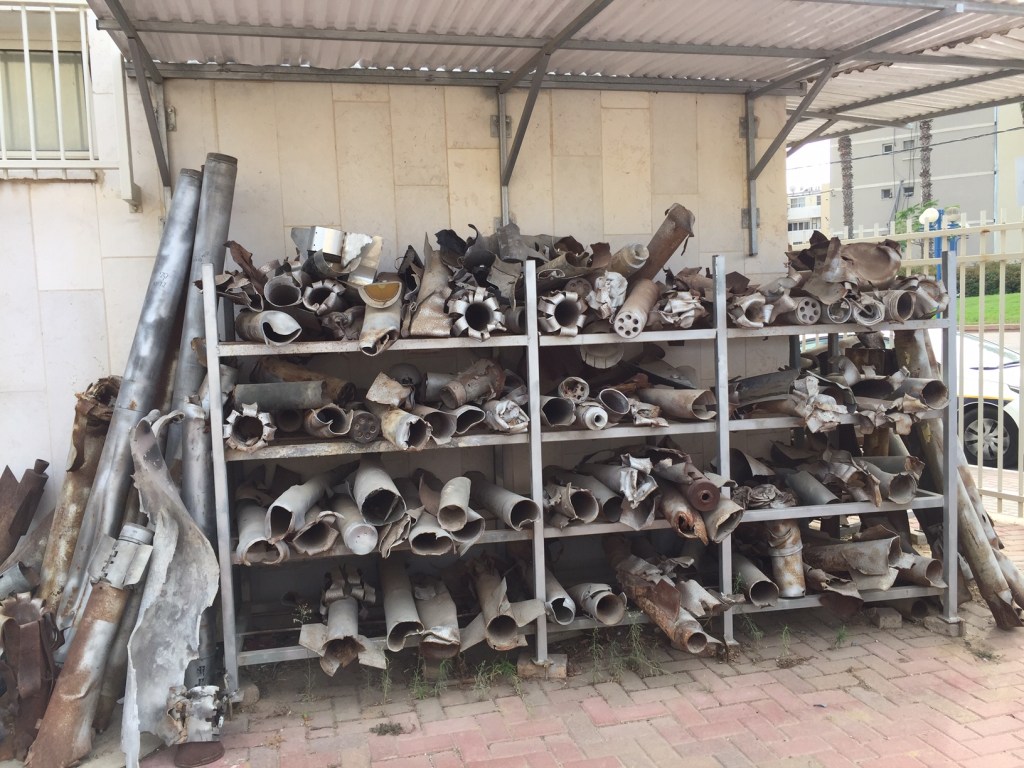
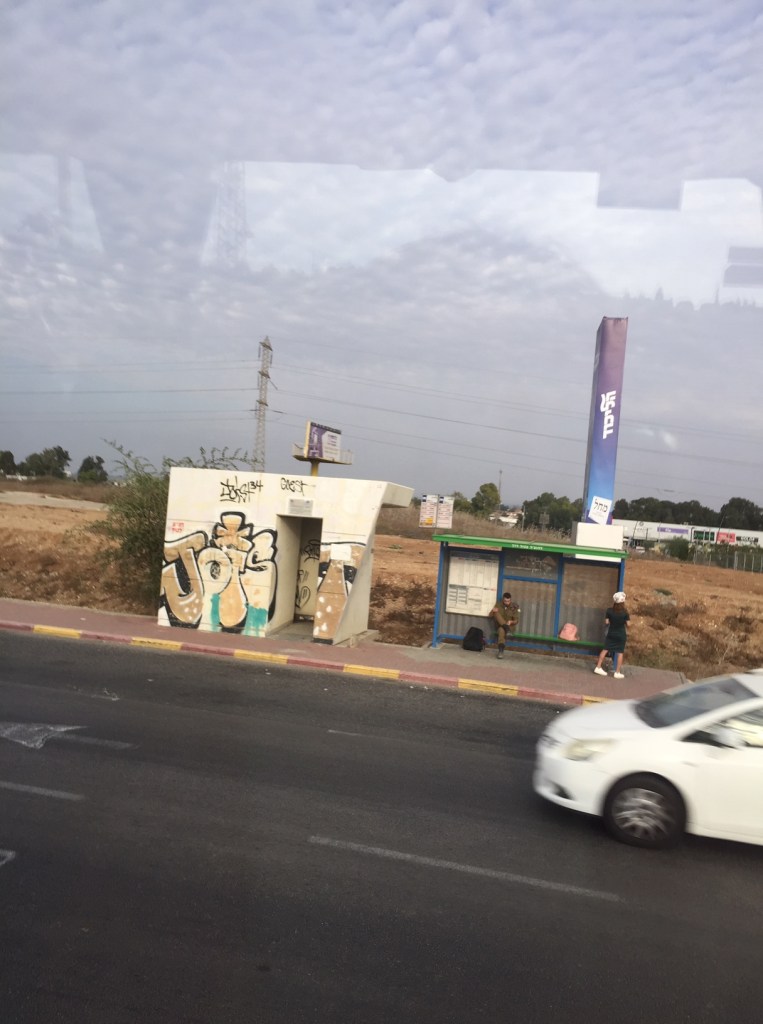
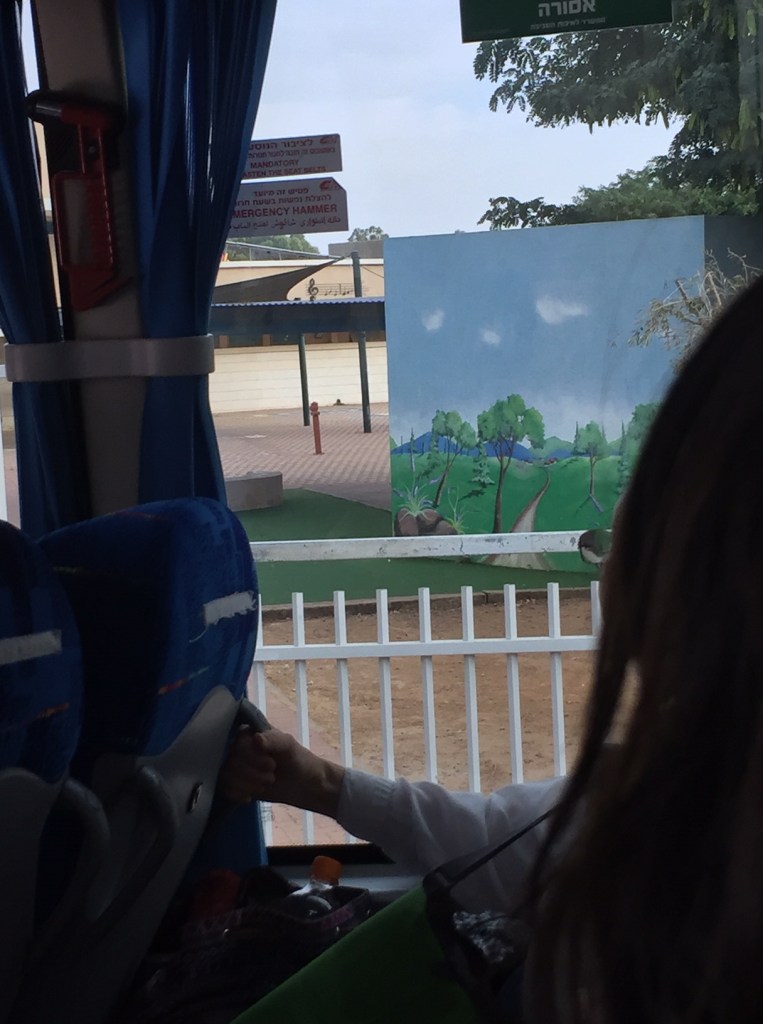
Little by little, the Israeli government and the larger Jewish world have taken notice of Sderot and helped rebuild and strengthen the community. Because of the “Iron Dome” missile defense program, most of the rockets are destroyed in the air now before they reach the town. However, missiles still fall, and so the city has built itself to be prepared. There is a siren that goes off if a missile is incoming. Residents know that they have thirty seconds or less to get to a shelter. When the missiles first started falling there were no shelters. Now, as our guide proudly showed us, there are shelters for every apartment and for every bus stop. Schools have been built to be one big missile shelter, so that kids don’t have to suffer the trauma of leaving classes and going to a shelter over and over again. Even playgrounds have shelters, built to look like fun places.
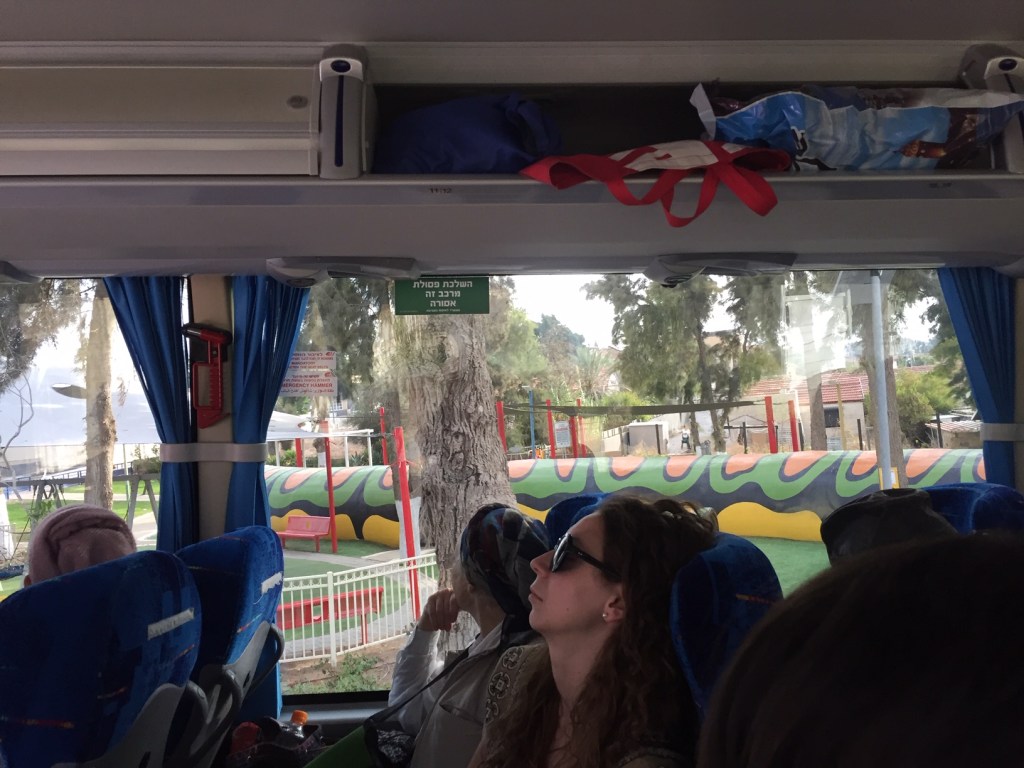
Sderot is determined to be a lively arts community. Throughout the town there are sculptures of musicians, and the community regularly hosts a music festival. Our guide recommended to us a film, “Rock in the Red Zone” — here is the trailer. https://www.youtube.com/watch?v=RcH2AIc2hWk (I haven’t watched the movie yet, but it looks great.) The train now comes to Sderot, bringing city people. Also, a program called Yeshivat Hesder — a combination of yeshiva study and army service — is located in Sderot. If you did not know what you were looking for, you would see only a lovely little town. Amazingly, people are moving to Sderot. There is a certain attitude in Israel, expressed by our guide, that no matter where you are in this tiny country, a missile could reach you, or a terrorist blow you up. And so — why not live in a pretty, tight-knit community full of music?
Orgenia took us to a spot that overlooks the Gaza border. We drove past a waste water treatment plant, where waste water from Tel Aviv is purified to become water for agriculture.
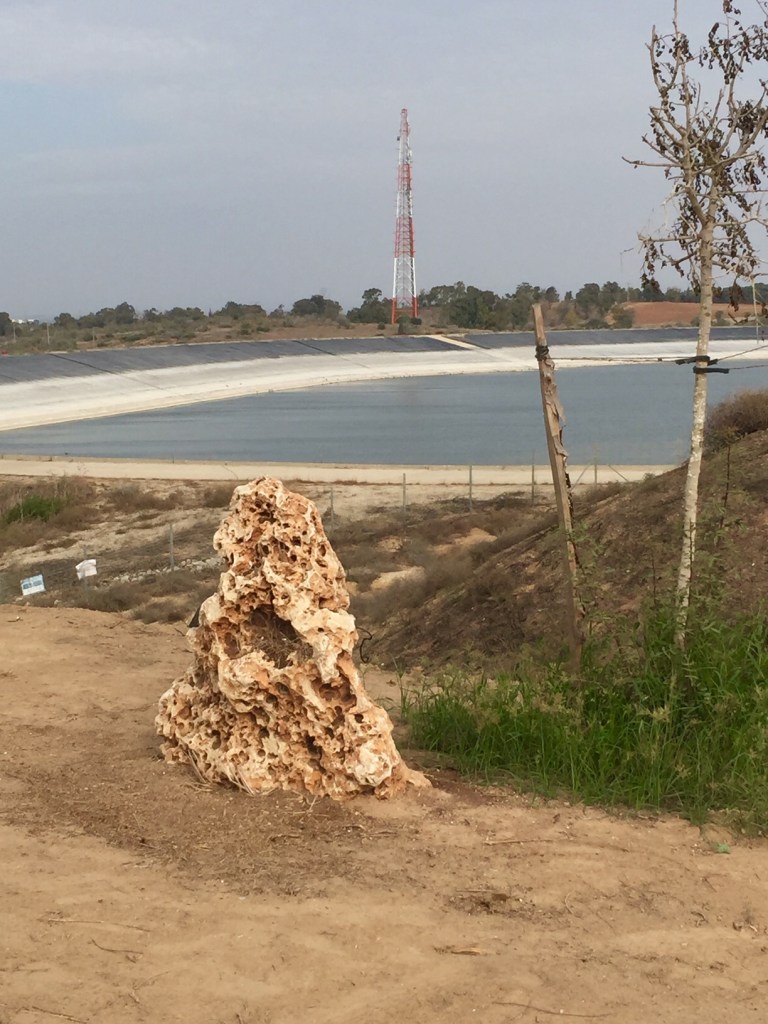
Orgenia made a phone call, and the big metal gate was opened electronically. We drove through, and down a dirt road. We parked near a memorial for one of the soldiers who died in a military helicopter accident, who came from Sderot. A giant wind chime was erected in his honor, because he was a musician. There were some soldiers there visiting the memorial.
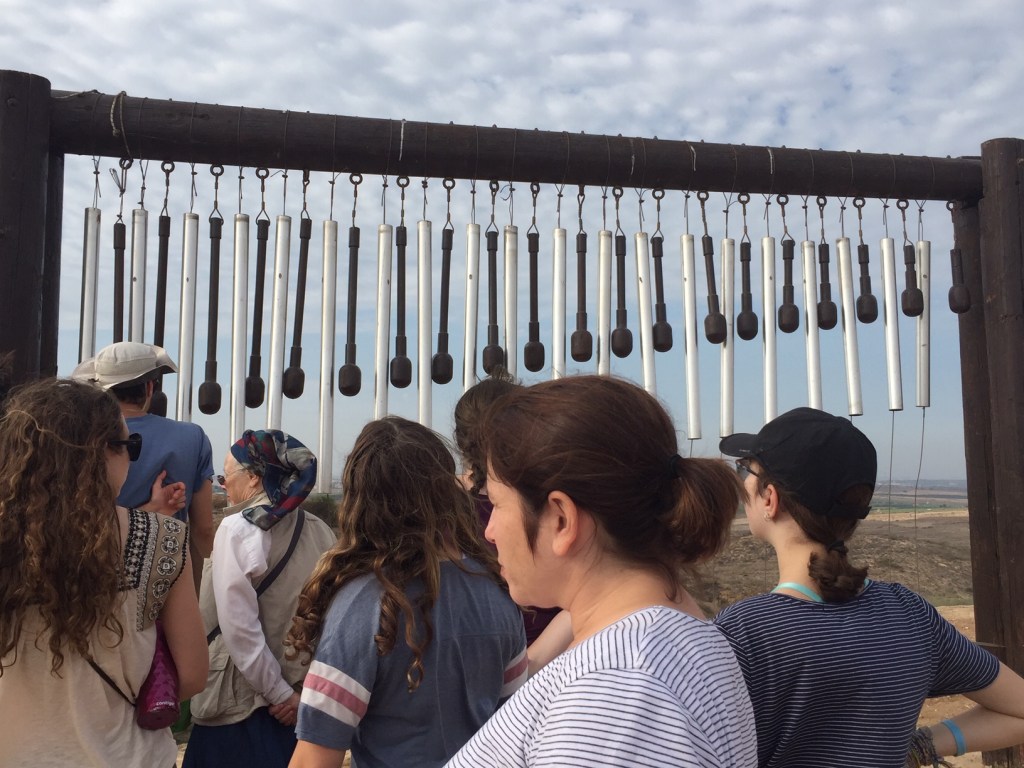
Beyond the wind chime, you see a road (open only to the military now), and a fence, and another fence — and then, there’s Gaza. Because Hamas has also been making tunnels under the border, Israel is building a wall now here — one that will be dug deep into the ground, with sensors. Those we spoke with who live on the Israel side of the border expressed sadness about the wall, and also a feeling that withdrawing from Gaza had not been a wise decision, but has only created more hostility, poverty, and despair. I don’t know what Gazans say — I am not permitted to go there, as Israel has blockaded Gaza since Hamas took over there. But as a Jew, I doubt I would be safe or welcome in any case.
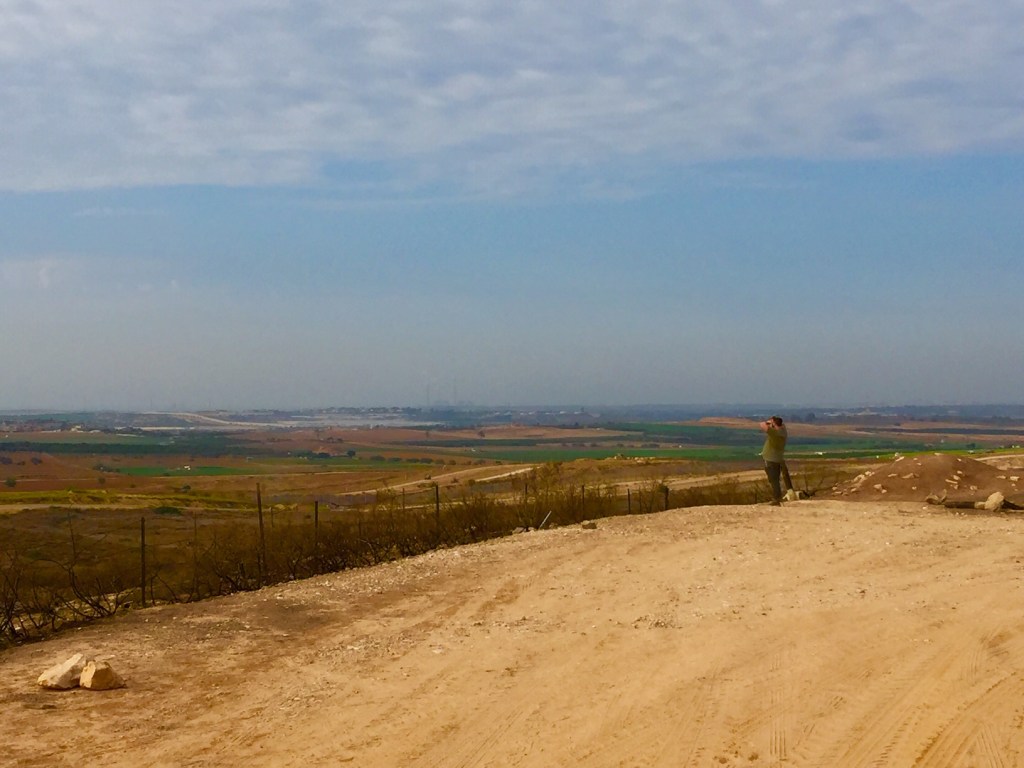
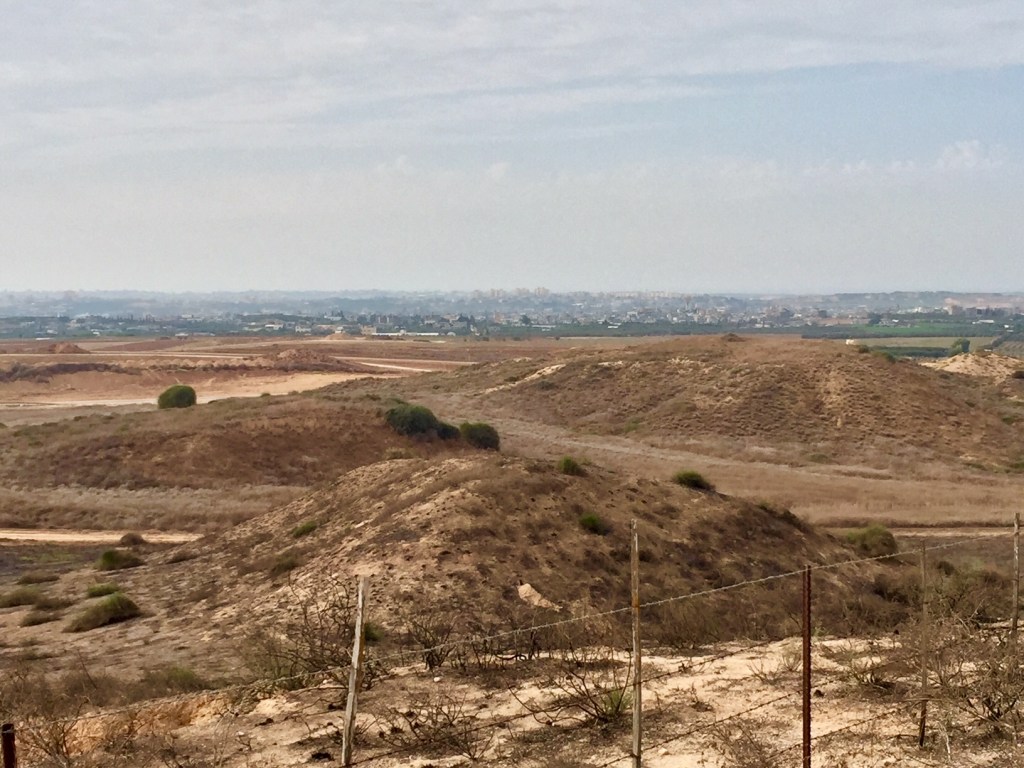
Looking over Gaza, we davened mincha, the afternoon prayers. It was the most poignant davening of my life, especially Birkat Shalom, the brachah (blessing) in the Amidah or standing prayer that asks for peace.
Grant abundant peace over Israel, Your people, forever.
For You are the sovereign source of all peace.
So may it be good in Your eyes to bless Your people Israel
in every season and in every hour with Your peace.
Blessed are You, Adonai,
Who blesses His people Israel with peace.
There’s also place in daily prayers where liberal Jews such a myself add to the request for peace for the Jewish people (Am Yisrael) a prayer for peace for kol yoshvvei teiveil, all who dwell on earth. It was quiet up there looking over Gaza, and deeply mournful.
We concluded our trip with a very special visit to the home a peace activist in the village of N’tiv Asara, “The Way of Ten”, on the northern border of Gaza. It was a hopeful way to end our long day, and a perfect bookend to our visit with Khadra Elsaneh at Desert Embroidery in the morning. I need to practice my Hebrew and go to bed, so I’ll share that with you in a day or two. Shalom.


Thanks, Kate, for this view into life on the border with Gaza. Yes — the sim shalom prayer is especially poignant, isn’t it — and it’s the reminder to include not only “kol yoshvei tevel” but also “v’al kol Yishmael” at the end of every kaddish. We need to remind ourselves that we all — children of Israel and children of Ishmael — descend from the same biblical forebear.
Bob R.
LikeLike