A week has passed since the Pardes tiyyul (trip) and Shabbaton in Ein Gedi. The weather feels different (cooler, thank G-d!), and we are now all orienting ourselves towards Rosh HaShanah, which begins tomorrow night. But here I will share some pictures and a few reflections on our trip to Ein Gedi and Ein Bokek .
It was insanely hot last weekend — and down by Yam HaMelach (the Dead Sea — literally, the Salt Sea) it is always significantly hotter than up here in the Holy City. In case you thought all those references to “going up to Jerusalem” were only metaphorical, take a look at a topographical map – Jerusalem is on a series of high hills. https://mfa.gov.il/MFA/AboutIsrael/Maps/Maps/Topography.jpg Yam HaMelach, on the other hand, is the lowest place on earth. This is fact, not exaggeration; according to Wikipedia, “its surface and shores are 430.5 meters (1,412 ft) below sea level,[4][6] Earth’s lowest elevation on land. It is 304 m (997 ft) deep, the deepest hypersaline lake in the world. With a salinity of 342 g/kg, or 34.2% (in 2011), it is one of the world’s saltiest bodies of water[7] – 9.6 times as salty as the ocean – and has a density of 1.24 kg/liter, which makes swimming similar to floating.[8][9] This salinity makes for a harsh environment in which plants and animals cannot flourish, hence its name.” (For the rest of the Wiki article, click here: https://en.wikipedia.org/wiki/Dead_Sea)
Our bus left Jerusalem at about nine in the morning. It’s been quite a number of years since I was on a bus trip with a group — all I could think of, actually, was when I was in my late teens and sang with the Blanche Moyse Chorale. I had a very pleasant seat mate, Joe, a young man originally from Lexington, Massachusetts who has been going to Yale and is considering studying for the rabbinate (not uncommon among Pardes students!). We had fun talking about the pleasures of New England.
We drove north from Pardes, past the Old City, and turned east to begin our descent through the West Bank. This area is Judea and Samaria to some, Palestine to others. On the map above you can see it’s shaded gray. We came down through a barren, stony, arid landscape, passing Jericho. I was reminded of the final lyrics to Yerushalim shel zahav, “Jerusalem of Gold”: Nashuv nered el yam hamelach b’derech Yericho! — “We will once again descend to the Salt Sea by the Jericho road.” (For the moving history of this song, read here: https://www.jerusalem-insiders-guide.com/jerusalem-of-gold.html) In class we had been discussing a gemara which suggests that when they blew the shofarot in Jerusalem, they were audible all the way if Jericho — which seems unlikely, but not entirely impossible, since one of my classmates found out that in Temple times they blew in a formation of up to 120 shofarot (ram or ibex horns) and chatzotzrot (silver trumpets). We learned also in a Bible class that Jericho is over three thousand years old, and was possibly a place where they dealt in spices and perfumes (It’s Yericho in Hebrew, which seems to maybe derive from reiach, meaning scent.) And yet, this is Jericho as in Joshua and “the walls came atumbling down”!
In the distance we could see the Dead Sea, sapphire blue between golden shores. The upper part of the Sea is in the West Bank, while the lower regions are in Israel proper. There is some tourism in the West Bank section of Yam HaMelach, although its modest. I spoke with a student who had swum at a beach there – -she said she and her friend had had the beach to themselves apart from a Bahai family. But of course, Americans are highly discouraged from going into the West Bank (except tucked up safely in a passing tour bus), so the most beautiful part of the eastern shore of the Sea is not much enjoyed except by Israelis and Palestinians.
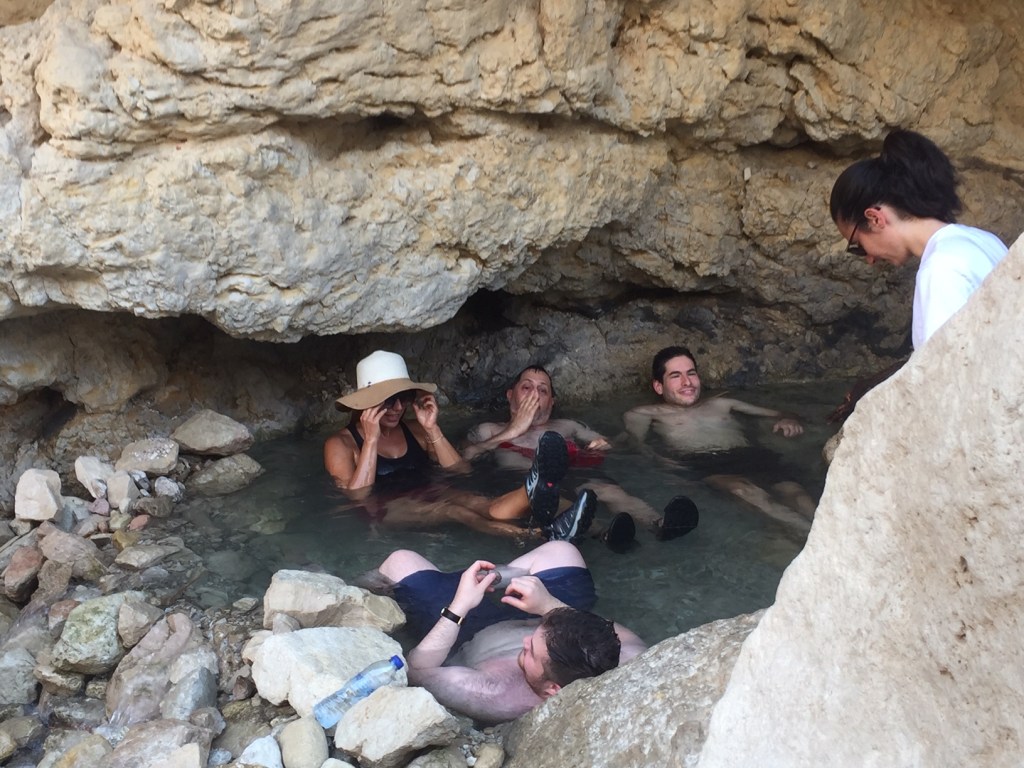
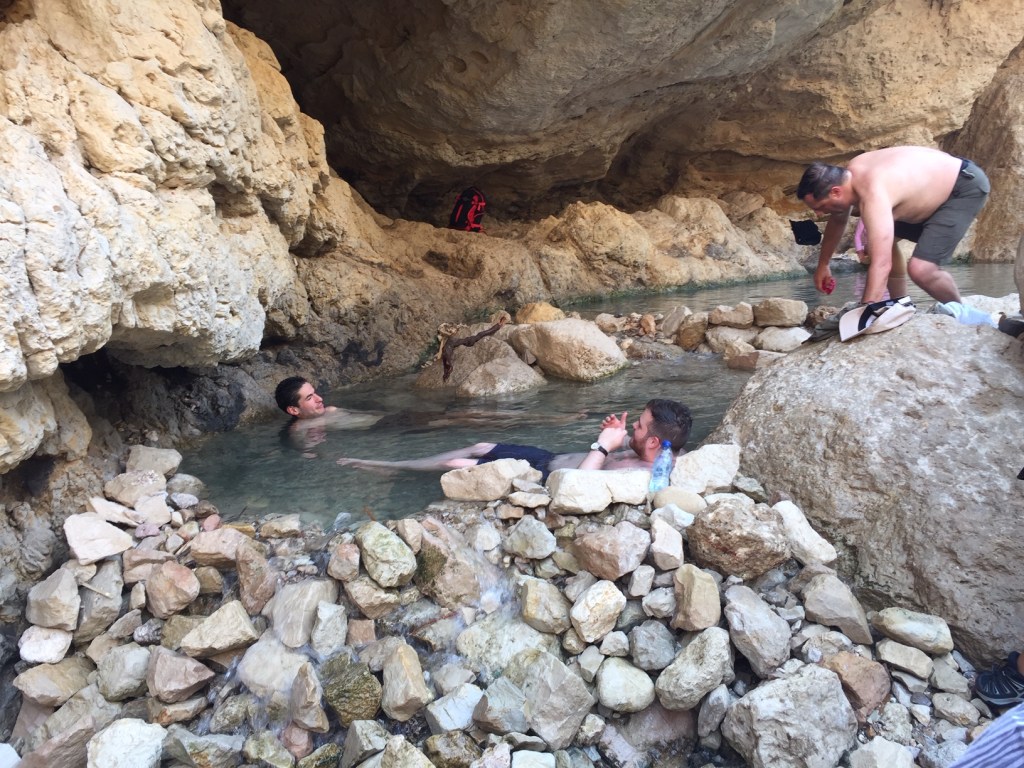
We passed Ein Gedi (the spring of the baby goat), and continued down the road to Ein Bokek (spring of [meaning uncertain]). Here, we walked and clambered up the stream bed to the pools made by the Spring.
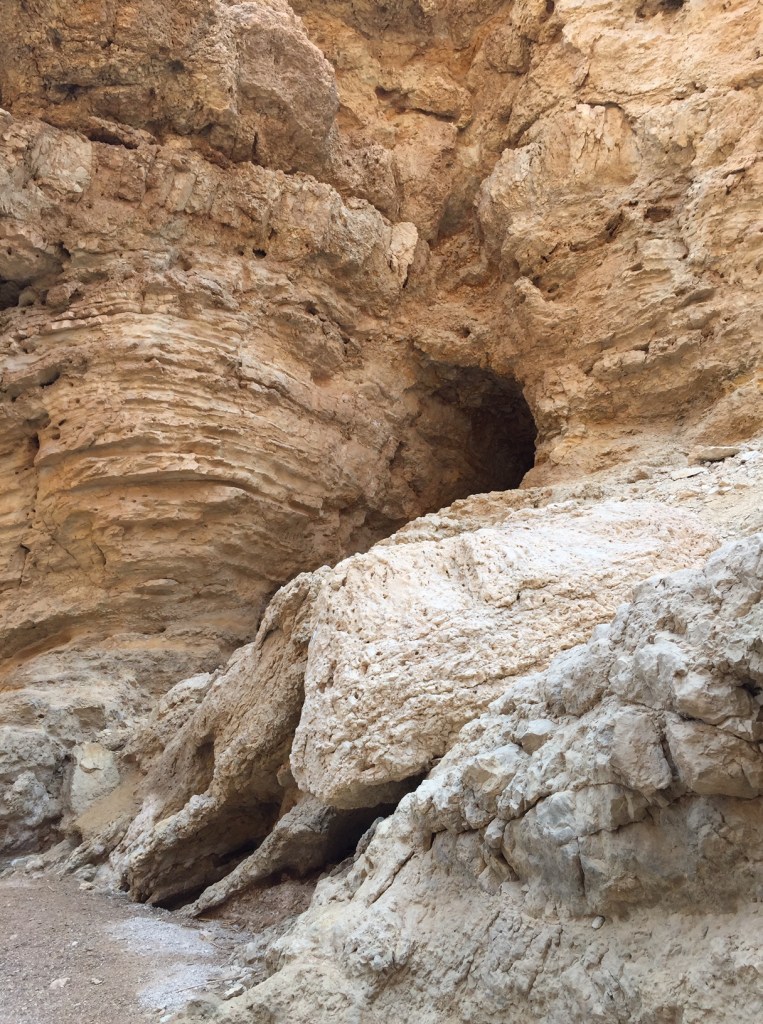
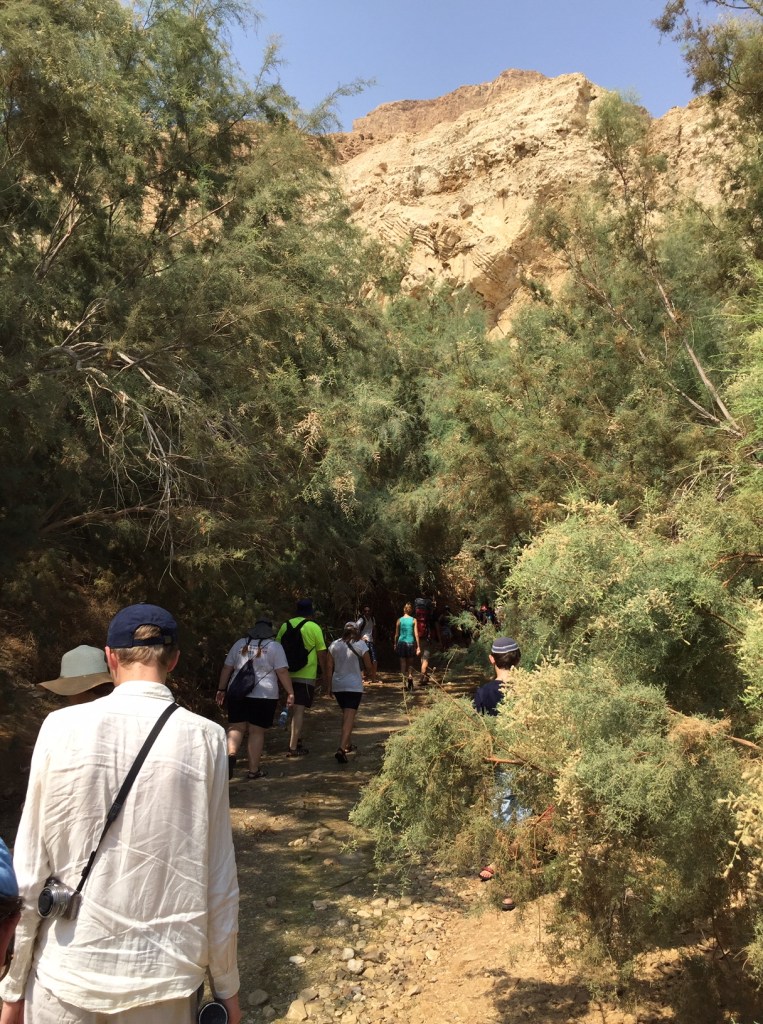
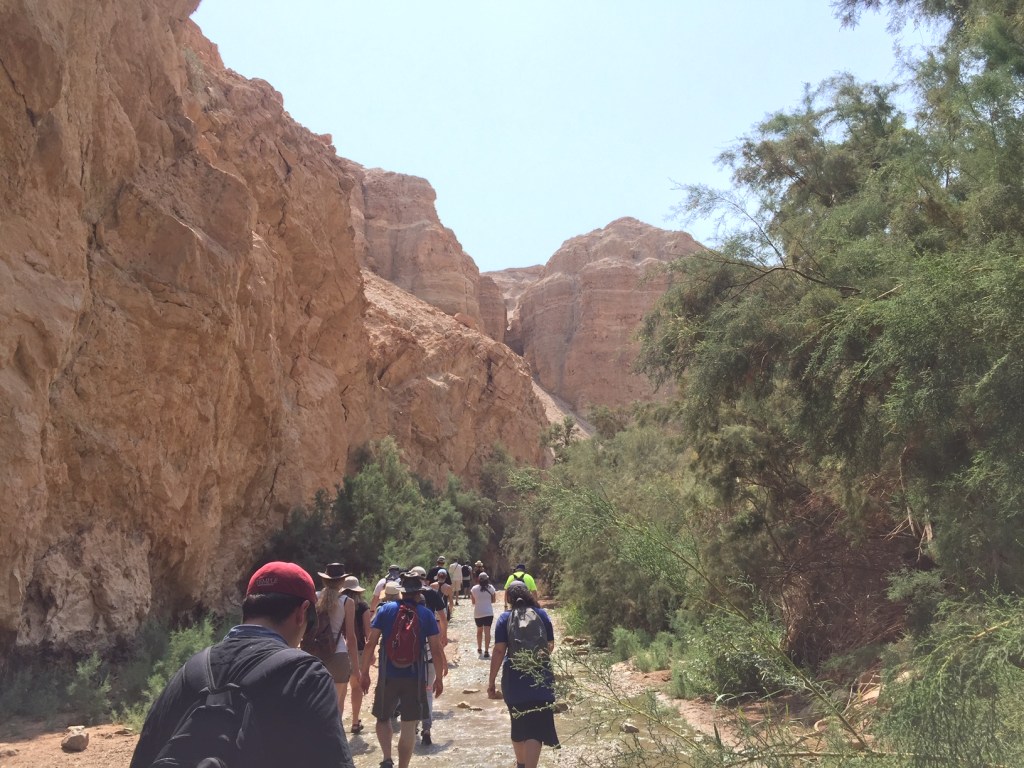
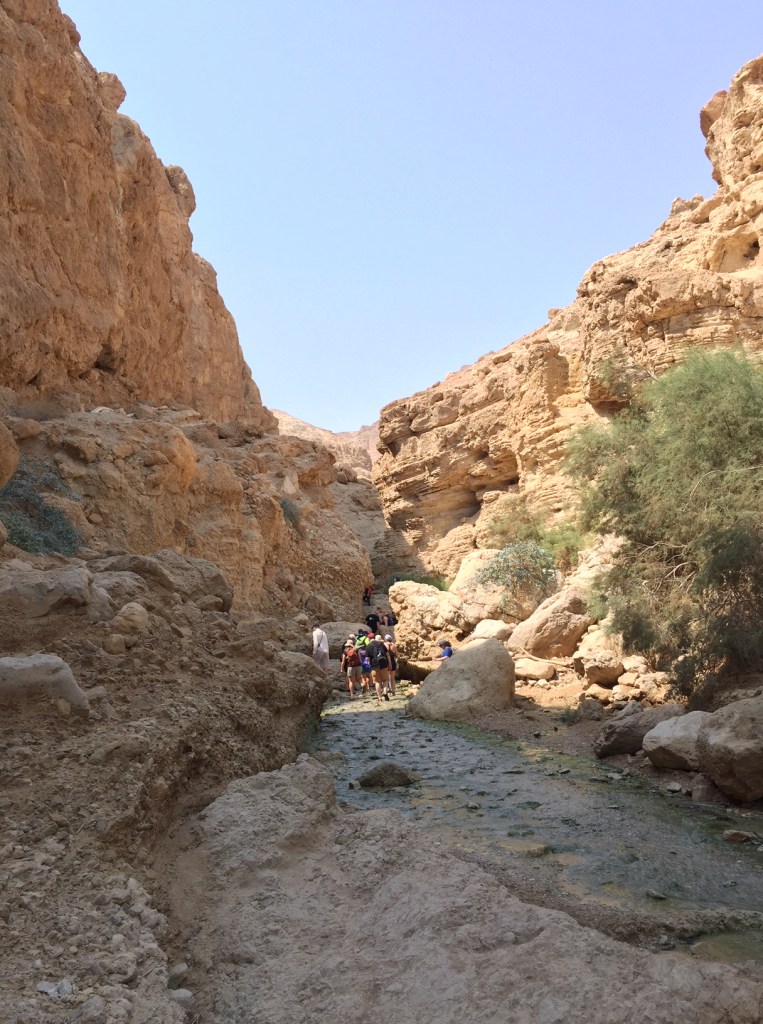
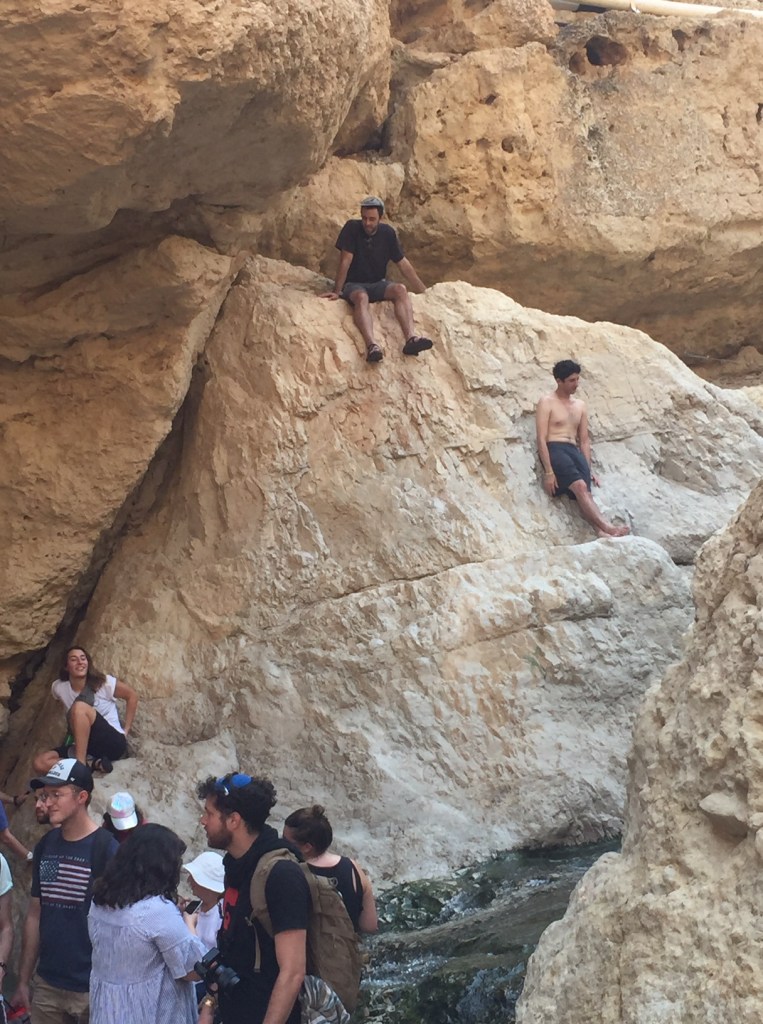
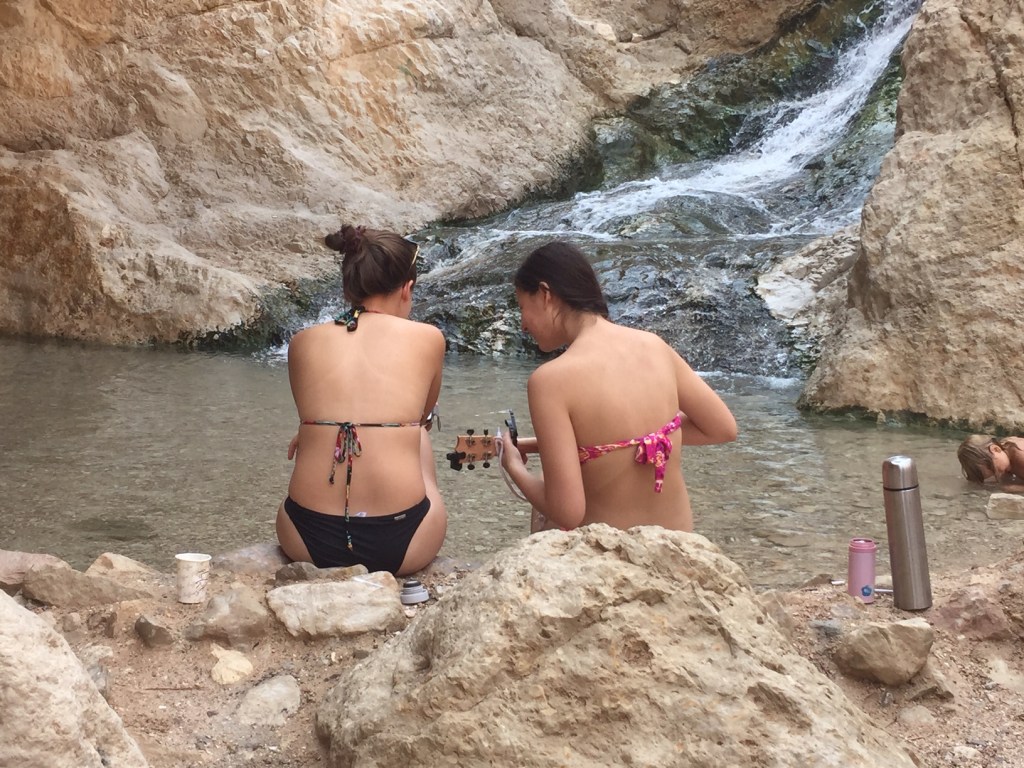
The water somehow seeps underground from way further north in the country. The heat and humidity were extremely oppressive (about 104 degrees F), but it was somewhat cooler in the shade of the tamarisk bushes growing by the stream. When we reached the pools and the waterfall, many of my classmates jumped right in! I wasn’t dressed for that, but did sit with my legs up to the knees in the water, which was warm, but cooler than the surrounding air.
After our walk up to the pools, we returned to the bus and drove the short distance to the beach in front of the row of huge hotels that characterize this peculiar desert outpost. The sand is hard and crunchy with salt — and definitely trucked in from somewhere. I saw none of the black mud that we’ve all seen in pictures — I believe one only finds this now in the northern section of the Dead Sea.
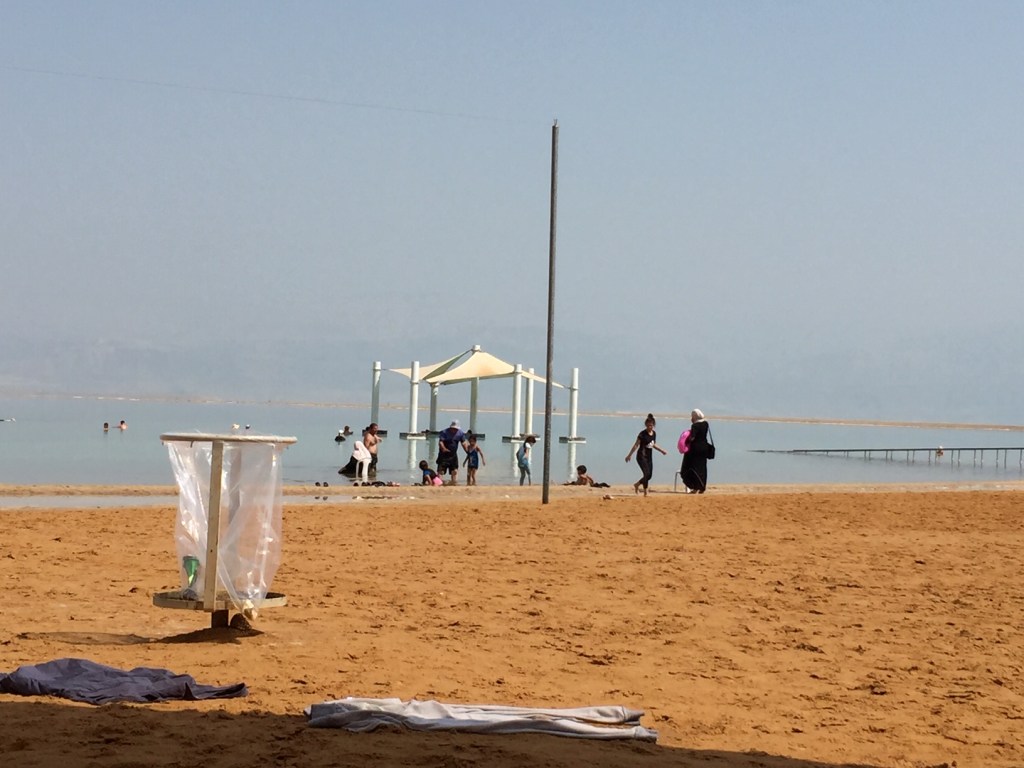
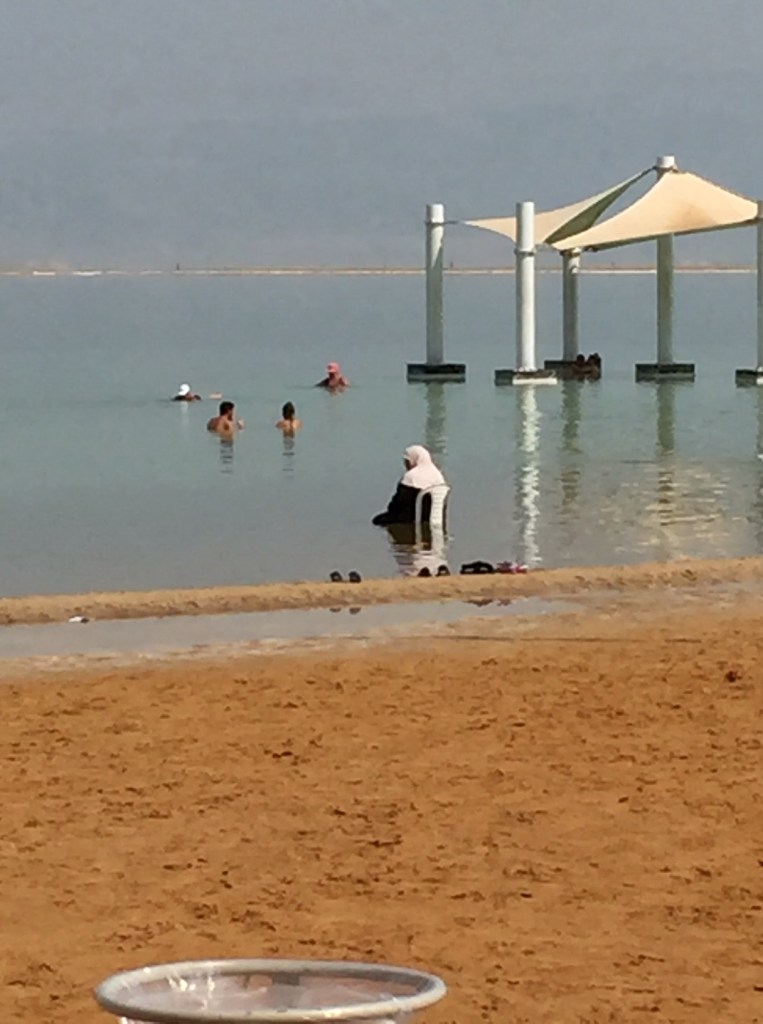
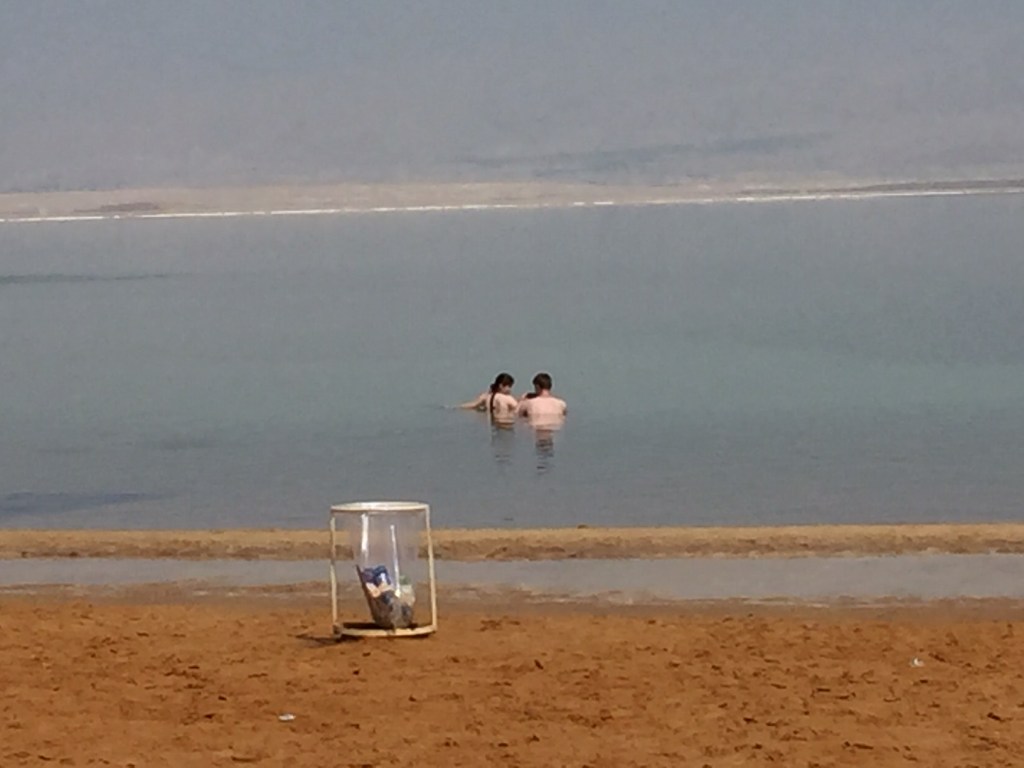
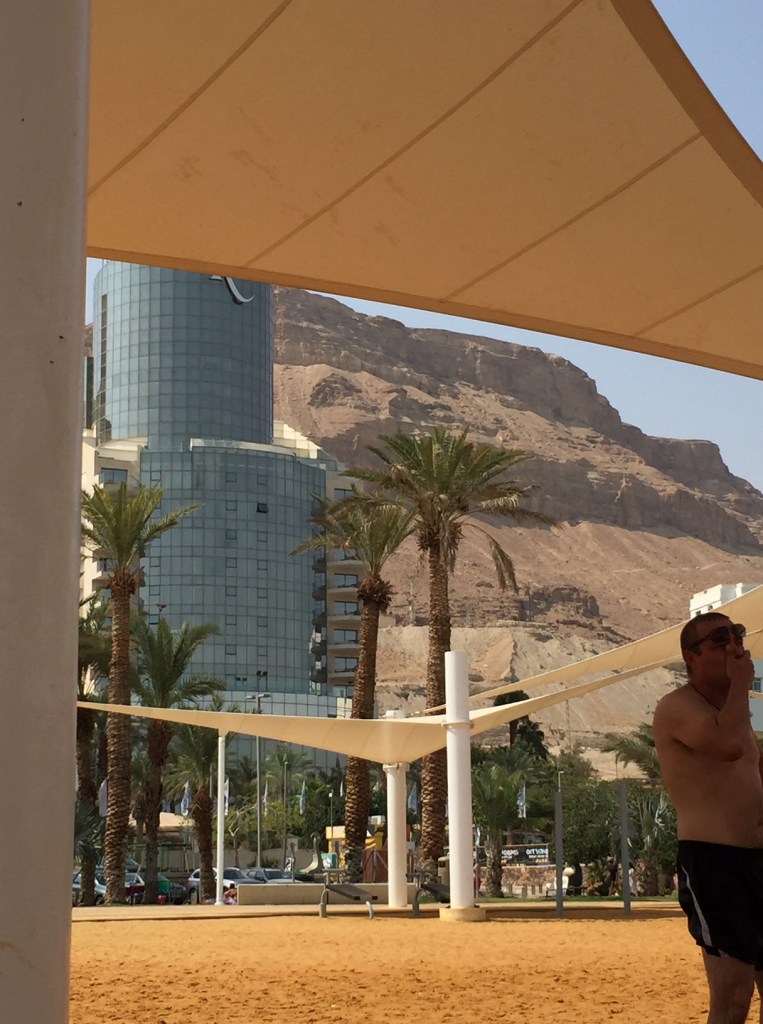
Yam HaMelach is shrinking rapidly, largely because of the industrial uses of the water by both Israel and Jordan, as well as the diversion of the Jordan River water further up stream. The shores of the Dead Sea in Ein Gedi have collapsed, causing the old road to be closed off for a distance. For both the purposes of tourism and of industry, barriers have been built and water diverted to preserve in some form the second, lower section of the Sea. The Western shore of this section in entirely in Israel proper. The towering Ein Bokek hotels, mall, etc., have been been built to support the tourists, both Israeli and from elsewhere, who still love to flock to the Dead Sea. Bathing in the Dead Sea is considered both healthy and fun. Many of my friends did go in, but I declined to have the experience. Although it may be exciting to float in water of such high salinity, and although the minerals in the water may indeed have some health benefits, I was put off both by the strong stench of sulfur and the descriptions from those who had been in the water before. I was advised that it feels like “swimming in a pool of warm butter”, and that if you have an open cut, or even have shaved within the past few days, you are going to experience severe smarting. Not for me!
After an hour an the beach we drove back to Ein Gedi. When I was there last November I stayed at the hotel, which is in the midst of an extraordinary botanical garden created by the Ein Gedi kibutz. We, however, stayed at the Field Station, an agricultural training center, training place for tour guides, and hostel. I shared a room with three young women, with whom I had been put because we share a certain iconoclasm. (One roommate — she of the ‘warm butter’ analogy — said “If calling my mother on Shabbat makes me an iconoclast, then so be it!”)
I’ll share more about the actual Shabbaton experience in another post…